
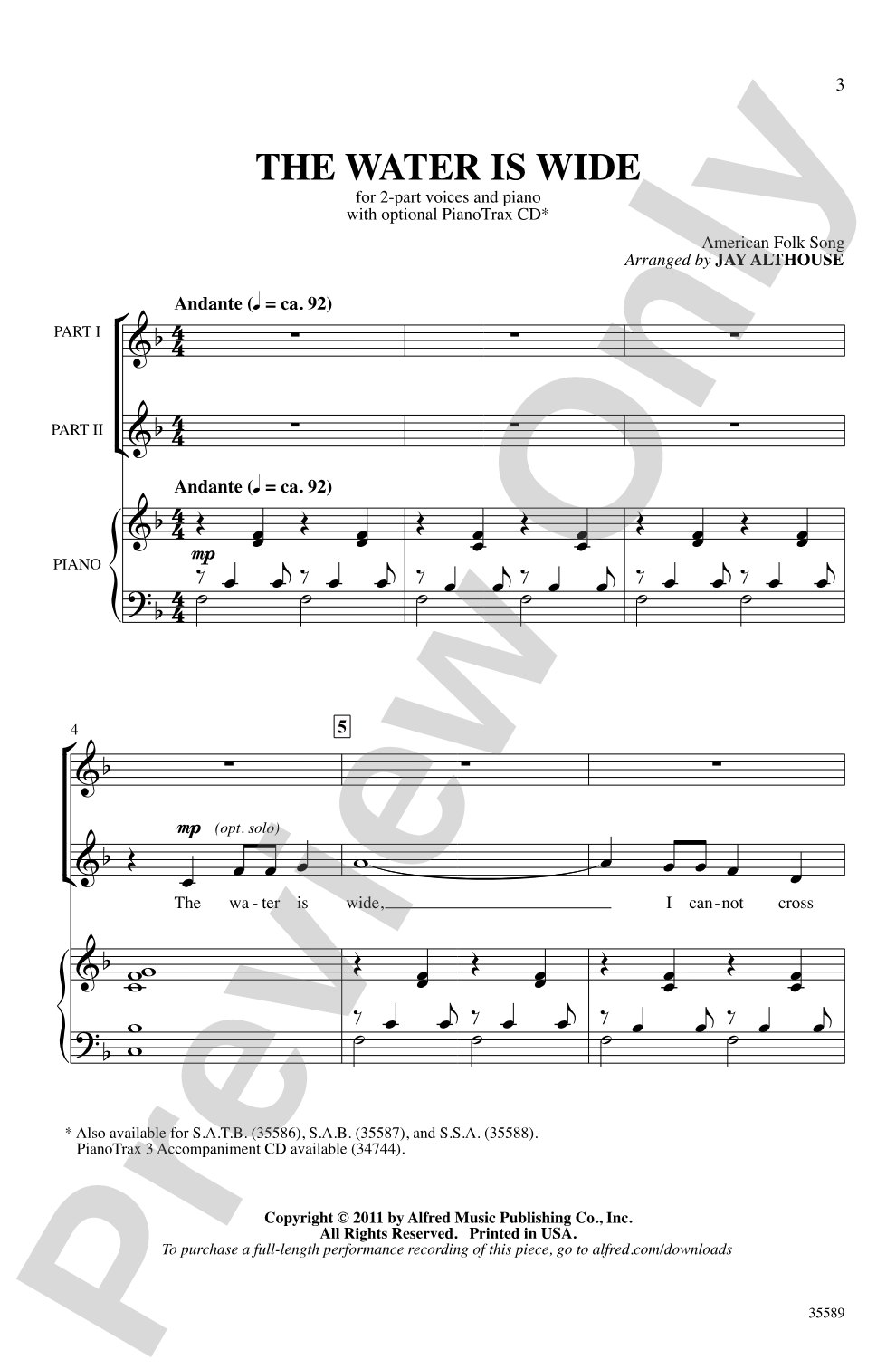

The Water Is Wide: 2-Part Choral Octavo
American Folk Song / arr. Jay Althouse
Item: 00-PO-0000915
$1.80
Minimum order quantity: 20 copies
Pickup currently not available
Related Items
The Water Is Wide: PianoTrax Digital Download |
$9.99
|
View | |
The Water Is Wide: SATB Choral Octavo |
$1.80
|
View | |
The Water Is Wide: SAB Choral Octavo |
$1.80
|
View | |
The Water Is Wide: SSA Choral Octavo |
$1.80
|
View | |
The Water Is Wide: SATB Choral Octavo |
$1.80
|
View | |
The Water Is Wide: SAB Choral Octavo |
$1.80
|
View | |
The Water Is Wide: SSA Choral Octavo |
$1.80
|
View | |
The Water Is Wide: 2-Part Choral Octavo |
$1.80
|
View |
Description
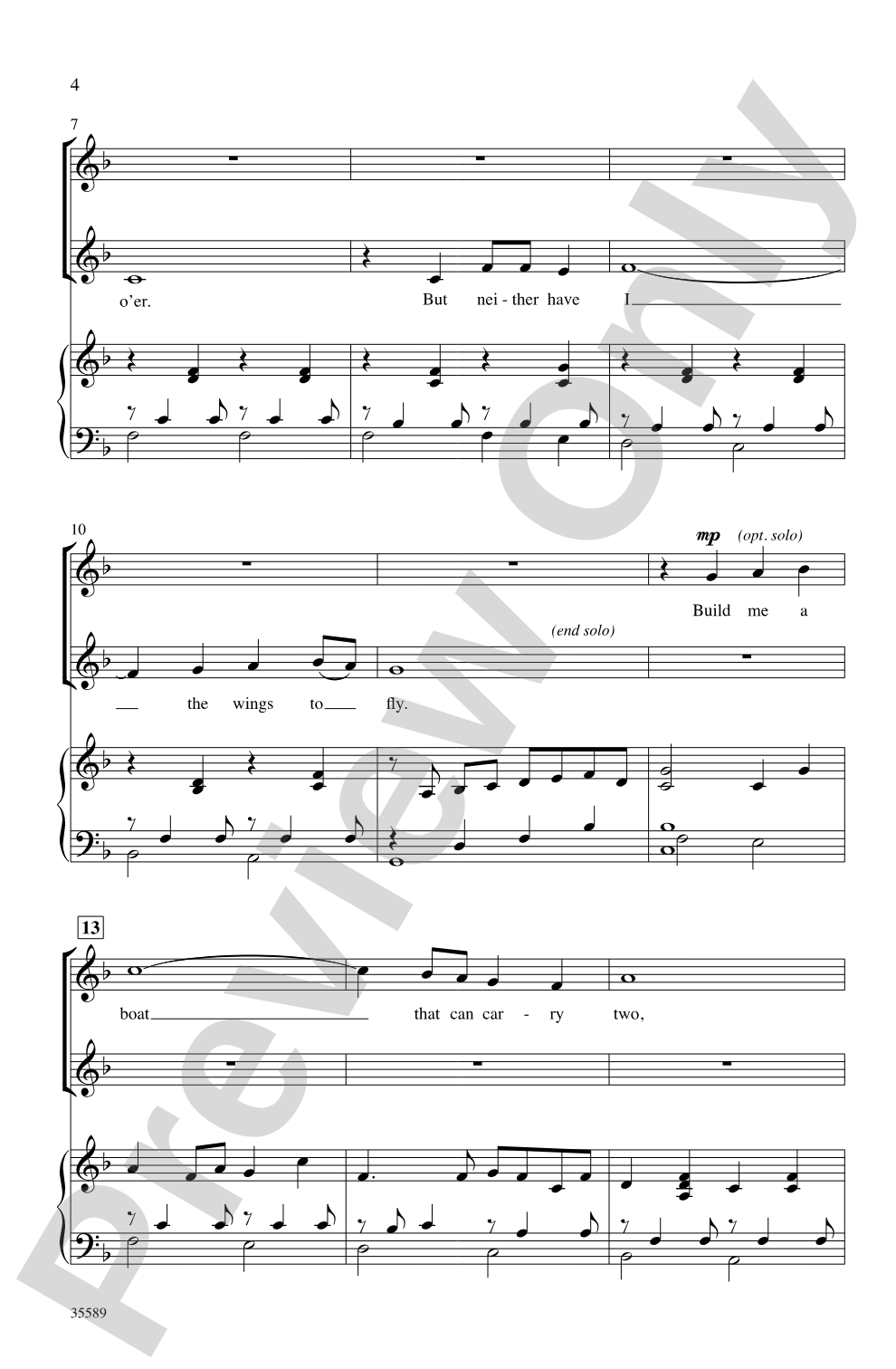
Contemporary harmonies shimmer over the rolling piano accompaniment in this superb arrangement of a folk favorite. A must-have! Featured on PianoTrax 3 Accompaniment CD (00-34744).


The Water Is Wide: 2-Part Choral Octavo isn't in MakeMusic Cloud just yet...but it could be. Let us know you'd like to see it, and you'll help shape what comes next. In the meantime, start a free trial and dive into thousands of interactive titles your students can play along with today.
Request This Title
Tell us you want it.
Start Your Free Trial
Explore everything that's ready to play right now.
Sample Audio
1
Audio File
--:--
0:00
0:00
Sample Video
No sample videos found.
Additional Details
Series:
Alfred Choral Designs
Publisher:
Alfred Music
Page Count:
12
SKU:
00-PO-0000915
More about this title
About the Arranger: Jay Althouse

Jay Althouse holds degrees in Music Education and Music from Indiana University of Pennsylvania, where he was honored as a Distinguished Alumni award recipient. His work in educational music publishing spanned eight years, during which he held a position on the Executive Board of the Music Publishers Association of America. As a composer, he has created more than 800 choral works performed across the English-speaking world and maintains membership in ASCAP, where he is a regular recipient of the Special Award for his compositions.
Beyond his prolific output as a choral composer, Althouse has collaborated with his wife Sally K. Albrecht on children's musicals and has compiled and edited respected vocal solo collections including Folk Songs for Solo Singers. His educational writing extends to co-authored titles such as The Complete Choral Warm-up Book and Accent on Composers, as well as classroom reproducible resources like Ready to Read Music and One-Page Composer Bios. He served on the board of the North Carolina Master Chorale and continues his involvement with folk music through his work with the Folk Art Society of America's National Advisory Board.
Why we love this
Althouse's understanding of what makes a folk song resonate shows throughout this arrangement. The contemporary harmonic language lifts a familiar tune without overshadowing its essential character, and the piano writing provides genuine support rather than mere accompaniment. For festival programming, this piece delivers both musical substance and accessibility.
What to expect
The arrangement wraps a familiar melody in shimmering, contemporary harmonies that feel both fresh and grounded. The rolling piano accompaniment creates a sense of motion and flow, as if following a gentle current, while the two-part voices interweave with clarity and warmth.
Who it's for
This arrangement serves middle and high school choirs as well as community ensembles seeking accessible two-part literature with real musical substance. The piece works equally well for groups new to contemporary harmonies and for singers ready to explore harmonic depth without navigating complex voice leading.
How to get the most out of it
- Shape the melodic line through the piano accompaniment rather than against it; the rolling patterns should feel like a single musical current carrying the voices forward.
- Let the two parts find their independence gradually across the phrase; starting with unified singing helps establish the tune before harmonic independence takes hold.
- Balance the upper and lower voices so that neither dominates; the shimmer Althouse creates depends on both parts being heard with equal presence.
- Work for clean unison sections to throw the two-part writing into relief; contrast makes both clearer.
How to use it
Pair this with other folk-based arrangements to explore how different composers approach traditional material, or use it as a bridge piece between pop/contemporary and traditional repertoire on a mixed concert. Its moderate difficulty and strong melodic anchor make it an effective festival selection that audiences connect with immediately.
Skills your students will build
- Balancing two independent melodic lines while maintaining harmonic cohesion
- Singing contemporary harmonies while preserving the integrity of a traditional melody
- Following piano accompaniment patterns and entrances across phrase changes
- Achieving blend in two-part texture where both voices carry equal musical weight