

The Trout: 2-Part Choral Octavo
(Die Forelle)
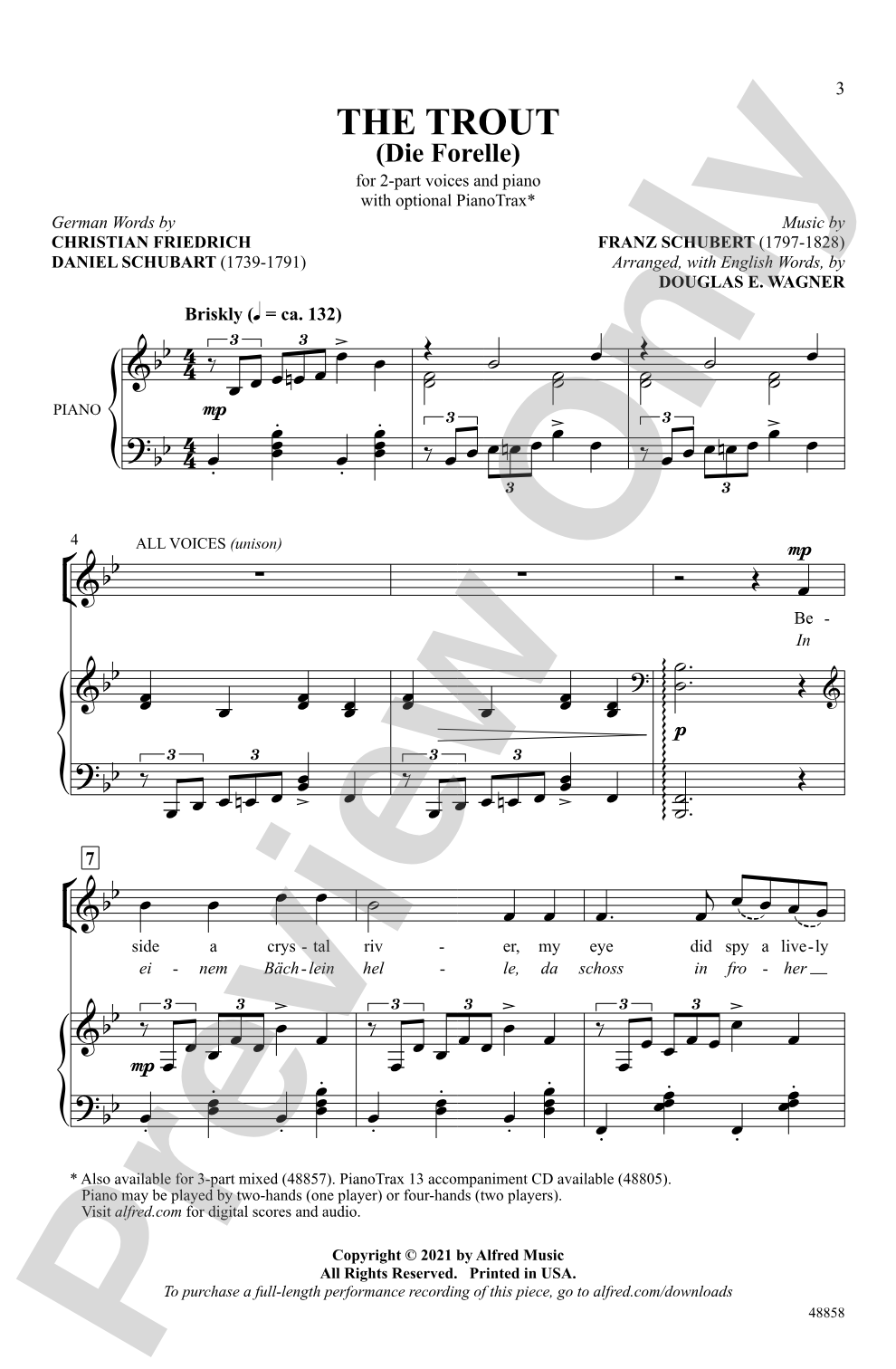
Music by Franz Schubert / arr., with English words, by Douglas E. Wagner
Item: 00-PO-0006650
$2.05
Minimum order quantity: 20 copies
Pickup currently not available
Description
You may have studied this beloved Schubert art song in voice lessons, and now you can share it with developing choirs in a well-constructed, approachable arrangement. The choice of key fits comfortably within range and the Romantic era harmonies are easy to hear. Whether there are two or four hands at the piano, listeners will be hooked by the rippling water and leaping fish in the playful accompaniment. Concerned about the German words? A rhyming English translation provides a charming option. Listen to Fischer-Dieskau's iconic recording as an introduction to the piece or an extension of learning.


Discover MakeMusic Cloud: thousands of interactive titles your students can play along with today.
Sample Audio
1
Audio File
--:--
0:00
0:00
Sample Video
Additional Details
Series:
Alfred Choral Designs
Publisher:
Alfred Music
Page Count:
12
SKU:
00-PO-0006650
More about this title
About the Composer: Franz Schubert
Franz Schubert (1797–1828) composed over 600 works across every major genre, yet his gift for melody and harmonic invention remains unmatched among Romantic composers. His 200-plus art songs (Lieder) transformed the genre into a vehicle for profound emotional expression, each one a miniature drama set to poetry.
Why we love this
Wagner's arrangement preserves everything that makes the original unforgettable while opening it to singers who are still building confidence and range. The key sits naturally for developing voices, the two-part texture allows soloists or sections to shine, and the accompaniment's shimmer and playfulness come through whether you have one pianist or two. You get a masterwork that sounds polished and complete, never simplified.
What to expect
The piece dances. Schubert's melody is supple and singing, moving through the text with ease while the accompaniment captures the movement of water with delicate, rippling sixteenths. There's joy here, curiosity, and a touch of the magical—the poem tells of a fisherman mesmerized by a trout in the stream, and the music mirrors that enchantment with warmth and wonder.
Who it's for
Two-part choirs ready to explore a genuine art song without the vocal demands of unison versions or complex harmonic arrangements. This works especially well for middle school through early high school choirs, school choirs aiming for contest or festival performance, and any ensemble that wants to program something genuinely beautiful alongside more contemporary repertoire.
How to get the most out of it
- Shape the phrases with gentle dynamic swells that follow the text and melody rather than hitting every note at the same volume; the rippling piano texture will float under a well-shaped vocal line.
- Bring out the contrast between the two parts by assigning them intentionally: let stronger singers carry the primary melody while newer singers find security in the supporting line, then swap roles later in the piece to build confidence.
- Use the recorded accompaniment (when available) to internalize the piano's character and tempo before rehearsing without it; this piece lives and breathes with the accompaniment's vitality.
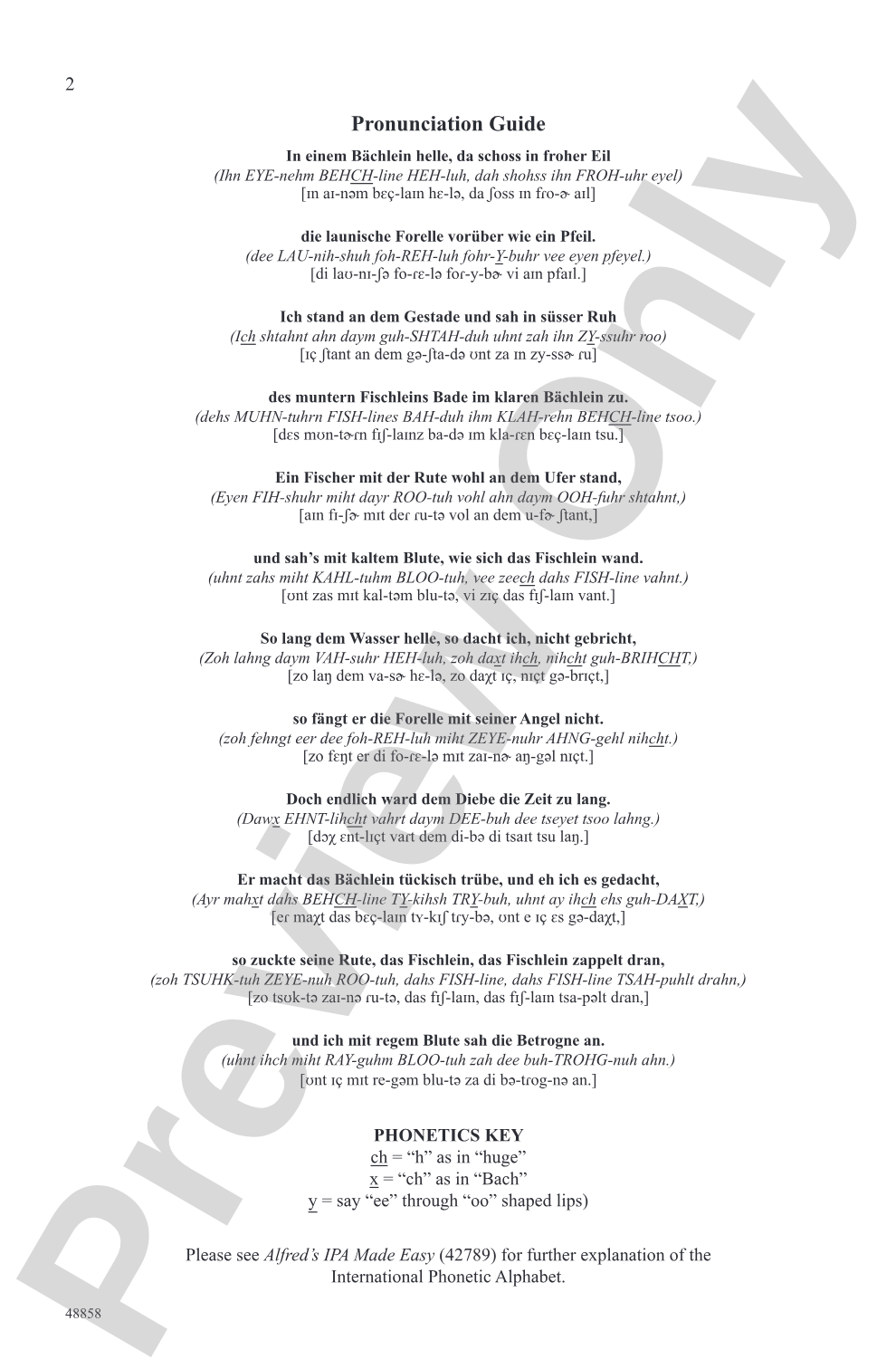
- Work the German text before introducing the English translation so singers understand the original language and imagery; the authenticity will deepen their musical choices.
How to use it
Program this in a concert devoted to art song or Romantic repertoire, pairing it with other arranged Lieder or contrasting it with folk song treatments. It also works beautifully in a set that explores water imagery across cultures and time periods, or as a bridge between classical masterworks and contemporary choral music to show singers the roots of lyrical writing.
Skills your students will build
- Singing legit, connected lines with proper phrase shape
- Balancing two-part harmony while maintaining independence
- Navigating German diction and vowel consistency across ensemble
- Responding to and integrating with piano accompaniment texture
- Understanding and performing art song as a genre