

The Trout: 3-Part Mixed Choral Octavo
(Die Forelle)
Music by Franz Schubert / arr., with English words, by Douglas E. Wagner
Item: 00-PO-0006649
$2.05
Minimum order quantity: 20 copies
Pickup currently not available
Description
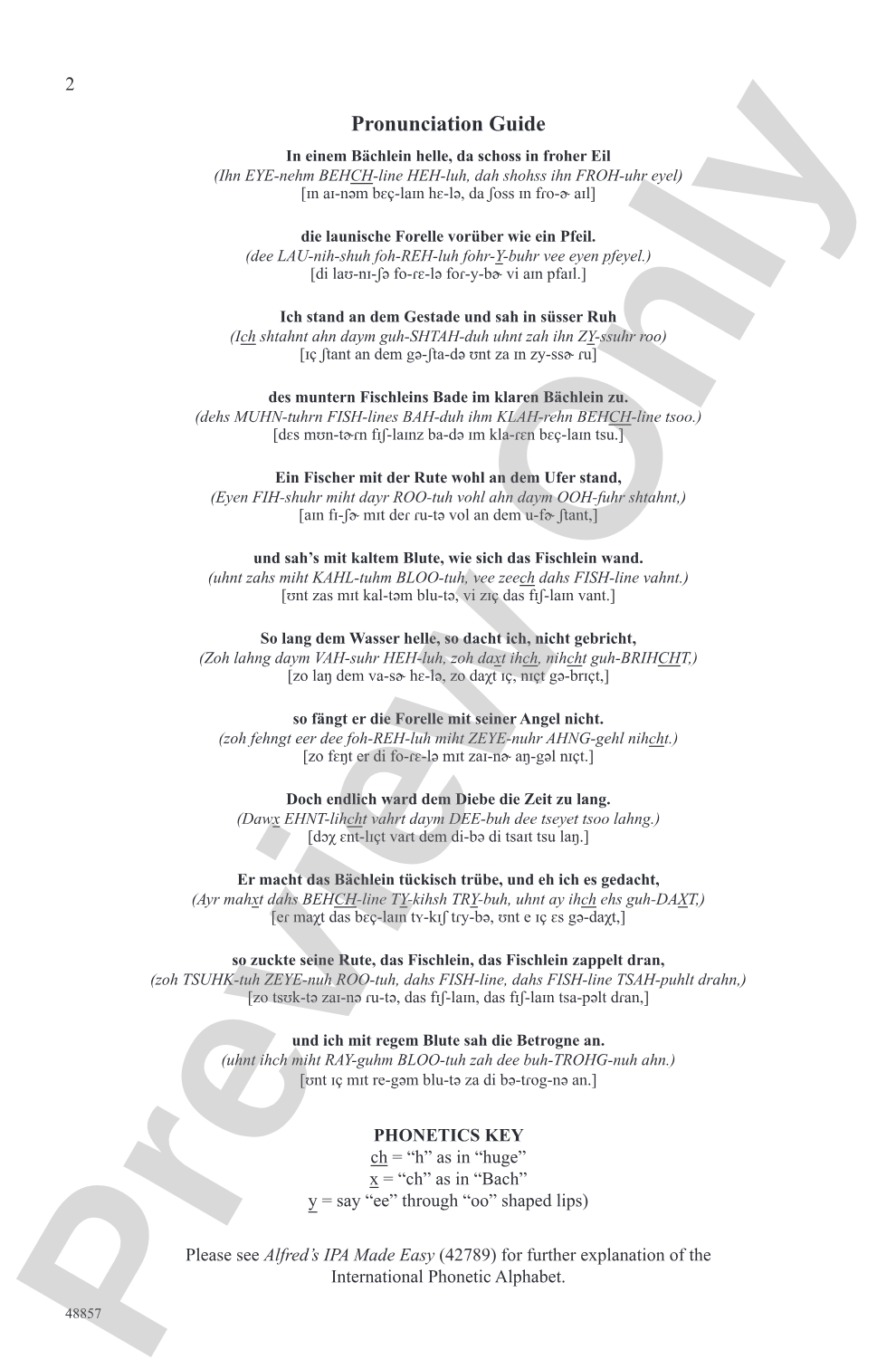
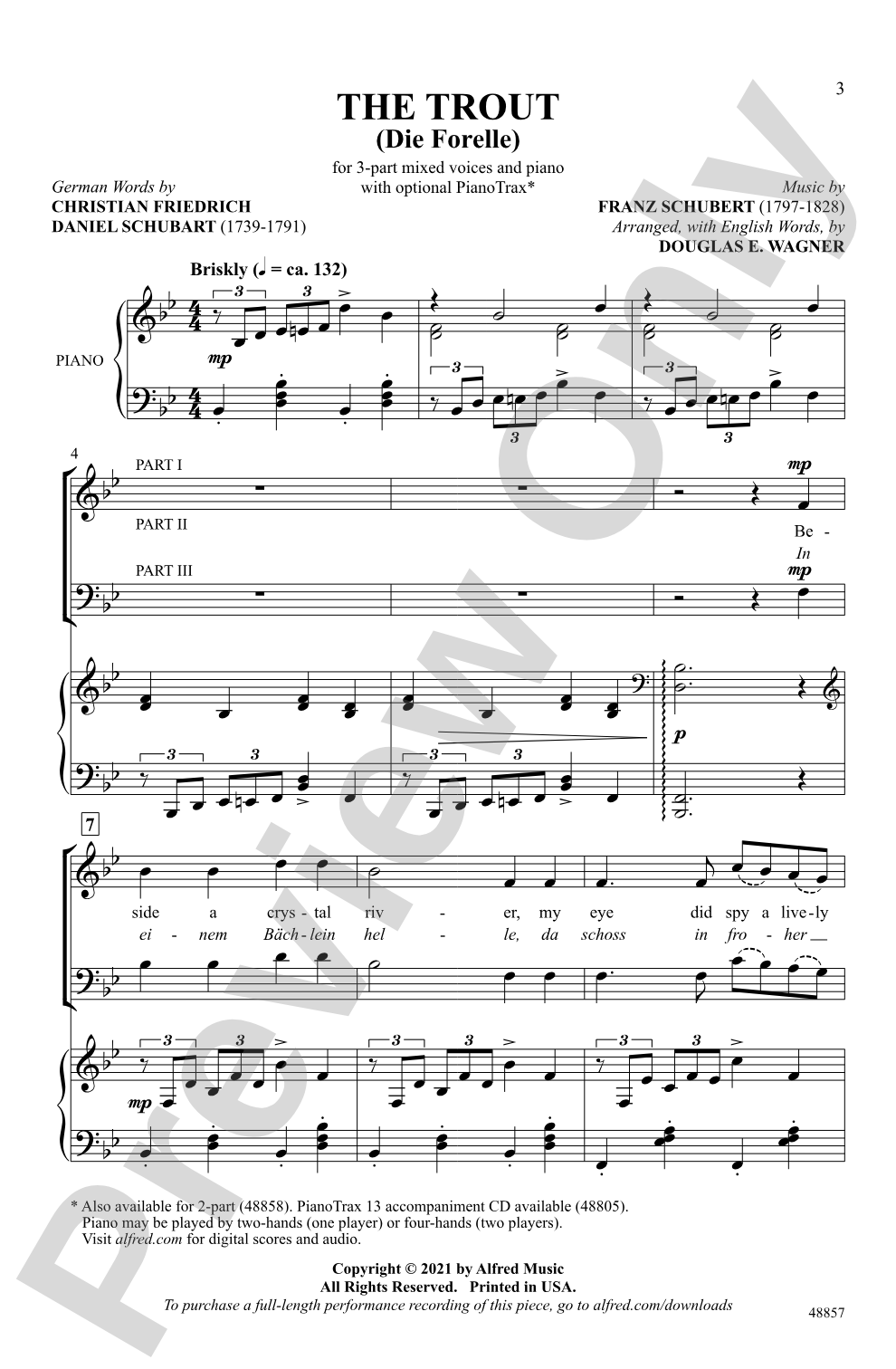
You may have studied this beloved Schubert art song in voice lessons, and now you can share it with developing choirs in a well-constructed, approachable arrangement. The choice of key fits comfortably within range and the Romantic era harmonies are easy to hear. Whether there are two or four hands at the piano, listeners will be hooked by the rippling water and leaping fish in the playful accompaniment. Concerned about the German words? A rhyming English translation provides a charming option. Listen to Fischer-Dieskau's iconic recording as an introduction to the piece or an extension of learning.


Discover MakeMusic Cloud: thousands of interactive titles your students can play along with today.
Sample Audio
1
Audio File
--:--
0:00
0:00
Sample Video
Additional Details
Series:
Alfred Choral Designs
Publisher:
Alfred Music
Page Count:
12
SKU:
00-PO-0006649
More about this title
About the Composer: Franz Schubert
Franz Schubert (1797-1828) composed over 600 works across symphonies, chamber music, and vocal literature, yet his art songs remain among the most performed pieces in the concert hall and music classroom. His gift for melody and harmonic innovation transformed the Lied into a sophisticated musical form, pairing richly expressive vocal lines with piano accompaniments that often equal the voice in importance and character.
Why we love this
This arrangement captures everything that makes "Die Forelle" enduring: the playful narrative, the shimmer of Romantic harmony, and a piano part that genuinely delights singers and audiences alike. Wagner's voicing sits naturally for developing choirs while preserving the piece's charm, and the English text option removes a common barrier without sacrificing musical authenticity.
What to expect
Playful yet poignant, with a sparkle of water and the vivid image of a trout darting through a stream. The vocal melody sings with Romantic lyricism while the accompaniment dances, creating a perfect blend of narrative charm and musical sophistication that keeps audiences engaged from start to finish.
Who it's for
Developing choirs ready to engage with art song literature and singers who want the experience of performing a Schubert masterwork without the technical demands of four-part or advanced voicing. Directors seeking repertoire that bridges the gap between pop and classical, contest-ready material, and a piece that genuinely impresses audiences.
How to get the most out of it
- Shape the melodic phrases with gentle, natural phrasing rather than exaggerating the text painting; let Schubert's own contours guide your singers toward musical coherence.
- Encourage light, articulate diction on the rippling accompaniment figures in the piano part, whether played by two or four hands, so the accompaniment doesn't overshadow the vocal line.
- Balance the playful character of the fish leaping with the genuine tenderness of the poem's deeper meaning; avoid letting the piece slide into mere entertainment.
- If using the English text, spend time with the rhymes and prosody to ensure the translation sits as naturally as the original German.
How to use it
Program this as a standalone concert feature that refreshes audiences accustomed to contemporary choral fare, or pair it with other art song arrangements to create a thematic segment on Romantic vocal music. It works equally well in contest settings where judges value both accessibility and artistic integrity.
Skills your students will build
- Singing Romantic-era harmonic progressions with sensitivity and intonation
- Balancing independent vocal lines while maintaining phrase cohesion in SAB voicing
- Interpretation of song text and narrative character through musical expression
- Listening to and learning from historical recordings as a performance model