

The Tiger: 2-Part Choral Octavo
By Sherri Porterfield
Level: Moderate
Item: 00-PO-0003066
$2.25
Minimum order quantity: 20 copies
Pickup currently not available
Description
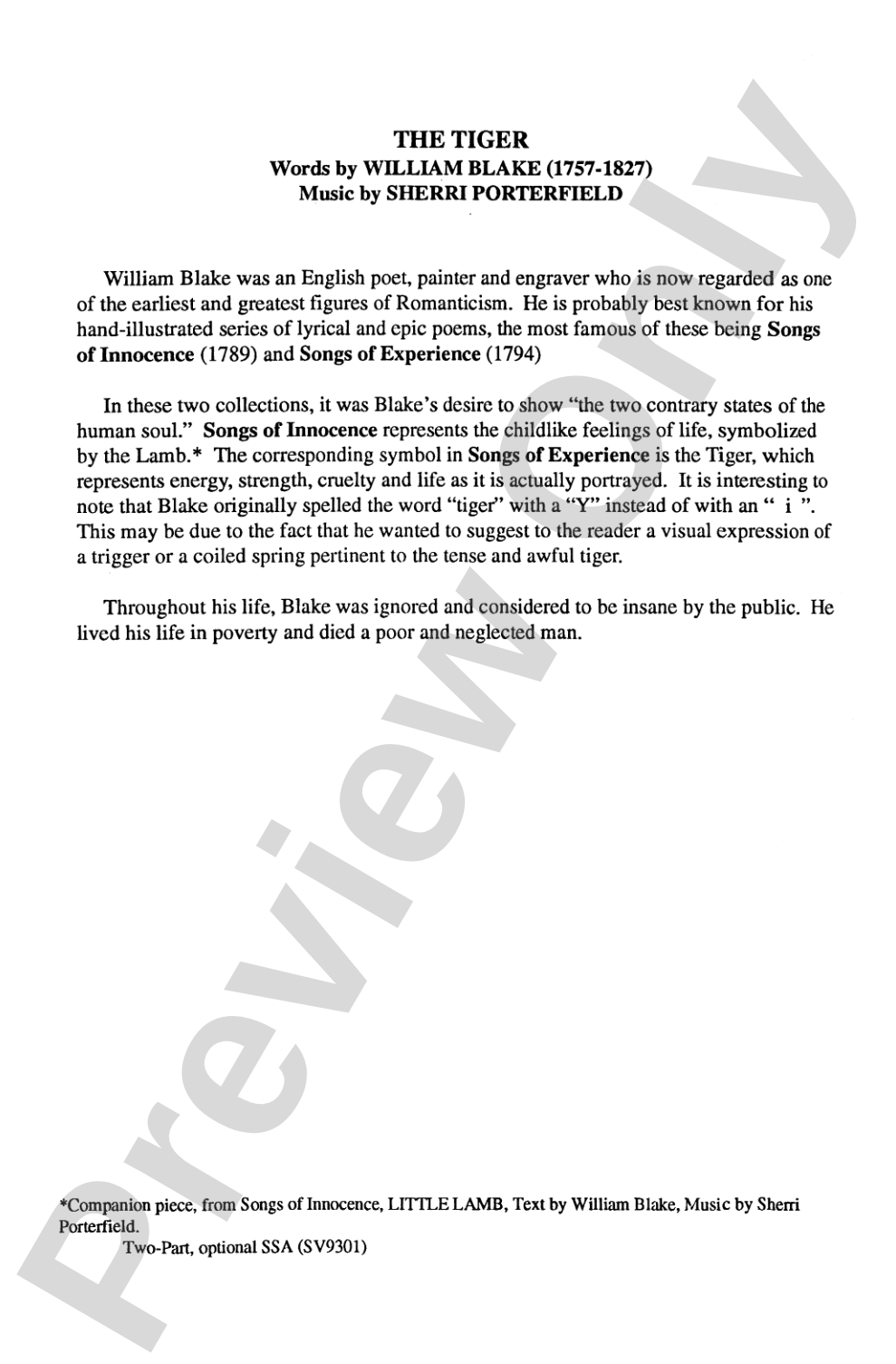
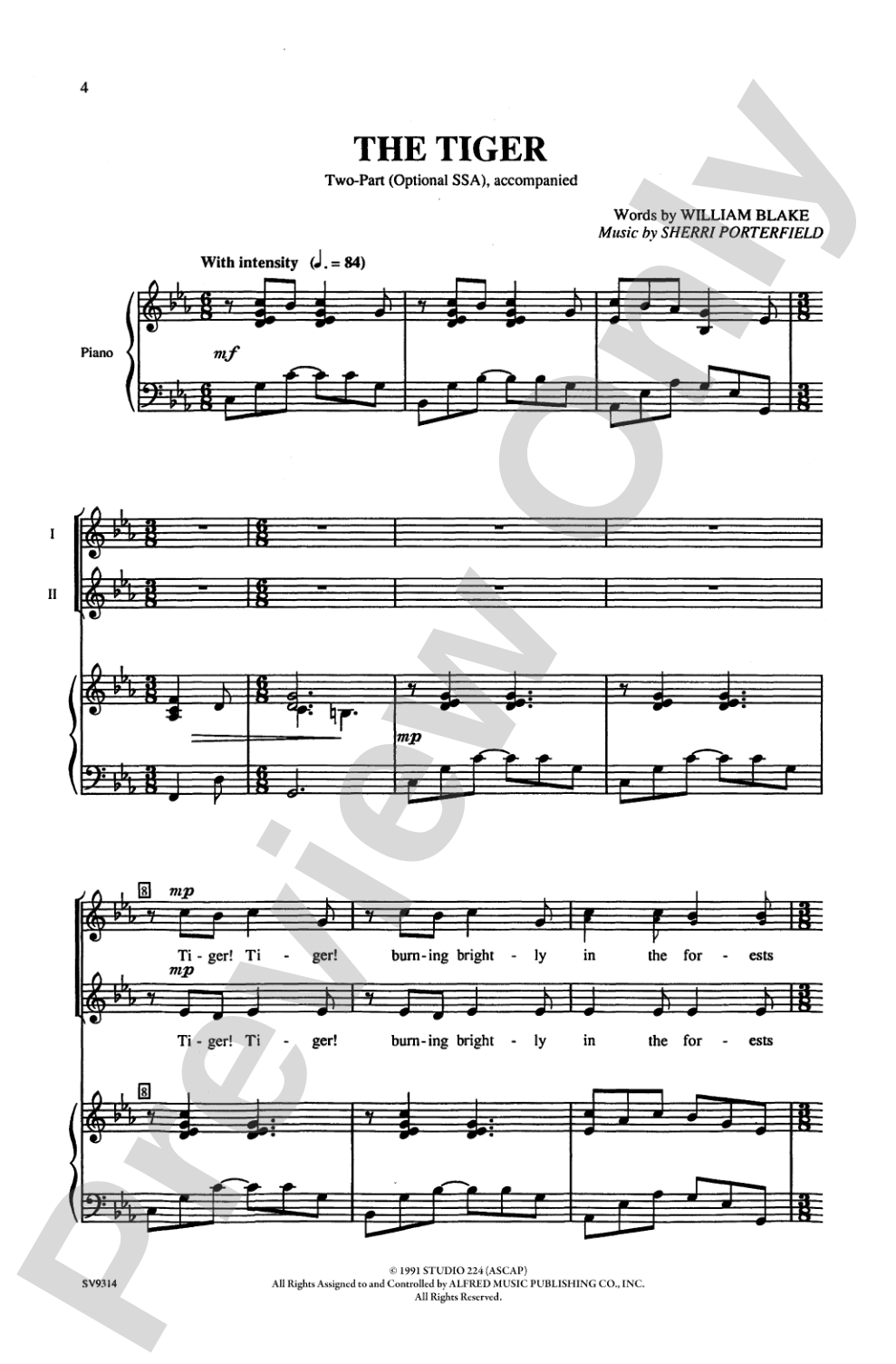
Musical life is breathed into William Blake's stunning text. Intensity builds throughout this well-constructed work. Sherri captures the excitement, the fear, and dread of the tiger. A wonderful new work for concert, contest or festival. Creative yet accessible.


The Tiger: 2-Part Choral Octavo isn't in MakeMusic Cloud just yet...but it could be. Let us know you'd like to see it, and you'll help shape what comes next. In the meantime, start a free trial and dive into thousands of interactive titles your students can play along with today.
Request This Title
Tell us you want it.
Start Your Free Trial
Explore everything that's ready to play right now.
Sample Audio
1
Audio File
--:--
0:00
0:00
Sample Video
No sample videos found.
Additional Details
Series:
Alfred Archive Edition: Studio PR Catalog
Publisher:
Alfred Music
Page Count:
12
SKU:
00-PO-0003066
More about this title
About the Composer: Sherri Porterfield

Sherri Porterfield directs choirs at Cedar Park Middle School in Cedar Park, Texas, and has built a distinguished career across Missouri, Kansas, and Texas. Her choirs have earned numerous first place and sweepstakes awards at competitions and have performed at state music educators conventions. She served as an adjunct assistant professor of music education at the University of Missouri-Kansas City Conservatory of Music and has worked as a clinician and guest conductor with honor choirs throughout the country.
With over 175 published choral compositions, Porterfield has received consistent recognition from ASCAP since 1997 for her compositional work. Her music appears in catalogs at Alfred Music Publishing and other major publishers. She holds degrees from the University of Memphis (B.S.E. in music education) and the University of Missouri-Kansas City (Master of Music in choral conducting), and has been honored multiple times as a Teacher of the Year and selected to Who's Who in American Education, Who's Who in America, and other prestigious directories.
Why we love this
Blake's iconic poem finds its perfect musical voice in Porterfield's composition. The arc of the piece mirrors the text's escalating intensity, building from quiet observation to palpable danger, which gives your singers genuine dramatic stakes to perform. At a moderate difficulty level, it challenges growing choirs without overwhelming them, making it equally effective in concert, contest, and festival settings.
What to expect
The music captures the electricity and menace of Blake's famous tiger. There is an underlying current of unease throughout, building steadily until your singers feel the full weight of the poet's inquiry about creation and darkness. The piece never feels overwrought; instead, it achieves intensity through careful construction and restraint.
Who it's for
This octavo suits middle school choirs seeking concert or festival repertoire with literary substance and musical sophistication. Any developing choir at the 2-part level that wants to tackle a text-driven work will find the moderate difficulty accessible without sacrificing genuine dramatic content.
How to get the most out of it
- Shape the dynamic arc carefully from the opening. Porterfield constructs the fear and dread deliberately, so each phrase should feel like one notch higher in intensity than the last.
- Balance the 2-part texture so that neither voice part gets lost. Since the voicing is relatively simple, clarity of text and precision of rhythm become your main tools for theatrical impact.
- Let your singers understand Blake's imagery fully before rehearsal begins. When they grasp what the tiger represents, the emotional commitment in their voices becomes authentic rather than superficial.
- Pay attention to breath placement as a dramatic tool. Strategic pauses and breaths can amplify the mounting tension without interrupting the musical line.
How to use it
Pair this with other Blake settings or Romantic-era poetry to create a concert featuring literary texts and their musical interpretations. Its moderate length and compelling narrative make it a strong standalone selection for a 30-minute or longer festival performance. Consider programming it mid-concert where it can command full attention without opening or closing the program.
Skills your students will build
- Dynamic control and shaping of longer musical phrases
- Interpretation of literary text within a musical setting
- Building intensity and tension through collective vocal production
- Balance between independent voice parts in 2-part texture
- Connecting emotional content to musical choices