
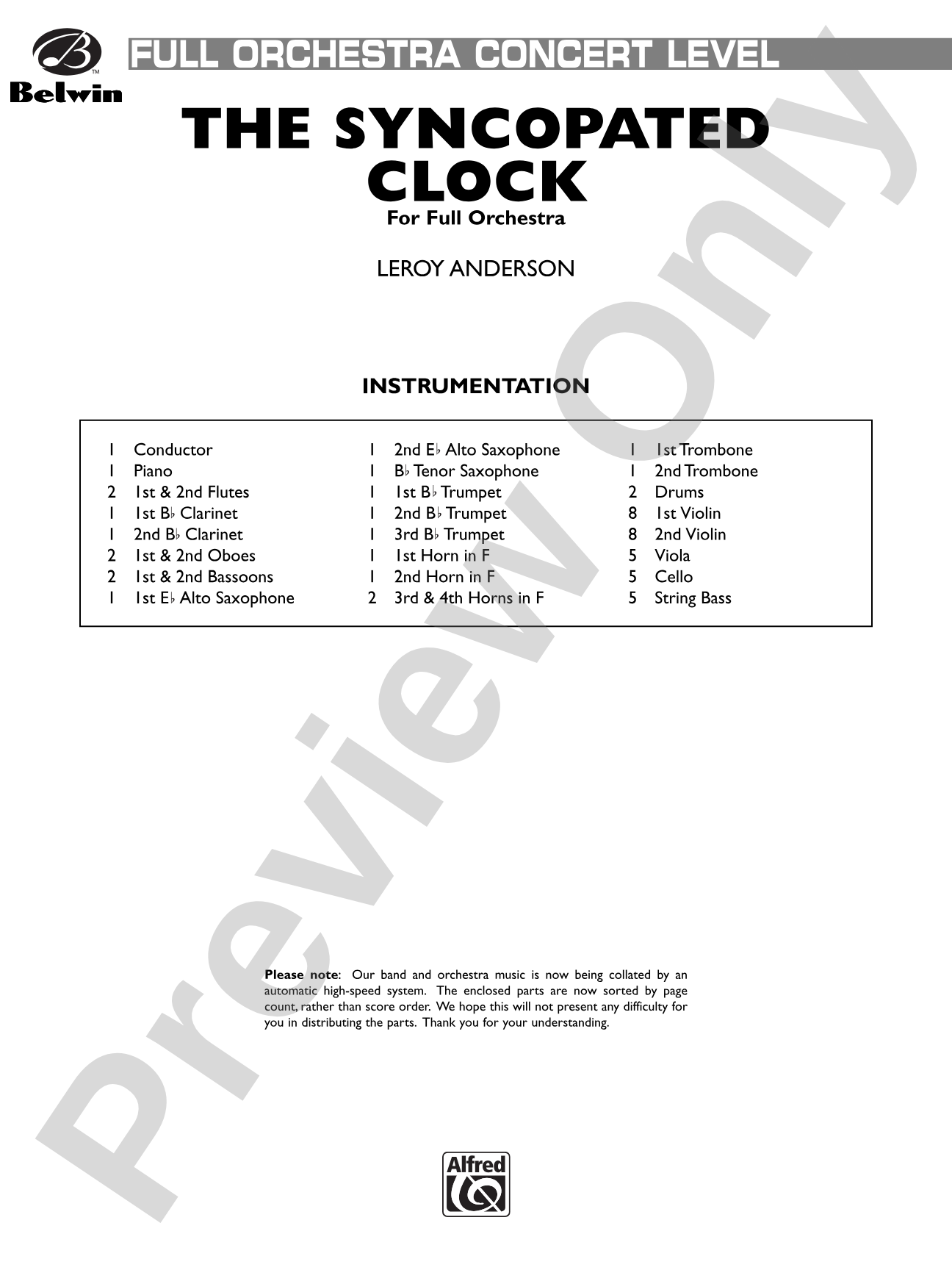

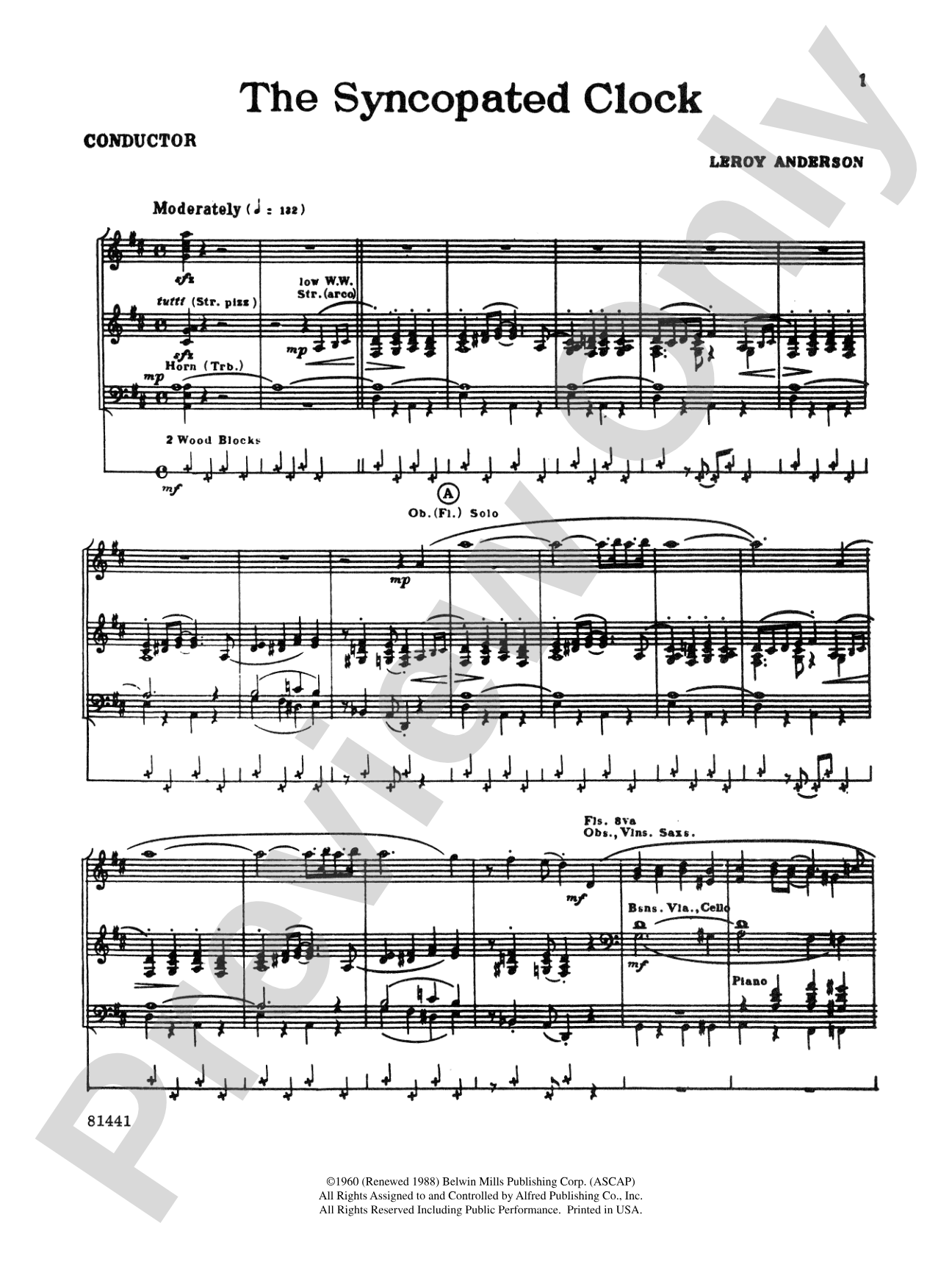
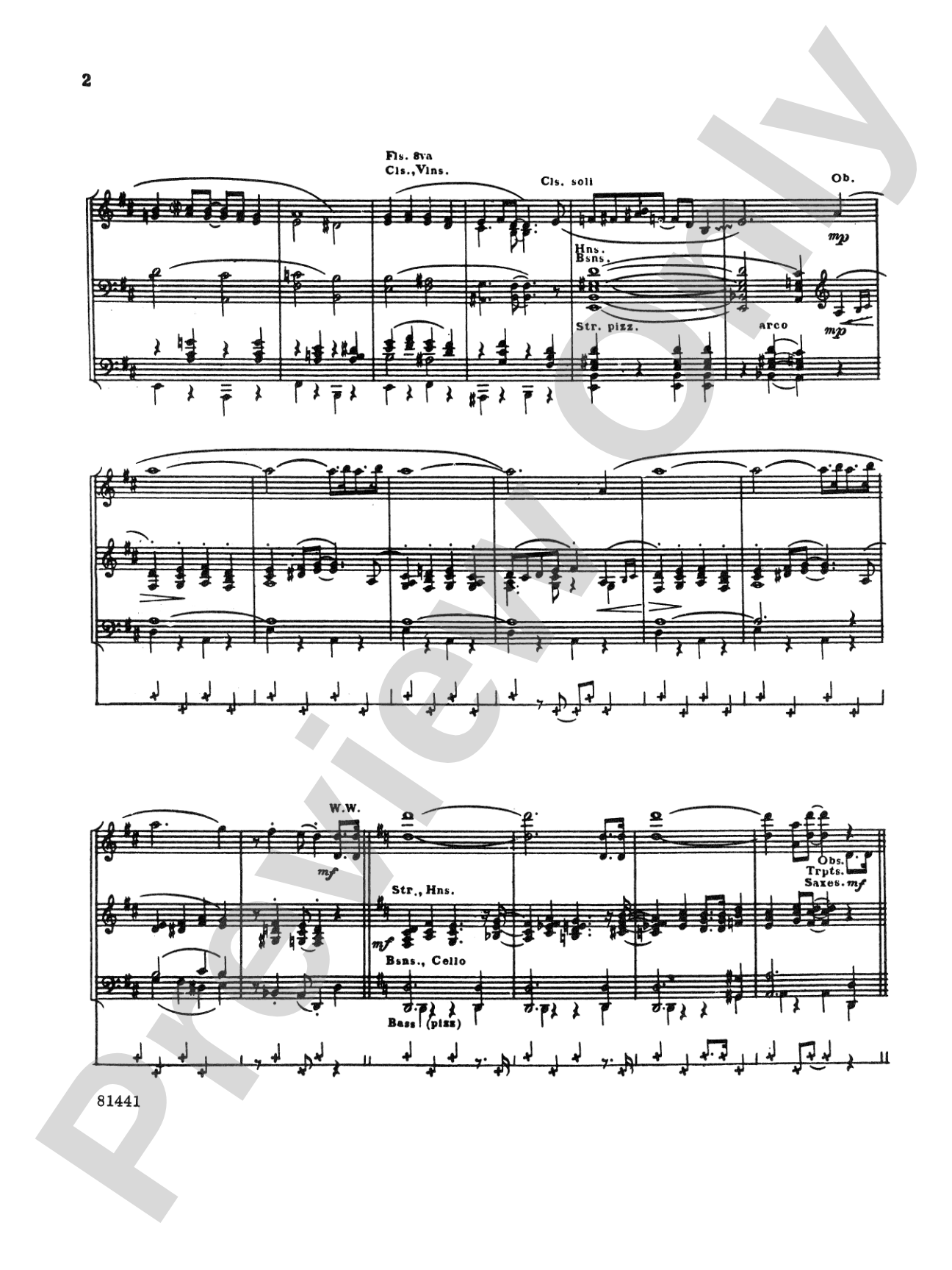
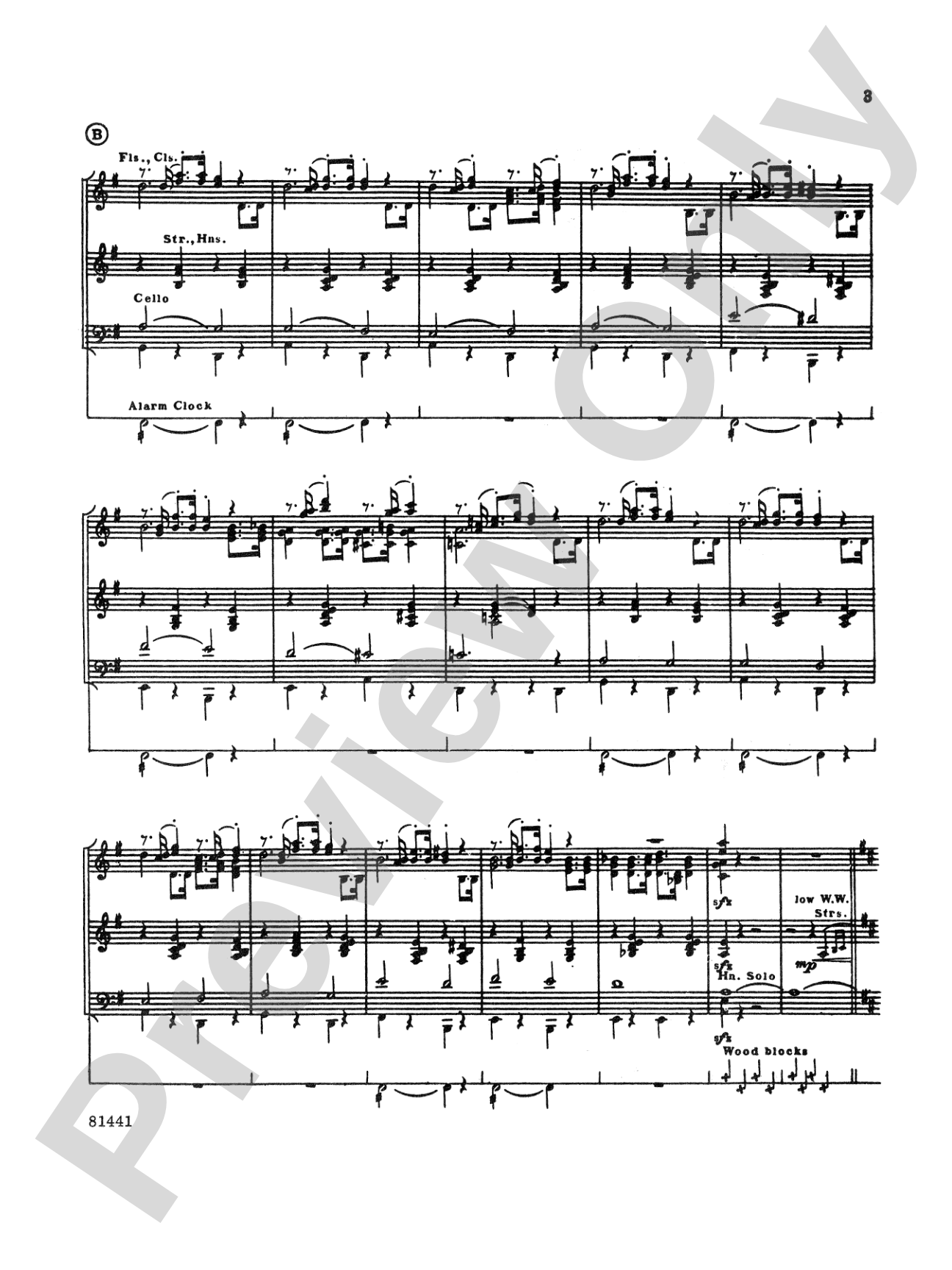
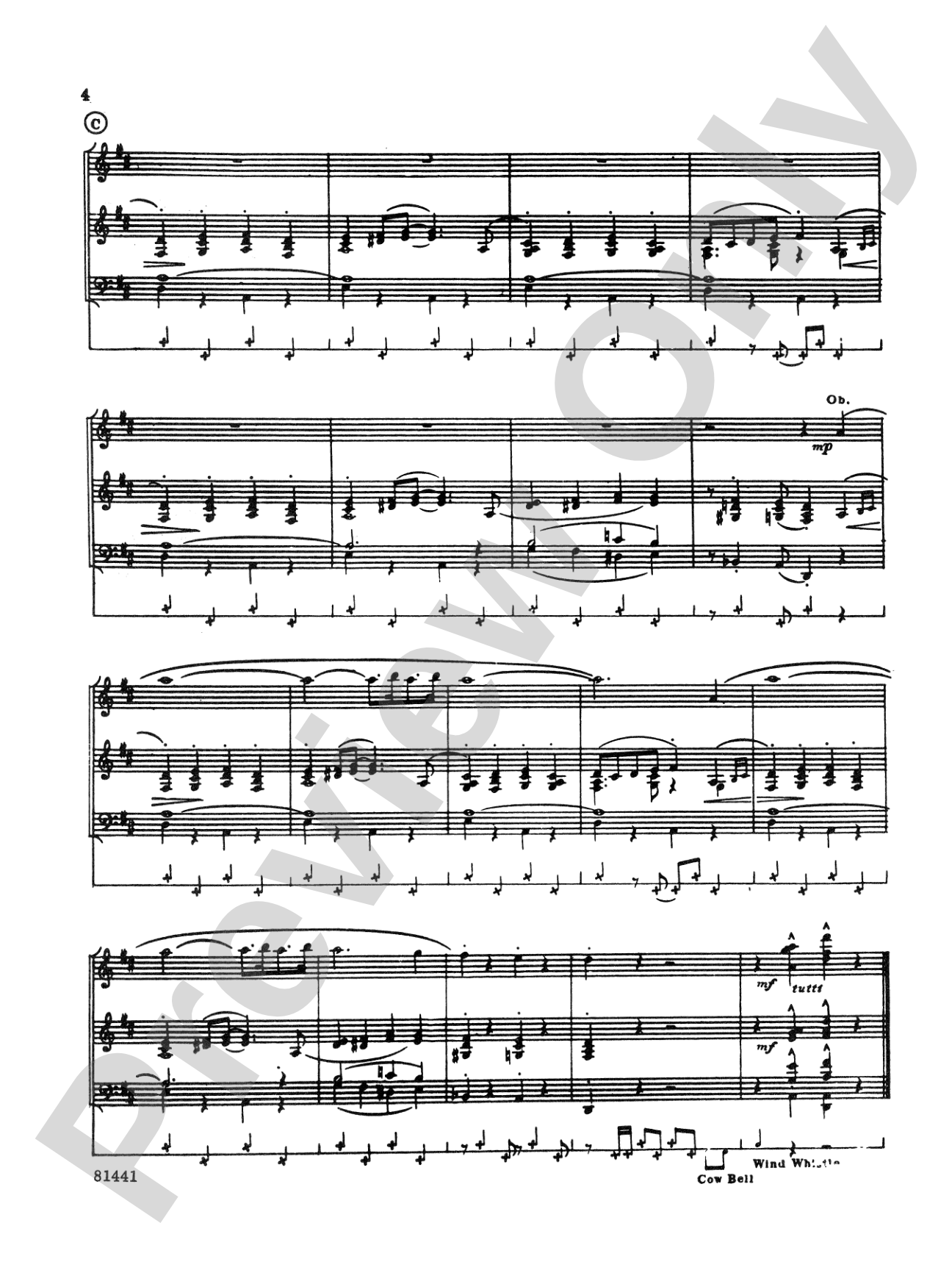



The Syncopated Clock: Full Orchestra Conductor Score & Parts
By Leroy Anderson
Grade: 3.5
Item: 00-PK-0001947

$69.00
Pickup currently not available
Buy Extra Parts (Digital PDF Download)
Parts Added to Cart!
Related Items
The Syncopated Clock: Full Orchestra Conductor Score & Parts |
$75.00
|
View | |
The Syncopated Clock: Concert Band Conductor Score & Parts |
$85.00
|
View | |
The Syncopated Clock: Guitar Quartet Conductor Score & Parts |
$14.99
|
View | |
The Syncopated Clock: Full Orchestra Conductor Score & Parts |
$75.00
|
View | |
The Syncopated Clock: Full Orchestra Conductor Score |
$10.00
|
View | |
The Syncopated Clock: Full Orchestra Conductor Score & Parts |
$66.00
|
View | |
The Syncopated Clock: Full Orchestra Conductor Score |
$9.00
|
View | |
The Syncopated Clock: Concert Band Conductor Score & Parts |
$85.00
|
View | |
The Syncopated Clock: Concert Band Conductor Score |
$9.00
|
View |
Description
All school orchestras can experience the magic of Leroy Anderson with this composition in the original version. Usable year after year.


Don't just read it, hear it, play along with it, and watch your students grow with it. In MakeMusic Cloud, The Syncopated Clock: Full Orchestra Conductor Score & Parts comes alive with professional accompaniment, adjustable tempo, and built-in practice tools that turn solo practice into real progress.
Open in the Player
Jump straight in and assign it today.
Start Your Free Trial
Open this title and explore the full library in minutes.
Sample Audio
No sample audio found.
Sample Video
No sample videos found.
Additional Details
Series:
Belwin Concert Full Orchestra
Publisher:
Alfred Music
Page Count:
110
SKU:
00-PK-0001947
More about this title
About the Composer: Leroy Anderson
Leroy Anderson (1908-1975) was an American composer and conductor whose gift for melody and orchestration made him a cornerstone of American light music. His works, built on infectious rhythms and clever instrumental effects, became staples of pops concerts and school orchestras alike. Anderson studied at Harvard and later served in World War II, but his legacy rests entirely on the wit and accessibility of his compositions, which prove that "light" music demands just as much craft as any symphonic work.
Why we love this
Anderson's genius lies in the orchestration itself. The Syncopated Clock is a piece where the arrangement *is* the composition; students hear how individual colors combine to tell a story, and conductors shape that story through balance and clarity rather than bombast. It never fails to delight audiences, and at Grade 3.5, it's genuinely playable without compromise.
What to expect
There's something irresistible about the way this piece clicks into place. The ticking of the clock becomes almost hypnotic, broken by moments of genuine warmth and humor. It's both a miniature composition and a showcase for orchestral color, moving with just enough whimsy to keep listeners smiling while demanding real musicianship from every player.
Who it's for
This score and parts set is designed for school orchestras at the intermediate level that want authentic Anderson without needing a reduction or simplified arrangement. Conductors seeking repertoire that engages audiences, challenges students musically, and remains fresh after multiple years of programming will find their answer here.
How to get the most out of it
- Keep the syncopated rhythm crisp and consistent from the opening. The piece's humor depends on rhythmic precision across all sections, especially in the woodwinds and strings during the main theme.
- Balance the solo "ticking" against the surrounding textures. Those prominent instrumental moments need to sing above the accompanying figures without overshadowing the orchestral fabric.
- Shape the melodic lines with a gentle rubato during the lyrical sections. Anderson's material rewards expressive phrasing even when the overall tempo remains steady.
- Use the full dynamic range available. The contrast between pianissimo passages and robust tutti moments is where the piece's personality emerges.
How to use it
Program this as an opener or interlude in a concert built around lighter fare, or let it anchor a "American Composers" set alongside other Anderson works. It also travels well to festivals and competitions where its technical accessibility and immediate appeal make for a strong showing without requiring extensive rehearsal investment.
Skills your students will build
- Executing syncopated rhythms across ensemble parts with rhythmic unity
- Balancing solo passages within full orchestral textures
- Responding to conductor's subtle gesture work in light, character-driven music
- Reading and performing the full range of orchestral colors and instrumental combinations