

The Stars Are with the Voyager: 2-Part Choral Octavo
Words by Thomas Hood, music by Mary Donnelly and George L. O. Strid
Item: 00-PO-0005784
$2.05
Minimum order quantity: 20 copies
Pickup currently not available
Description
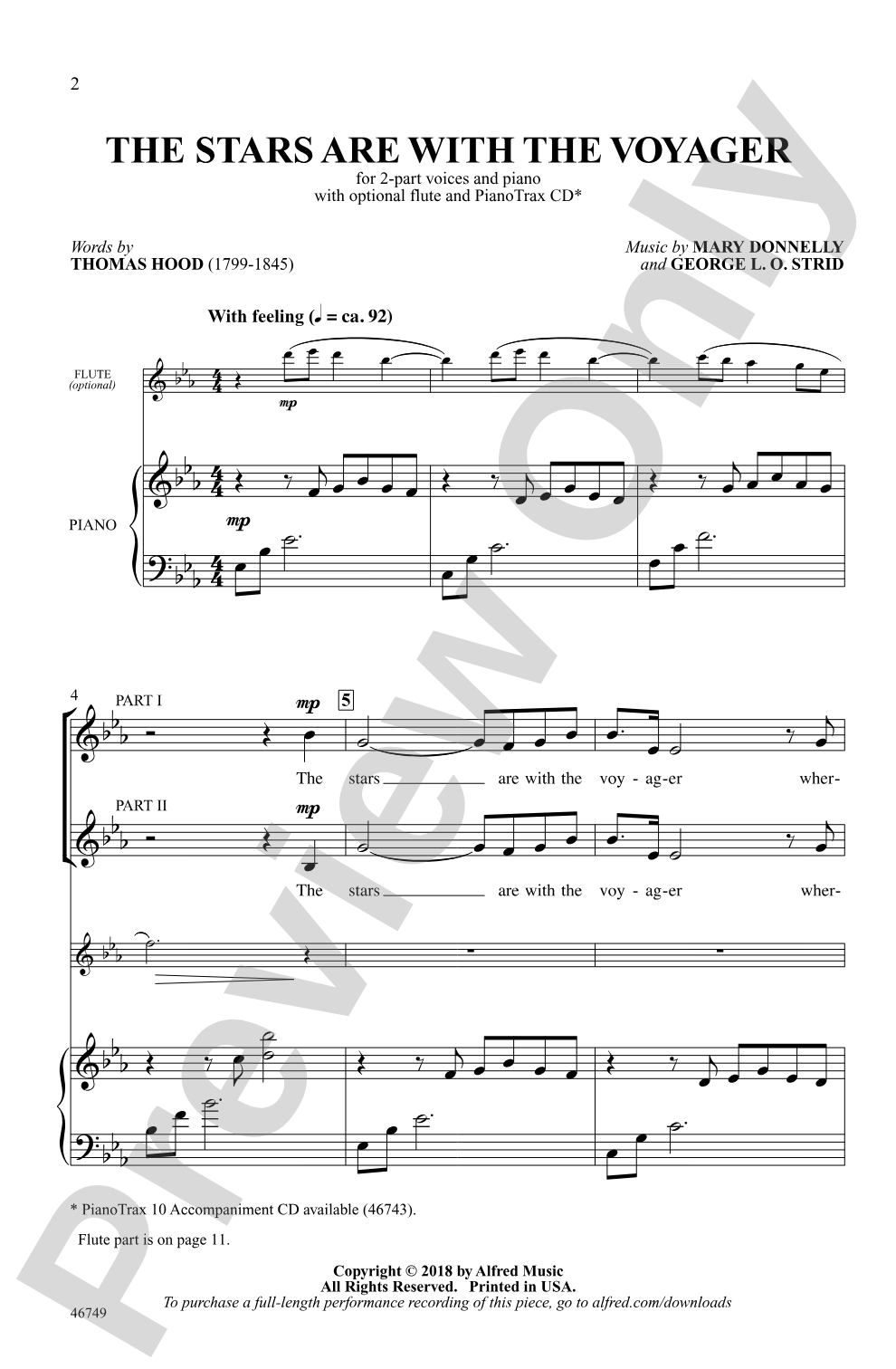
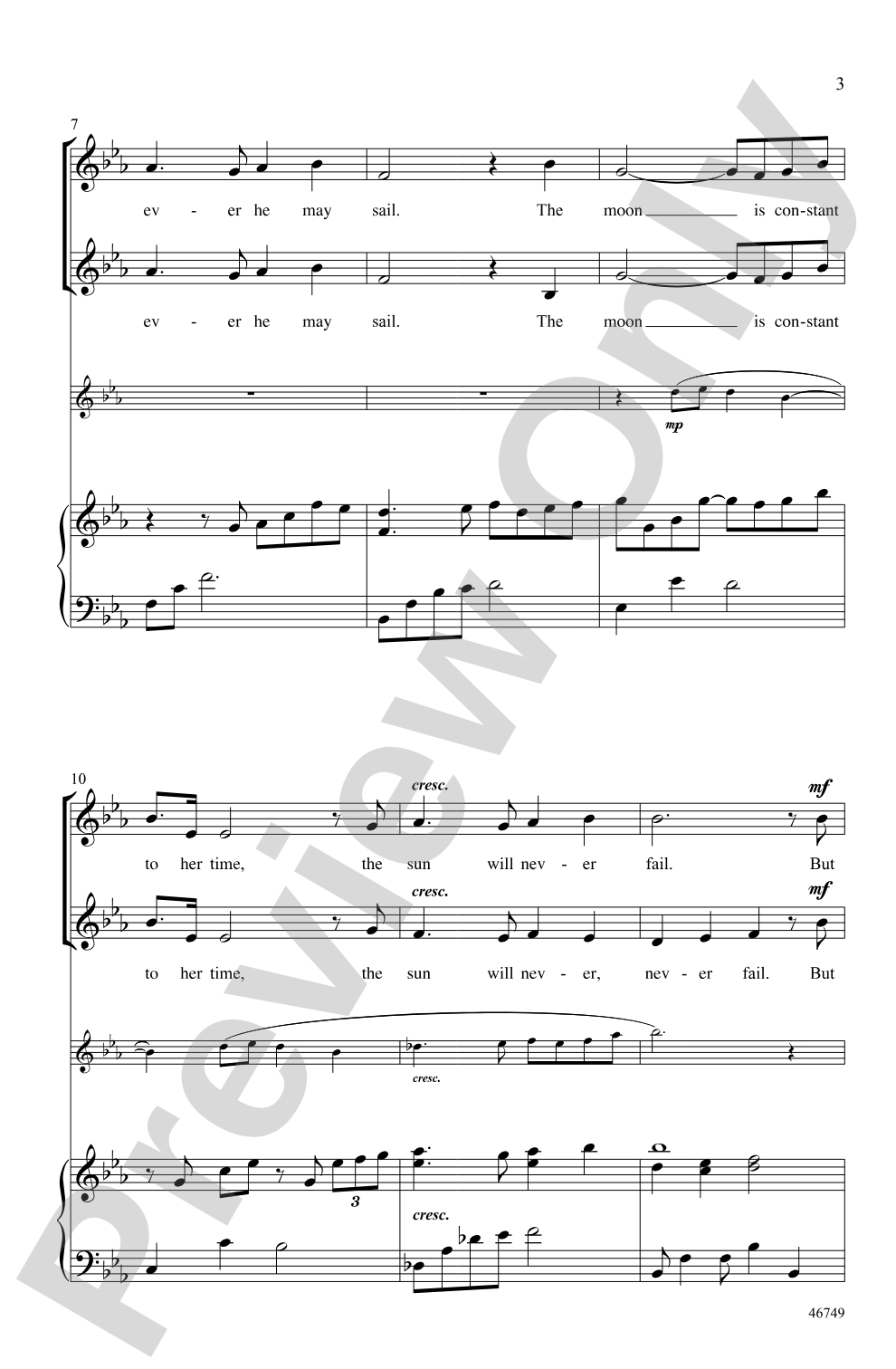
An optional flute obbligato floats dreamily above throughout this lovely treble setting of the famous poem by Thomas Hood. Both melody and harmony are written in ideal vocal ranges, and subtle changes in tempo and dynamics encourage choral artistry.


The Stars Are with the Voyager: 2-Part Choral Octavo isn't in MakeMusic Cloud just yet...but it could be. Let us know you'd like to see it, and you'll help shape what comes next. In the meantime, start a free trial and dive into thousands of interactive titles your students can play along with today.
Request This Title
Tell us you want it.
Start Your Free Trial
Explore everything that's ready to play right now.
Sample Audio
1
Audio File
--:--
0:00
0:00
Sample Video
Additional Details
Series:
Alfred Choral Designs
Publisher:
Alfred Music
Page Count:
12
SKU:
00-PO-0005784
More about this title
About the Composer: Mary Donnelly
Mary Donnelly grew up in Reno, Nevada and pursued dual degrees in English and French at the University of Nevada before discovering her passion for music education. After returning to school for music certification, she earned a Master's Degree in Education from Lesley College in Cambridge, Massachusetts, where she focused on arts integration across the curriculum. She spent three decades teaching general music and choir in the Washoe County School District, retiring as an active member of ACDA, NEA, and ASCAP.
In 1985, Donnelly began a prolific creative partnership with George L. O. Strid when their principal challenged them to write a musical for Reading Week. That collaboration launched a sustained writing career spanning over two hundred songs and twenty-five musicals. Her background in literature and language deeply informs her approach to text setting and poetic interpretation in choral music.
Why we love this
Donnelly and Strid have crafted a treble setting that honors Thomas Hood's language without overshadowing it. The optional flute obbligato adds interpretive flexibility; you can feature it as a sonic enhancement or simplify the arrangement for groups without instrumental support. The careful attention to vocal range and the marked tempo and dynamic shifts transform what could be a straightforward piece into genuine choral artistry.
What to expect
Dreamy and contemplative, with the flute drifting above like starlight itself. The piece balances accessibility with genuine artistry, creating moments of quiet beauty that reward focused listening and careful ensemble work. Subtle shifts in pace and volume invite singers to engage emotionally rather than simply produce sound.
Who it's for
Two-part choirs looking for sophisticated repertoire that respects both young voices and literary merit. This works well for middle school and high school treble ensembles, or mixed choirs wanting accessible arrangements that showcase musicianship without excessive technical demands.
How to get the most out of it
- Shape the flute obbligato as a vocalist would, breathing between phrases even though the instrument has different technical capabilities. This creates continuity with the vocal lines below.
- Attend closely to the dynamic markings and tempo shifts. These are not decorative; they deepen the emotional arc of Hood's text and keep the piece from sounding static.
- Balance the two vocal parts so harmony supports rather than overwhelms the melody. Young singers often sing in unison by default; here, independence requires careful listening and sectional work.
- Consider how the flute part interacts with rests in the vocal lines. Donnelly likely uses these moments intentionally, so let them breathe rather than rushing through silence.
How to use it
This works beautifully in a concert framed around nature, wonder, or literature. Pair it with instrumental chamber music featuring flute, or place it alongside other accessible two-part arrangements to celebrate treble voices without programming juvenile material. Its reflective quality also makes it suitable for festival programming where sophistication matters as much as difficulty level.
Skills your students will build
- Two-part independence and harmonic listening
- Vocal line shaping with dynamic nuance
- Text expression rooted in poetry and imagery
- Ensemble balance between vocal and optional instrumental lines
- Sustaining legit phrases across optional tempo variations