
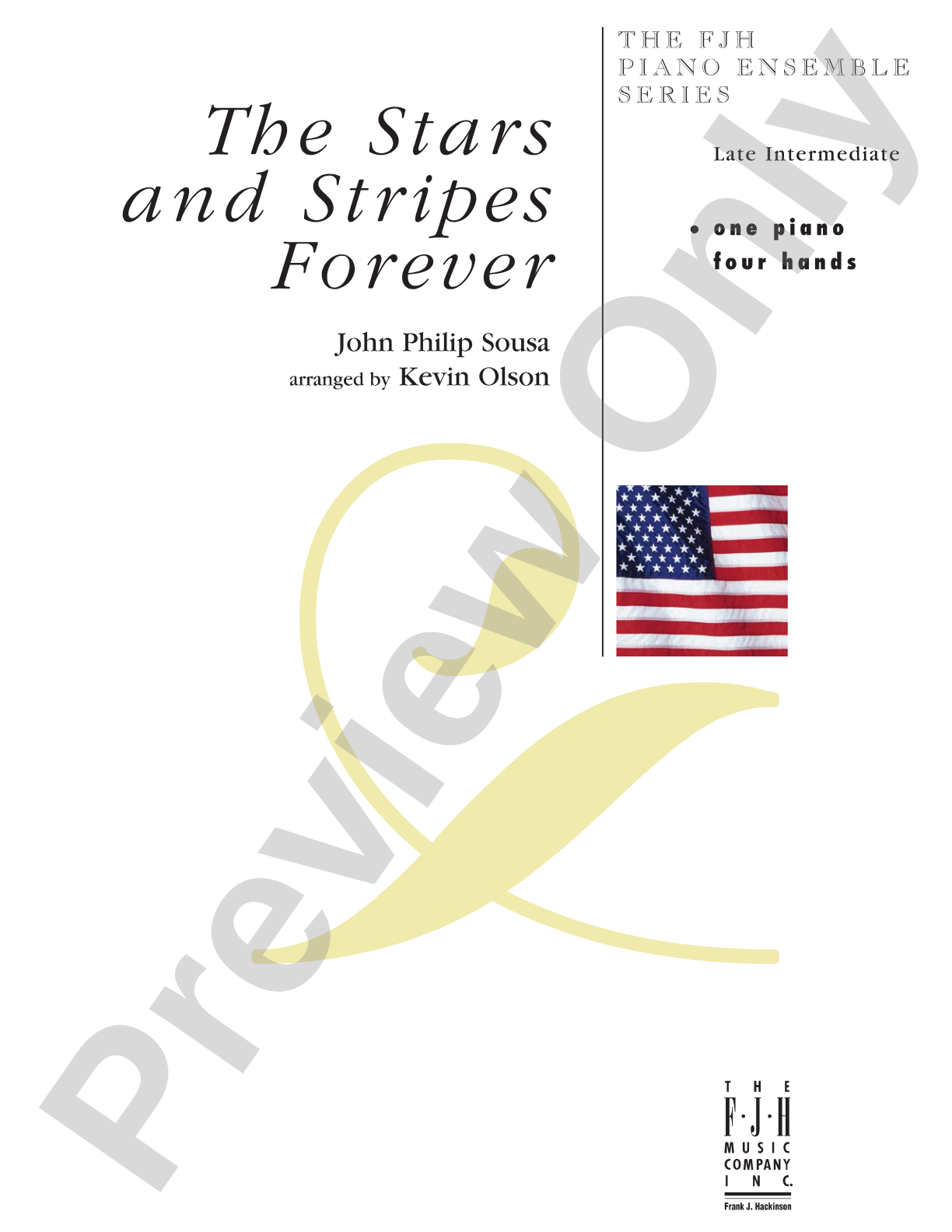

The Stars and Stripes Forever: Piano
By John Philip Sousa / arr. Kevin Olson
Item: 98-DE1015
$5.95
Pickup currently not available
Description
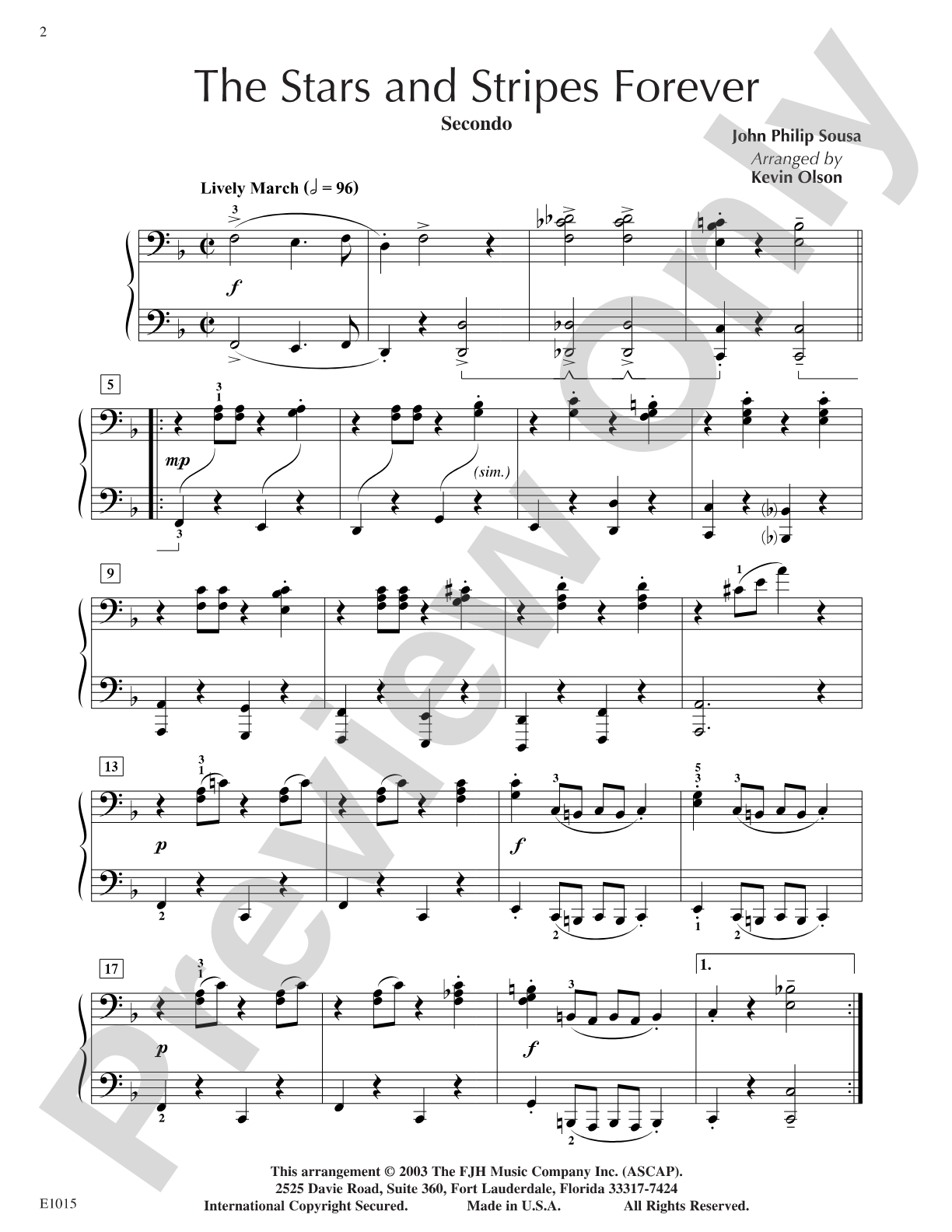
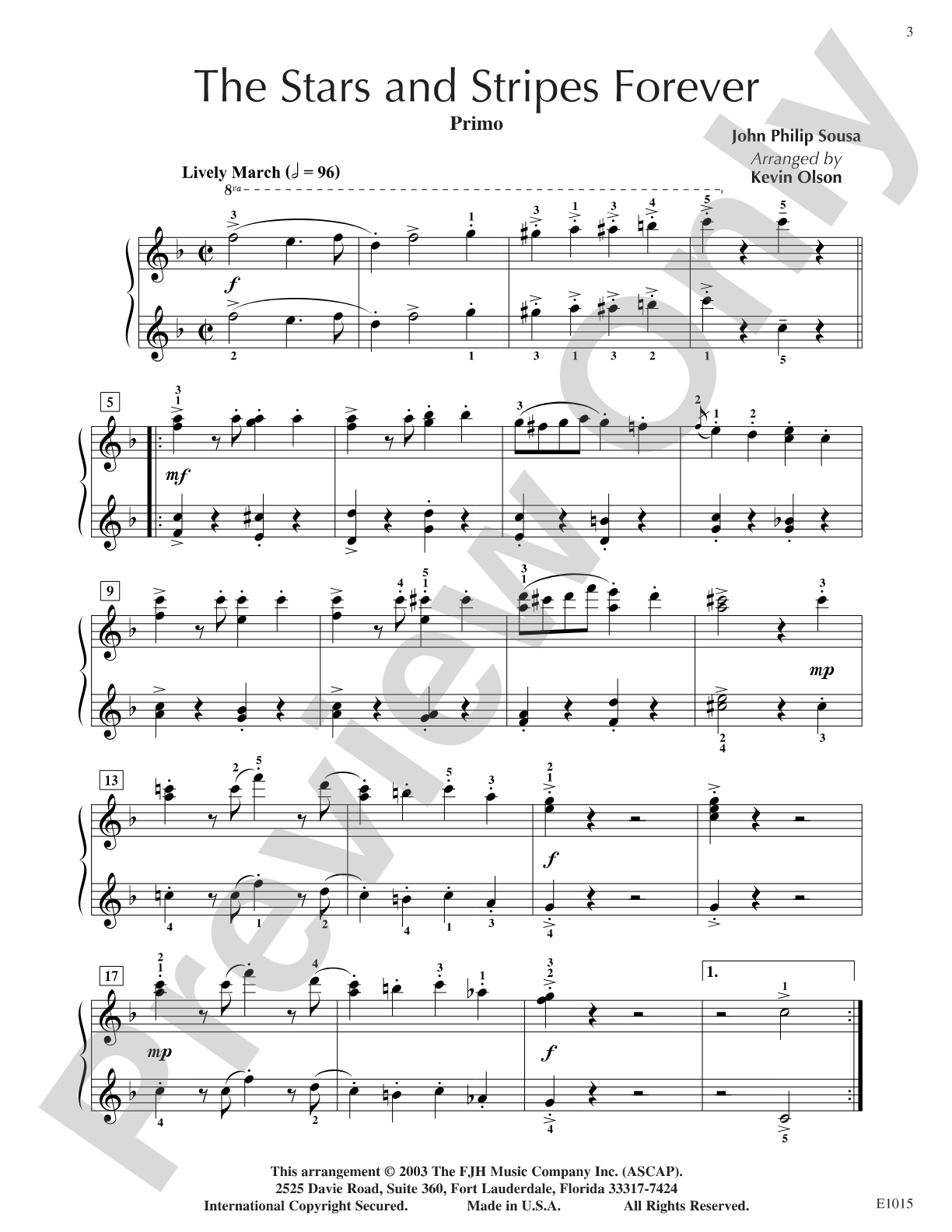
This stirring arrangement of The Stars and Stripes Forever, one of the best-loved patriotic tunes in American history, will be a recital favorite for years to come. Using rich, traditional harmonies, this duet is for one piano, four hands. Dynamic, expressive, yet pianistic, this piece is recommended for the teenager or adult because of the abundant use of octaves throughout.


The Stars and Stripes Forever: Piano isn't in MakeMusic Cloud just yet...but it could be. Let us know you'd like to see it, and you'll help shape what comes next. In the meantime, start a free trial and dive into thousands of interactive titles your students can play along with today.
Request This Title
Tell us you want it.
Start Your Free Trial
Explore everything that's ready to play right now.
Sample Audio
No sample audio found.
Sample Video
No sample videos found.
Additional Details
Series:
The FJH Piano Ensemble Series
Publisher:
The FJH Music Company, Inc.
SKU:
98-DE1015
More about this title
About the Composer: John Philip Sousa
John Philip Sousa (1854-1932) shaped American concert music as a composer and conductor whose marches became synonymous with patriotic celebration. His gift for melody, harmonic sophistication, and orchestral color established him as one of the most performed composers in the nation, and his works remain central to band and ensemble literature worldwide.
Beyond his role as America's March King, Sousa was a skilled arranger who understood how to adapt his own compositions across instrumental combinations. His arrangements preserve the integrity and emotional weight of his originals while opening them to different performance contexts and audience sizes.
Why we love this
This four-hand arrangement captures the swagger and grandeur of Sousa's most iconic march while making it genuinely pianistic rather than a mechanical transcription. The octave writing sits naturally under the hands, demanding technical confidence without feeling like a finger exercise, and the harmonic richness maintains the piece's ceremonial weight in an intimate setting.
What to expect
The march unfolds with unmistakable dignity and forward momentum, propelled by steady rhythmic confidence and supported by warm harmonic colors. You feel the ceremonial occasion in every phrase, hearing Sousa's original orchestral brilliance reimagined for the piano's particular capacities.
Who it's for
Teenage and adult pianists with solid octave technique and comfortable sight-reading skills will find this arrangement accessible yet rewarding. It works well for duet recitals, community concert programming, and pianists seeking substantial patriotic repertoire that respects both the music's ceremonial importance and pianistic integrity.
How to get the most out of it
- Balance the octaves between primo and secondo hands so they blend as a single voice rather than competing. Achieve this through careful attention to tone quality and pedal use, not by one hand sitting back dynamically.
- Shape the melodic material across both parts as if conducted by a single musician. Mark phrase breathing points for both players and use those moments to reset tempo and energy together.
- Let the march rhythm drive the piece forward without rushing. The ceremonial character depends on a steady, confident pulse that feels inevitable rather than pushed.
- Coordinate pedal changes between both players, especially through harmonic shifts and during the rich chordal passages. A shared pedal strategy prevents muddiness while preserving the full harmonic color Olson has written.
How to use it
Program this as a concert opener or closing number when patriotic programming is appropriate, or feature it on a duet recital alongside other American classics. Its substantial character and immediate audience recognition make it ideal for civic celebrations, Independence Day performances, or mixed recitals where you need a piece that lands with both musical and cultural weight.
Skills your students will build
- Octave passage work and hand independence
- Balancing duet voices while maintaining unified phrasing
- Coordinated pedaling between two players
- Stylistic control of march rhythm and ceremonial character
- Harmonic awareness and color through four-hand writing