
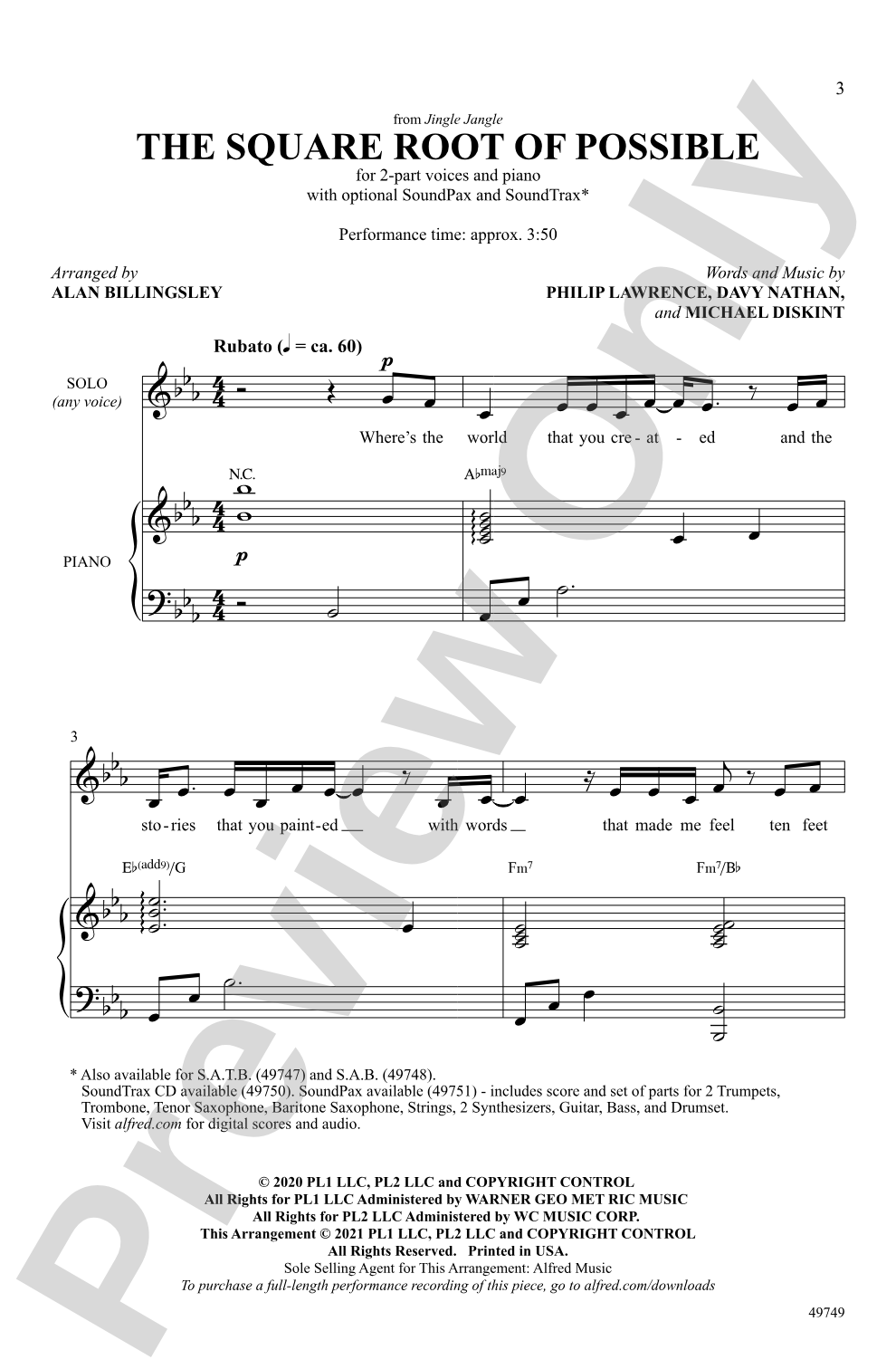
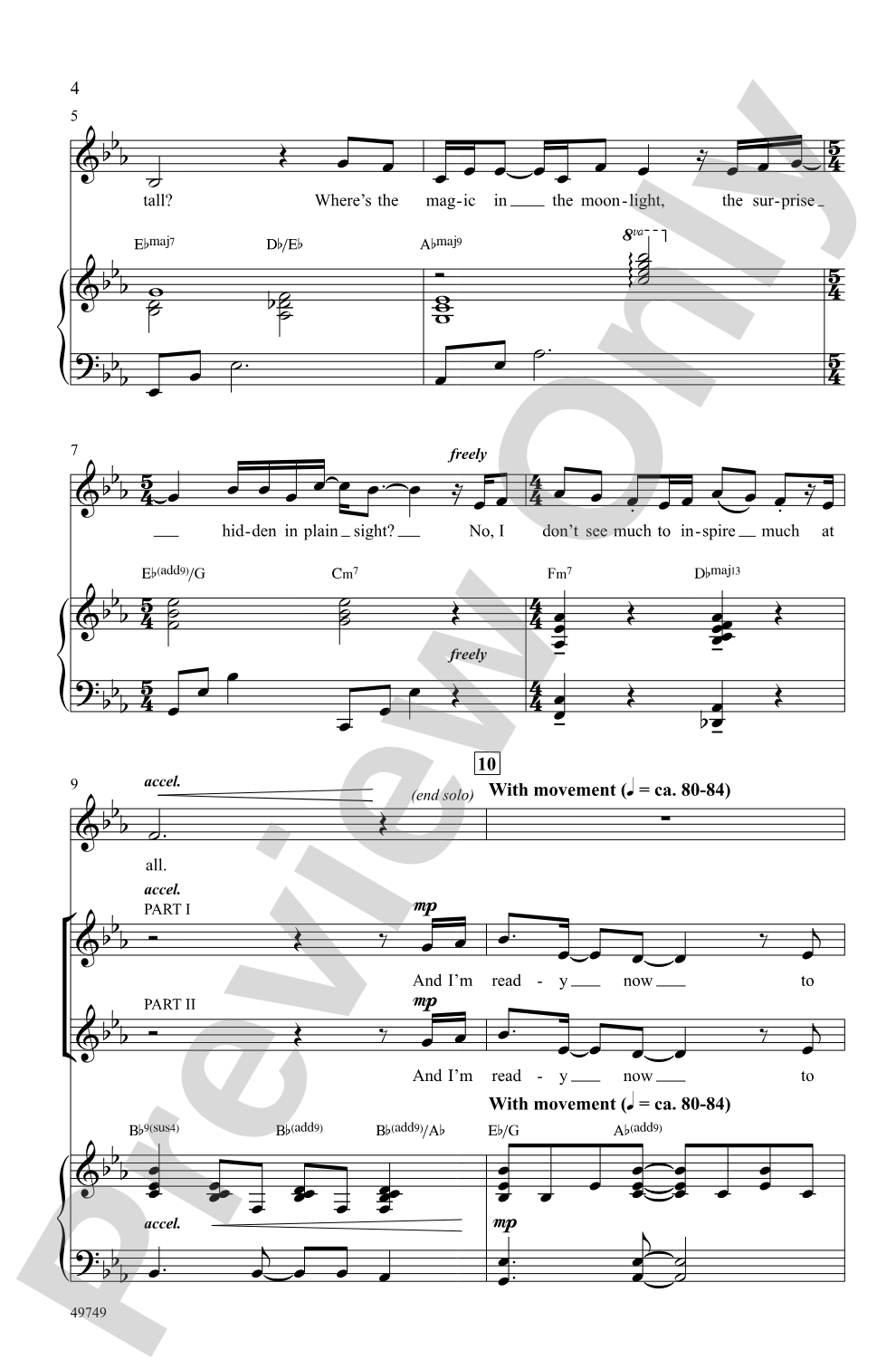
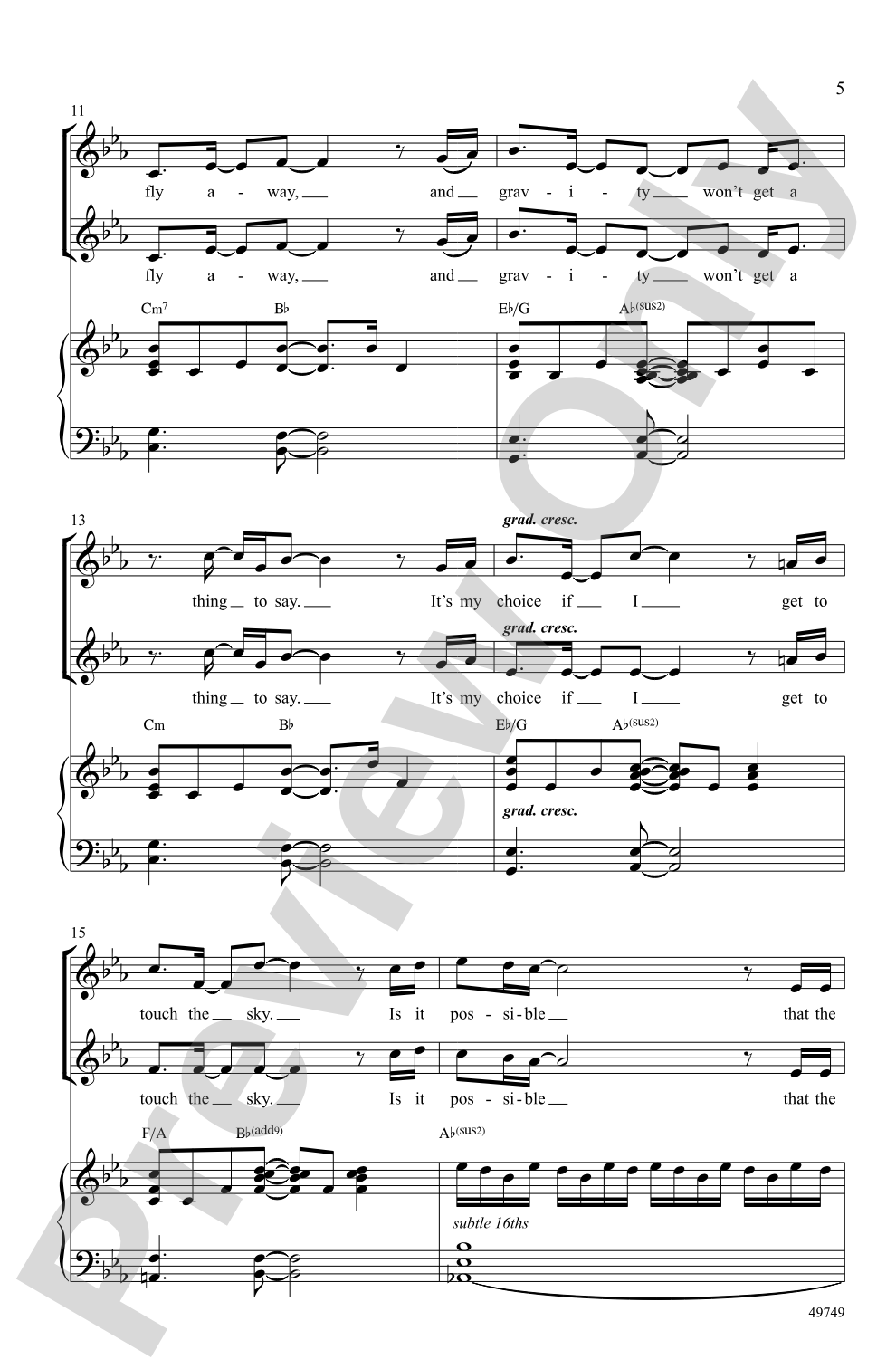

The Square Root of Possible: 2-Part Choral Octavo
from Jingle Jangle
Words and music by Philip Lawrence, Davy Nathan, and Michael Diskint / arr. Alan Billingsley
Item: 00-PO-0006945
$2.25
Minimum order quantity: 20 copies
One moment…
Related Items
The Square Root of Possible: SoundTrax Digital Audio Download |
$29.99
|
View | |
The Square Root of Possible: SATB Choral Octavo |
$2.25
|
View | |
The Square Root of Possible: SATB Choral Octavo |
$2.25
|
View | |
The Square Root of Possible: SAB Choral Octavo |
$2.25
|
View | |
The Square Root of Possible: SAB Choral Octavo |
$2.25
|
View | |
The Square Root of Possible: 2-Part Choral Octavo |
$2.25
|
View | |
The Square Root of Possible: Choral SoundPax |
$60.00
|
View | |
The Square Root of Possible: SATB Choral Octavo |
$2.25
|
View | |
The Square Root of Possible: SAB Choral Octavo |
$2.25
|
View | |
The Square Root of Possible: 2-Part Choral Octavo |
$2.25
|
View | |
The Square Root of Possible: Choral Octavo SoundTrax CD |
$29.99
|
View | |
The Square Root of Possible: Choral SoundPax |
$60.00
|
View |
Description
"The square root of impossible is possible in me." Here's an empowering musical theater-style anthem with an up-to-date sound. This captivating song from the Netflix Christmas musical fantasy Jingle Jangle captures a joyfully adventurous spirit with lyrics that are not holiday-specific, so you can program it year-round! Three well-conceived choral voicings invite all types of groups to program this uplifting powerhouse as their big entrance, grand finale, or spotlight feature. Perform with piano alone, the sparkling SoundTrax audio, or the fully rendered SoundPax orchestration. This title is available in MakeMusic Cloud.


The Square Root of Possible: 2-Part Choral Octavo isn't in MakeMusic Cloud just yet...but it could be. Let us know you'd like to see it, and you'll help shape what comes next. In the meantime, start a free trial and dive into thousands of interactive titles your students can play along with today.
Request This Title
Tell us you want it.
Start Your Free Trial
Explore everything that's ready to play right now.
Sample Audio
1
Audio File
--:--
0:00
0:00
Sample Video
Additional Details
Series:
Alfred Pop Choral Series
Publisher:
Alfred Music
Page Count:
16
SKU:
00-PO-0006945
More about this title
About the Composer: Philip Lawrence
Philip Lawrence is a composer and songwriter known for his work in musical theater and film. He has crafted music for major theatrical productions and screen projects, bringing contemporary energy and emotional depth to his compositions. His gift for writing singable melodies paired with meaningful lyrics has made his work accessible to performers and audiences across age groups and skill levels.
Why we love this
Alan Billingsley's 2-part voicing opens this piece to mixed ensembles of all experience levels without sacrificing the song's theatrical punch. The lyrics sidestep holiday specificity entirely, making it genuinely programmable across your entire calendar. Its entrance-or-finale energy and contemporary sound give choirs a modern alternative to the repertoire standard for special moments.
What to expect
The piece radiates forward momentum and confidence, driven by lyrics that celebrate inner strength and possibility. Its musical theater DNA shows in the conversational phrasing and uplifting harmonic movement, creating an experience that feels both current and genuinely inspiring to sing.
Who it's for
This octavo works for choirs ranging from high school mixed groups and treble choirs to community ensembles seeking accessible yet impactful contemporary material. The 2-part voicing makes it ideal for groups with limited advanced singers while remaining engaging for stronger sections.
How to get the most out of it
- Build the dynamic arc deliberately. The piece gains power through accumulation, so establish clear contrast between verses and the full statement of the anthem.
- Balance the two vocal lines so neither dominates. The arrangement's effectiveness depends on both parts being heard with equal clarity.
- Let the accompaniment choice shape your rehearsal strategy. If using the full SoundPax orchestration, lock your ensemble to its groove early; if going piano-only, control your own tempo and phrasing shape.
How to use it
This is your answer when you need a show-stopping opener or closer that energizes an audience without leaning on December holidays. Program it alongside other contemporary choral works to signal your ensemble's range, or use it as a solo feature that lets your singers step into the spotlight with material that suits their voices.
Skills your students will build
- Singing contemporary harmonic idioms with clear voice leading in 2-part texture
- Performing with recorded accompaniment (SoundTrax and SoundPax) while maintaining ensemble precision
- Interpreting theatrical material with appropriate phrasing and dynamic contrast
- Sustaining lyrical intensity through a through-composed arc