

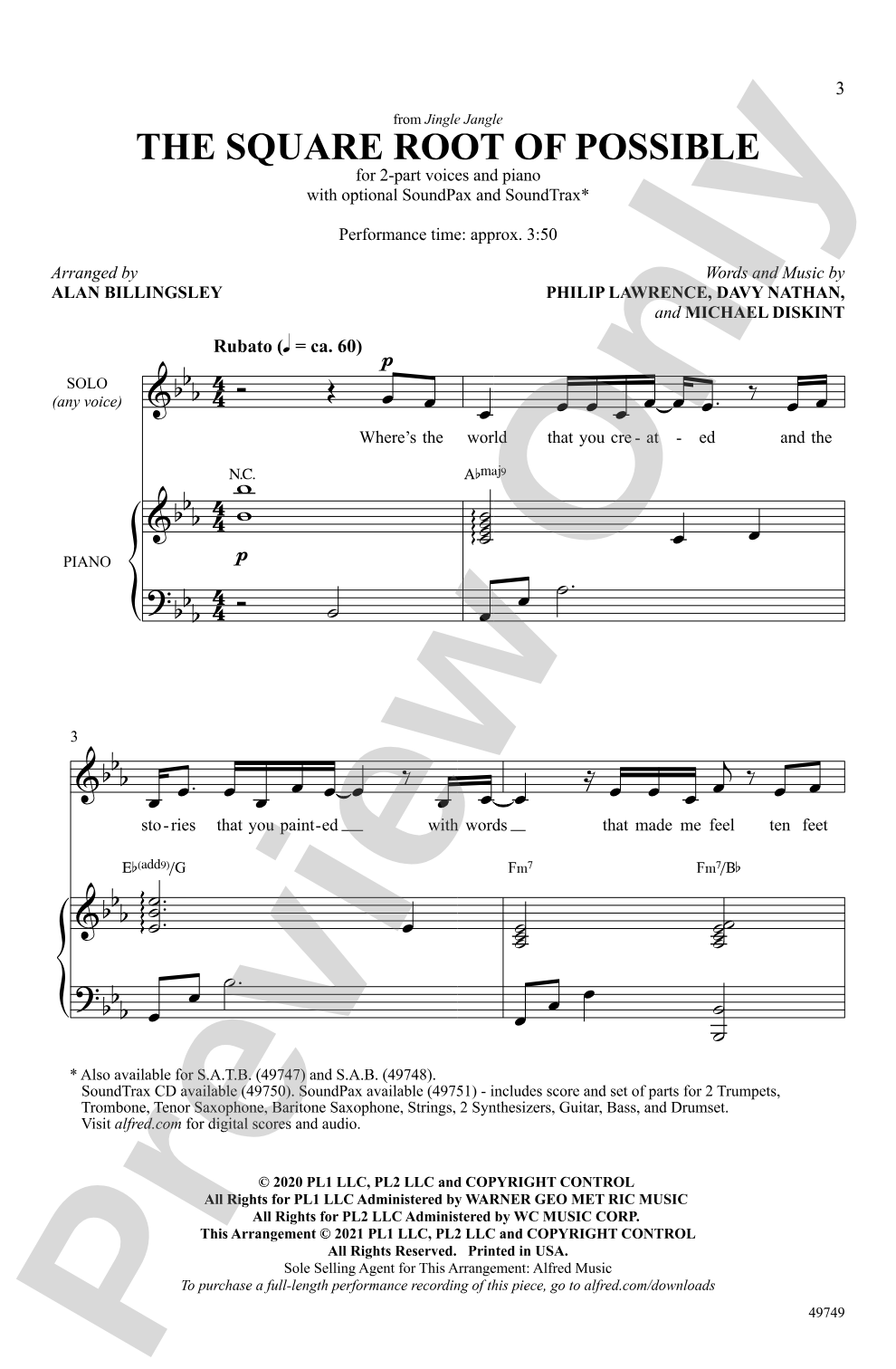
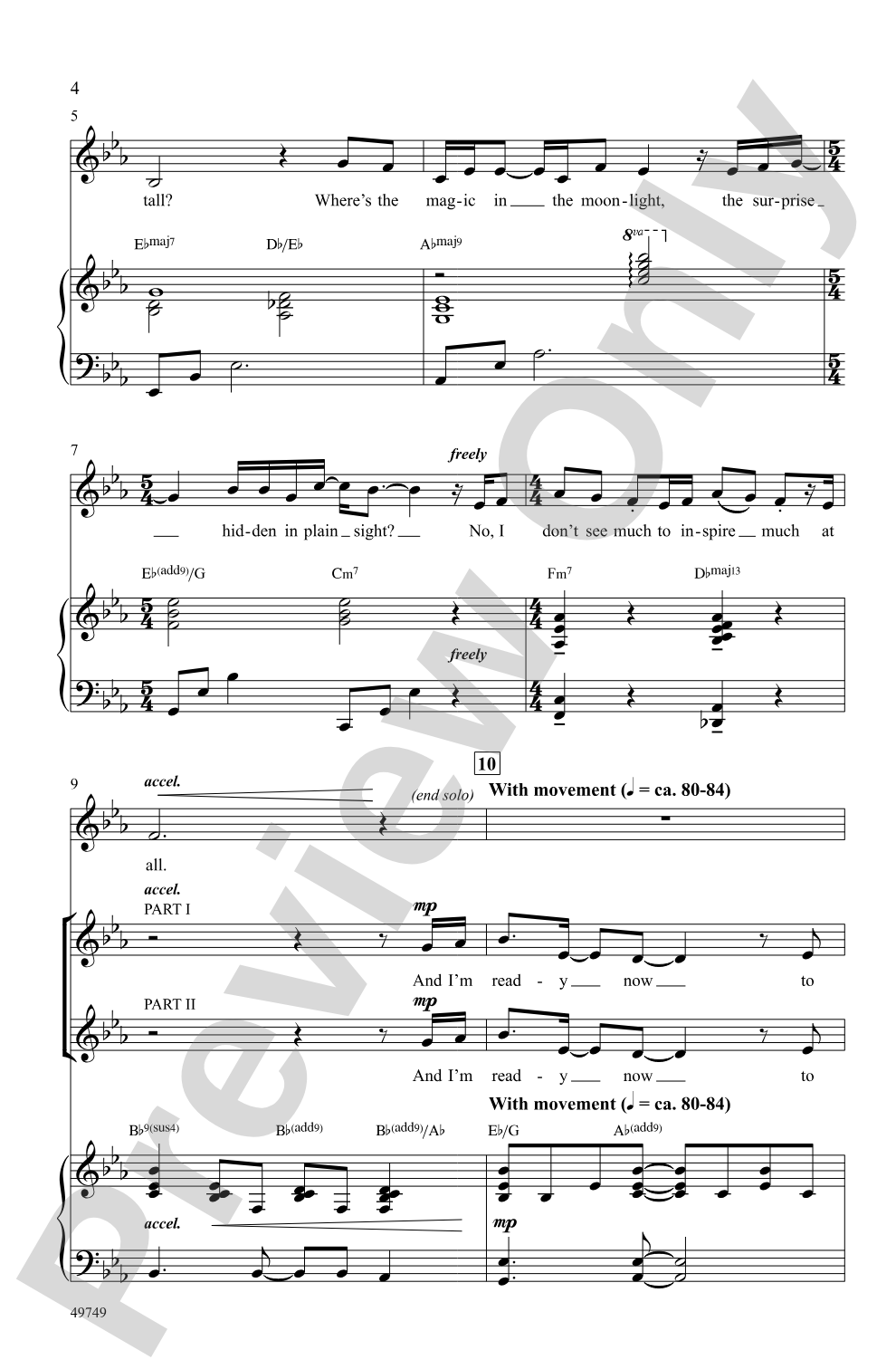

The Square Root of Possible: 2-Part Choral Octavo
from Jingle Jangle
Words and music by Philip Lawrence, Davy Nathan, and Michael Diskint / arr. Alan Billingsley
Item: 00-PO-0006842
$2.25
Minimum order quantity: 20 copies
One moment…
Related Items
The Square Root of Possible: SoundTrax Digital Audio Download |
$29.99
|
View | |
The Square Root of Possible: SATB Choral Octavo |
$2.25
|
View | |
The Square Root of Possible: SATB Choral Octavo |
$2.25
|
View | |
The Square Root of Possible: SAB Choral Octavo |
$2.25
|
View | |
The Square Root of Possible: SAB Choral Octavo |
$2.25
|
View | |
The Square Root of Possible: 2-Part Choral Octavo |
$2.25
|
View | |
The Square Root of Possible: Choral SoundPax |
$60.00
|
View | |
The Square Root of Possible: SATB Choral Octavo |
$2.25
|
View | |
The Square Root of Possible: SAB Choral Octavo |
$2.25
|
View | |
The Square Root of Possible: 2-Part Choral Octavo |
$2.25
|
View | |
The Square Root of Possible: Choral Octavo SoundTrax CD |
$29.99
|
View | |
The Square Root of Possible: Choral SoundPax |
$60.00
|
View |
Description
"The square root of impossible is possible in me." Here's an empowering musical theater-style anthem with an up-to-date sound. This captivating song from the Netflix Christmas musical fantasy Jingle Jangle captures a joyfully adventurous spirit with lyrics that are not holiday-specific, so you can program it year-round! Three well-conceived choral voicings invite all types of groups to program this uplifting powerhouse as their big entrance, grand finale, or spotlight feature. Perform with piano alone, the sparkling SoundTrax audio, or the fully rendered SoundPax orchestration. This title is available in MakeMusic Cloud.


The Square Root of Possible: 2-Part Choral Octavo isn't in MakeMusic Cloud just yet...but it could be. Let us know you'd like to see it, and you'll help shape what comes next. In the meantime, start a free trial and dive into thousands of interactive titles your students can play along with today.
Request This Title
Tell us you want it.
Start Your Free Trial
Explore everything that's ready to play right now.
Sample Audio
1
Audio File
--:--
0:00
0:00
Sample Video
Additional Details
Series:
Alfred Pop Choral Series
Publisher:
Alfred Music
Page Count:
16
SKU:
00-PO-0006842
More about this title
About the Composer: Philip Lawrence
Philip Lawrence is a composer and lyricist whose work spans film, television, and musical theater. He earned Grammy recognition for his contributions to the Jingle Jangle soundtrack and has built a reputation for crafting songs with emotional directness and contemporary sensibility. His music often centers on themes of resilience and self-discovery, delivered through melodies that feel both fresh and singable.
Why we love this
This arrangement captures the defiant optimism of the original without ever feeling saccharine. Alan Billingsley's voicing for two-part voices is genuinely musical, with real harmonic interest that doesn't condescend to younger or developing singers. The piece works equally well as a confidence-building opener, a powerful finale, or a showcase moment in the middle of a concert.
What to expect
Bright, purposeful, and charged with the kind of energy that comes from believing in yourself. The melody sits naturally in the voice and resists cliché, supported by harmonies that feel modern but not overly complicated. There's joy here, but it's earned, not artificial.
Who it's for
Any choir with singers who can handle contemporary rhythms and want to perform something with genuine emotional stakes. Two-part voicing makes this accessible to middle school groups, younger high school ensembles, or mixed groups with limited rehearsal time. The arrangement also works for middle or high school choirs that want a spotlight number with real musicality.
How to get the most out of it
- Lean into the theatrical quality without oversinging. The lyrics do the lifting; let the choir commit to the message rather than forcing volume.
- If you're using the recorded accompaniment, take time in rehearsal to find where your ensemble sits rhythmically. This song has a modern, slightly syncopated feel that needs to sit comfortably in the singers' bodies.
- Balance the two parts so neither drowns out the melody. Billingsley's arrangement uses the lower voices for support, but they should remain audible.
- Consider your entrance staging carefully. With lyrics about possibility and strength, this piece invites physical commitment from your singers. Stillness or movement both work, but choose intentionally.
How to use it
Program this as your opening number to set a confident, optimistic tone for the entire concert. It also makes a stirring finale, especially in spring concerts where themes of growth and possibility resonate. The non-holiday-specific lyrics mean you can feature it in fall or spring performances without feeling out of season.
Skills your students will build
- Singing contemporary rhythmic patterns with accuracy and style
- Balancing two-part harmony with clear text projection
- Connecting emotional content of lyrics to vocal performance
- Responding to dynamic and textural cues in arranged choral writing