The Southeast Sixstep Cover Image

The Southeast Sixstep: Jazz Ensemble Conductor Score & Parts

$60.00 USD
Sale price  $60.00 USD Regular price 
Skip to product information
The Southeast Sixstep Cover Image

The Southeast Sixstep: Jazz Ensemble Conductor Score & Parts

By Eric Richards

Grade: 5 (Advanced / Difficult)

Item: 00-30661

$60.00
Shipped

One moment…

Description
Composer Eric Richards offers a creative, challenging and effective original in 6/4 time, with a straight eighth groove that moves into a swing feel, but still in 6. You'll discover that this chart feels great in 6 with features such as a sax soli, solo space for tenor sax and trumpet 2, lots of ensemble shout chorus, and lead trumpet range to written C, above the staff. An excellent chart with a hint of Metheny. (7:26)

The Southeast Sixstep: Jazz Ensemble Conductor Score & Parts isn't in MakeMusic Cloud just yet...but it could be. Let us know you'd like to see it, and you'll help shape what comes next. In the meantime, start a free trial and dive into thousands of interactive titles your students can play along with today.

Sample Pages

Sample Audio
0:00
0:00
Sample Video
Additional Details
Series: Premier Jazz Series
Publisher: Alfred Music
Page Count: 92
UPC: 038081343440
SKU: 00-30661

More about this title

About the Composer: Eric Richards
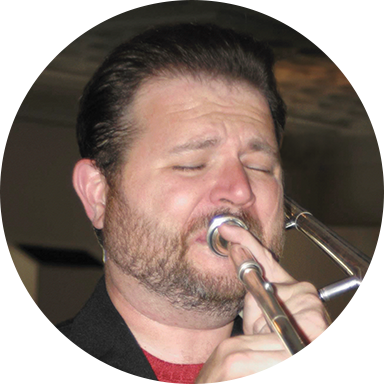
Eric Richards

Eric Richards brings decades of experience across composition, arranging, conducting, and performance to his work at the University of Nebraska-Lincoln School of Music, where he serves on the composition faculty. His music has been commissioned and performed by prestigious ensembles including the US Army Field Band, National Symphony Orchestra, Boston Pops Orchestra, and USAF Airmen of Note, with performances at Carnegie Hall, Montreux Jazz Festival, Nice Jazz Festival, and the North Sea Jazz Festival. Richards spent twenty years (1984–2004) as composer and arranger with the US Army Field Band, a period that shaped his distinctive voice across multiple genres and instrumental combinations.

Why we love this

Richards writes for what your ensemble can actually do while pushing them forward musically. The 6/4 meter never feels forced; it emerges as the natural home for this chart's groove, and the balance between straight eighths and swing phrasing gives students a real rhythmic puzzle to solve together. High-level writing that sounds as good as it is challenging.

What to expect

A groove that settles into 6 with surprising naturalness, then pulls you into swing without losing that foundation. Richards hints at Pat Metheny's harmonic sensibility, creating a sound that's both modern and rooted in jazz tradition. The sax soli and solo space give it personality; the shout choruses give it punch.

Who it's for

Advanced jazz ensembles ready for Grade 5 complexity and musicians mature enough to navigate metric ambiguity without losing ensemble cohesion. This chart rewards sections with strong fundamentals and directors willing to spend time on the unique rhythmic character Richards has created.

How to get the most out of it

  • Lock the ensemble's sense of 6 before rehearsing the swing sections. Have the rhythm section feel the 6/4 pulse internally even when the melody shifts into swing phrasing; this prevents the chart from collapsing into straight 4/4.
  • Balance the sax soli so the section feels unified but each voice articulates with clarity. This is where your saxophone section shows what it can do.
  • Give the tenor sax and trumpet 2 soloists space to breathe during their sections. These aren't just featured moments; they're opportunities for individual voices to shine within the ensemble context.
  • Approach the lead trumpet range (written to C above the staff) as a musical statement, not a technical display. Confidence and tone matter more than speed through that register.

How to use it

Feature this on a jazz festival or concert where you want to showcase your ensemble's rhythmic sophistication and individual soloists. It pairs well with more traditional swing charts, providing contrast through its metric distinctiveness while maintaining that crowd-pleasing energy.

Skills your students will build

  • Reading and maintaining 6/4 meter while navigating swing feel
  • Balancing rhythmic precision with expressive phrasing in contemporary jazz
  • Executing sax soli with sectional unity and articulation clarity
  • Comping and rhythm section interplay in non-standard meters
  • Solo improvisation and featured voice writing within ensemble context
  • Lead trumpet range extension and tone production at the top of the staff

You May Also Like