
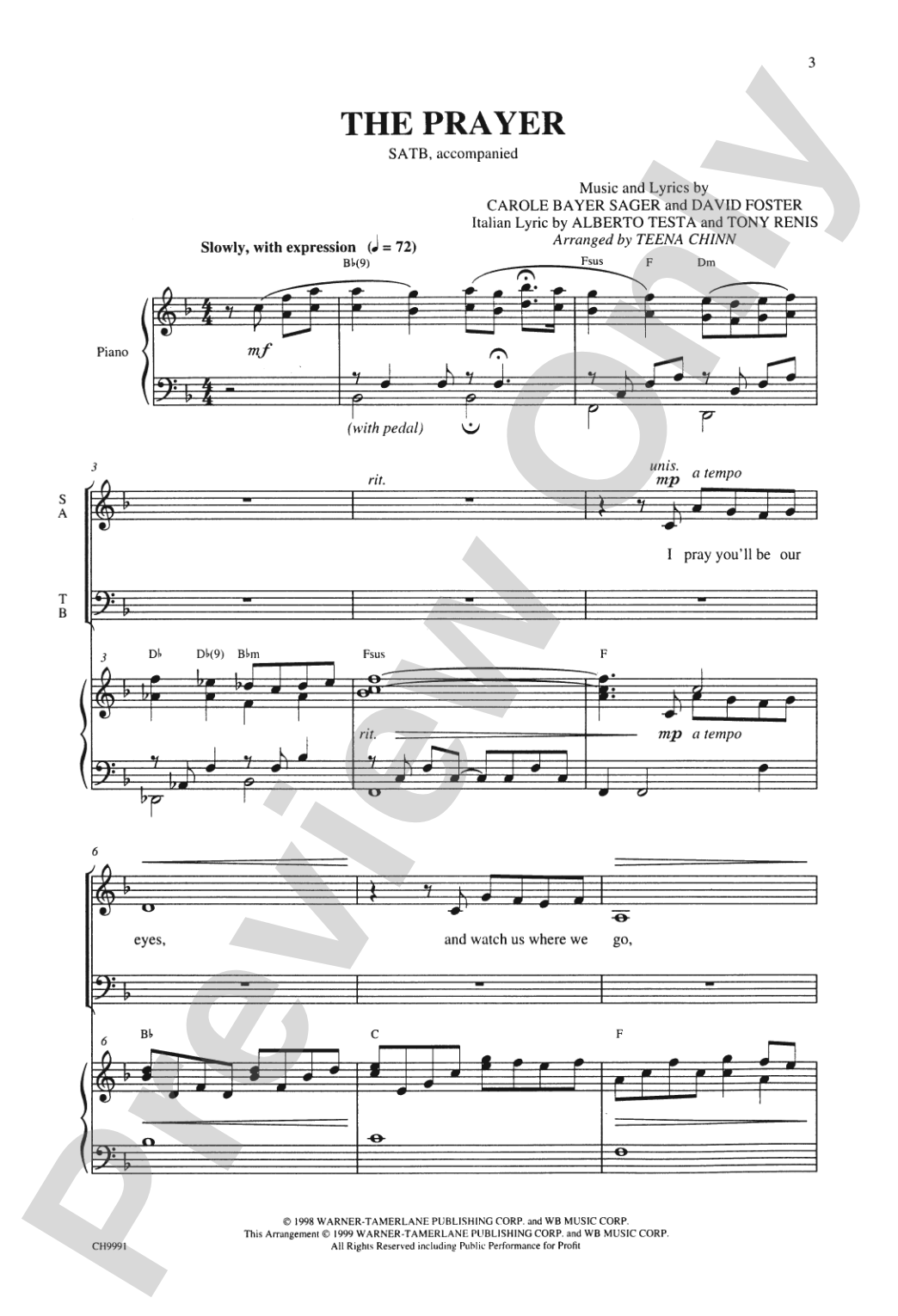

The Prayer (from Quest for Camelot™): SATB Choral Octavo
Arr. Teena Chinn
Item: 00-PO-0002529

$2.10
Minimum order quantity: 20 copies
Pickup currently not available
Description
Combine the singing talents of Celine Dion and Andrea Bocelli and the songwriting talents of Carole Bayer Sager and David Foster and you have a winner! Winner of the 1999 Golden Globe for "Best Song." Also nominated for the 1999 Academy Award® for "Best Song."


Don't just read it, hear it, play along with it, and watch your students grow with it. In MakeMusic Cloud, The Prayer (from Quest for Camelot™): SATB Choral Octavo comes alive with professional accompaniment, adjustable tempo, and built-in practice tools that turn solo practice into real progress.
Open in the Player
Jump straight in and assign it today.
Start Your Free Trial
Open this title and explore the full library in minutes.
Sample Audio
1
Audio File
--:--
0:00
0:00
Sample Video
No sample videos found.
Additional Details
Publisher:
Alfred Music
Page Count:
12
SKU:
00-PO-0002529
More about this title
About the Arranger: Teena Chinn
Teena Chinn is an arranger whose work spans musical theatre, film, and choral literature. Her arrangements are known for preserving the emotional core of their source material while crafting writing that sits naturally in ensemble voices.
Why we love this
This arrangement captures the sweeping intimacy of the original duet without requiring soloists. Chinn's voice leading keeps the melody accessible while giving each section musical substance, making it rewarding for singers across ability levels. The Golden Globe-winning song carries instant appeal with audiences, and the SATB scoring allows you to program a contemporary classic that resonates emotionally.
What to expect
A moment of stillness and devotion. The arrangement creates an atmosphere of searching and hope, with voices moving gently through rich harmonies. Despite its theatrical origins, it reads as sincere and intimate rather than Broadway-grand.
Who it's for
This octavo works well for choirs with intermediate to advanced musicianship who want to perform a film song that brings genuine emotional impact without requiring advanced vocal technique. It suits concerts pairing contemporary and classical repertoire, or programming that celebrates film music.
How to get the most out of it
- Treat the lyrical melody as a shared conversation rather than a solo line. Pass the tune between sections so all voices remain engaged and the song feels collective rather than featuring a few parts.
- Shape the dynamics gradually across phrases. The song builds through repetition and accumulation of voices, so resist the urge to jump to forte too early. Let each verse grow organically into the next.
- Balance the accompaniment so the text is never obscured. Even at fuller sections, diction carries the emotional weight of the lyrics.
- Record a full run-through early in rehearsal. Hearing the complete arrangement helps singers locate themselves within the broader harmonic context and reduces the need for constant part-checking.
How to use it
Include this in a concert exploring film music alongside art song or sacred works. It works beautifully as a contrast to more energetic choral selections, and its recognizability makes it an excellent audience engagement piece without sacrificing artistic integrity.
Skills your students will build
- Singing sustained lines with legit vocal tone and control
- Balancing ensemble blend in four-part writing
- Phrasing lyrical melody collaboratively across multiple voice parts
- Interpreting dynamic and expressive markings to shape narrative arc