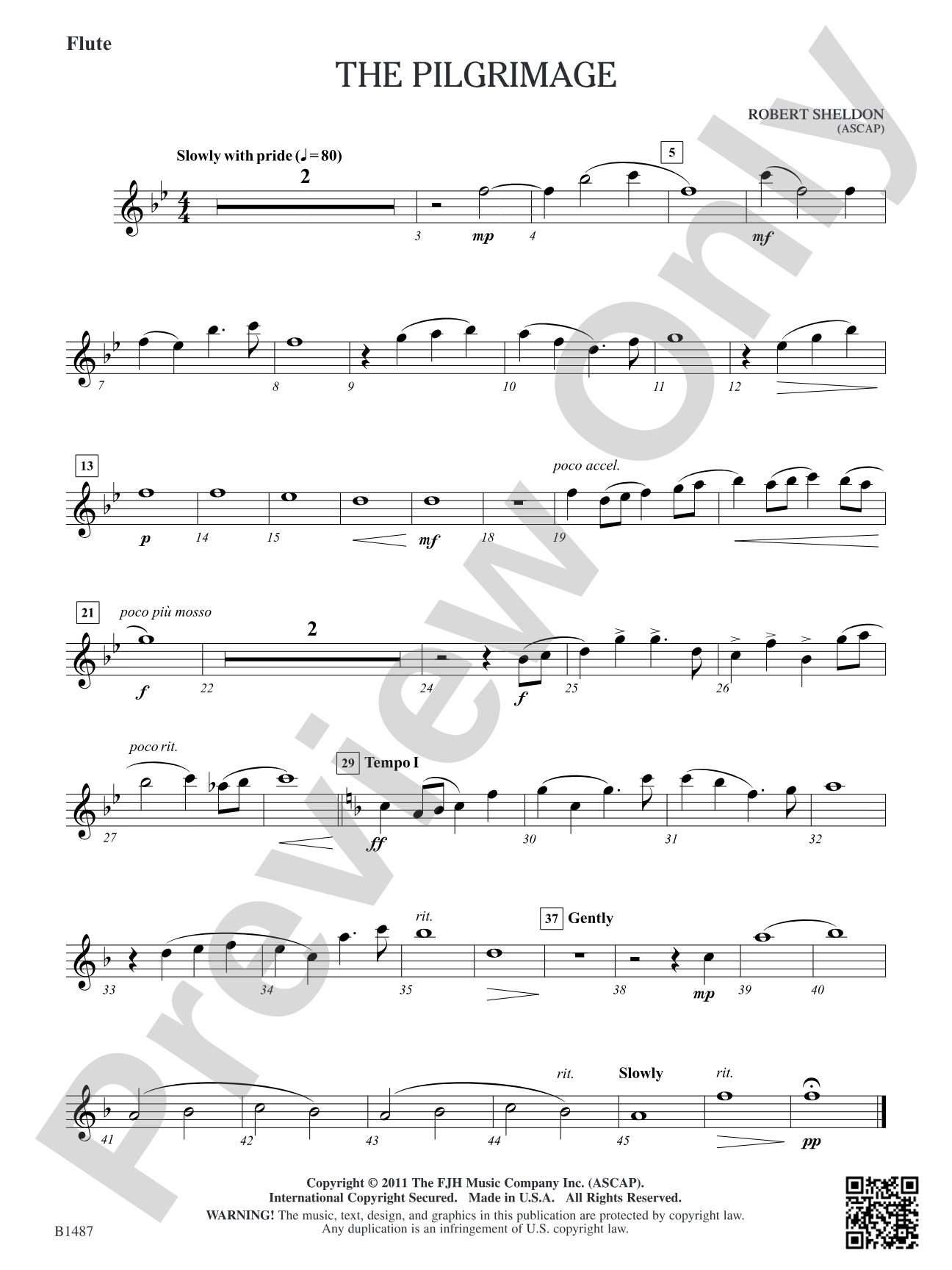
The Pilgrimage: Flute Sheet Music Preview

The Pilgrimage: Flute

By Robert Sheldon

Grade: 1

Item: 98-PC-DB1487_F1

Digital Download
$7.00
Description
Haunting lyrical lines form the basis of this wonderful and dramatic work depicting an individual’s quiet journey towards truth. Themes seem to dissolve into each other as the emotional journey continues through a variety of texture changes and harmonic progressions. Stunning and beautiful.

Don't just read it, hear it, play along with it, and watch your students grow with it. In MakeMusic Cloud, The Pilgrimage: Flute comes alive with professional accompaniment, adjustable tempo, and built-in practice tools that turn solo practice into real progress.

Sample Audio
0:00
0:00
Sample Video
Additional Details
Series: FJH Beginning Band
Publisher: The FJH Music Company, Inc.
SKU: 98-PC-DB1487_F1

More about this title

About the Composer: Robert Sheldon

Robert Sheldon

Robert Sheldon ranks among the most widely performed composers of concert band repertoire in the world. His works appear regularly on state and national contest lists, and ensembles from elementary through professional levels perform his music across Europe, Asia, Australia, and North America. Sheldon has received honors from the American School Band Directors Association, Phi Beta Mu, and ASCAP, and he holds a honorary doctorate from VanderCook College of Music.

Beyond composition, Sheldon serves as lead author of Sound Innovations for Concert Band and maintains an active schedule as guest conductor for All-State and regional honor bands. He has conducted his own works at Carnegie Hall, Orchestra Hall, Symphony Hall, the Sydney Opera House, and the Kennedy Center, and regularly presents clinics and seminars at universities and state music education conferences.

Why we love this

Sheldon crafts lyrical melodies that young musicians can genuinely connect with, even at Grade 1 level. The emotional arc of this piece unfolds through accessible harmonic language and intelligent texture choices that keep beginners engaged without overwhelming them, making it ideal for building both technical confidence and musical sensitivity.

What to expect

The music unfolds like a meditation, with haunting melodic gestures that seem to float and merge into one another. Beneath the surface, shifting harmonies and changing textures create an emotional landscape that feels both intimate and expansive, inviting listeners into a quiet moment of reflection.

Who it's for

Beginning concert bands and Grade 1 ensembles looking for repertoire with genuine artistic substance. This works beautifully for groups ready to explore lyrical expression and harmonic color without technical overreach, making it accessible for middle school bands or younger high school groups.

How to get the most out of it

  • Let the harmonic progressions breathe. Avoid rushing through chord changes; allow each shift to land clearly so the emotional journey reads to your audience.
  • Balance the melodic lines across your sections. The haunting quality depends on lyrical clarity, so ensure your lead voice carries naturally without drowning out inner parts.
  • Prepare students for the texture changes in advance. Mark sectional rehearsals where the accompaniment pattern shifts, so everyone understands how their role evolves throughout the piece.
  • Shape phrases through dynamics rather than tempo. Sheldon's melodic writing suggests where to breathe and swell; guide your ensemble to follow those contours naturally.

How to use it

Feature this as a concert centerpiece that demonstrates your ensemble's musicality and depth. Its lyrical character pairs well alongside faster, lighter selections, giving your program emotional balance and showing audiences that young musicians can handle sophisticated musical storytelling. It also contests effectively at Grade 1 level.

Skills your students will build

  • Shaping sustained melodic lines with appropriate phrasing and breath placement
  • Following harmonic progressions and recognizing chord changes within a tonal context
  • Adapting balance and blend as textural layers change throughout the piece
  • Sustaining focus through piece that relies on lyrical expression rather than technical display
  • Reading and responding to dynamic and expressive markings that shape emotional intent

You May Also Like