
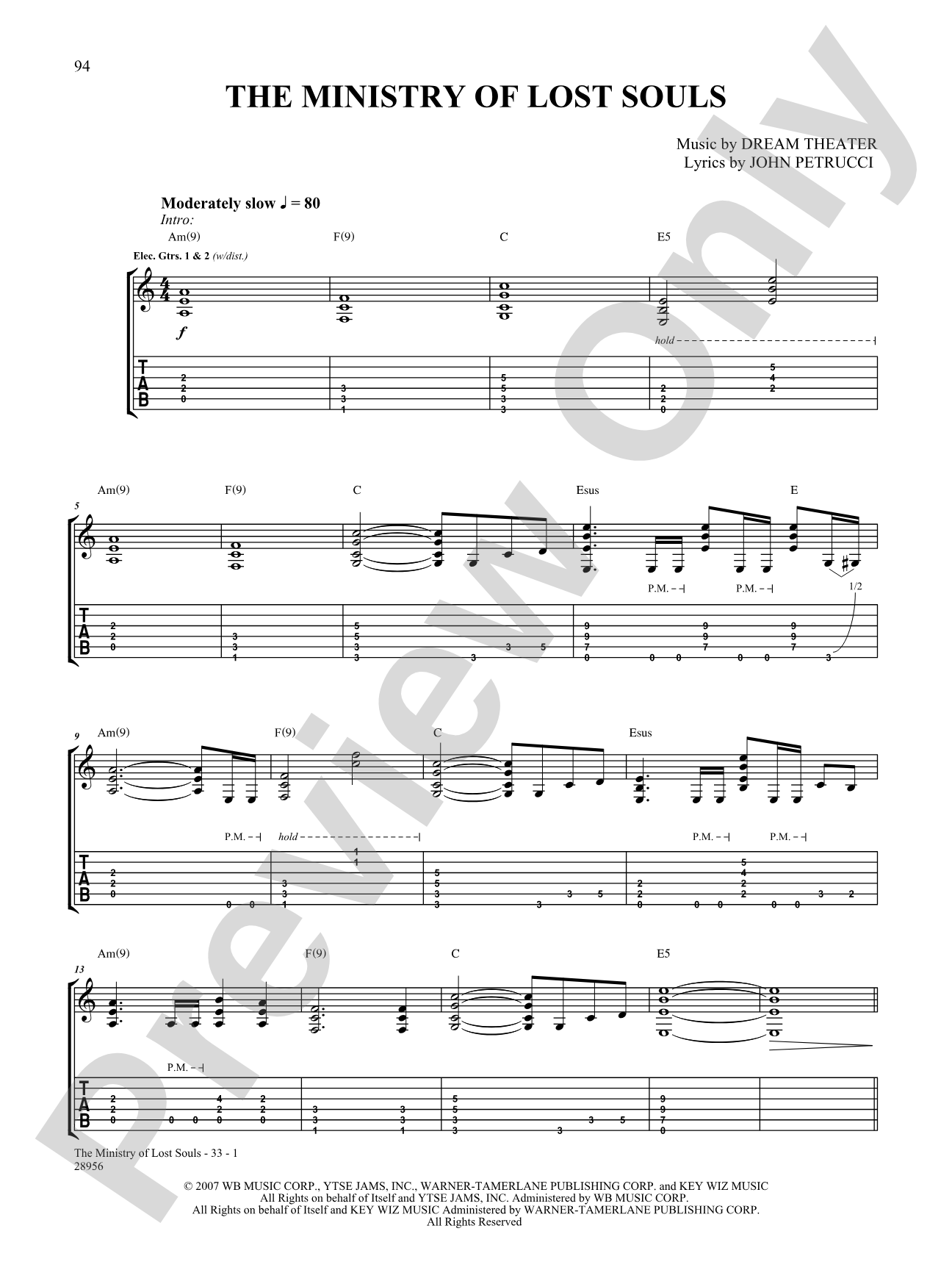
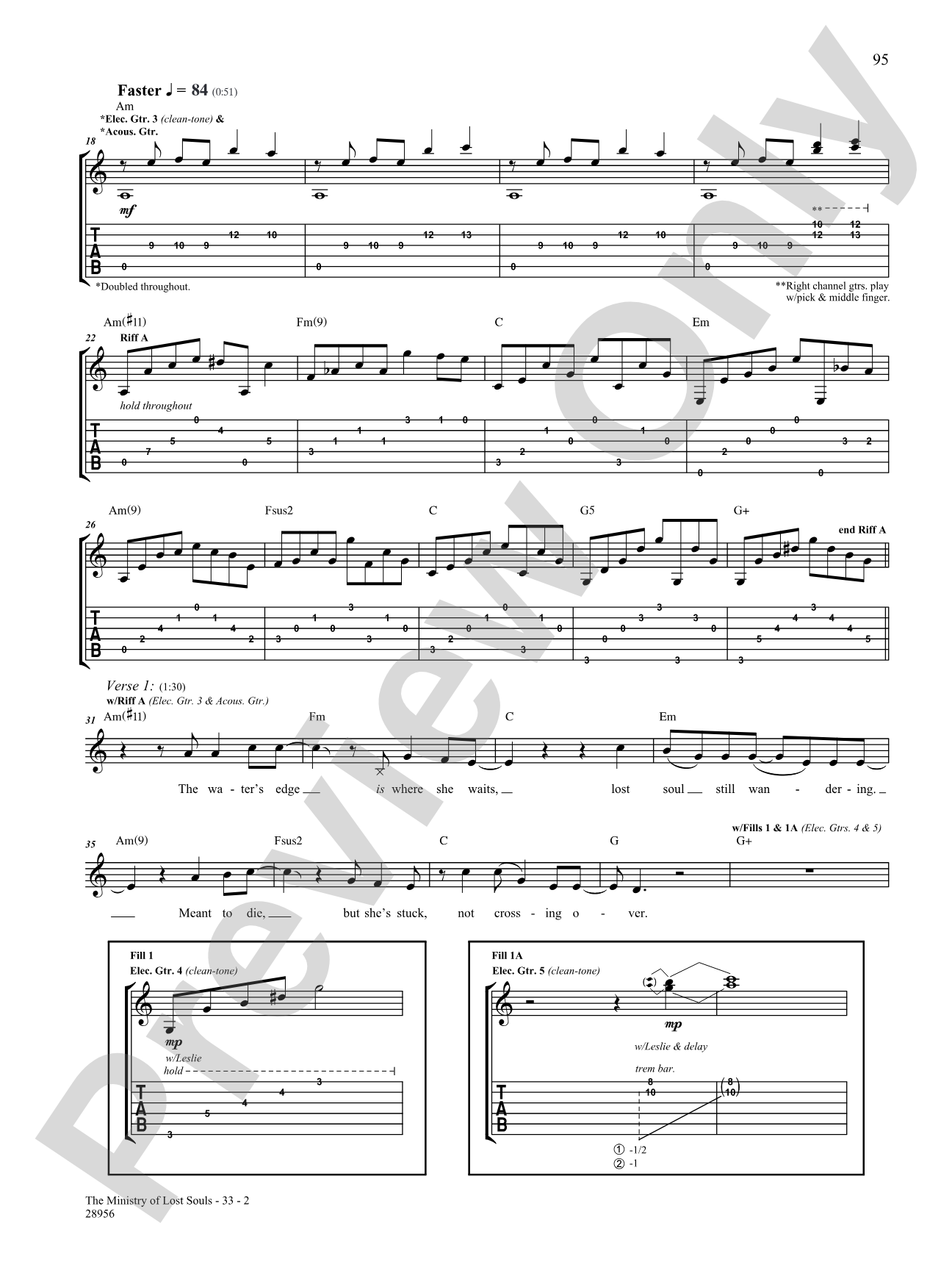
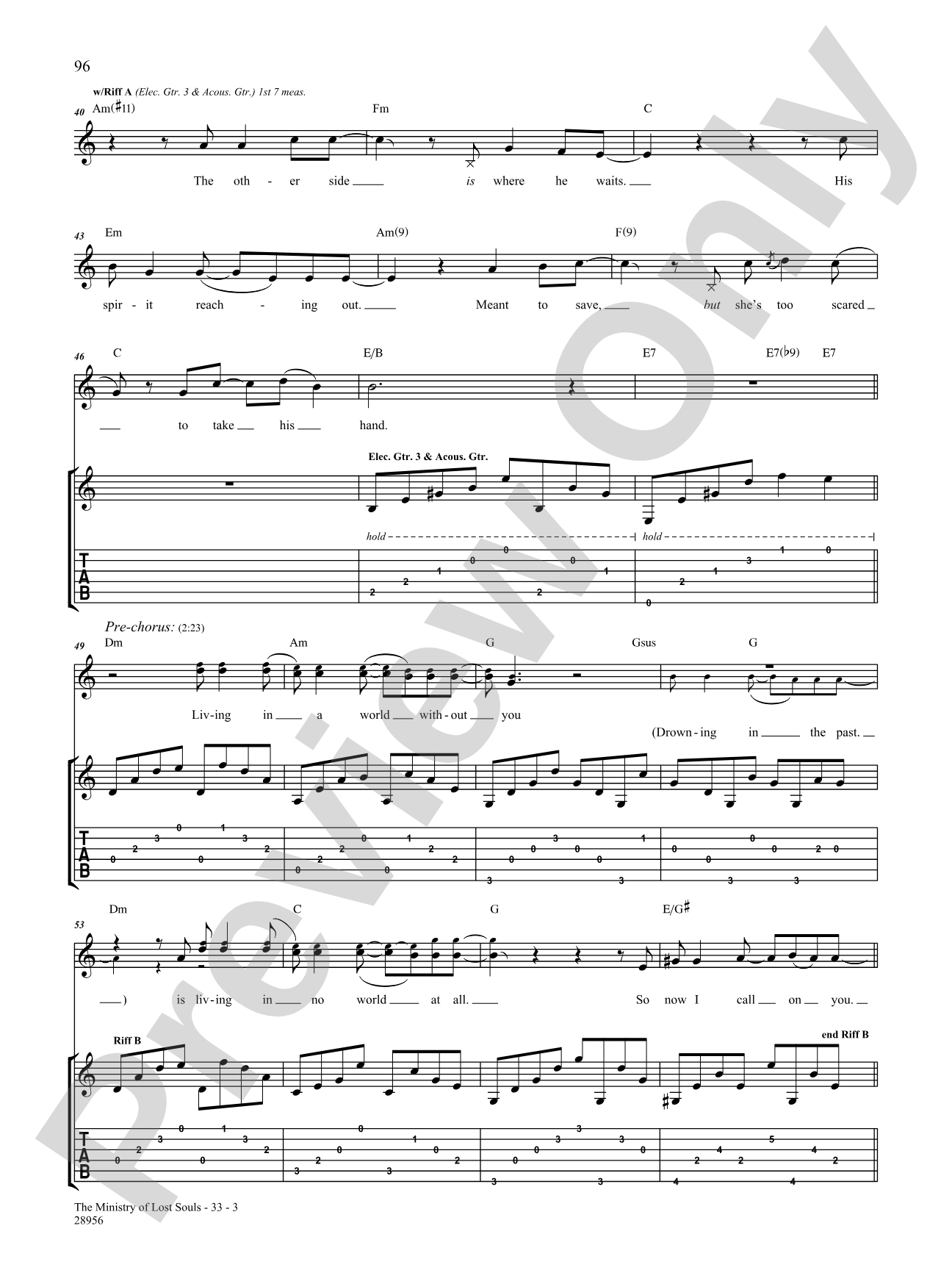
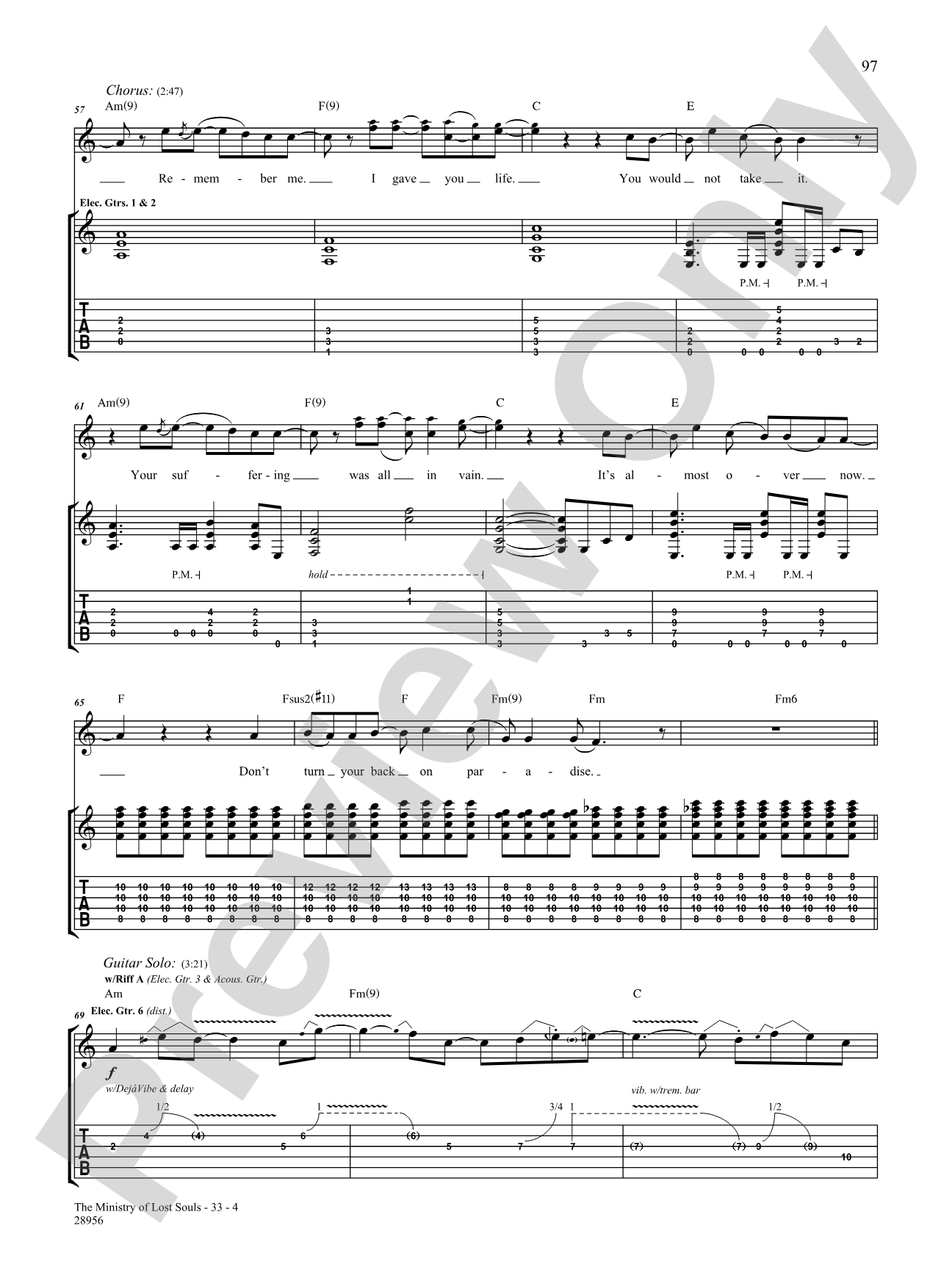
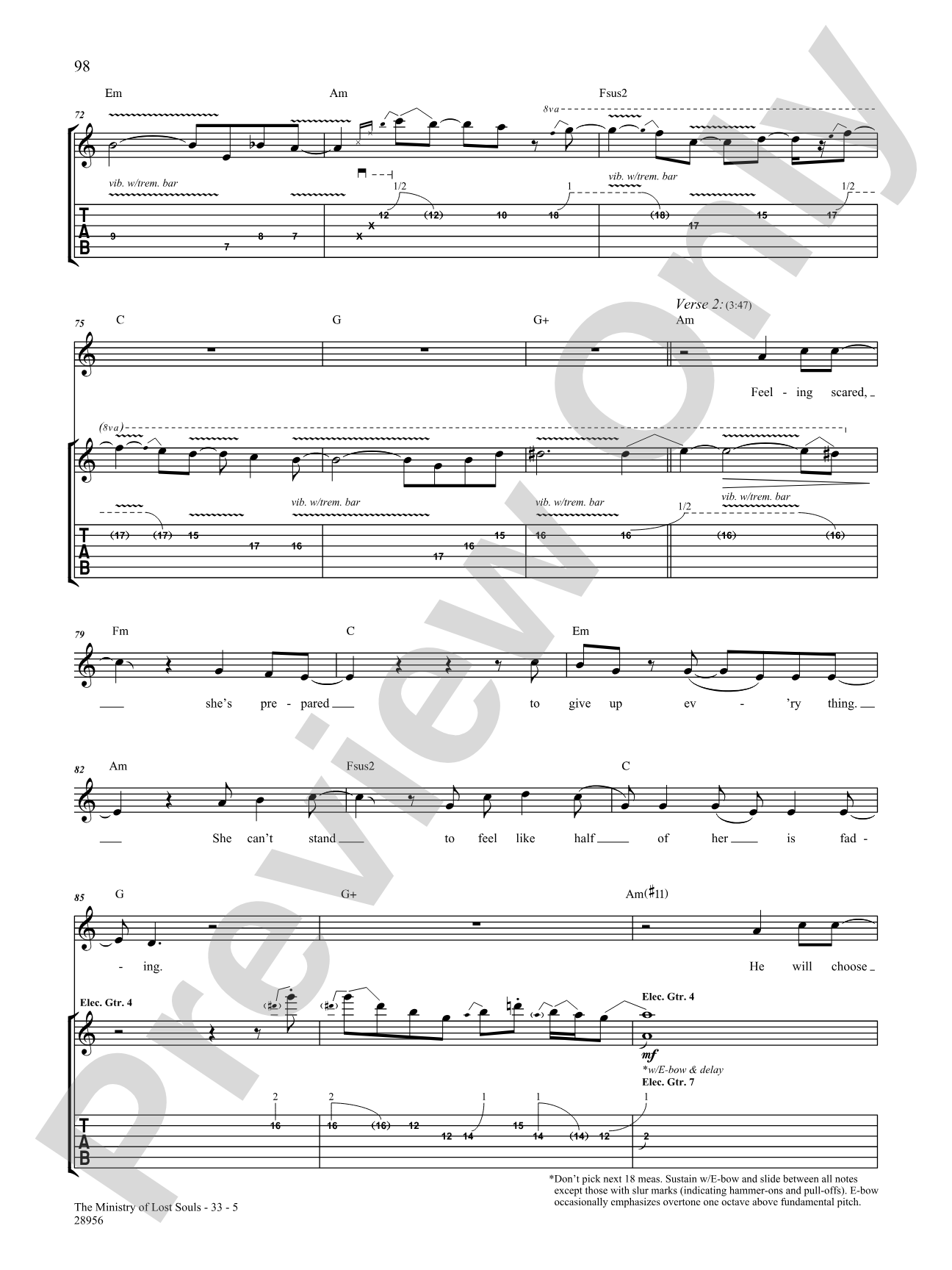
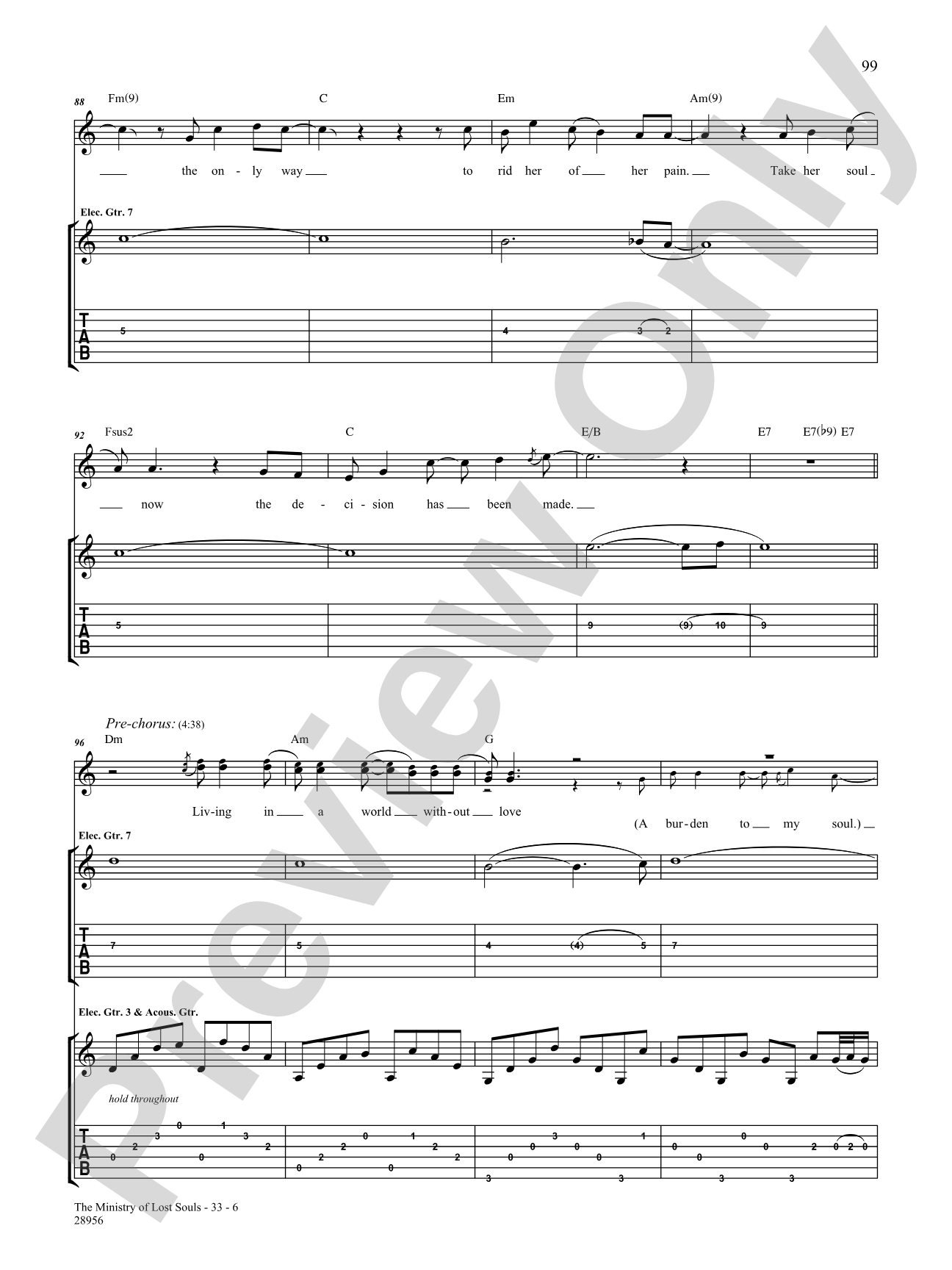
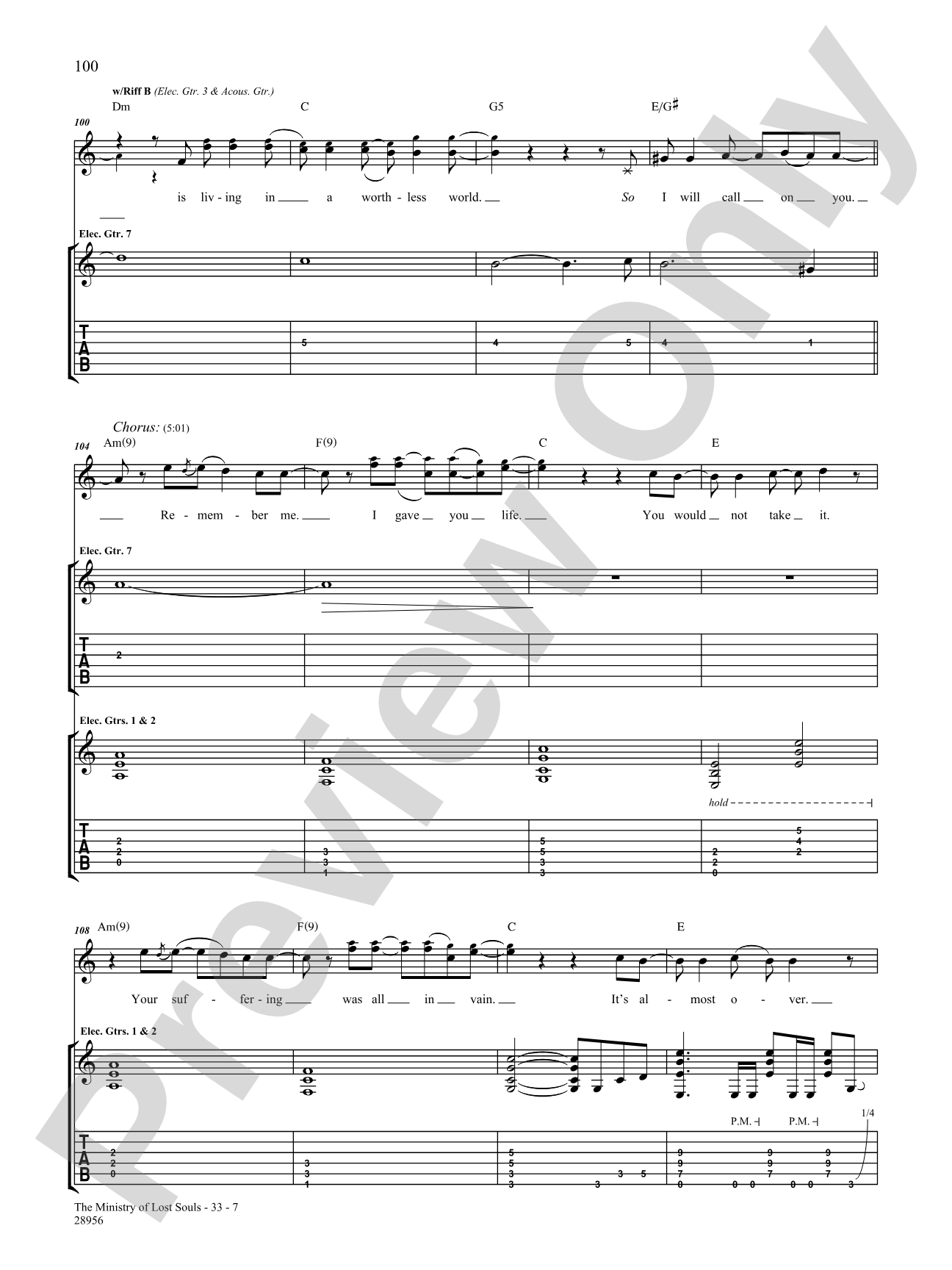

The Ministry of Lost Souls: Authentic Guitar TAB
Dream Theater
Item: 00-PSG-000880
$9.99
One moment…
Related Items
Constant Motion: Authentic Guitar TAB |
$9.99
|
View | |
Forsaken: Authentic Guitar TAB |
$9.99
|
View | |
In the Presence of Enemies, Part 1: Authentic Guitar TAB |
$9.99
|
View | |
In the Presence of Enemies, Part 2: Authentic Guitar TAB |
$9.99
|
View | |
Prophets of War: Authentic Guitar TAB |
$9.99
|
View | |
Repentance: Authentic Guitar TAB |
$9.99
|
View | |
The Dark Eternal Night: Authentic Guitar TAB |
$9.99
|
View |
Description
Formed in 1985, the progressive metal band Dream Theater has played an instrumental role in defining the age of progressive rock over the last three decades. Well-known for their technical expertise, band members have won coveted musical instruction awards in addition to releasing a total of 10 hit albums. Their latest album, Systematic Chaos, hit stores in the summer of 2007, becoming their highest charting album in the United States to date. In conjunction with the release of Systematic Chaos, Dream Theater kicked off a world tour set to run through the fall of 2007.
Alfred presents the album-matching folio to Systematic Chaos. Songs include lyrics and authentic guitar TAB.
Titles: In the Presence of Enemies * Forsaken * Constant Motion * The Dark Eternal Night * Repentance * Prophets of War * The Ministry of Lost Souls * In the Presence of Enemies - Part II.


Alfred presents the album-matching folio to Systematic Chaos. Songs include lyrics and authentic guitar TAB.
Titles: In the Presence of Enemies * Forsaken * Constant Motion * The Dark Eternal Night * Repentance * Prophets of War * The Ministry of Lost Souls * In the Presence of Enemies - Part II.
The Ministry of Lost Souls: Authentic Guitar TAB isn't in MakeMusic Cloud just yet...but it could be. Let us know you'd like to see it, and you'll help shape what comes next. In the meantime, start a free trial and dive into thousands of interactive titles your students can play along with today.
Request This Title
Tell us you want it.
Start Your Free Trial
Explore everything that's ready to play right now.
Sample Audio
No sample audio found.
Sample Video
No sample videos found.
Additional Details
Publisher:
Alfred Music
Page Count:
164
SKU:
00-PSG-000880
More about this title
About the Artist: Dream Theater
Dream Theater emerged from the New Jersey progressive metal scene in 1985 and became architects of a modern sound that merged classical composition, jazz harmony, and heavy metal intensity. The band's technical command and ambitious song structures have influenced generations of musicians and earned individual members recognition as educators and innovators in instrumental technique.
Why we love this
This folio captures one of progressive metal's most ambitious albums at its peak, offering guitarists a chance to decode the complex arrangements and technical passages that define Systematic Chaos. The authentic TAB paired with lyrics gives students both the precision they need and the context to understand how these intricate guitar lines serve the larger compositions.
What to expect
These songs unfold across sweeping instrumental passages and intricate harmonic landscapes, alternating between crushing rhythmic sections and delicate technical passages. The guitar work demands both raw power and precision, with moments of atmospheric texture balanced against displays of virtuosic speed and dexterity.
Who it's for
Advanced guitarists with solid technique and comfort reading TAB in standard and extended tunings will find this folio rewarding. Musicians working toward performance proficiency on complex rock and metal repertoire, as well as those studying arranging and composition through the lens of progressive metal songwriting, will benefit from the detailed transcriptions.
How to get the most out of it
- Study the TAB alongside a recording of the album to grasp tempo relationships and dynamics; the notation alone cannot convey the layering and production details that make these arrangements breathe.
- Break longer passages into practice sections aligned with the song structure rather than attempting full runs too early; many tracks exceed six minutes and benefit from methodical, phrase-based work.
- Pay attention to tuning specifications and alternate tunings within the folio; Dream Theater frequently uses dropped and extended tunings that are essential to the tone and resonance of each piece.
- Track finger positioning changes during rapid position shifts, as the TAB may not always indicate the most efficient fingering path for your hand size or playing style.
How to use it
Guitarists preparing for solo performances or recital programs can select individual tracks that showcase different technical and stylistic ranges within progressive metal. Music theory and arranging courses can use specific compositions from this album to examine complex time signatures, key modulations, and the role of guitar texture in building compositional architecture.
Skills your students will build
- Reading TAB in non-standard and dropped tunings
- Executing rapid position shifts and finger placement across extended passages
- Interpreting syncopated rhythms and mixed meters typical of progressive metal
- Translating notation to technique with attention to tone, dynamics, and sustain
- Understanding the role of layered guitar parts in creating harmonic and textural density