
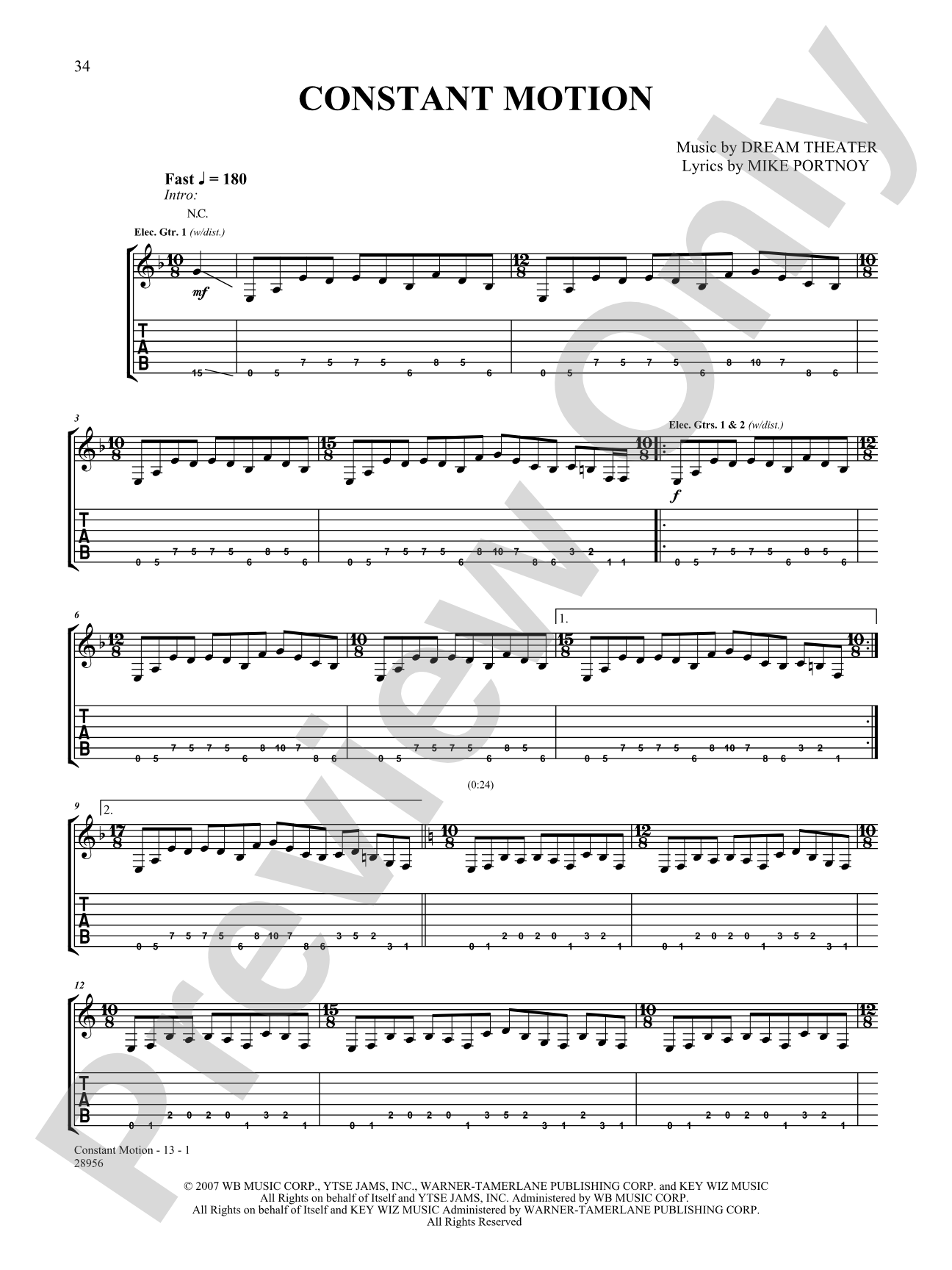
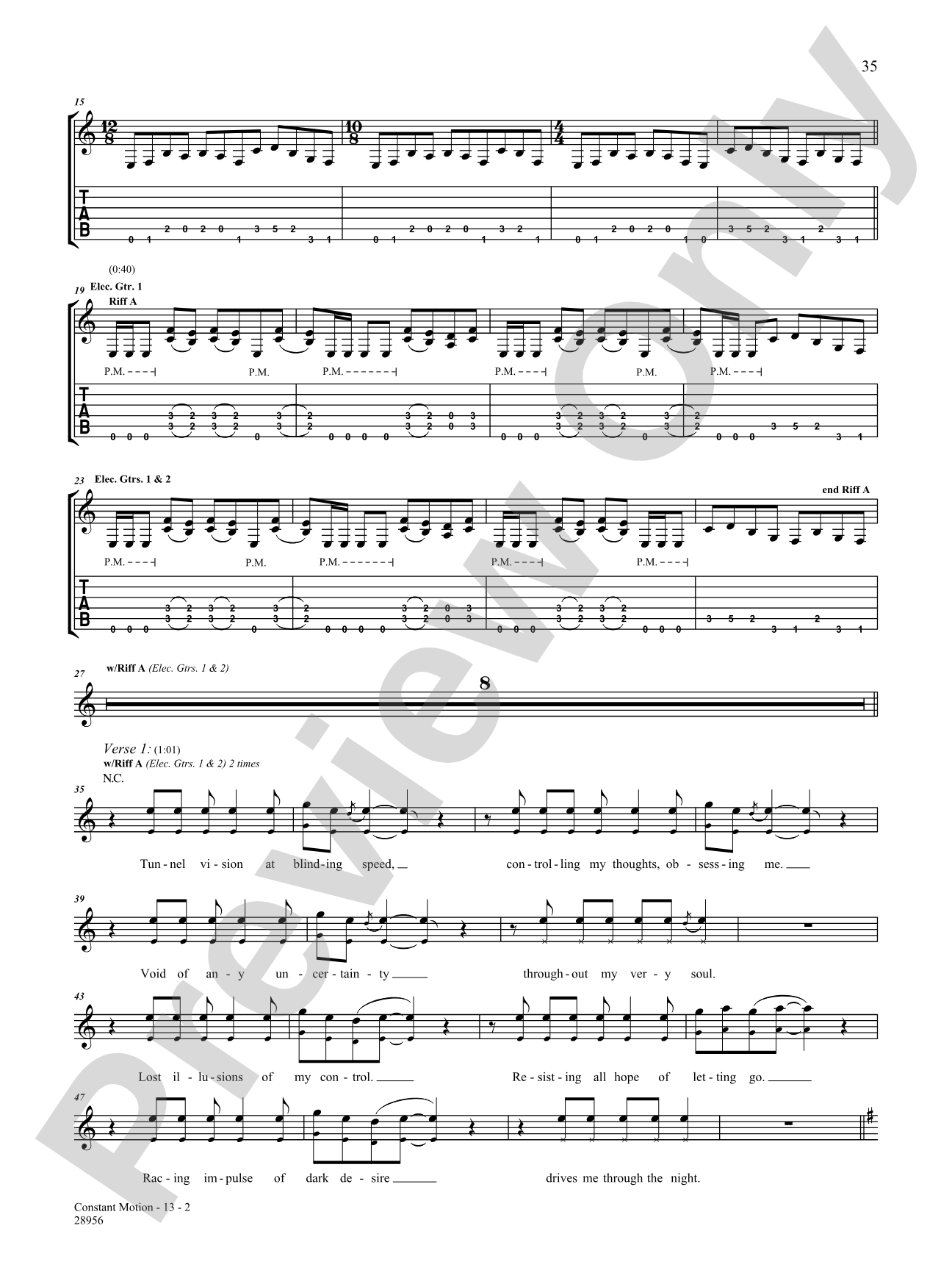
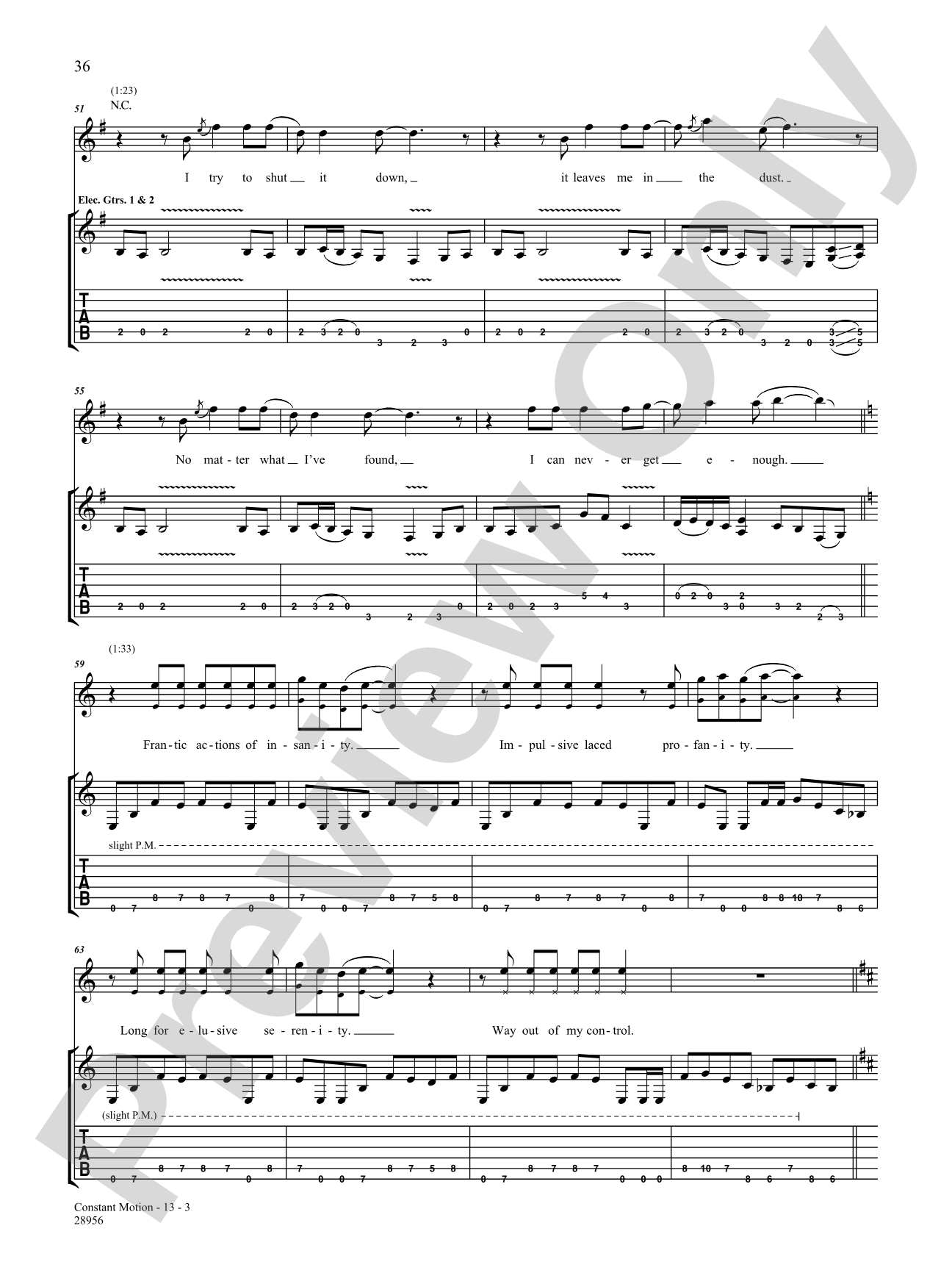

Constant Motion: Authentic Guitar TAB
Dream Theater
Item: 00-PSG-000802
$9.99
One moment…
Related Items
Forsaken: Authentic Guitar TAB |
$9.99
|
View | |
In the Presence of Enemies, Part 1: Authentic Guitar TAB |
$9.99
|
View | |
In the Presence of Enemies, Part 2: Authentic Guitar TAB |
$9.99
|
View | |
Prophets of War: Authentic Guitar TAB |
$9.99
|
View | |
Repentance: Authentic Guitar TAB |
$9.99
|
View | |
The Dark Eternal Night: Authentic Guitar TAB |
$9.99
|
View | |
The Ministry of Lost Souls: Authentic Guitar TAB |
$9.99
|
View |
Description
Formed in 1985, the progressive metal band Dream Theater has played an instrumental role in defining the age of progressive rock over the last three decades. Well-known for their technical expertise, band members have won coveted musical instruction awards in addition to releasing a total of 10 hit albums. Their latest album, Systematic Chaos, hit stores in the summer of 2007, becoming their highest charting album in the United States to date. In conjunction with the release of Systematic Chaos, Dream Theater kicked off a world tour set to run through the fall of 2007.
Alfred presents the album-matching folio to Systematic Chaos. Songs include lyrics and authentic guitar TAB.
Titles: In the Presence of Enemies * Forsaken * Constant Motion * The Dark Eternal Night * Repentance * Prophets of War * The Ministry of Lost Souls * In the Presence of Enemies - Part II.


Alfred presents the album-matching folio to Systematic Chaos. Songs include lyrics and authentic guitar TAB.
Titles: In the Presence of Enemies * Forsaken * Constant Motion * The Dark Eternal Night * Repentance * Prophets of War * The Ministry of Lost Souls * In the Presence of Enemies - Part II.
Constant Motion: Authentic Guitar TAB isn't in MakeMusic Cloud just yet...but it could be. Let us know you'd like to see it, and you'll help shape what comes next. In the meantime, start a free trial and dive into thousands of interactive titles your students can play along with today.
Request This Title
Tell us you want it.
Start Your Free Trial
Explore everything that's ready to play right now.
Sample Audio
No sample audio found.
Sample Video
No sample videos found.
Additional Details
Publisher:
Alfred Music
Page Count:
164
SKU:
00-PSG-000802
More about this title
About the Artist: Dream Theater
Dream Theater emerged from the progressive metal scene in 1985 and became architects of modern progressive rock. The band's members have earned recognition for their technical mastery, winning multiple music instruction awards while building a catalog of 10 studio albums that pushed the boundaries of complexity, composition, and instrumental virtuosity. Their 2007 album Systematic Chaos marked a commercial peak, charting higher in the United States than any previous release and showcasing the band's evolution as songwriters and performers.
Why we love this
This folio captures the signature complexity and precision that define Dream Theater's writing for guitar. Advanced players get authentic transcriptions of genuinely demanding material that rewards deep study and offers real challenges in technique, timing, and musical interpretation.
What to expect
Systematic Chaos unfolds with instrumental precision and dramatic dynamics, shifting between passages of explosive technical display and moments of atmospheric tension. The guitar work spans dense polyrhythmic sections, soaring melodic lines, and intricate textural layers that demand focus and stamina.
Who it's for
This collection serves advanced guitarists and serious progressive metal enthusiasts who are ready to tackle intricate fretwork and unconventional song structures. It appeals equally to players working on technical mastery and musicians interested in how progressive metal compositions balance complexity with melodic intent.
How to get the most out of it
- Work through the rhythmic displacements slowly; Dream Theater's meters shift frequently, and locking the pulse mentally before adding speed saves frustration.
- Use the TAB alongside standard notation to cross-reference fingering options, especially on passages where multiple solutions exist.
- Study the album recordings while reading through these transcriptions to internalize the tone and phrasing choices that make the originals distinctive.
How to use it
This material suits advanced recital programming or showcase performances where technical excellence and contemporary music matter. Guitarists preparing auditions for progressive rock ensembles or higher-level instruction often use these transcriptions as benchmark repertoire.
Skills your students will build
- Reading and executing complex rhythmic patterns and meter changes
- Translating TAB-based learning across standard notation
- Developing left-hand stamina and right-hand control at faster tempos
- Refining tone production across extended range and dynamic contrasts
- Analyzing song structure in progressive compositions