
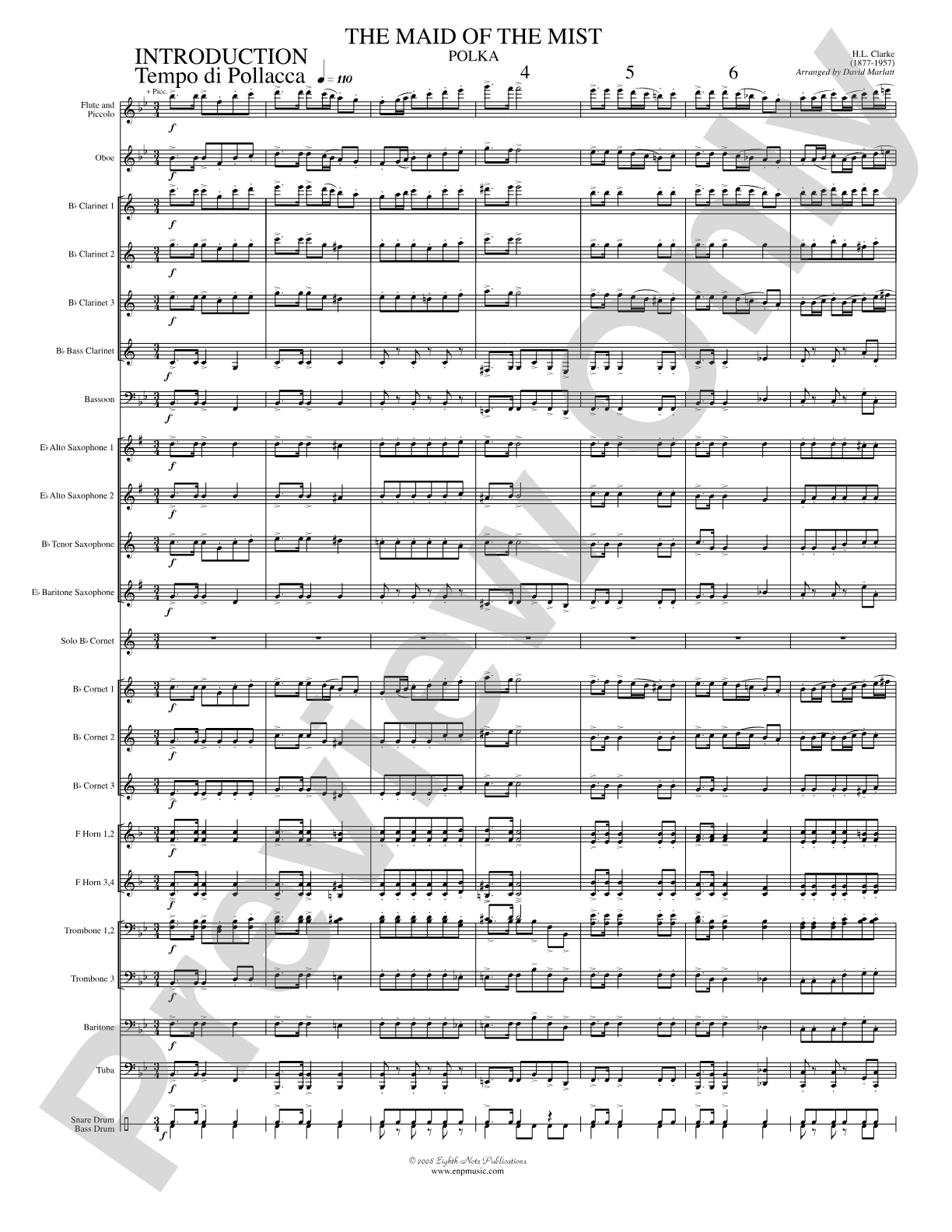
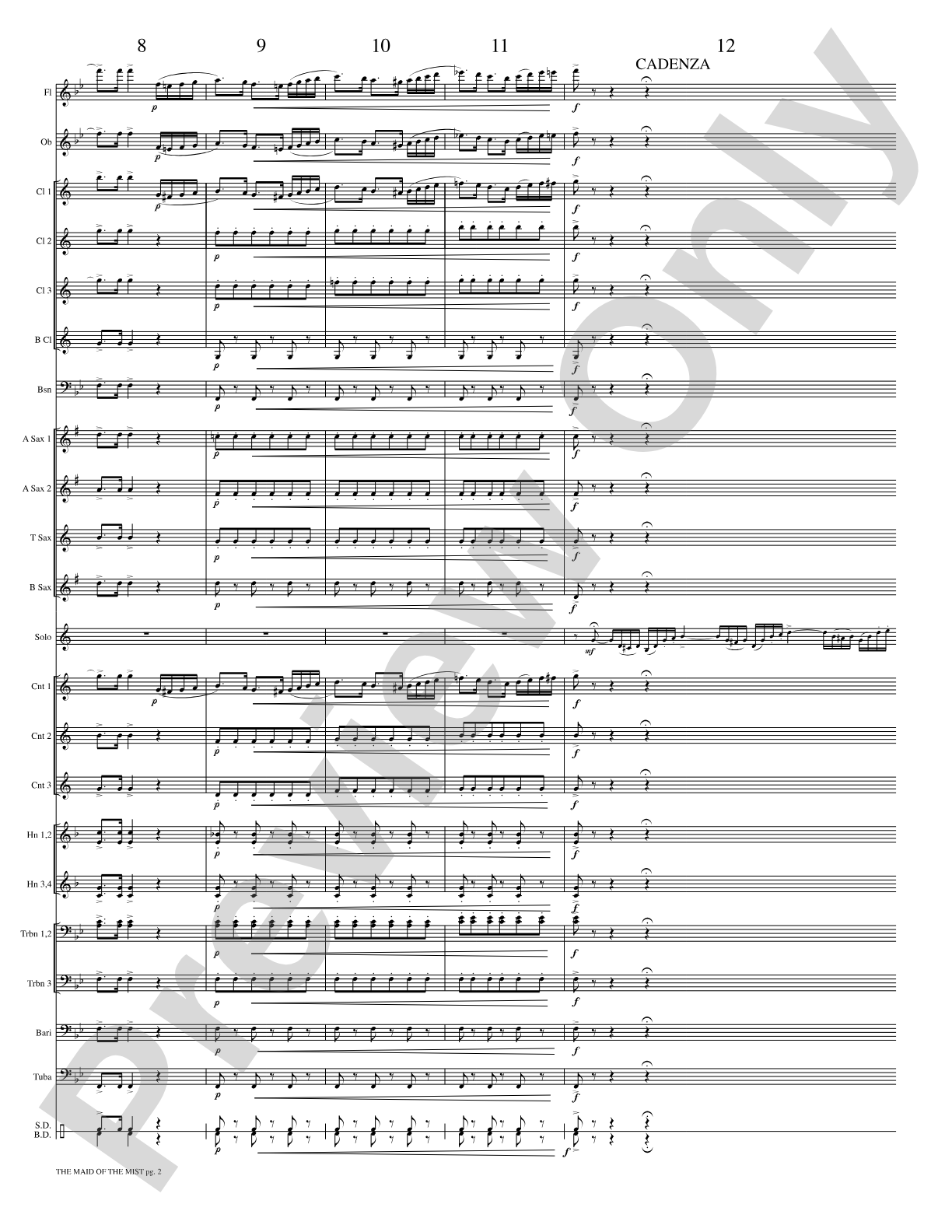
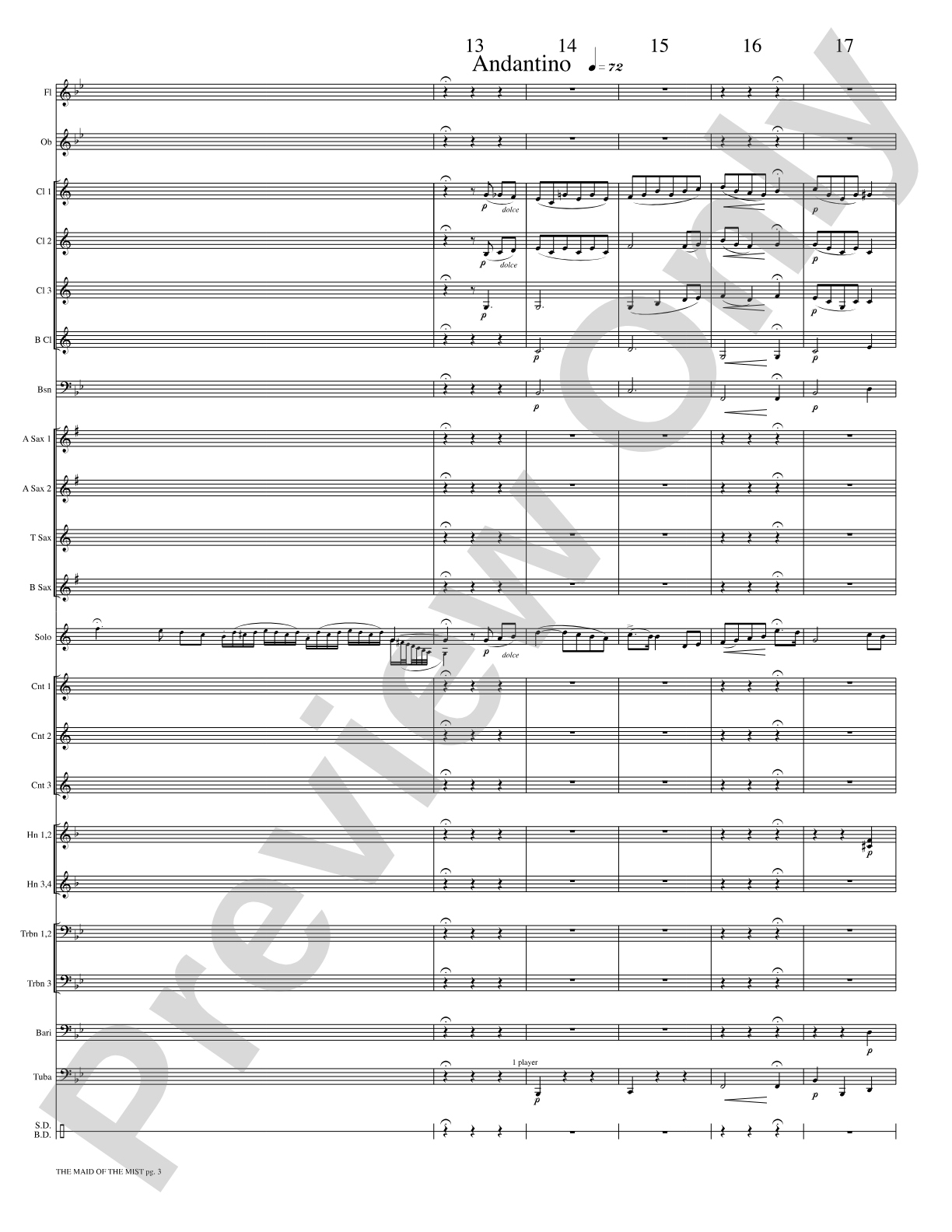
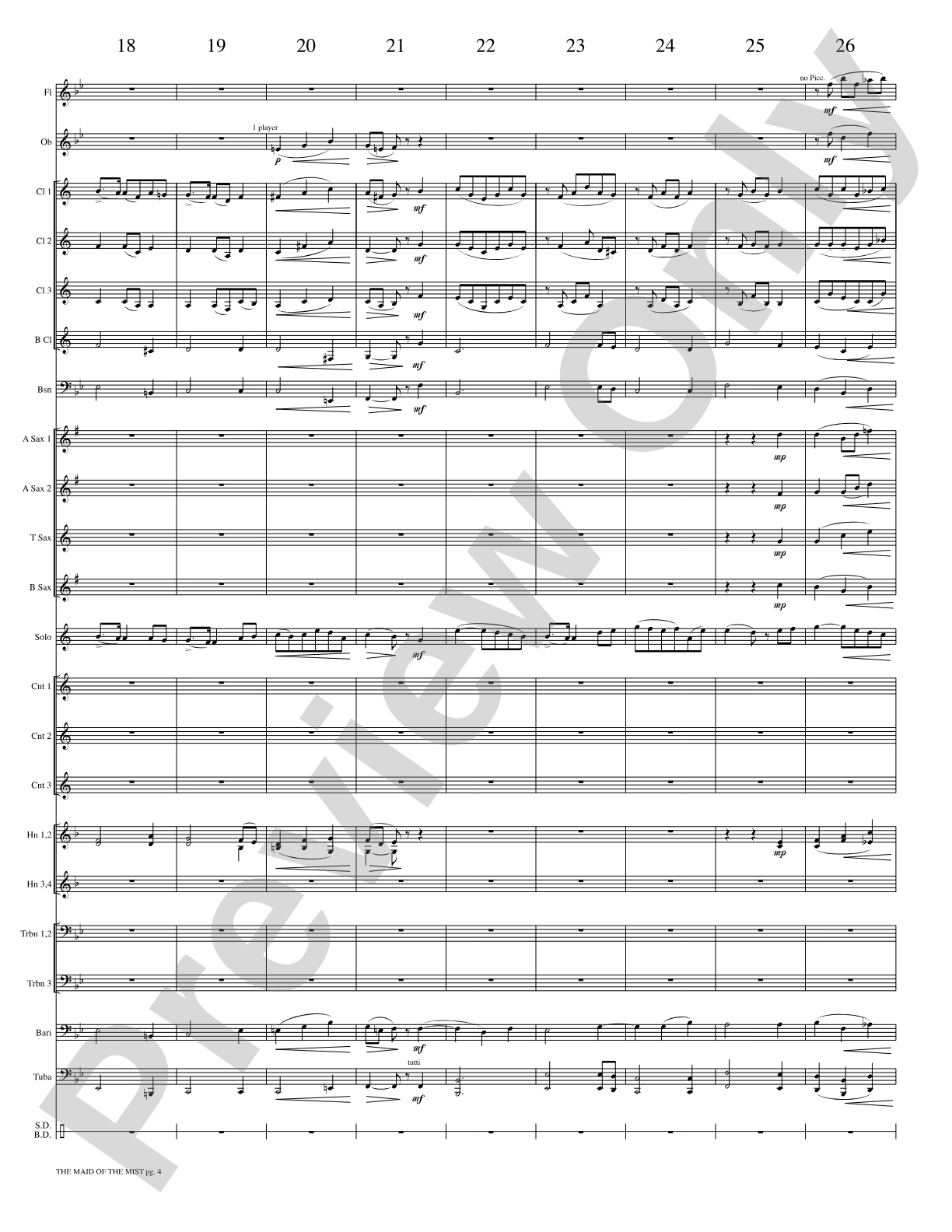
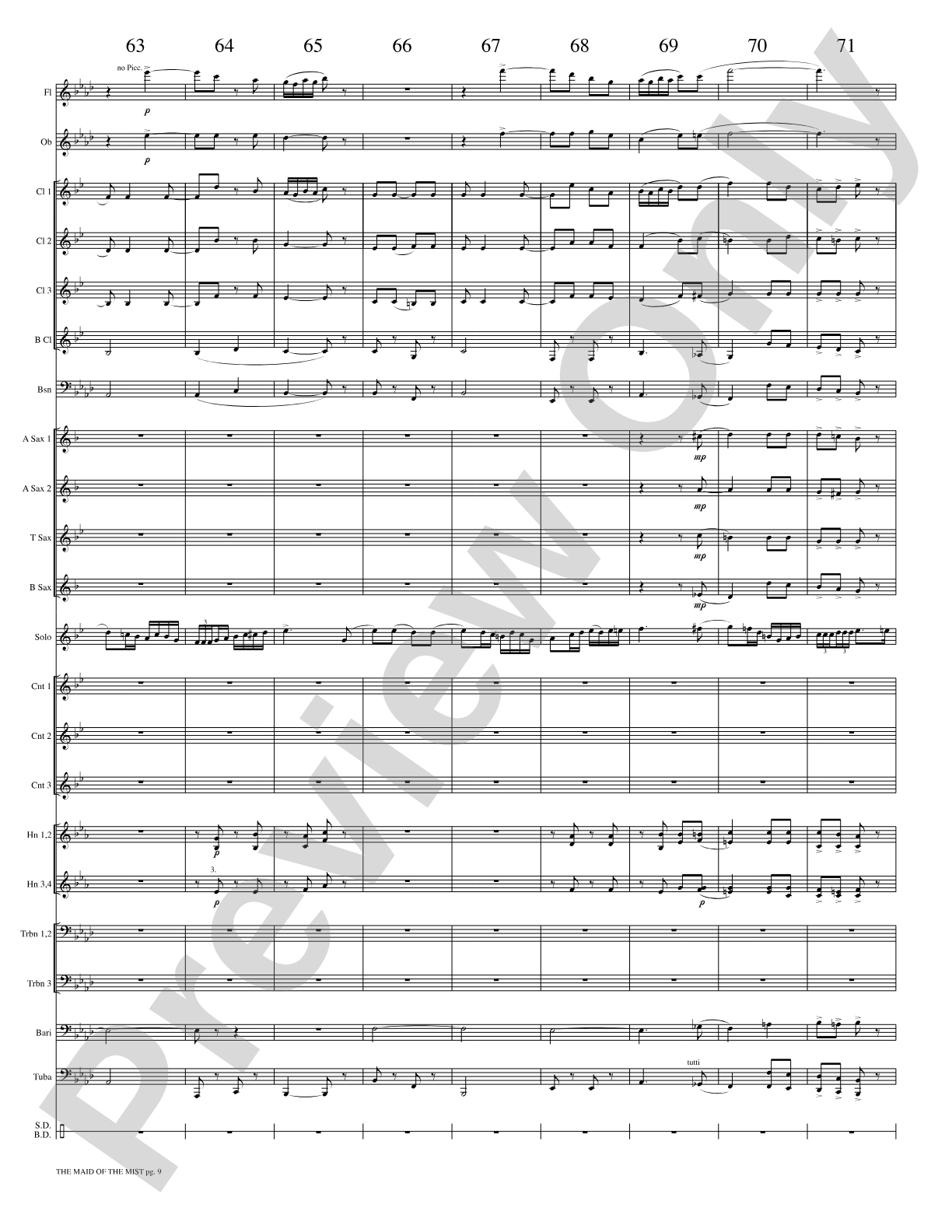
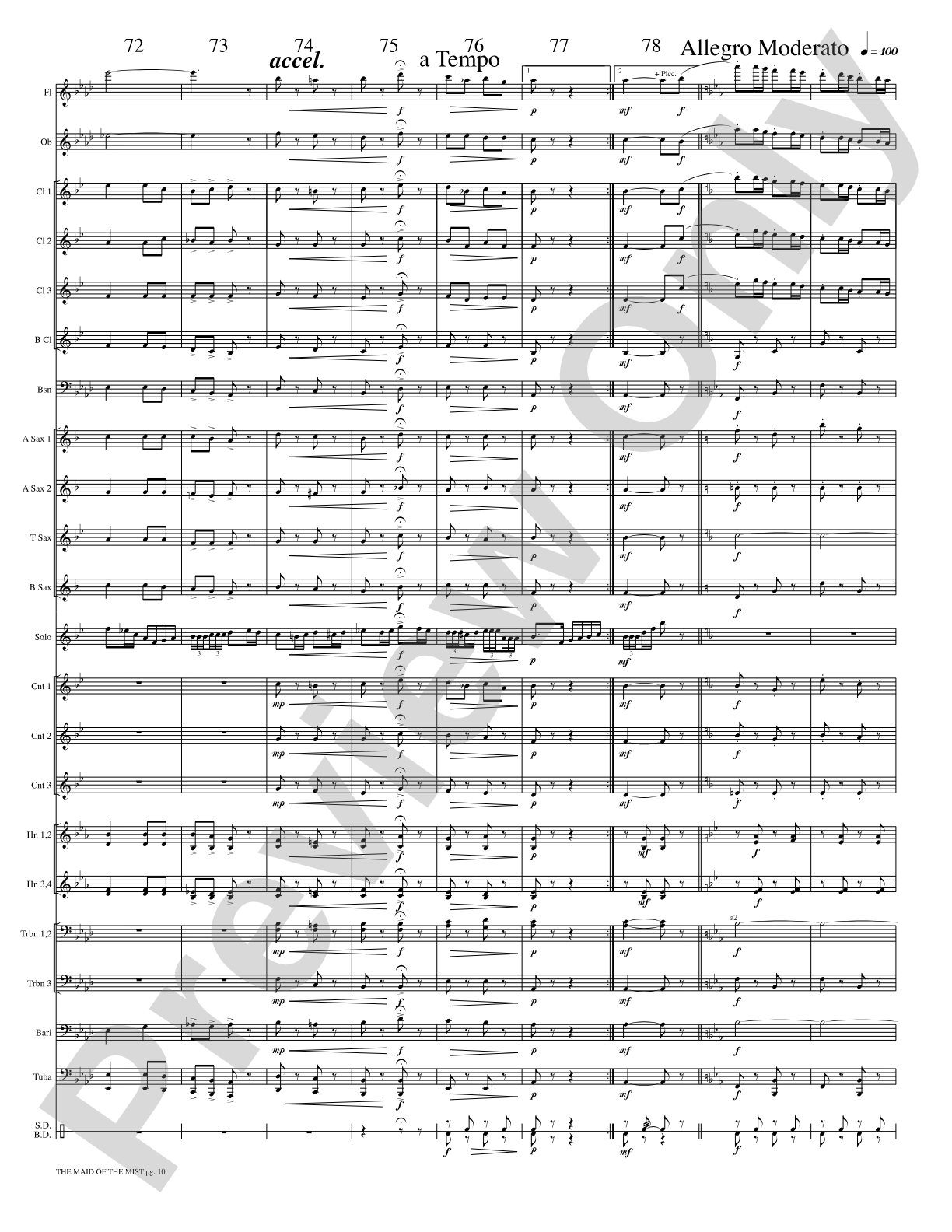
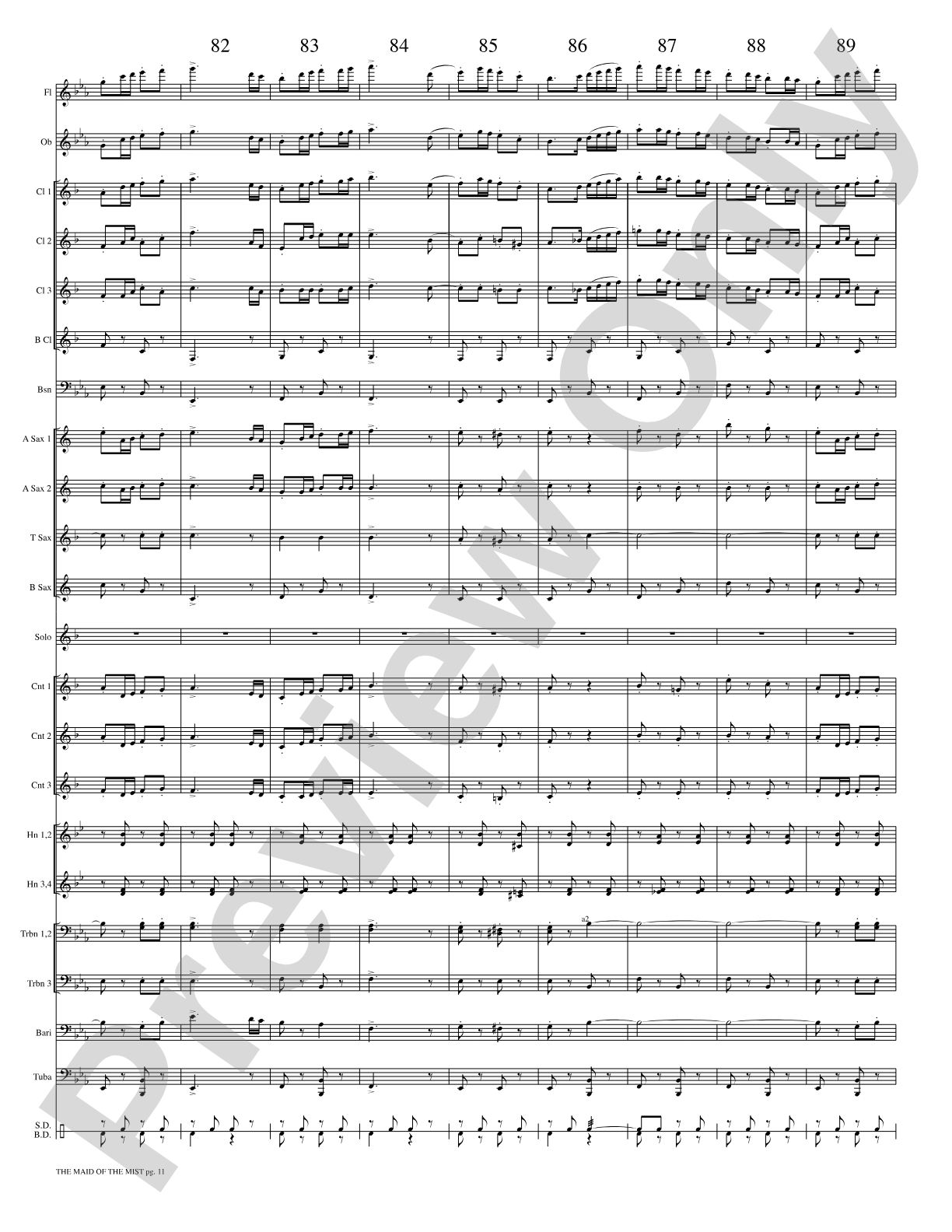
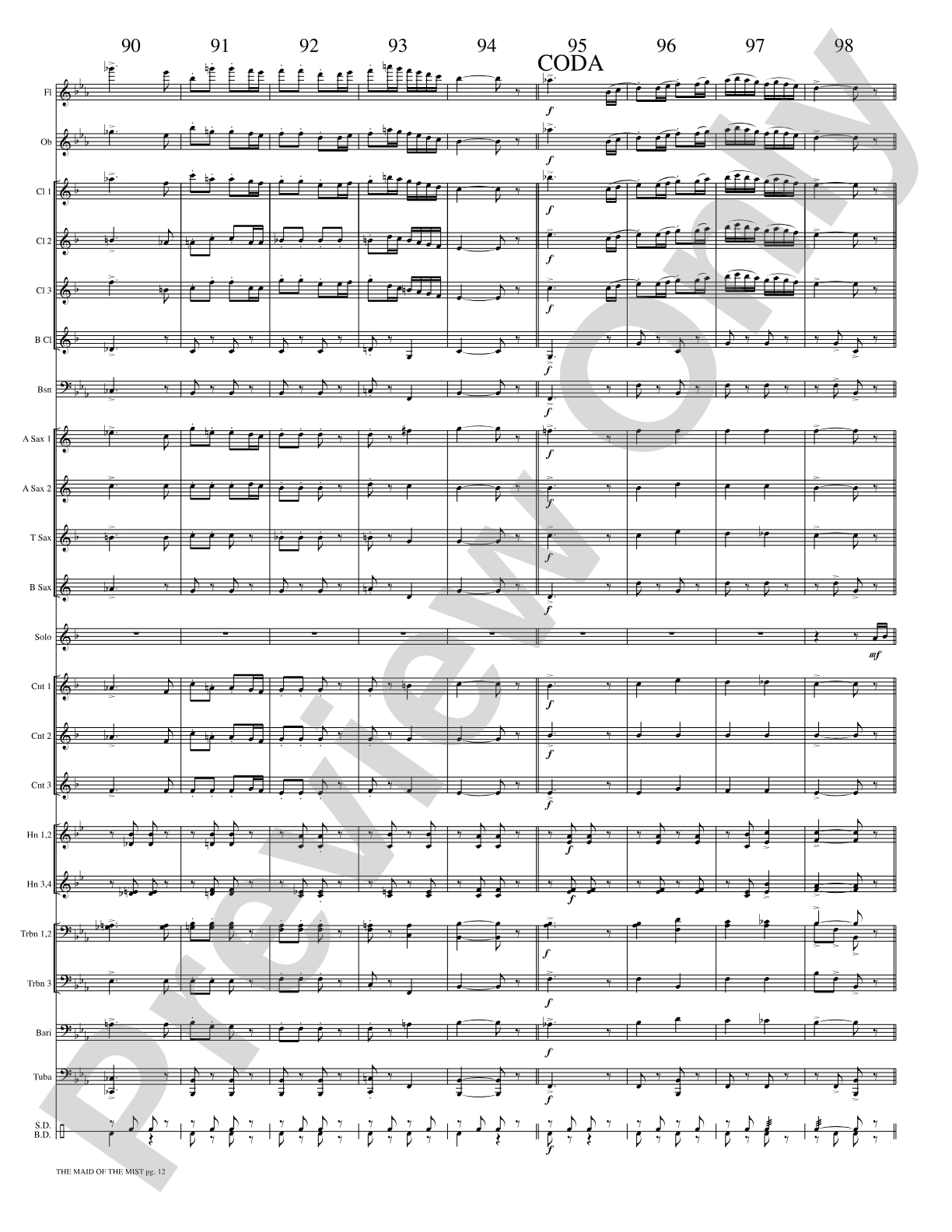
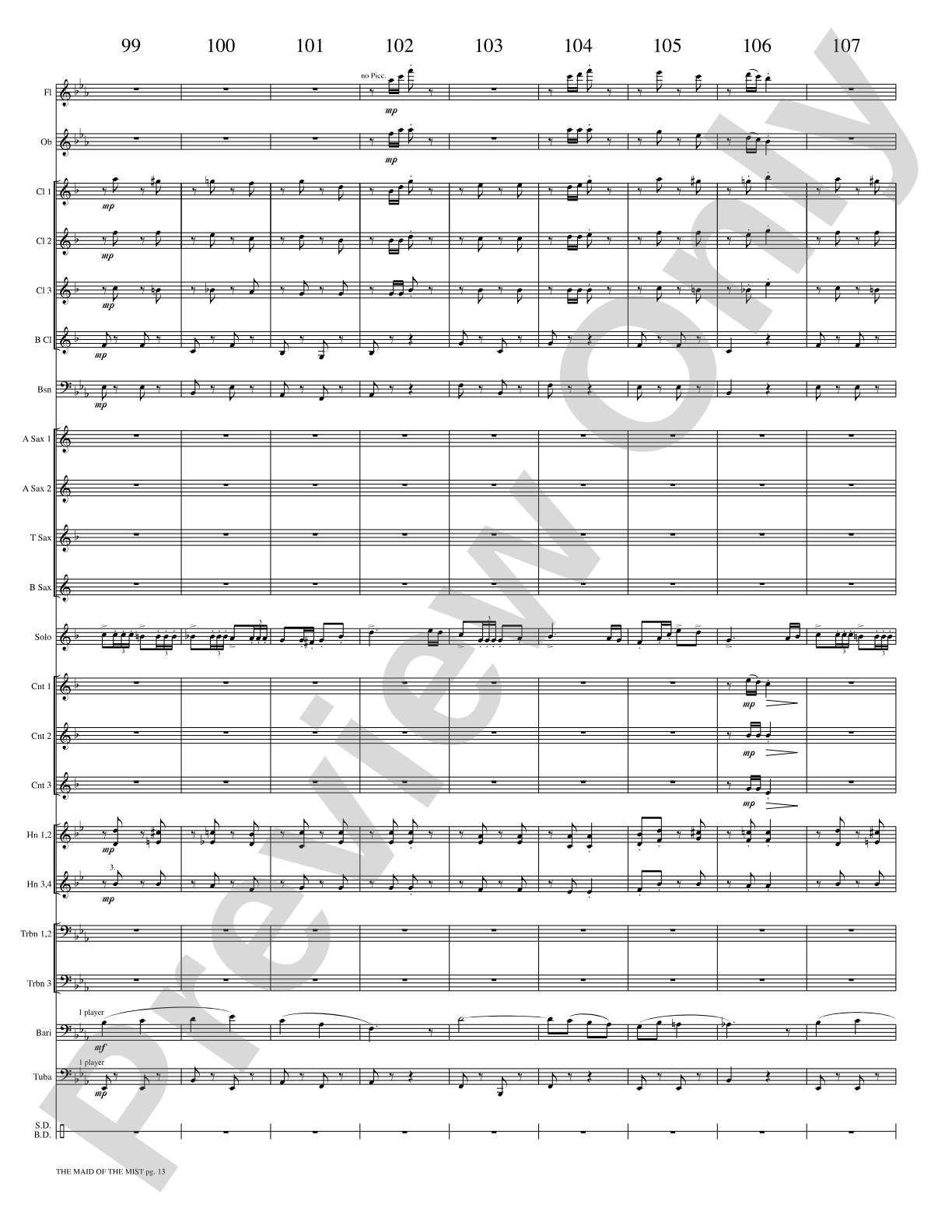
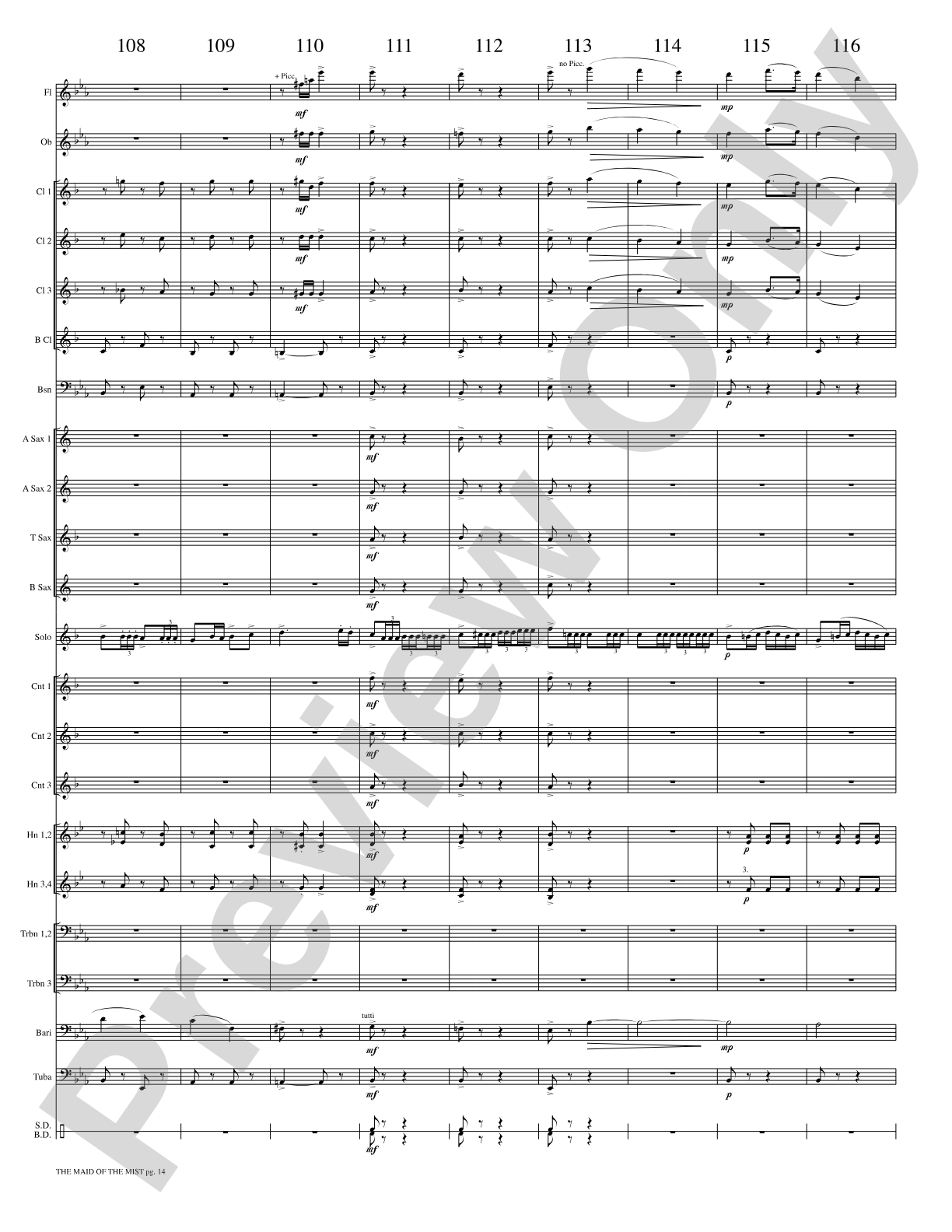
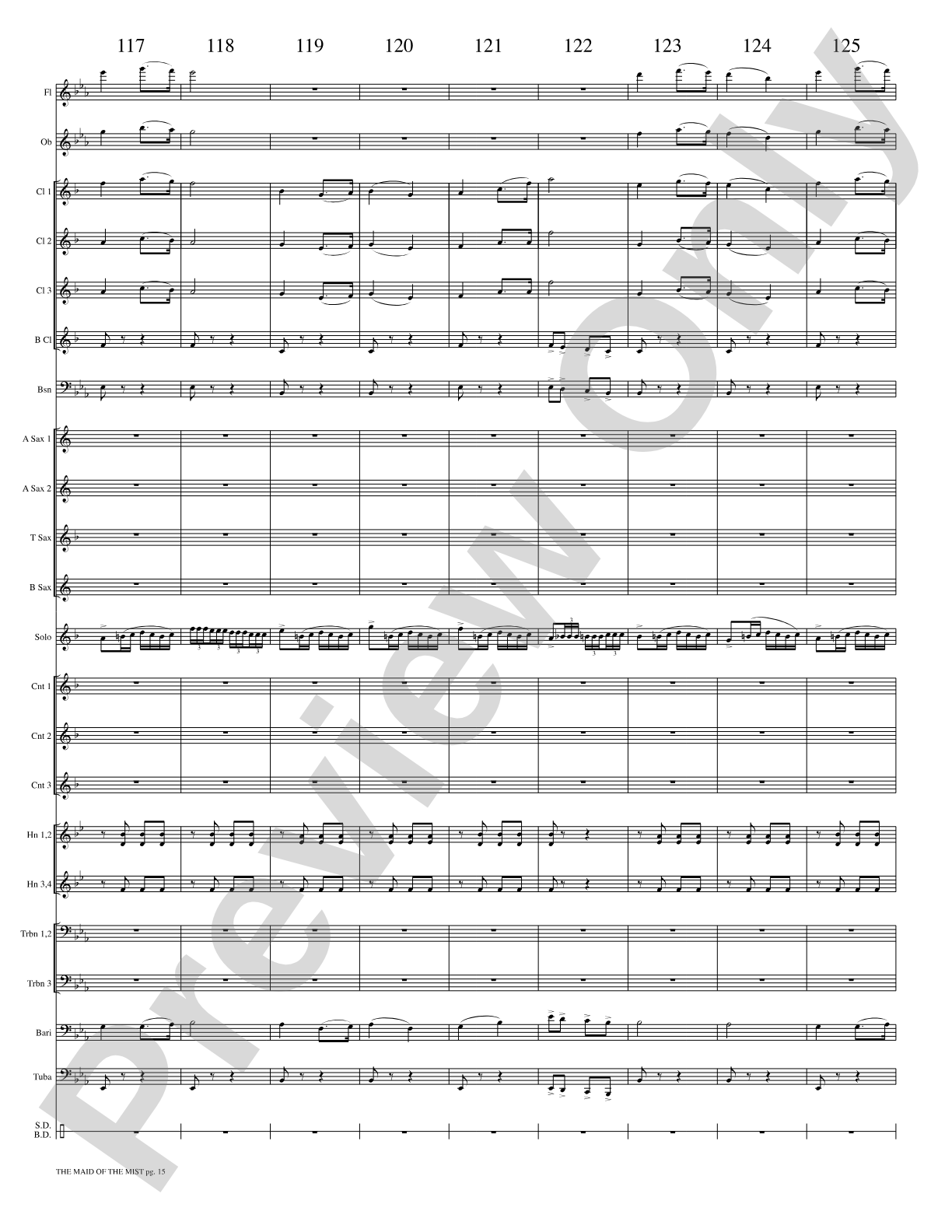
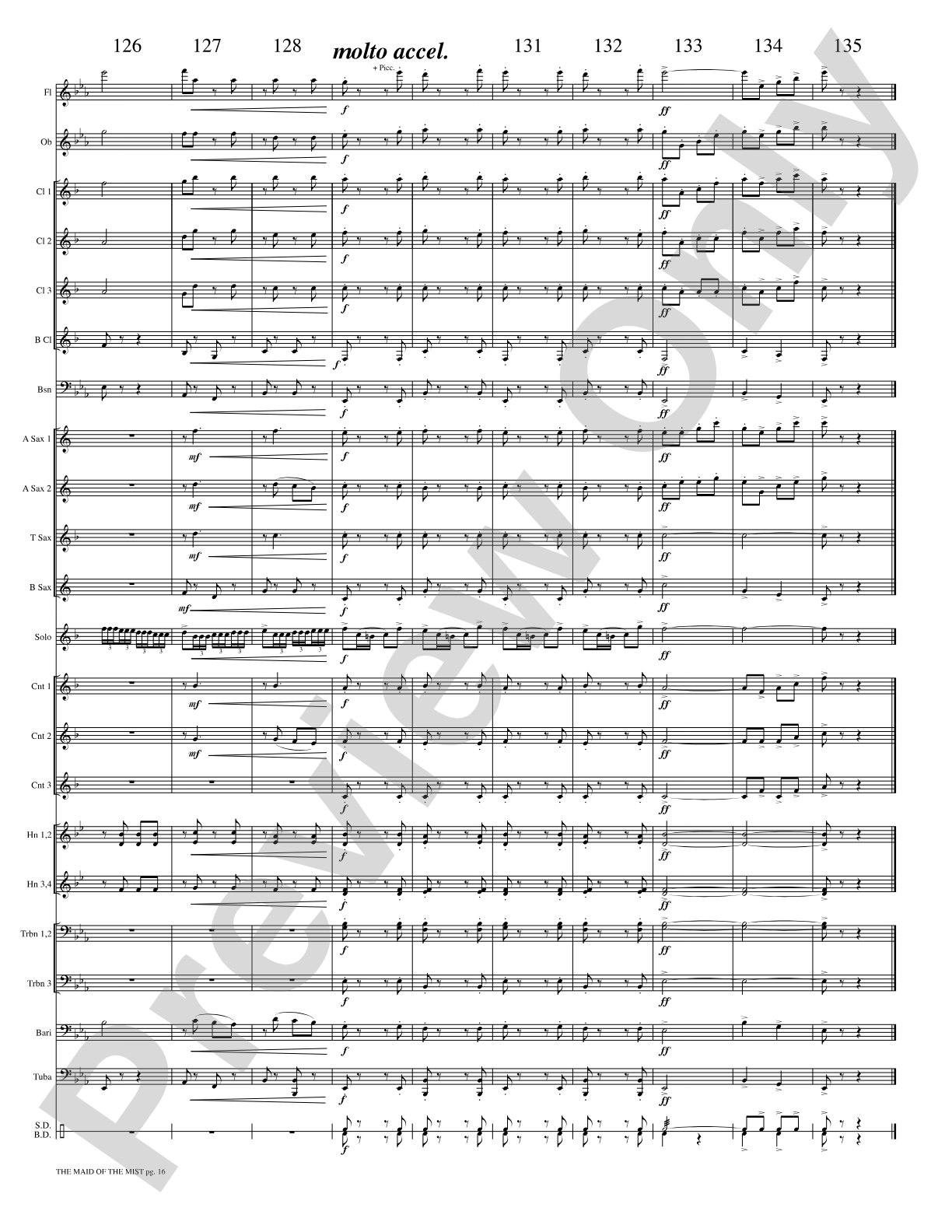

The Maid of the Mist (Solo Cornet and Concert Band): Concert Band Conductor Score & Parts
Solo Cornet and Concert Band
By Herbert L. Clarke / arr. David Marlatt
Grade: 3
Item: 81-PK-0000012
$65.00
One moment…
Description
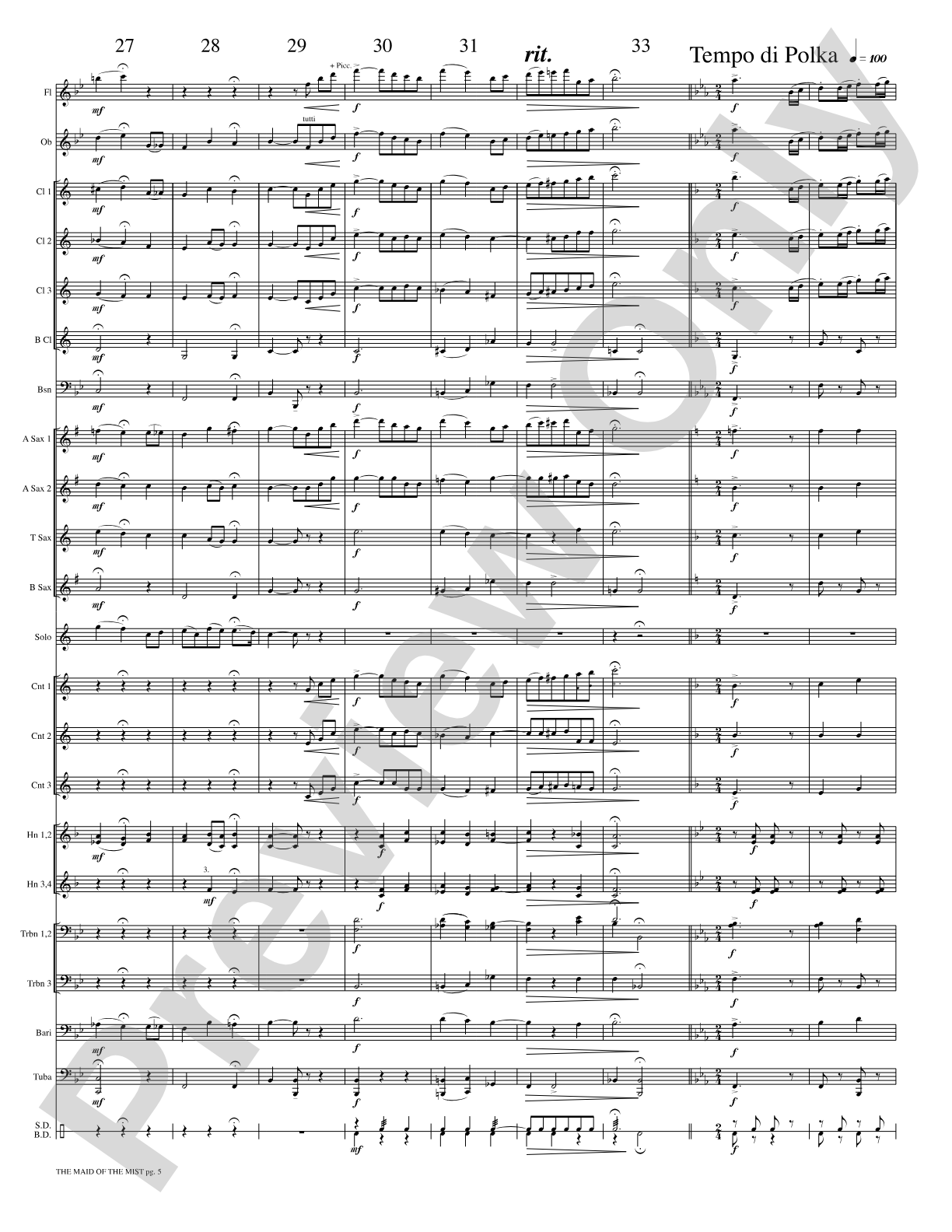
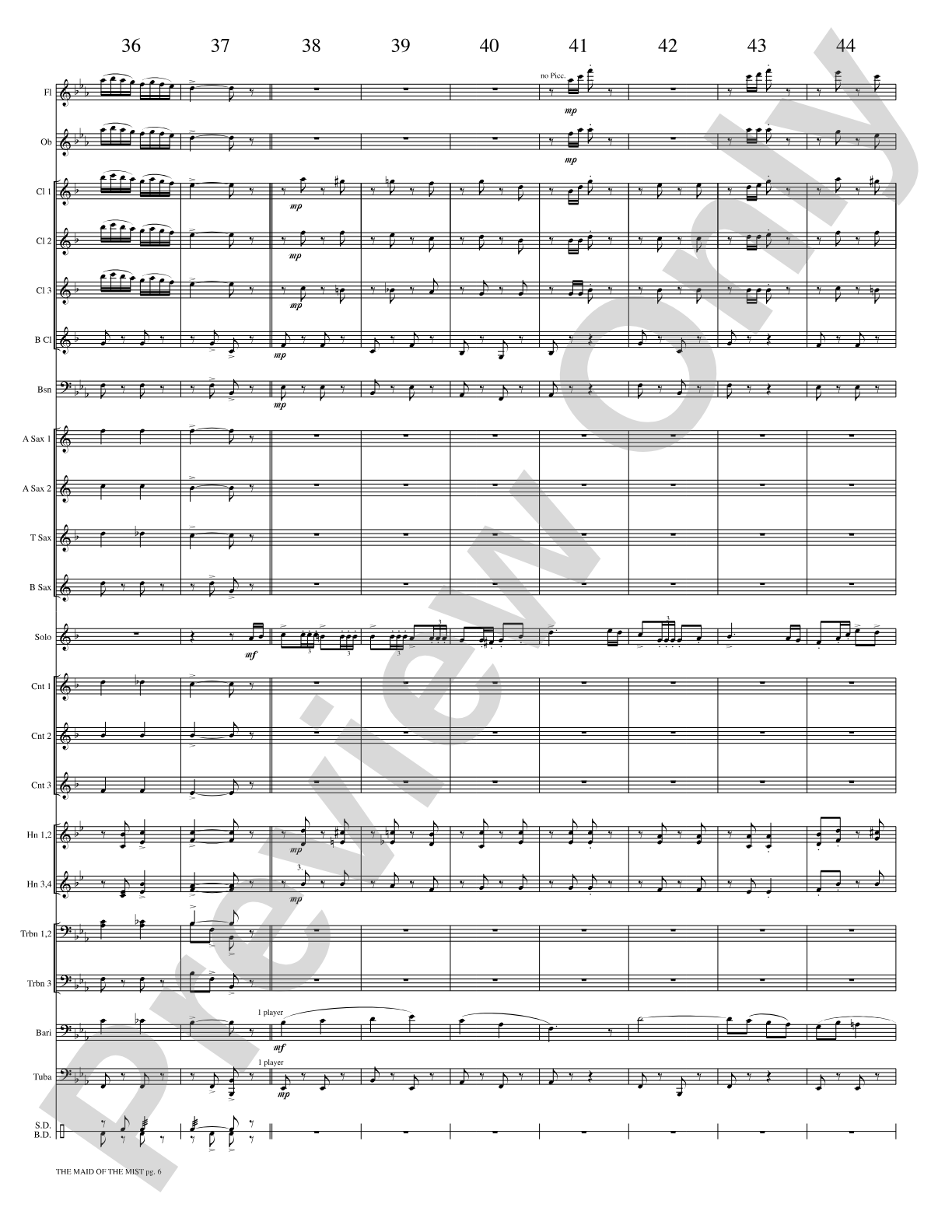
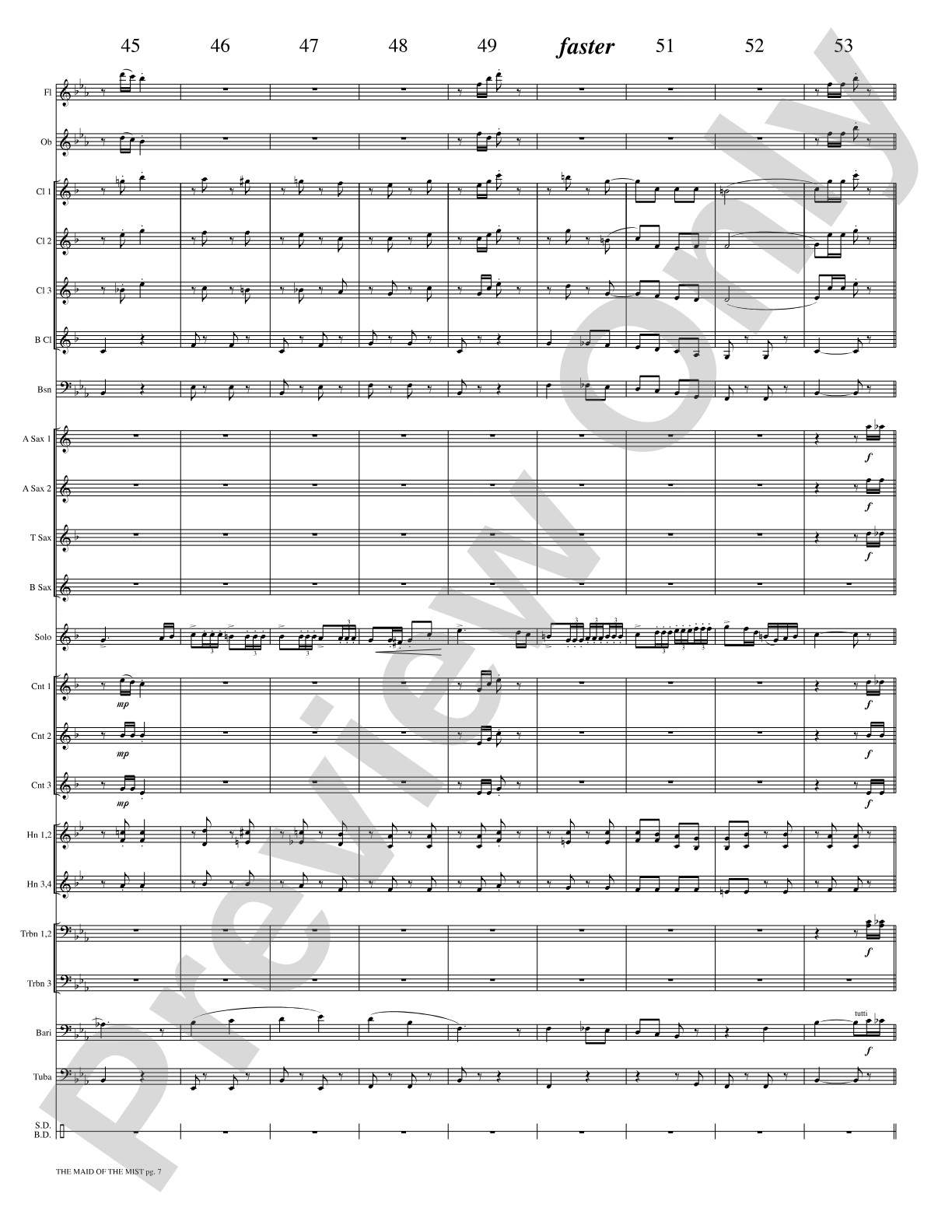
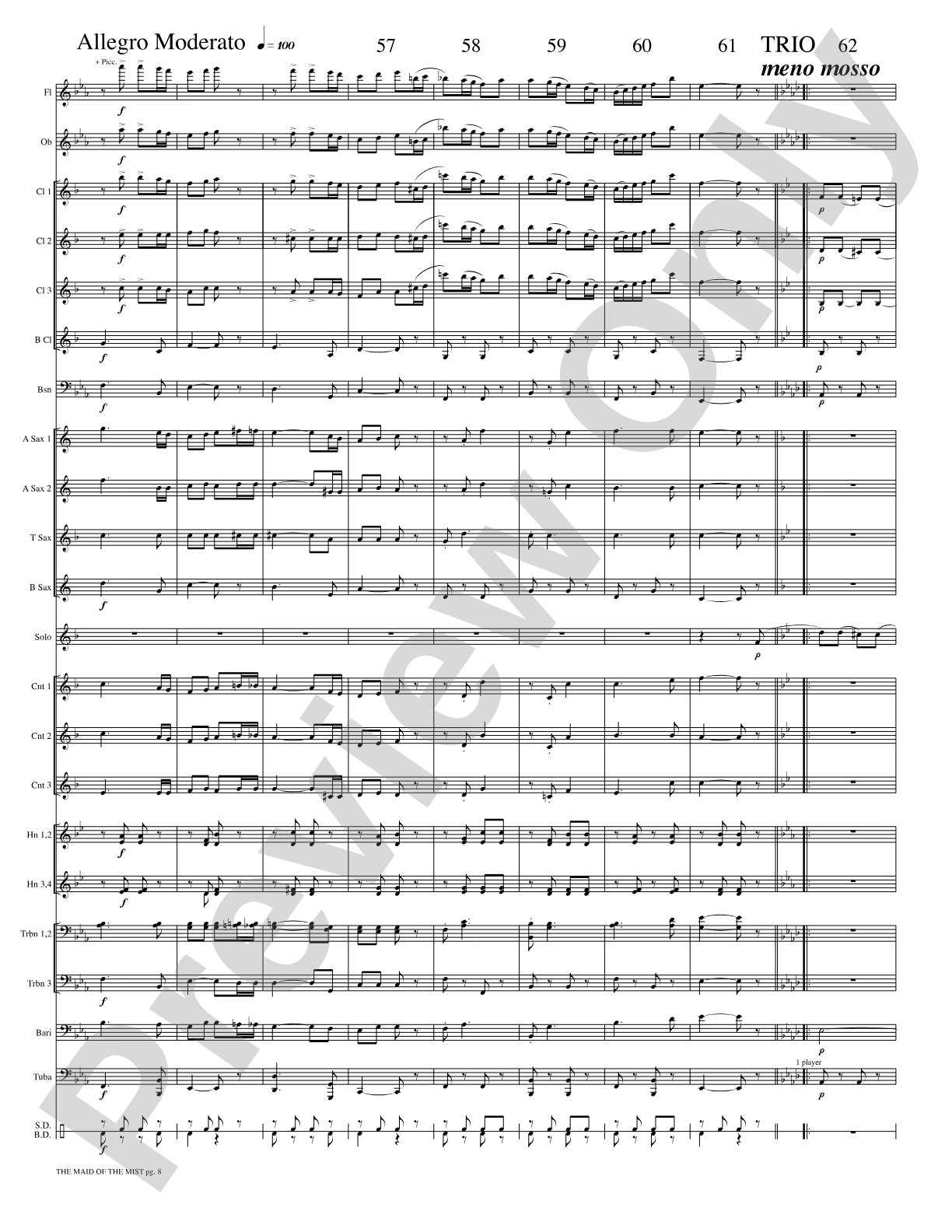
This fun light piece is a great showpiece for the cornet. It is named after the sight-seeing boats for tourists in Niagara Falls. Set as a polka, there is much opportunity for the soloist to display quick fingers and light triple tonguing.
To create a clean new edition, dynamics and articulations were made more consistent in the parts. Other items were changed to reflect the bands of today including F Horn parts rather than E-flat and the percussion parts have been reorganized.
This is the first time this work has been available with a full conductor score rather than a piano reduction.


To create a clean new edition, dynamics and articulations were made more consistent in the parts. Other items were changed to reflect the bands of today including F Horn parts rather than E-flat and the percussion parts have been reorganized.
This is the first time this work has been available with a full conductor score rather than a piano reduction.
Discover MakeMusic Cloud: thousands of interactive titles your students can play along with today.
Sample Audio
1
Audio File
--:--
0:00
0:00
Sample Video
No sample videos found.
Additional Details
Series:
Eighth Note Publications
Publisher:
Eighth Note Publications
Page Count:
224
SKU:
81-PK-0000012
More about this title
About the Composer: Herbert L. Clarke
Herbert L. Clarke (1867-1945) was an American cornet virtuoso and composer whose brilliant technical writing for the instrument set a standard that remains unmatched. His career as both a concert soloist and composer established him as a central figure in American wind band music during the late 19th and early 20th centuries. Clarke's works for cornet showcase the instrument's agility and lyrical range, making them essential repertoire for any serious cornetist.
Clarke's legacy extends beyond his performance career. His compositions and technical studies for cornet continue to develop players' facility with triple tonguing, rapid articulation, and melodic expression. Band directors and cornet teachers rely on his works because they balance musical substance with genuine entertainment value, a quality that makes his pieces engaging for both performers and audiences.
Why we love this
Marlatt's revision brings Clarke's beloved showpiece into modern concert band practice with a full conductor score, eliminating the limitations of piano reduction and allowing the ensemble to breathe as an integrated unit. The clarified dynamics and articulations across parts make this cleaner to teach while preserving Clarke's brilliant cornet writing, and the updated instrumentation (F horns, reorganized percussion) means you're working with parts your musicians are already equipped to play.
What to expect
Bright, sprightly, and full of personality, this polka captures the lighthearted tourism of Niagara Falls with playful cornet figurations that dance over a propulsive band accompaniment. The piece swings with carnival energy, inviting both the soloist and ensemble to find joy in precision and rhythmic vitality.
Who it's for
This work sits perfectly in the Grade 3 concert band with a strong cornet soloist who enjoys technical display and light articulation work. It appeals to directors seeking a crowd-pleasing showpiece that develops genuine musicianship rather than empty virtuosity, and it serves as a vehicle for a confident player to shine without overshadowing the ensemble's role.
How to get the most out of it
- Balance the cornet solo prominently in the polka sections. The soloist's fast passages need clarity, but the ensemble's rhythmic drive should remain grounded and steady underneath.
- Approach the triple tonguing with evenness and precision. Marking articulation guides in rehearsal helps young soloists find consistency before adding tempo.
- Shape the polka rhythm with a light, lilting quality rather than driving heaviness. The piece commemorates pleasure boats, not military marches; let the character stay buoyant.
- Use the full conductor score to balance solo with ensemble during the showy passages. Watching the conductor helps the cornet soloist land entrances cleanly and coordinate dynamic shifts with the band.
How to use it
Program this as a closing concert opener or mid-program palate cleanser between heavier works. It works particularly well on pops concerts, family audience events, or any program seeking an accessible, entertaining piece that showcases individual talent while keeping the ensemble engaged. The piece also serves as a natural celebration of your cornet section's technical achievements.
Skills your students will build
- Triple tonguing clarity and control in rapid passages
- Polka rhythm and lilt, including lilting articulation on sustained notes
- Solo cornet balance and projection against full ensemble accompaniment
- Precision in coordinated ensemble articulation and dynamic consistency
- Light, buoyant phrasing in a concert setting