

The Lighthouse: 2-Part Choral Octavo
Words and music by Andy Beck
Item: 00-PO-0005632
$2.05
Minimum order quantity: 20 copies
Pickup currently not available
Description
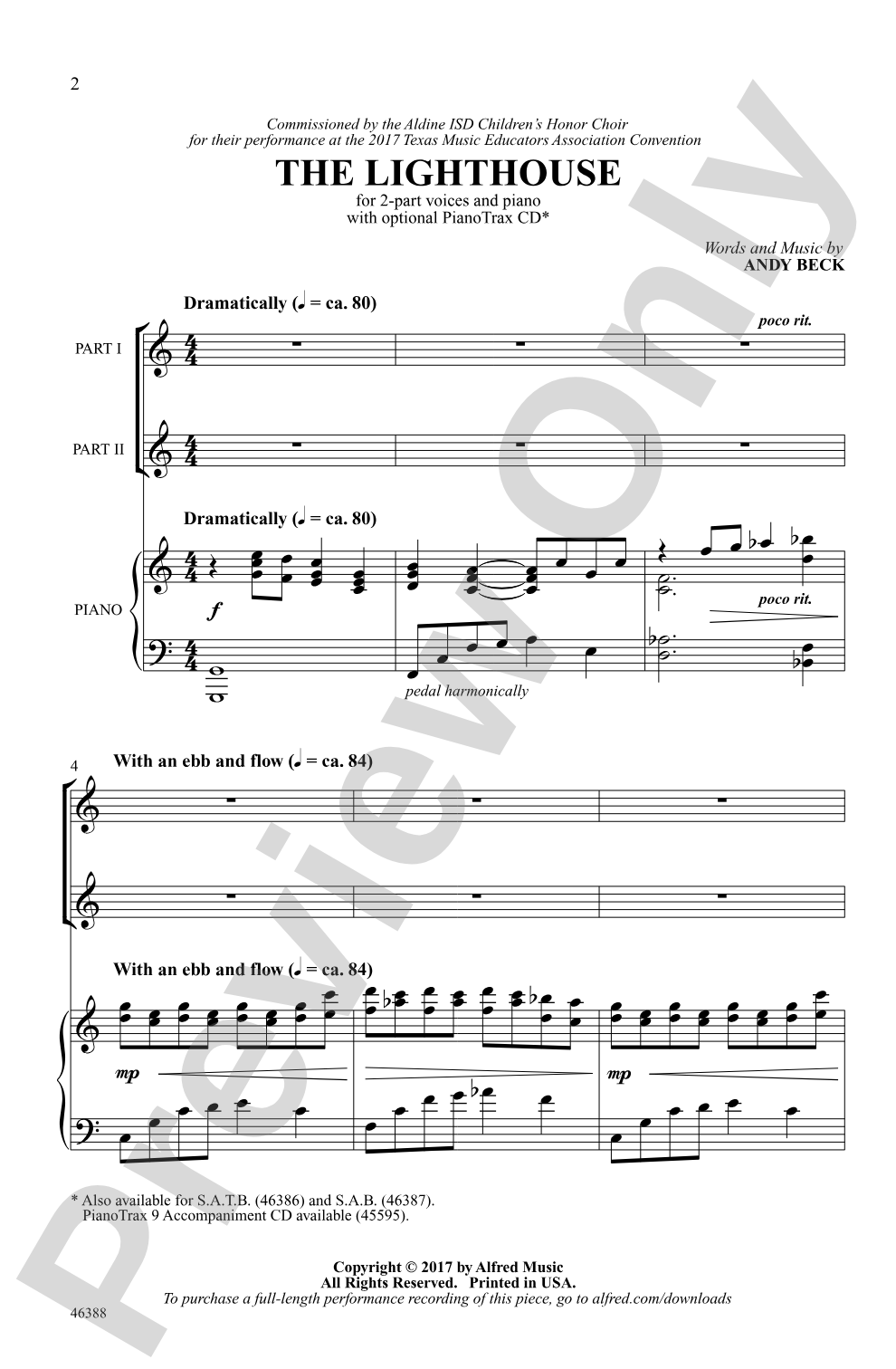
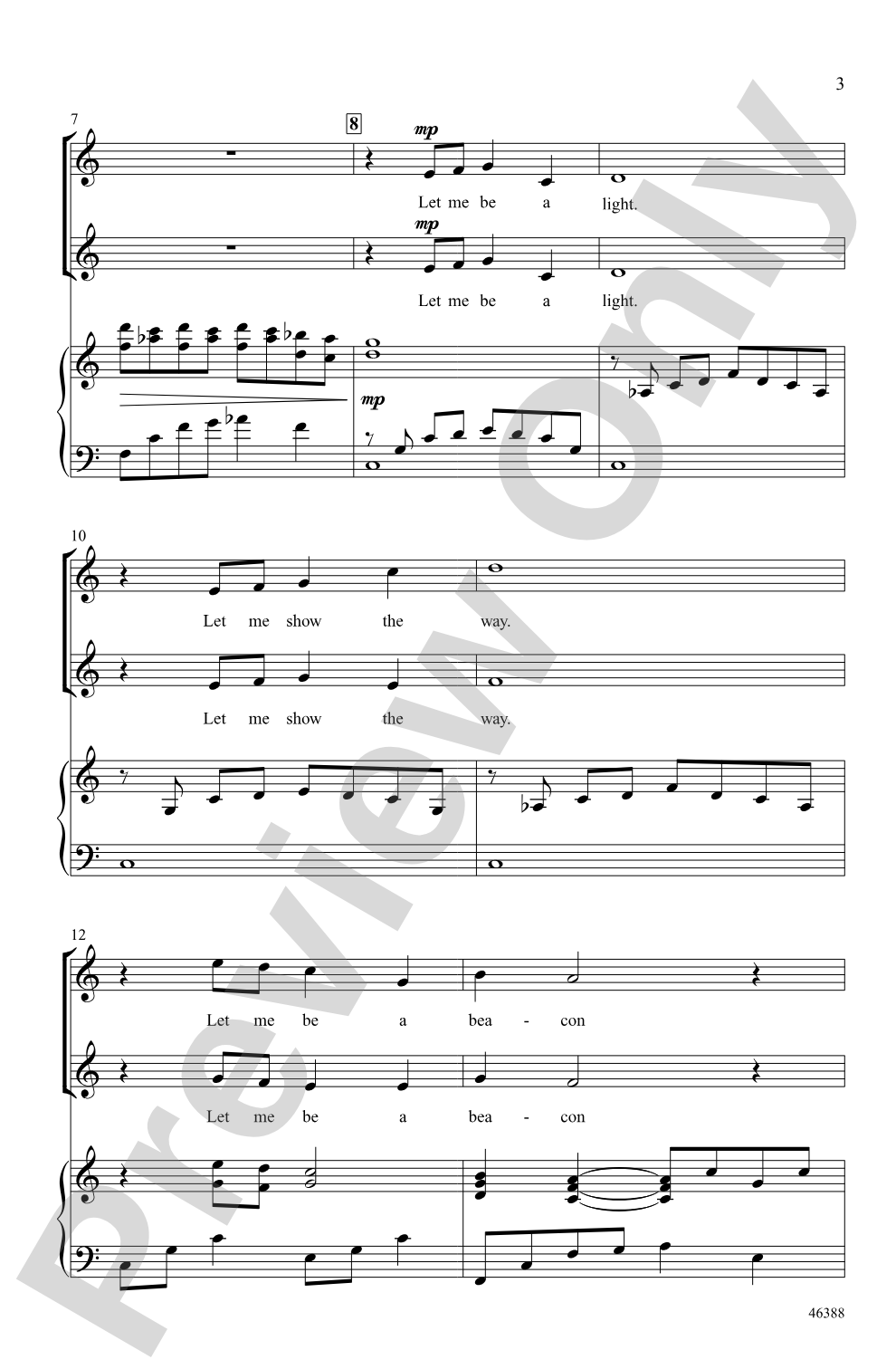
The title of this piece never appears in the lyrics, but provides an overarching metaphor for the text. Themes of strength, guidance, and living by example are at the heart of this inspiring choral. Superb voice leading makes the warm harmonic twists and turns accessible for any age choir, and the ebb and flow of the piano represents a turbulent sea. Expressive and elevating!


The Lighthouse: 2-Part Choral Octavo isn't in MakeMusic Cloud just yet...but it could be. Let us know you'd like to see it, and you'll help shape what comes next. In the meantime, start a free trial and dive into thousands of interactive titles your students can play along with today.
Request This Title
Tell us you want it.
Start Your Free Trial
Explore everything that's ready to play right now.
Sample Audio
1
Audio File
--:--
0:00
0:00
Sample Video
Additional Details
Series:
Alfred Choral Designs
Publisher:
Alfred Music
Page Count:
8
SKU:
00-PO-0005632
More about this title
About the Composer: Andy Beck

Andy Beck directs choral publications at Alfred Music while maintaining an active composing and arranging career. His catalogue includes over 450 published works spanning choral literature, vocal resources, and children's musicals, many of which have garnered widespread performance through YouTube and concert halls alike.
Beyond the page, Beck remains deeply engaged with music education as a guest conductor, adjudicator, and clinician working with honor choirs and all-state ensembles across the United States and internationally. He holds degrees in music education from Ithaca College and Northwest Missouri State University, sings as a tenor with the North Carolina Master Chorale Chamber Choir, and brings decades of experience in musical theatre and choral artistry to his compositional voice.
Why we love this
Beck's harmonic language here feels genuinely warm without sacrificing sophistication. The metaphor of the lighthouse works because it stays implicit in the music itself; the piano part's oceanic swells and the supple voice leading create the emotional architecture without ever spelling things out. You'll find this piece sits perfectly in that rare space where it challenges singers musically while remaining genuinely accessible across age and experience levels.
What to expect
There's an inherent dignity to this piece that builds gradually. The piano painting the sea creates an atmospheric foundation while the voices move through warm, unexpected harmonic territory. By the end, you feel both grounded and uplifted, as though the lighthouse has steadied something inside.
Who it's for
This piece works beautifully for choirs of any age seeking something musically and thematically substantive. Whether you're programming a concert or festival performance, the 2-part voicing makes it accessible to developing ensembles while the harmonic sophistication keeps more advanced singers engaged.
How to get the most out of it
- Shape the dynamic contours around the text's themes of strength and guidance rather than treating phrases as static units. Let the emotional arc of each section breathe naturally.
- Balance the two voice parts so that inner harmonic movement remains audible; Beck's voice leading deserves to be heard, not buried.
- Work closely with your pianist on the ebb and flow of the accompaniment. The turbulent sea imagery should feel organic, supporting rather than overpowering the voices.
- Allow time for singers to absorb the warm harmonic twists. Mark them in rehearsal so singers understand where the unexpected shifts occur and can deliver them with intention.
How to use it
Position this as a centerpiece rather than filler; its metaphorical depth and musical craftsmanship reward careful programming. It pairs well with other secular choral works that explore themes of resilience or community, or stands alone as the emotional anchor of a themed concert.
Skills your students will build
- Reading and executing warm harmonic progressions with security
- Balancing independent voice parts while maintaining harmonic awareness
- Responding to textual imagery through dynamic and expressive shaping
- Sustaining vocal line integrity through unexpected harmonic twists