
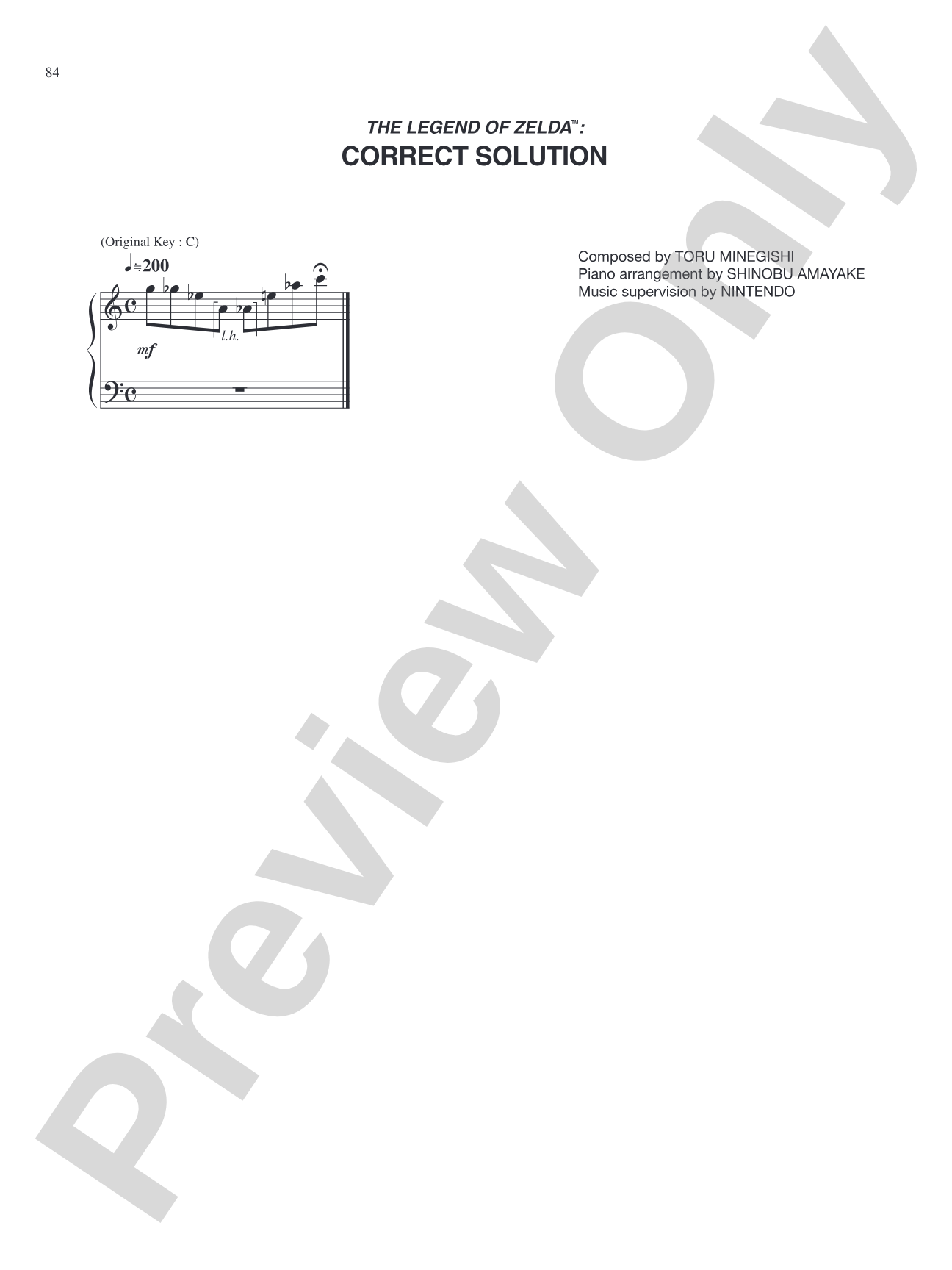

The Legend of Zelda™ Correct Solution: Piano
33 Themes from The Legend of Zelda™ Arranged for Solo Piano
By Koji Kondo, Kozue Ishikawa, Toru Minegishi, Kenta Nagata, Akito Nakatsuka, Asuka Ohta, Manaka Tominaga, and Hajime Wakai
Level: Intermediate / Advanced
Item: 00-PS-0015318
$4.99
One moment…
Related Items
The Legend of Zelda™ Title Theme: Piano |
$4.99
|
View | |
The Legend of Zelda™ Main Theme: Piano |
$4.99
|
View | |
Zelda II™: The Adventure of Link™ Title Theme: Piano |
$4.99
|
View | |
Zelda II™: The Adventure of Link™ Palace Music: Piano |
$4.99
|
View | |
The Legend of Zelda™: A Link to the Past™ Title Screen: Piano |
$4.99
|
View | |
The Legend of Zelda™: A Link to the Past™ Hyrule Castle Music: Piano |
$4.99
|
View | |
The Legend of Zelda™: A Link to the Past™ Main Theme: Piano |
$4.99
|
View | |
The Legend of Zelda™: A Link to the Past™ The Dark World: Piano |
$4.99
|
View | |
The Legend of Zelda™: Link's Awakening™ Main Theme: Piano |
$4.99
|
View | |
The Legend of Zelda™: Ocarina of Time™ Title Theme: Piano |
$4.99
|
View | |
The Legend of Zelda™: Ocarina of Time™ Princess Zeldas Theme: Piano |
$4.99
|
View | |
The Legend of Zelda™: Ocarina of Time™ Hyrule Field: Piano |
$9.99
|
View | |
The Legend of Zelda™: Ocarina of Time™ Lost Woods: Piano |
$4.99
|
View | |
The Legend of Zelda™: Ocarina of Time™ Song of Storms: Piano |
$4.99
|
View | |
The Legend of Zelda™: Ocarina of Time™ Gerudo Valley: Piano |
$4.99
|
View | |
The Legend of Zelda™: Majora's Mask™ Prelude of Majoras Mask: Piano |
$4.99
|
View | |
The Legend of Zelda™: Majora's Mask™ Termina Field: Piano |
$4.99
|
View | |
The Legend of Zelda™: The Wind Waker™ Main Theme: Piano |
$4.99
|
View | |
The Legend of Zelda™: The Wind Waker™ Dragon Roost Island: Piano |
$4.99
|
View | |
The Legend of Zelda™: The Wind Waker™ Molgera: Piano |
$4.99
|
View | |
The Legend of Zelda™: The Wind Waker™ Ocean Theme: Piano |
$4.99
|
View | |
The Legend of Zelda™: Four Swords Adventures Village of the Blue Maiden Restored: Piano |
$4.99
|
View | |
The Legend of Zelda™: Four Swords Adventures Field Theme: Piano |
$4.99
|
View | |
The Legend of Zelda™: Twilight Princess Hyrule Field Main Theme: Piano |
$4.99
|
View | |
The Legend of Zelda™: Twilight Princess Hidden Village: Piano |
$4.99
|
View | |
The Legend of Zelda™: Twilight Princess Midnas Lament: Piano |
$4.99
|
View | |
The Legend of Zelda™: Phantom Hourglass Cielas Parting Words: Piano |
$4.99
|
View | |
The Legend of Zelda™: Spirit Tracks Title Theme: Piano |
$4.99
|
View | |
The Legend of Zelda™: Spirit Tracks Field Theme: Piano |
$4.99
|
View | |
The Legend of Zelda™: Spirit Tracks Train Travel: Piano |
$4.99
|
View | |
The Legend of Zelda™ Tri Force Fanfare: Piano |
$4.99
|
View | |
The Legend of Zelda™ Whistle of Warp: Piano |
$4.99
|
View | |
The Legend of Zelda™ Series for Piano: Piano Book |
$19.99
|
View |
Description
After decades of anticipation, Alfred is proud to release the officially licensed, collectible sheet music companion folios to The Legend of Zelda™ video game series. The 33 arrangements in this intermediate-advanced piano edition are note-for-note transcriptions of instantly recognizable melodies beloved by generations of gamers around the globe. From Koji Kondo's iconic "The Legend of Zelda™ Main Theme" to The Legend of Zelda™: Spirit Tracks themes, the dozens of pieces in this book represent two and a half decades of Nintendo® video game favorites. Adding to the fun, graphics from the corresponding games grace each page of the sheet music. Impress friends, family, and audiences of all ages by playing from this magnificent collection, which makes a great gift for every pianist.
Titles: * The Legend of Zelda™ Title Theme * The Legend of Zelda™ Main Theme * Zelda II™ - The Adventure of Link™ Title Theme * Zelda II™ - The Adventure of Link™ Palace Music * The Legend of Zelda™: A Link to the Past™ Title Screen * The Legend of Zelda™: A Link to the Past™ Hyrule Castle Music * The Legend of Zelda™: A Link to the Past™ Main Theme * The Legend of Zelda™: A Link to the Past™ The Dark World * The Legend of Zelda™: Link's Awakening™ Main Theme * The Legend of Zelda™: Ocarina of Time™ Title Theme * The Legend of Zelda™: Ocarina of Time™ Princess Zelda's Theme * The Legend of Zelda™: Ocarina of Time™ Hyrule Field * The Legend of Zelda™: Ocarina of Time™ Lost Woods (Saria's Song) * The Legend of Zelda™: Ocarina of Time™ Gerudo Valley * The Legend of Zelda™: Ocarina of Time™ Song of Storms * The Legend of Zelda™: Majora's Mask™ Prelude of Majora's Mask * The Legend of Zelda™: Majora's Mask™Termina Field * The Legend of Zelda™: The Wind Waker™ Main Theme * The Legend of Zelda™: The Wind Waker™ Dragon Roost Island * The Legend of Zelda™: The Wind Waker™ Ocean Theme * The Legend of Zelda™: The Wind Waker™ Molgera * The Legend of Zelda™: Four Swords Adventures Village of the Blue Maiden Restored * The Legend of Zelda™: Four Swords Adventures Field Theme * The Legend of Zelda™: Twilight Princess Hyrule Field Main Theme * The Legend of Zelda™: Twilight Princess Hidden Village * The Legend of Zelda™: Twilight Princess Midna's Lament * The Legend of Zelda™: Phantom Hourglass Ciela's Parting Words * The Legend of Zelda™: Spirit Tracks Title Theme * The Legend of Zelda™: Spirit Tracks Field Theme * The Legend of Zelda™: Spirit Tracks Train Travel (Main Theme) * The Legend of Zelda™ Triforce Fanfare * The Legend of Zelda™ Correct Solution * The Legend of Zelda™ Whistle of Warp.
"Best in Show" Award at Winter NAMM 2012 presented by Music Inc. magazine.


Titles: * The Legend of Zelda™ Title Theme * The Legend of Zelda™ Main Theme * Zelda II™ - The Adventure of Link™ Title Theme * Zelda II™ - The Adventure of Link™ Palace Music * The Legend of Zelda™: A Link to the Past™ Title Screen * The Legend of Zelda™: A Link to the Past™ Hyrule Castle Music * The Legend of Zelda™: A Link to the Past™ Main Theme * The Legend of Zelda™: A Link to the Past™ The Dark World * The Legend of Zelda™: Link's Awakening™ Main Theme * The Legend of Zelda™: Ocarina of Time™ Title Theme * The Legend of Zelda™: Ocarina of Time™ Princess Zelda's Theme * The Legend of Zelda™: Ocarina of Time™ Hyrule Field * The Legend of Zelda™: Ocarina of Time™ Lost Woods (Saria's Song) * The Legend of Zelda™: Ocarina of Time™ Gerudo Valley * The Legend of Zelda™: Ocarina of Time™ Song of Storms * The Legend of Zelda™: Majora's Mask™ Prelude of Majora's Mask * The Legend of Zelda™: Majora's Mask™Termina Field * The Legend of Zelda™: The Wind Waker™ Main Theme * The Legend of Zelda™: The Wind Waker™ Dragon Roost Island * The Legend of Zelda™: The Wind Waker™ Ocean Theme * The Legend of Zelda™: The Wind Waker™ Molgera * The Legend of Zelda™: Four Swords Adventures Village of the Blue Maiden Restored * The Legend of Zelda™: Four Swords Adventures Field Theme * The Legend of Zelda™: Twilight Princess Hyrule Field Main Theme * The Legend of Zelda™: Twilight Princess Hidden Village * The Legend of Zelda™: Twilight Princess Midna's Lament * The Legend of Zelda™: Phantom Hourglass Ciela's Parting Words * The Legend of Zelda™: Spirit Tracks Title Theme * The Legend of Zelda™: Spirit Tracks Field Theme * The Legend of Zelda™: Spirit Tracks Train Travel (Main Theme) * The Legend of Zelda™ Triforce Fanfare * The Legend of Zelda™ Correct Solution * The Legend of Zelda™ Whistle of Warp.
"Best in Show" Award at Winter NAMM 2012 presented by Music Inc. magazine.
Discover MakeMusic Cloud: thousands of interactive titles your students can play along with today.
Sample Audio
No sample audio found.
Sample Video
No sample videos found.
Additional Details
Publisher:
Alfred Music
Page Count:
84
SKU:
00-PS-0015318
More about this title
About the Composer: Toru Minegishi
Toru Minegishi has been a cornerstone of Nintendo's audio design for decades, shaping the sonic identity of some of gaming's most beloved franchises. His work on The Legend of Zelda series demonstrates a mastery of melodic writing that transcends the medium, creating themes so memorable and emotionally resonant that they endure across generations of players and listeners.
As a composer who understands both the technical constraints and creative possibilities of interactive media, Minegishi crafts melodies that work equally well in a concert hall or a practice room. His contributions to video game music have elevated the genre and proven that great composition knows no medium.
Why we love this
Students recognize these melodies instantly, which transforms practice from obligation into genuine engagement. The arrangements sit at a sweet spot where intermediate pianists can access material that sounds heroic and polished without requiring virtuosic technique, making these pieces ideal for building confidence and sight-reading fluency in players who need repertoire that motivates them.
What to expect
Familiar yet fresh. These themes carry the warmth and melodic clarity of their original compositions, now arranged for the piano's full dynamic and harmonic range. Playing through this collection feels like revisiting cherished musical memories while discovering new depths in melodies you thought you already knew.
Who it's for
Intermediate and advanced pianists who want to play music they already love, as well as teachers seeking repertoire that combines cultural relevance with genuine musical substance. Gamers exploring music notation for the first time and experienced pianists looking for fresh material with widespread appeal will both find value here.
How to get the most out of it
- Shape each theme's arc by listening to how the original composition unfolds, then apply that phrasing to your interpretation. These melodies were written to carry emotion across a game world, and that narrative quality translates directly to the piano.
- Balance accompaniment patterns so they support the melody without overshadowing it. Many of these pieces use repetitive harmonic figures; keeping them rhythmically precise but dynamically understated lets the theme breathe.
- Treat tempo as a storytelling tool. Reference the game contexts if you're familiar with them (exploring a peaceful forest versus a tense dungeon crawl), and let that inform whether you sit at the faster or slower end of a comfortable tempo range.
- Experiment with pedal judiciously. The resonance of the piano can enhance harmonic color, but these melodies are so strong that clarity often serves them better than wash.
How to use it
These pieces work beautifully in casual recitals, community performances, and student showcases where broad audiences (not just classical music enthusiasts) will respond with recognition and delight. You might also use individual themes as sight-reading material throughout the year, or program a medley of pieces from a single game as a thematic concert moment that appeals to both traditional and non-traditional listeners.
Skills your students will build
- Sight-reading of intermediate-advanced piano notation
- Melody projection with accompaniment awareness
- Tempo control and rubato in thematic playing
- Pedal technique for harmonic color and sustain
- Interpretation of music from non-classical sources
- Stamina across longer, multi-section arrangements