
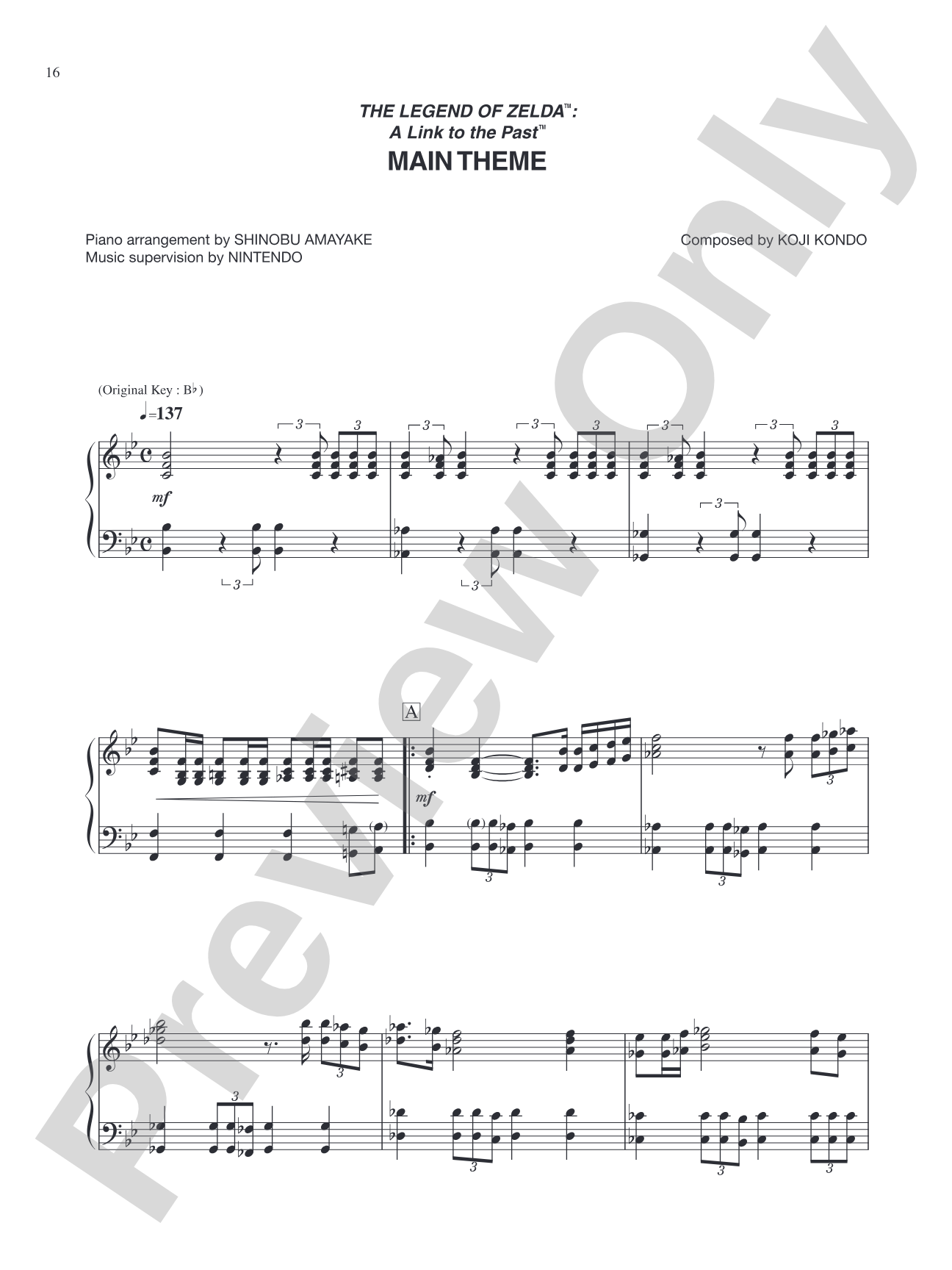

The Legend of Zelda™: A Link to the Past™ Main Theme: Piano
33 Themes from The Legend of Zelda™ Arranged for Solo Piano
By Koji Kondo, Kozue Ishikawa, Toru Minegishi, Kenta Nagata, Akito Nakatsuka, Asuka Ohta, Manaka Tominaga, and Hajime Wakai
Level: Intermediate / Advanced
Item: 00-PS-0015293
$4.99
One moment…
Related Items
The Legend of Zelda™ Title Theme: Piano |
$4.99
|
View | |
The Legend of Zelda™ Main Theme: Piano |
$4.99
|
View | |
Zelda II™: The Adventure of Link™ Title Theme: Piano |
$4.99
|
View | |
Zelda II™: The Adventure of Link™ Palace Music: Piano |
$4.99
|
View | |
The Legend of Zelda™: A Link to the Past™ Title Screen: Piano |
$4.99
|
View | |
The Legend of Zelda™: A Link to the Past™ Hyrule Castle Music: Piano |
$4.99
|
View | |
The Legend of Zelda™: A Link to the Past™ The Dark World: Piano |
$4.99
|
View | |
The Legend of Zelda™: Link's Awakening™ Main Theme: Piano |
$4.99
|
View | |
The Legend of Zelda™: Ocarina of Time™ Title Theme: Piano |
$4.99
|
View | |
The Legend of Zelda™: Ocarina of Time™ Princess Zeldas Theme: Piano |
$4.99
|
View | |
The Legend of Zelda™: Ocarina of Time™ Hyrule Field: Piano |
$9.99
|
View | |
The Legend of Zelda™: Ocarina of Time™ Lost Woods: Piano |
$4.99
|
View | |
The Legend of Zelda™: Ocarina of Time™ Song of Storms: Piano |
$4.99
|
View | |
The Legend of Zelda™: Ocarina of Time™ Gerudo Valley: Piano |
$4.99
|
View | |
The Legend of Zelda™: Majora's Mask™ Prelude of Majoras Mask: Piano |
$4.99
|
View | |
The Legend of Zelda™: Majora's Mask™ Termina Field: Piano |
$4.99
|
View | |
The Legend of Zelda™: The Wind Waker™ Main Theme: Piano |
$4.99
|
View | |
The Legend of Zelda™: The Wind Waker™ Dragon Roost Island: Piano |
$4.99
|
View | |
The Legend of Zelda™: The Wind Waker™ Molgera: Piano |
$4.99
|
View | |
The Legend of Zelda™: The Wind Waker™ Ocean Theme: Piano |
$4.99
|
View | |
The Legend of Zelda™: Four Swords Adventures Village of the Blue Maiden Restored: Piano |
$4.99
|
View | |
The Legend of Zelda™: Four Swords Adventures Field Theme: Piano |
$4.99
|
View | |
The Legend of Zelda™: Twilight Princess Hyrule Field Main Theme: Piano |
$4.99
|
View | |
The Legend of Zelda™: Twilight Princess Hidden Village: Piano |
$4.99
|
View | |
The Legend of Zelda™: Twilight Princess Midnas Lament: Piano |
$4.99
|
View | |
The Legend of Zelda™: Phantom Hourglass Cielas Parting Words: Piano |
$4.99
|
View | |
The Legend of Zelda™: Spirit Tracks Title Theme: Piano |
$4.99
|
View | |
The Legend of Zelda™: Spirit Tracks Field Theme: Piano |
$4.99
|
View | |
The Legend of Zelda™: Spirit Tracks Train Travel: Piano |
$4.99
|
View | |
The Legend of Zelda™ Tri Force Fanfare: Piano |
$4.99
|
View | |
The Legend of Zelda™ Correct Solution: Piano |
$4.99
|
View | |
The Legend of Zelda™ Whistle of Warp: Piano |
$4.99
|
View | |
The Legend of Zelda™ Series for Piano: Piano Book |
$19.99
|
View |
Description
After decades of anticipation, Alfred is proud to release the officially licensed, collectible sheet music companion folios to The Legend of Zelda™ video game series. The 33 arrangements in this intermediate-advanced piano edition are note-for-note transcriptions of instantly recognizable melodies beloved by generations of gamers around the globe. From Koji Kondo's iconic "The Legend of Zelda™ Main Theme" to The Legend of Zelda™: Spirit Tracks themes, the dozens of pieces in this book represent two and a half decades of Nintendo® video game favorites. Adding to the fun, graphics from the corresponding games grace each page of the sheet music. Impress friends, family, and audiences of all ages by playing from this magnificent collection, which makes a great gift for every pianist.
Titles: * The Legend of Zelda™ Title Theme * The Legend of Zelda™ Main Theme * Zelda II™ - The Adventure of Link™ Title Theme * Zelda II™ - The Adventure of Link™ Palace Music * The Legend of Zelda™: A Link to the Past™ Title Screen * The Legend of Zelda™: A Link to the Past™ Hyrule Castle Music * The Legend of Zelda™: A Link to the Past™ Main Theme * The Legend of Zelda™: A Link to the Past™ The Dark World * The Legend of Zelda™: Link's Awakening™ Main Theme * The Legend of Zelda™: Ocarina of Time™ Title Theme * The Legend of Zelda™: Ocarina of Time™ Princess Zelda's Theme * The Legend of Zelda™: Ocarina of Time™ Hyrule Field * The Legend of Zelda™: Ocarina of Time™ Lost Woods (Saria's Song) * The Legend of Zelda™: Ocarina of Time™ Gerudo Valley * The Legend of Zelda™: Ocarina of Time™ Song of Storms * The Legend of Zelda™: Majora's Mask™ Prelude of Majora's Mask * The Legend of Zelda™: Majora's Mask™Termina Field * The Legend of Zelda™: The Wind Waker™ Main Theme * The Legend of Zelda™: The Wind Waker™ Dragon Roost Island * The Legend of Zelda™: The Wind Waker™ Ocean Theme * The Legend of Zelda™: The Wind Waker™ Molgera * The Legend of Zelda™: Four Swords Adventures Village of the Blue Maiden Restored * The Legend of Zelda™: Four Swords Adventures Field Theme * The Legend of Zelda™: Twilight Princess Hyrule Field Main Theme * The Legend of Zelda™: Twilight Princess Hidden Village * The Legend of Zelda™: Twilight Princess Midna's Lament * The Legend of Zelda™: Phantom Hourglass Ciela's Parting Words * The Legend of Zelda™: Spirit Tracks Title Theme * The Legend of Zelda™: Spirit Tracks Field Theme * The Legend of Zelda™: Spirit Tracks Train Travel (Main Theme) * The Legend of Zelda™ Triforce Fanfare * The Legend of Zelda™ Correct Solution * The Legend of Zelda™ Whistle of Warp.
"Best in Show" Award at Winter NAMM 2012 presented by Music Inc. magazine.


Titles: * The Legend of Zelda™ Title Theme * The Legend of Zelda™ Main Theme * Zelda II™ - The Adventure of Link™ Title Theme * Zelda II™ - The Adventure of Link™ Palace Music * The Legend of Zelda™: A Link to the Past™ Title Screen * The Legend of Zelda™: A Link to the Past™ Hyrule Castle Music * The Legend of Zelda™: A Link to the Past™ Main Theme * The Legend of Zelda™: A Link to the Past™ The Dark World * The Legend of Zelda™: Link's Awakening™ Main Theme * The Legend of Zelda™: Ocarina of Time™ Title Theme * The Legend of Zelda™: Ocarina of Time™ Princess Zelda's Theme * The Legend of Zelda™: Ocarina of Time™ Hyrule Field * The Legend of Zelda™: Ocarina of Time™ Lost Woods (Saria's Song) * The Legend of Zelda™: Ocarina of Time™ Gerudo Valley * The Legend of Zelda™: Ocarina of Time™ Song of Storms * The Legend of Zelda™: Majora's Mask™ Prelude of Majora's Mask * The Legend of Zelda™: Majora's Mask™Termina Field * The Legend of Zelda™: The Wind Waker™ Main Theme * The Legend of Zelda™: The Wind Waker™ Dragon Roost Island * The Legend of Zelda™: The Wind Waker™ Ocean Theme * The Legend of Zelda™: The Wind Waker™ Molgera * The Legend of Zelda™: Four Swords Adventures Village of the Blue Maiden Restored * The Legend of Zelda™: Four Swords Adventures Field Theme * The Legend of Zelda™: Twilight Princess Hyrule Field Main Theme * The Legend of Zelda™: Twilight Princess Hidden Village * The Legend of Zelda™: Twilight Princess Midna's Lament * The Legend of Zelda™: Phantom Hourglass Ciela's Parting Words * The Legend of Zelda™: Spirit Tracks Title Theme * The Legend of Zelda™: Spirit Tracks Field Theme * The Legend of Zelda™: Spirit Tracks Train Travel (Main Theme) * The Legend of Zelda™ Triforce Fanfare * The Legend of Zelda™ Correct Solution * The Legend of Zelda™ Whistle of Warp.
"Best in Show" Award at Winter NAMM 2012 presented by Music Inc. magazine.
The Legend of Zelda™: A Link to the Past™ Main Theme: Piano isn't in MakeMusic Cloud just yet...but it could be. Let us know you'd like to see it, and you'll help shape what comes next. In the meantime, start a free trial and dive into thousands of interactive titles your students can play along with today.
Request This Title
Tell us you want it.
Start Your Free Trial
Explore everything that's ready to play right now.
Sample Audio
No sample audio found.
Sample Video
No sample videos found.
Additional Details
Publisher:
Alfred Music
Page Count:
84
SKU:
00-PS-0015293
More about this title
About the Composer: Koji Kondo
Koji Kondo composed the soundtracks that defined Nintendo's golden age, beginning with the original Donkey Kong arcade game in 1981. His work on The Legend of Zelda series established a compositional approach that balanced memorable melodies with functional game design, creating themes that players internalized after brief exposure and still hum decades later.
Kondo's influence extends beyond entertainment; his techniques for writing themes that sound both sophisticated and instantly singable have become a case study in melodic writing. His scores demonstrate how harmonic simplicity and structural clarity can coexist with genuine musical depth, a lesson applicable to any composer working within constraints.
Why we love this
These transcriptions capture the harmonic and melodic DNA of pieces that shaped an entire generation's relationship with music, all in arrangements that respect both the source material and the piano's capabilities. A Link to the Past Main Theme and its companions hit that rare sweet spot where technical demand (intermediate-advanced) never overshadows the tune itself, so your students stay engaged with the music, not trapped in the mechanics. Programming video game music alongside classical and contemporary repertoire legitimizes it as serious musical study while energizing rehearsals and concerts.
What to expect
Stepping into these pieces feels like unlocking a vault of musical memories. Each theme carries the weight of its game's narrative and setting, whether you're channeling the triumph of Hyrule Castle or the unsettling atmosphere of the Dark World. The familiar melodies anchor you immediately, but the piano arrangements reveal harmonic sophistication and compositional intent that deeper listening rewards.
Who it's for
Pianists at the intermediate-advanced level who want to expand their repertoire beyond classical standards will find immediate appeal in music they already know and love. These arrangements also work well for students interested in film scoring and video game composition, offering a chance to study how memorable melodies translate across media. Community pianists preparing recitals with broad appeal will discover pieces that genuinely excite non-classical audiences.
How to get the most out of it
- Keep the iconic melodies vocal and present even when navigating accompanimental figures; these themes earn their fame through clarity and accessibility, not complexity.
- Explore the dynamic range suggested by each piece's source material. Softer underscore passages benefit from restraint that lets the game's original context breathe.
- Balance tempo precision against flexibility when handling rhythmic figures that echo the digital constraints of their original platform. Light elasticity often sounds more musical than metronomic accuracy.
- Layer tone color into repeated sections; Kondo's themes often develop through timbre shifts rather than harmonic reharmonization, so voicing choices matter as much as note choices.
How to use it
Feature a single movement or pair of related themes in a chamber or solo concert to bridge the gap between your classical subscribers and families attending for the first time. Alternatively, open a pops-style concert or youth recital with one of the more upbeat selections to signal that serious musicianship and fun are not mutually exclusive. These pieces work especially well as encores that send audiences home energized.
Skills your students will build
- Playing scalar passages with maintained melodic contour and consistent tone
- Managing Alberti-style and broken-chord accompaniment patterns at tempo
- Interpreting thematic development across repeated sections with subtle dynamic and textural variation
- Balancing left-hand independence while keeping right-hand melody audible and shaped
- Reading music from a published collection with minimal editorial guidance