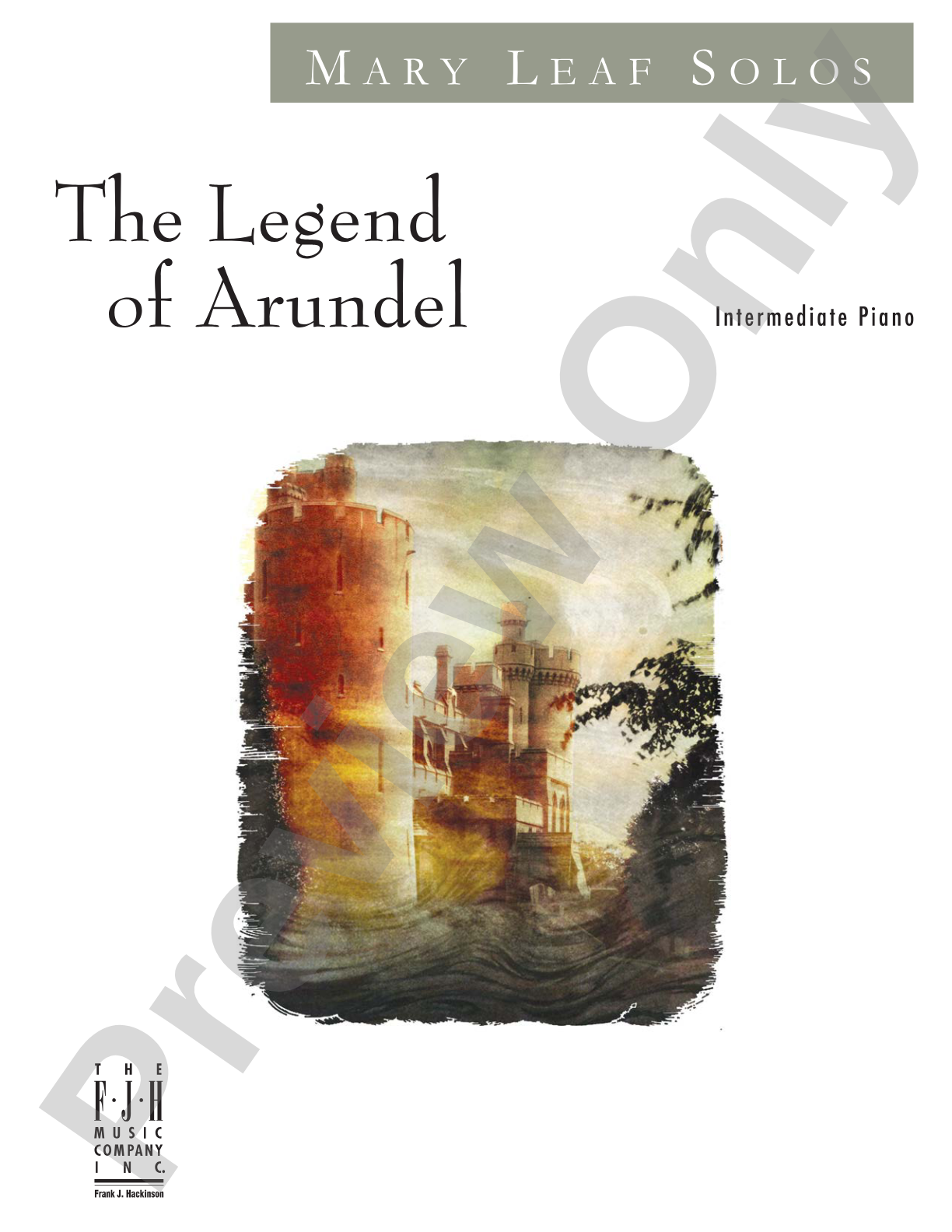
Leaf's piece for intermediate students is named for one of the treasure houses of England, home to priceless works of art and stunning tapestries. Played in the key of A minor, this piece features long lyrical phrases and a lively middle section in the sub-dominant. A great piece for teaching rubato.
Discover MakeMusic Cloud: thousands of interactive titles your students can play along with today.
Mary Leaf writes for the intermediate student with real musical substance. The architecture here is deliberately pedagogical—a lyrical A minor frame surrounding a contrasting middle section—which means your students are learning formal thinking, not just playing notes. The rubato work is especially valuable at this level, where most intermediate repertoire leaves expressive timing completely unexplored.
What to expect
Arundel unfolds with a reflective, stately quality that suggests the grandeur and history of its namesake. The long lines invite you to sing through the keyboard, while the energized middle section brings the piece into sharp relief before the serene return home.
Who it's for
Intermediate pianists ready to move beyond mechanical accuracy into expressive playing. This works well for students who can handle sustained melodies, understand harmonic function, and are beginning to ask "how do I make this sound musical?"
How to get the most out of it
Shape the long lyrical phrases by thinking in arcs rather than measure lines; let the melodic contour guide your breathing and phrasing choices.
Prepare the rubato sections by practicing them in strict time first, then gradually add flexibility; this prevents the freedom from becoming rhythmic confusion.
Balance the texture in the middle section so the shift to the sub-dominant key registers as a clear harmonic arrival without losing the piece's forward momentum.
Use the return to A minor as an opportunity to refine your interpretation; the reprise of familiar material is the perfect place to demonstrate what you've learned about expression.
How to use it
This pairs well in a recital with other character pieces at the intermediate level, especially if you're building a program around English music or architectural imagery. It also works as a bridge piece between technical etudes and more demanding Romantic-era repertoire, since it teaches musicianship without requiring advanced technical fireworks.
Skills your students will build
Shaping long lyrical phrases through dynamic and tempo nuance
Understanding harmonic function and sub-dominant relationships
Executing rubato expressively within a structured meter
Maintaining voice independence while serving a unified melodic line
Contrasting character and texture between formal sections
You May Also Like
Scan to Complete Your Purchase
Use your phone's camera to scan the code below
You'll log in on your phone and the order will be added to your account