The Lady and the Dragon Sheet Music Preview

The Lady and the Dragon: Piano

By Christopher Goldston

Item: 98-DW9131

Digital Download
$2.50
Description
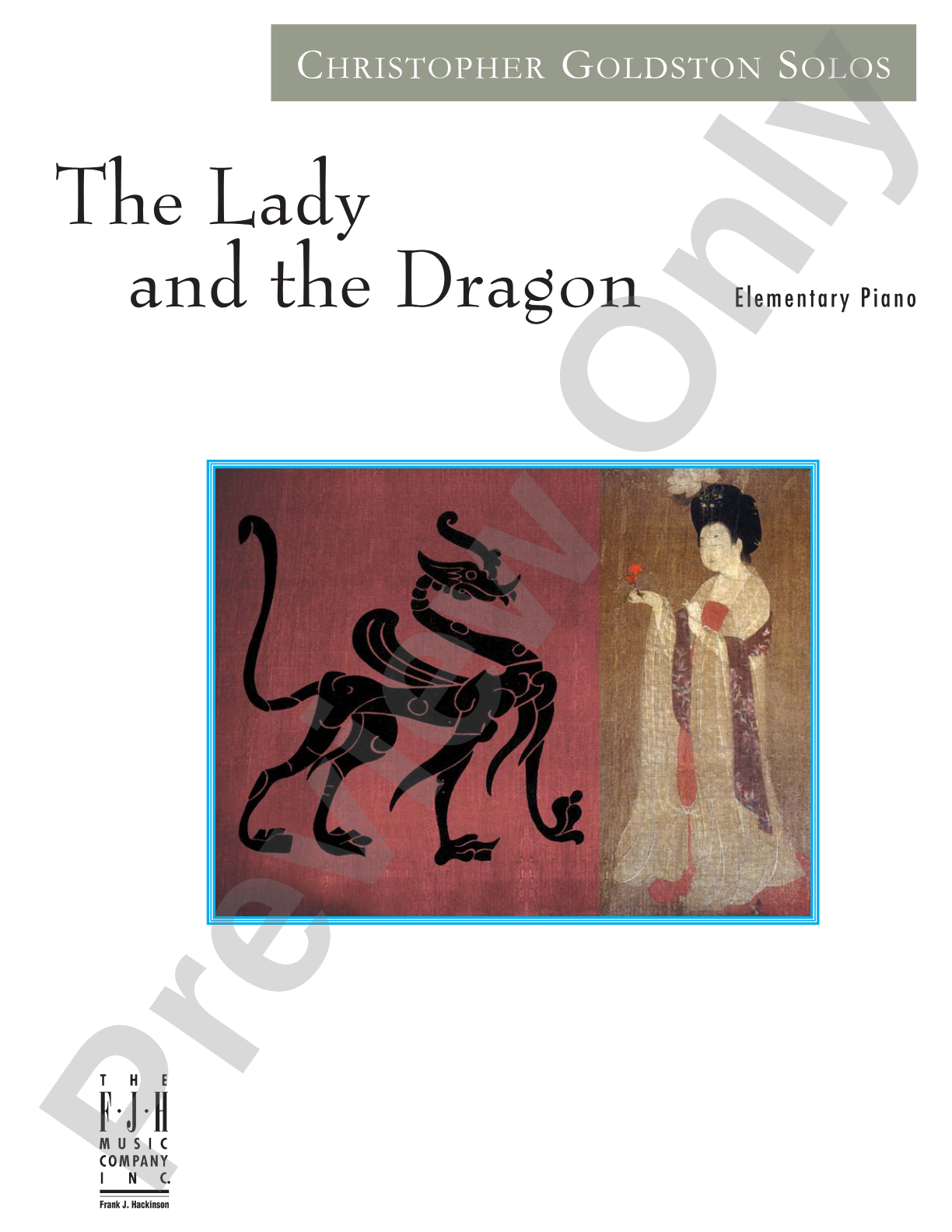
This enchanting solo is filled with all the fantasy and charm that its storybook title suggests. The graceful, legato melody of the Lady’s motif is wonderfully complemented by the spirited, staccato rhythm of the Dragon’s theme. Sublime modal harmonies throughout.

The Lady and the Dragon: Piano isn't in MakeMusic Cloud just yet...but it could be. Let us know you'd like to see it, and you'll help shape what comes next. In the meantime, start a free trial and dive into thousands of interactive titles your students can play along with today.

Sample Audio
No sample audio found.
Sample Video
Additional Details
Series: Written For You
Publisher: The FJH Music Company, Inc.
SKU: 98-DW9131

More about this title

About the Composer: Christopher Goldston

Christopher Goldston

Christopher Goldston earned his Master of Music in piano performance and pedagogy from Northwestern University and his Bachelor of Music degree in piano performance from the University of North Carolina-Greensboro. He has held faculty positions at Columbia College Chicago, Roosevelt University, and Sherwood Conservatory of Music while maintaining a private teaching studio in Chicago and offering virtual instruction.

Goldston's compositional work has earned national recognition, including the 1991 Lynn Freeman Olson Composition Award from the National Federation of Music Clubs for his piece Night Train. Since 2010, he has served as national coordinator for the MTNA Composition Competition. His leadership in music education includes service as president of both the Illinois State Music Teachers Association and the Chicago Area Music Teachers Association. The MTNA Foundation named him a Fellow in 2020, and he served as National Secretary-Treasurer from 2021 to 2023. His commissioned work Four Virtues for oboe, violin, and piano premiered at the 2022 MTNA National Conference.

Why we love this

Goldston crafts genuine narrative contrast through two distinct musical voices. The interplay between the Lady's legato grace and the Dragon's energetic staccato articulation gives young pianists a clear dramatic anchor, making this more than a pretty melody study. The modal harmonic language adds sophisticated color without requiring advanced technical facility.

What to expect

A storybook brought to life through sound. The Lady's music unfolds with graceful, flowing elegance, while the Dragon arrives with playful, bouncing energy. Together they create a gentle dramatic tension that feels inviting rather than threatening, colored throughout by warm, slightly exotic modal harmonies that give the whole piece an air of enchantment.

Who it's for

Elementary pianists ready to develop dynamic control and character interpretation beyond basic technique. This piece rewards students who can sustain legato lines while managing independent hand articulation, making it ideal for the student who has mastered elementary fundamentals and is beginning to think musically about storytelling at the keyboard.

How to get the most out of it

  • Shape the Lady's motif with long, connected phrasing and consistent pedal support; let the melody breathe naturally without rushing the legato lines.
  • Articulate the Dragon's staccato theme with rhythmic precision and lighter touch to create real textural contrast and bring the character to life.
  • Listen for where the two themes interact or overlap; balance them dynamically so each voice remains clear and the narrative relationship feels intentional.
  • Explore the modal sonorities by allowing the harmonies to ring slightly; these colors distinguish the piece from traditional major/minor progressions and deserve attention.

How to use it

Program this in a recital themed around narrative or fairy tales, where it can share the stage with other character-driven works. It also works beautifully in a spring concert celebrating younger students' progress, since the piece is visually engaging for an audience while remaining technically accessible for the performer.

Skills your students will build

  • Sustaining legato melody lines with proper pedal control
  • Contrasting articulation between staccato and legato within the same piece
  • Reading and interpreting modal harmonic movement
  • Balancing dynamic independence between treble and bass voices
  • Building character and narrative intent in performance

You May Also Like