
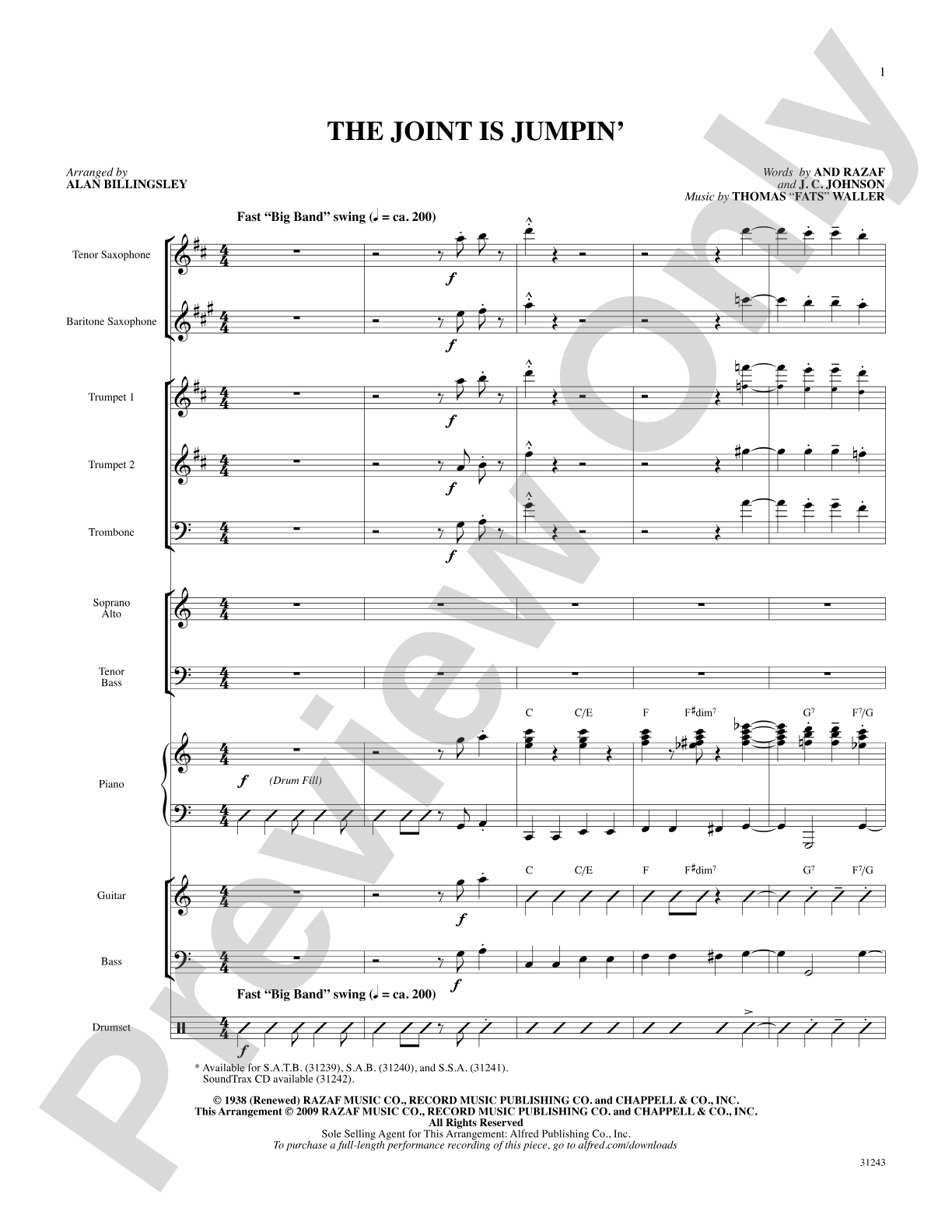
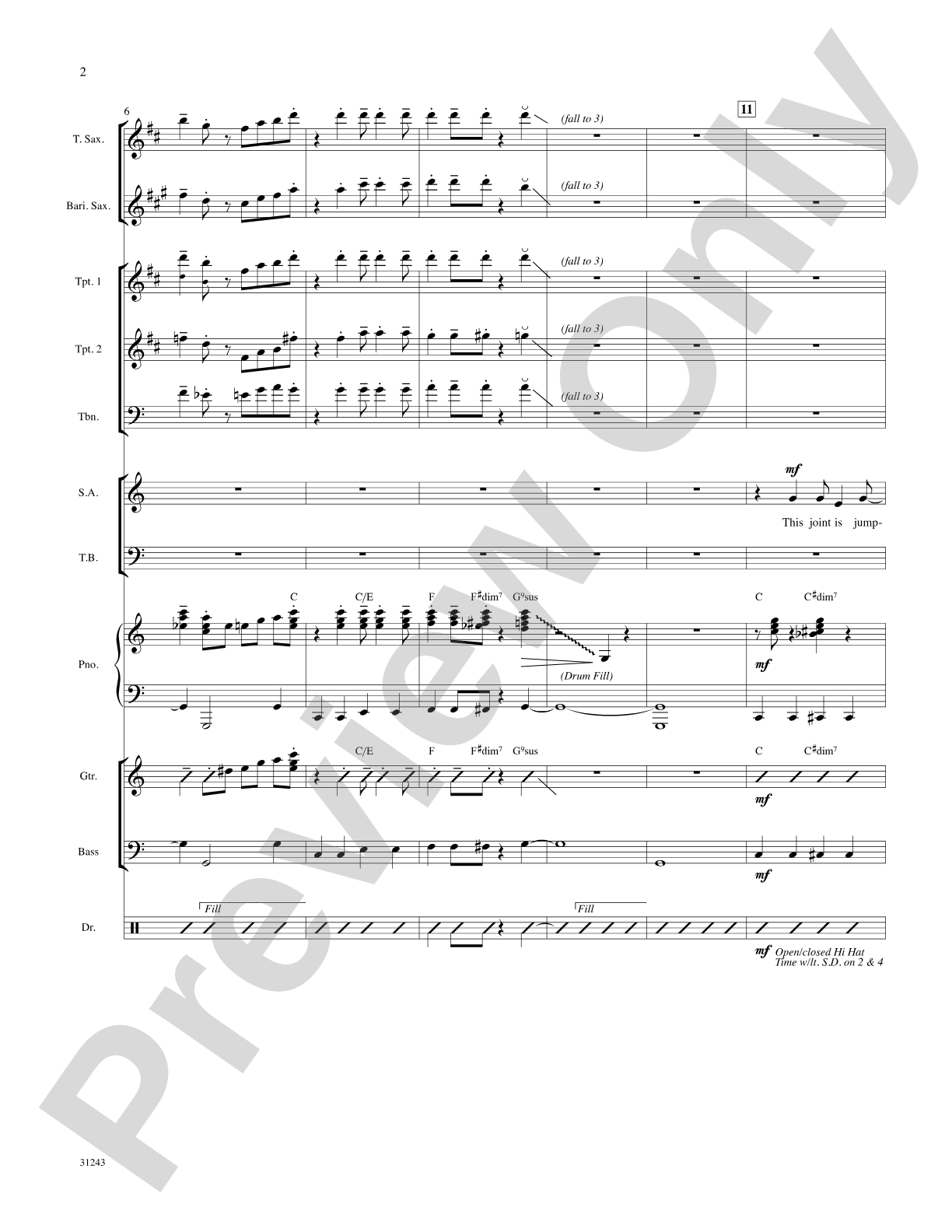
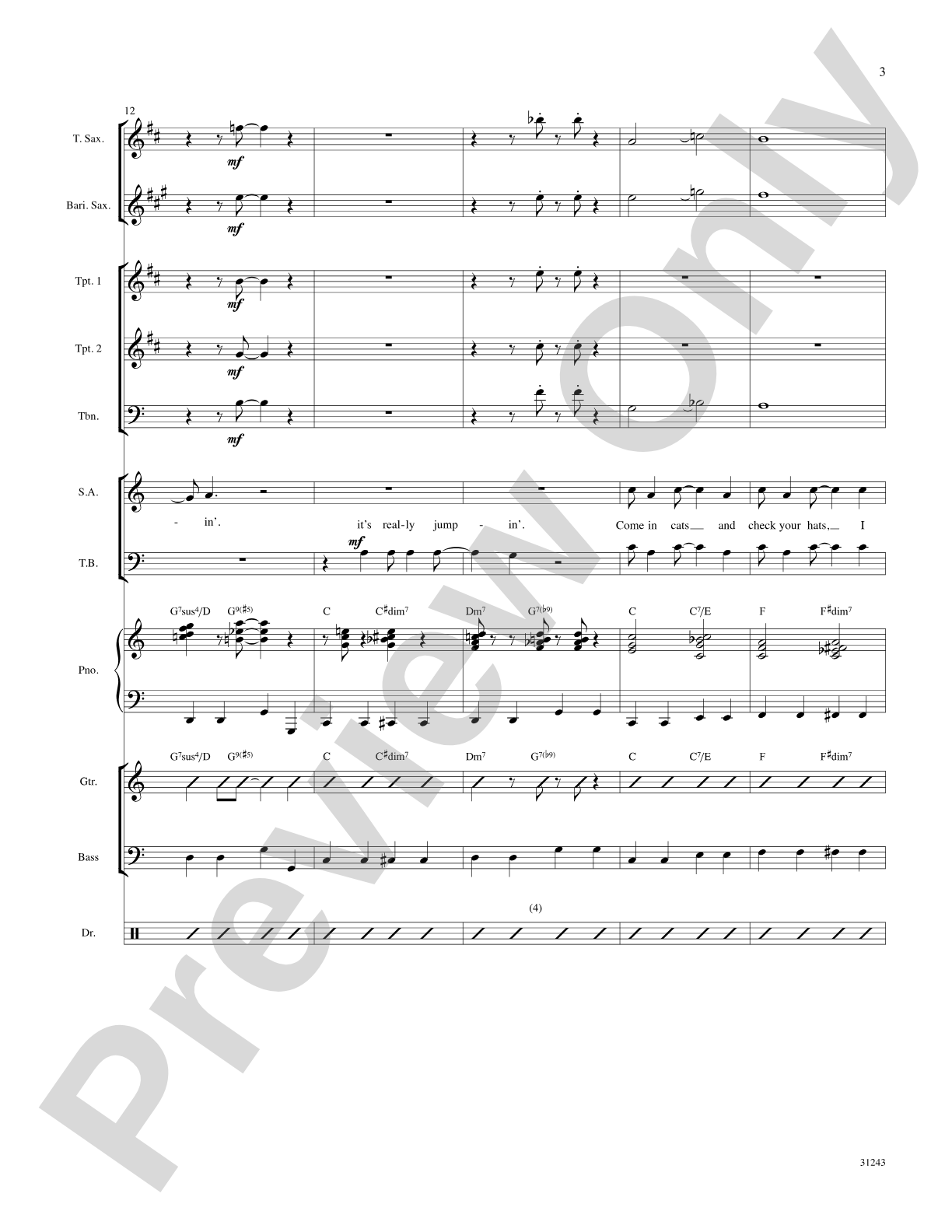
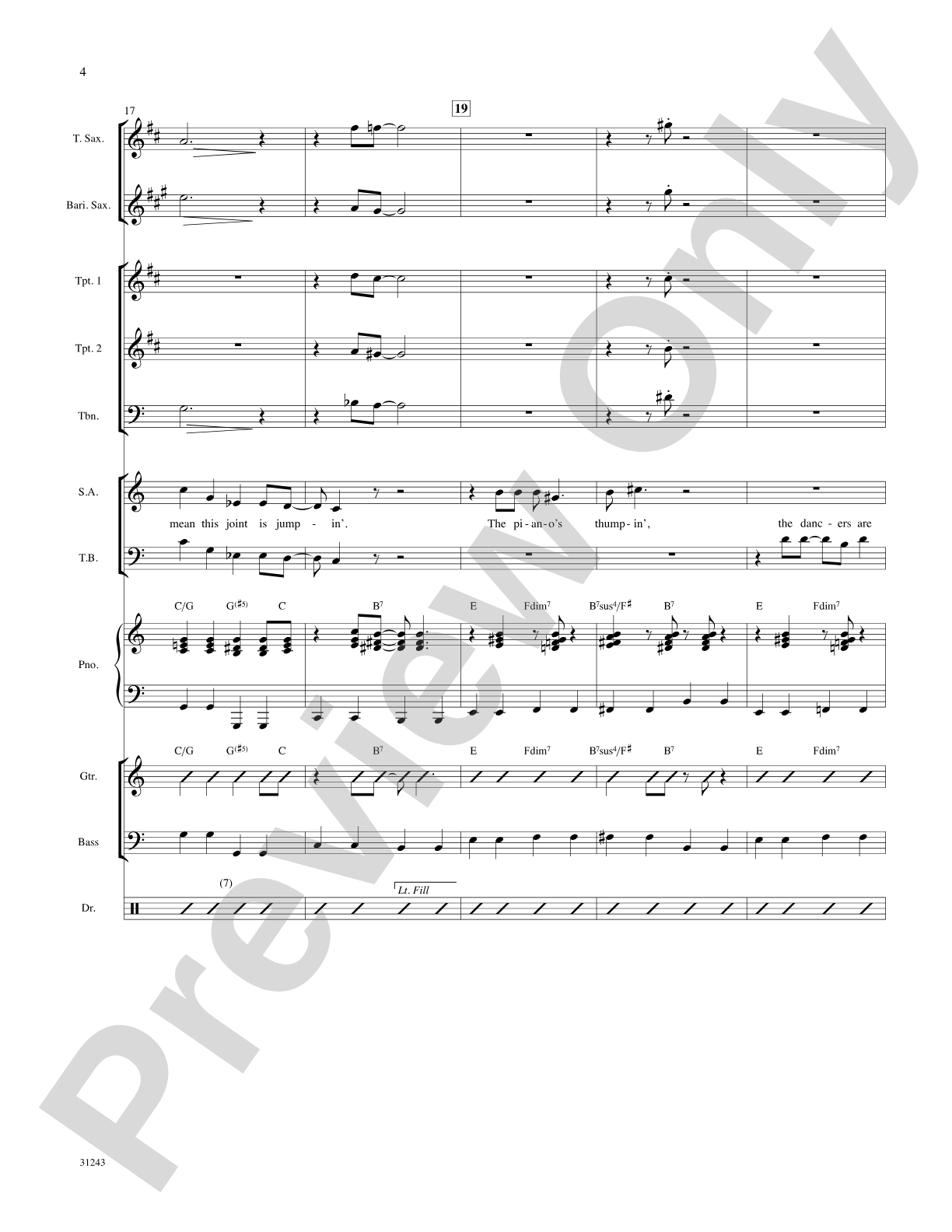
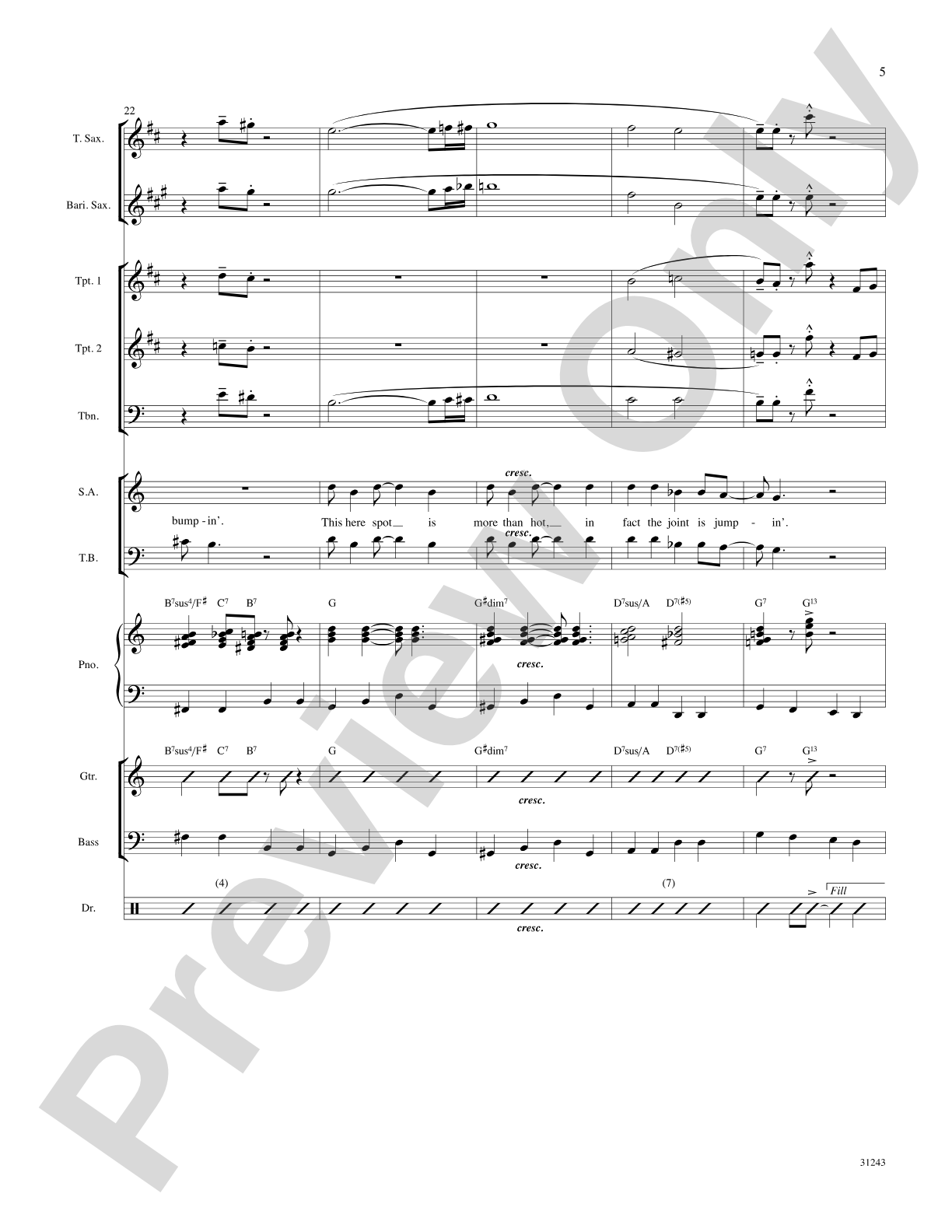
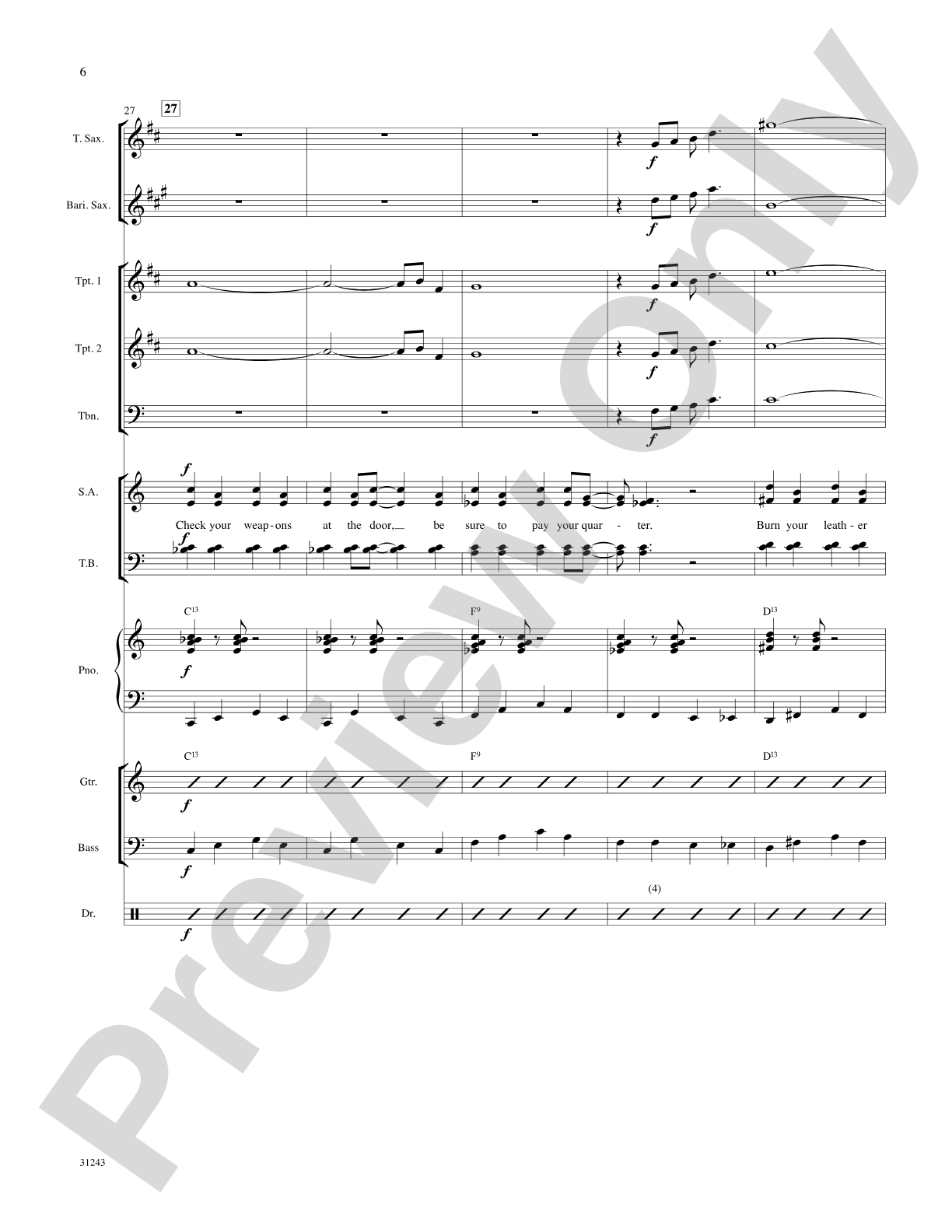
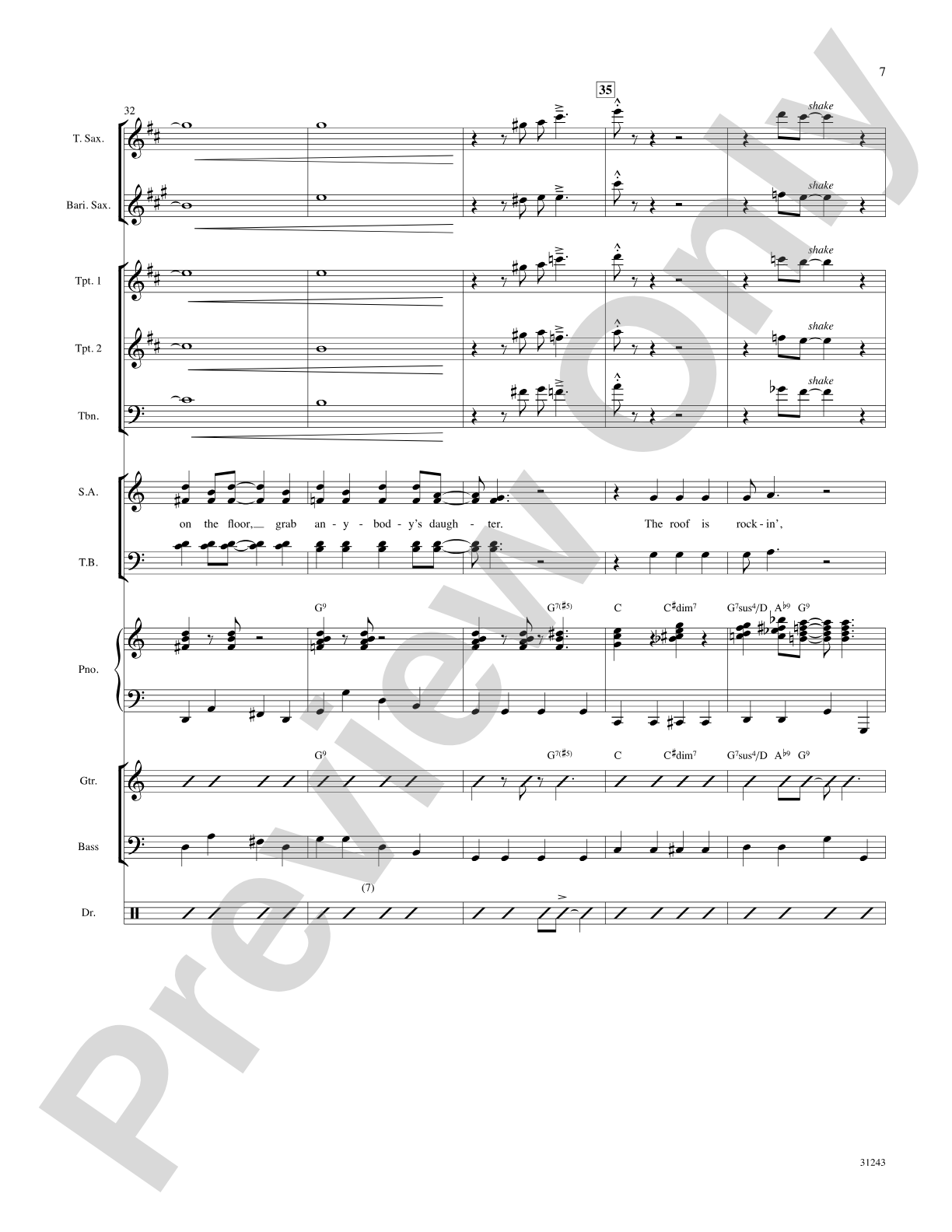
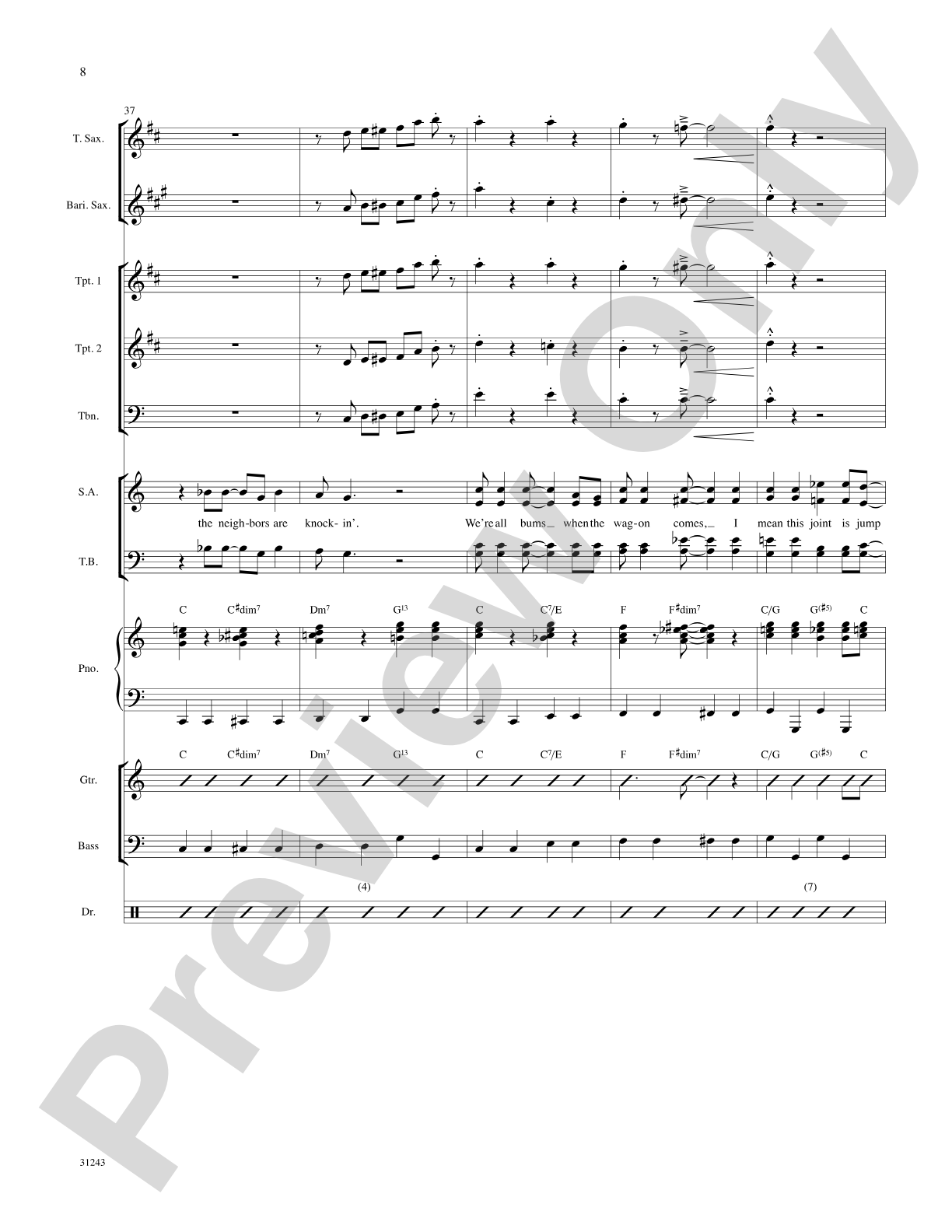
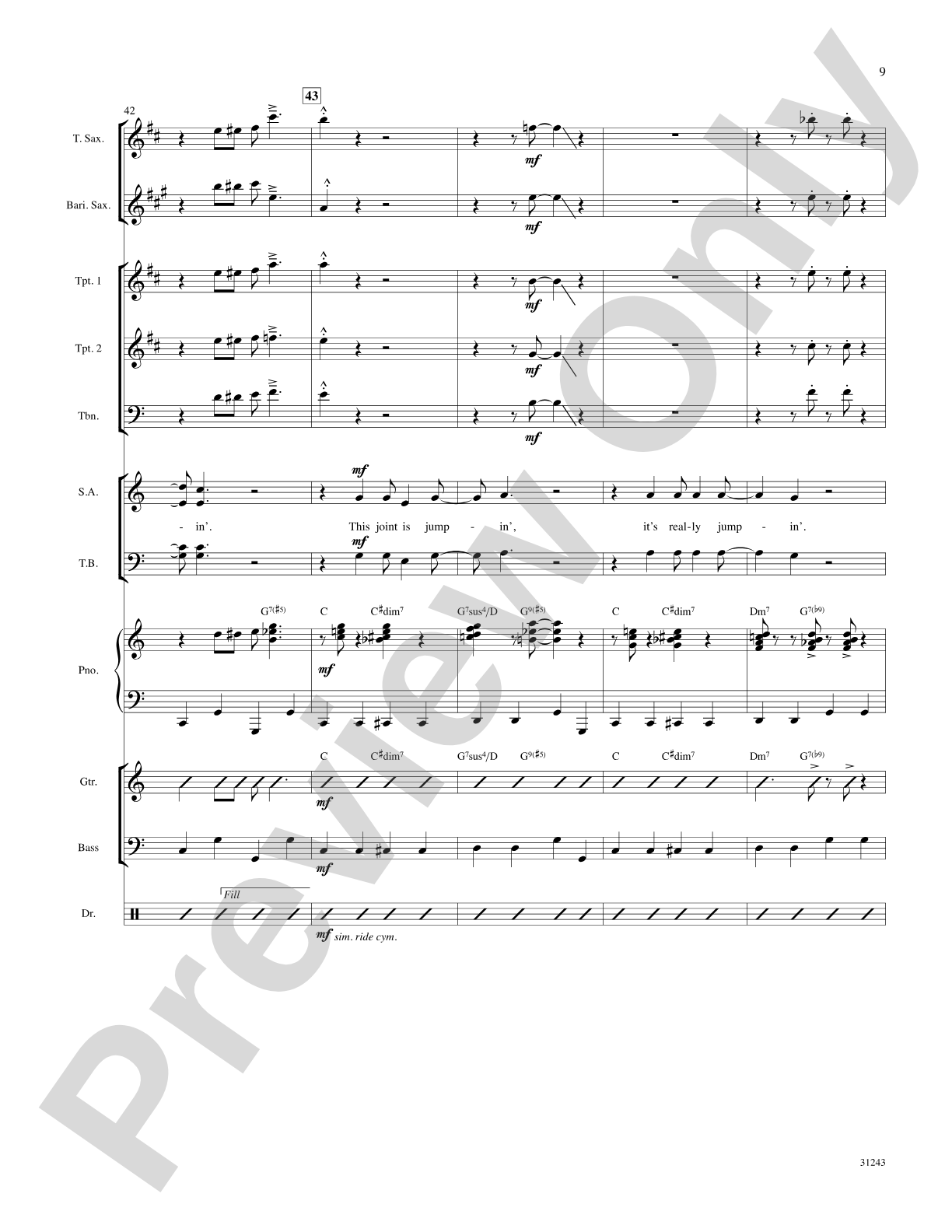
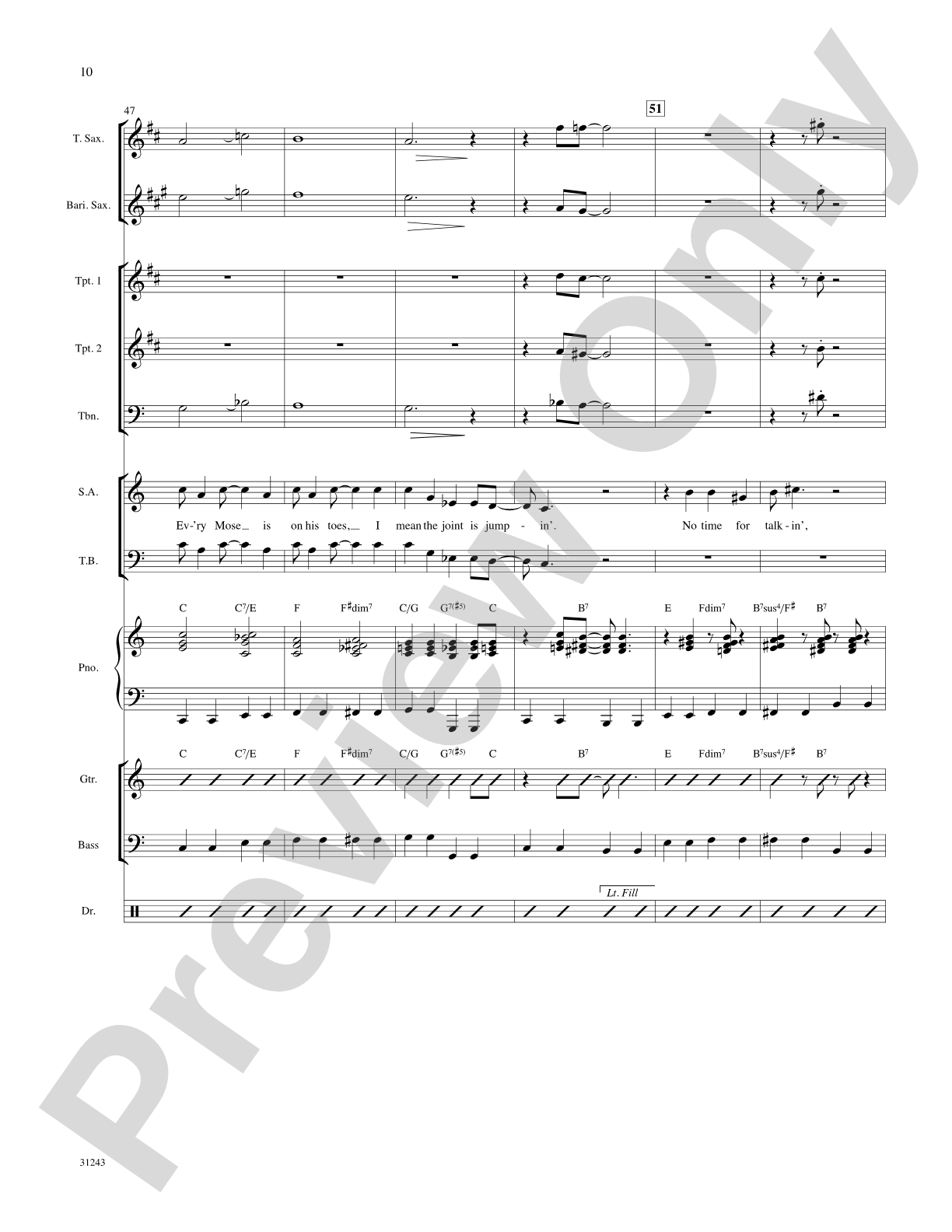
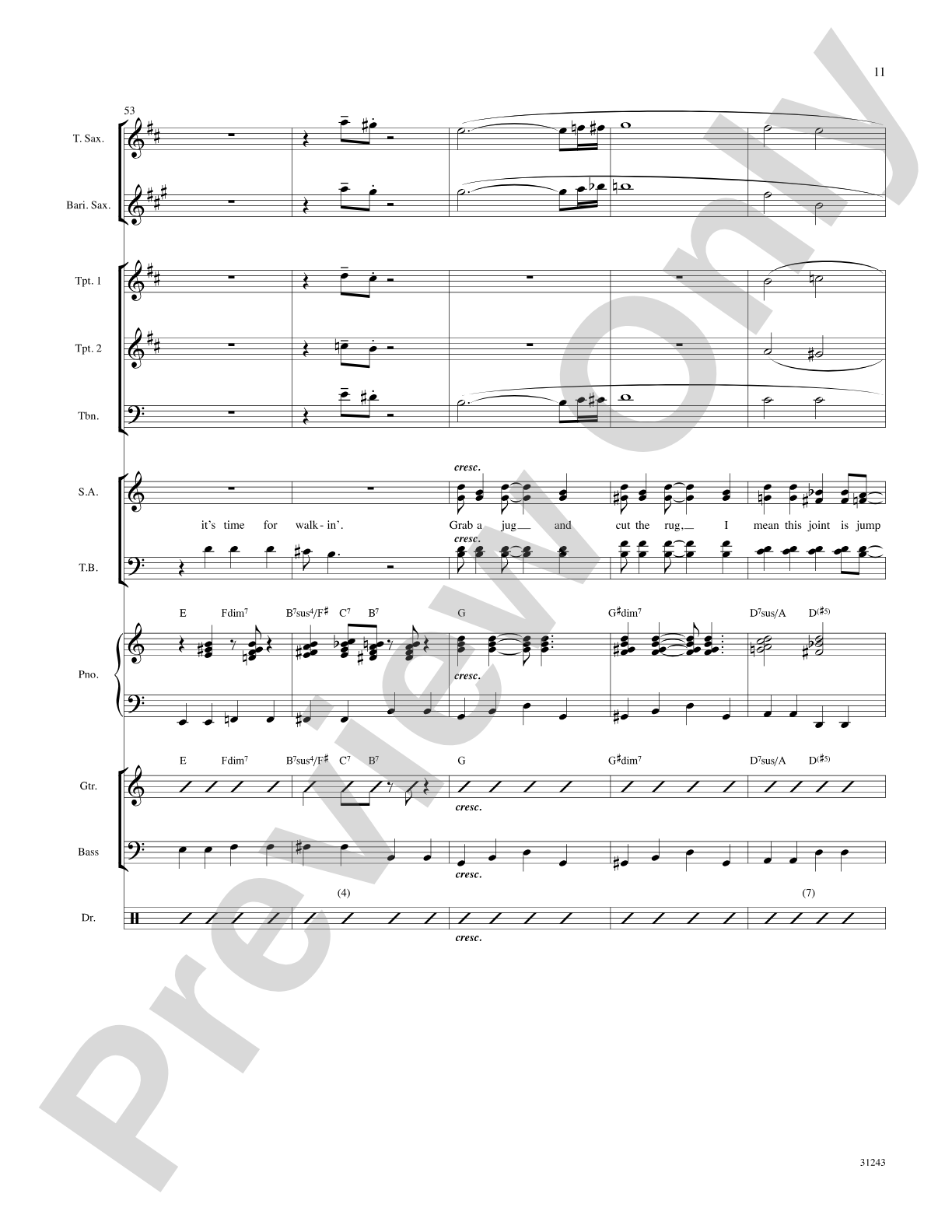
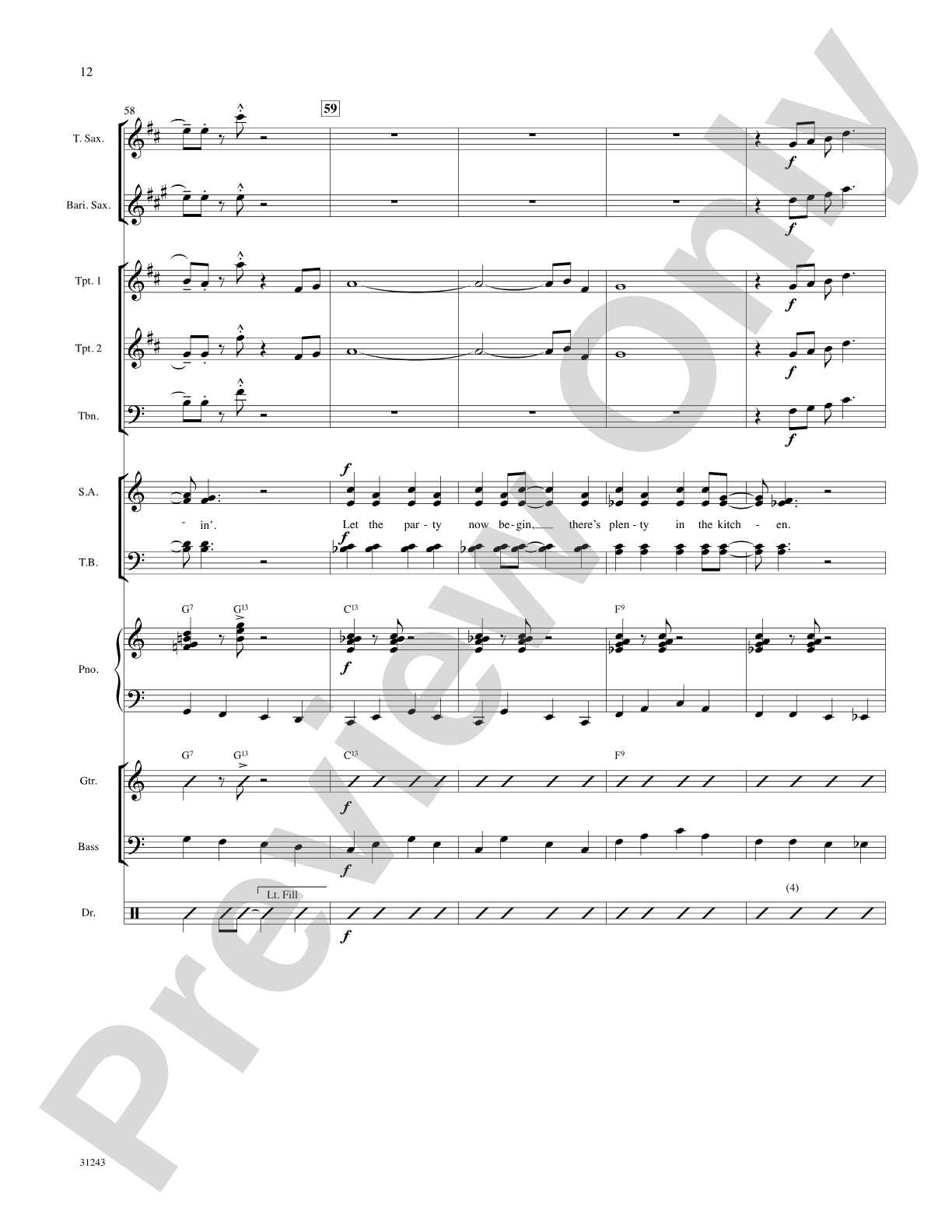
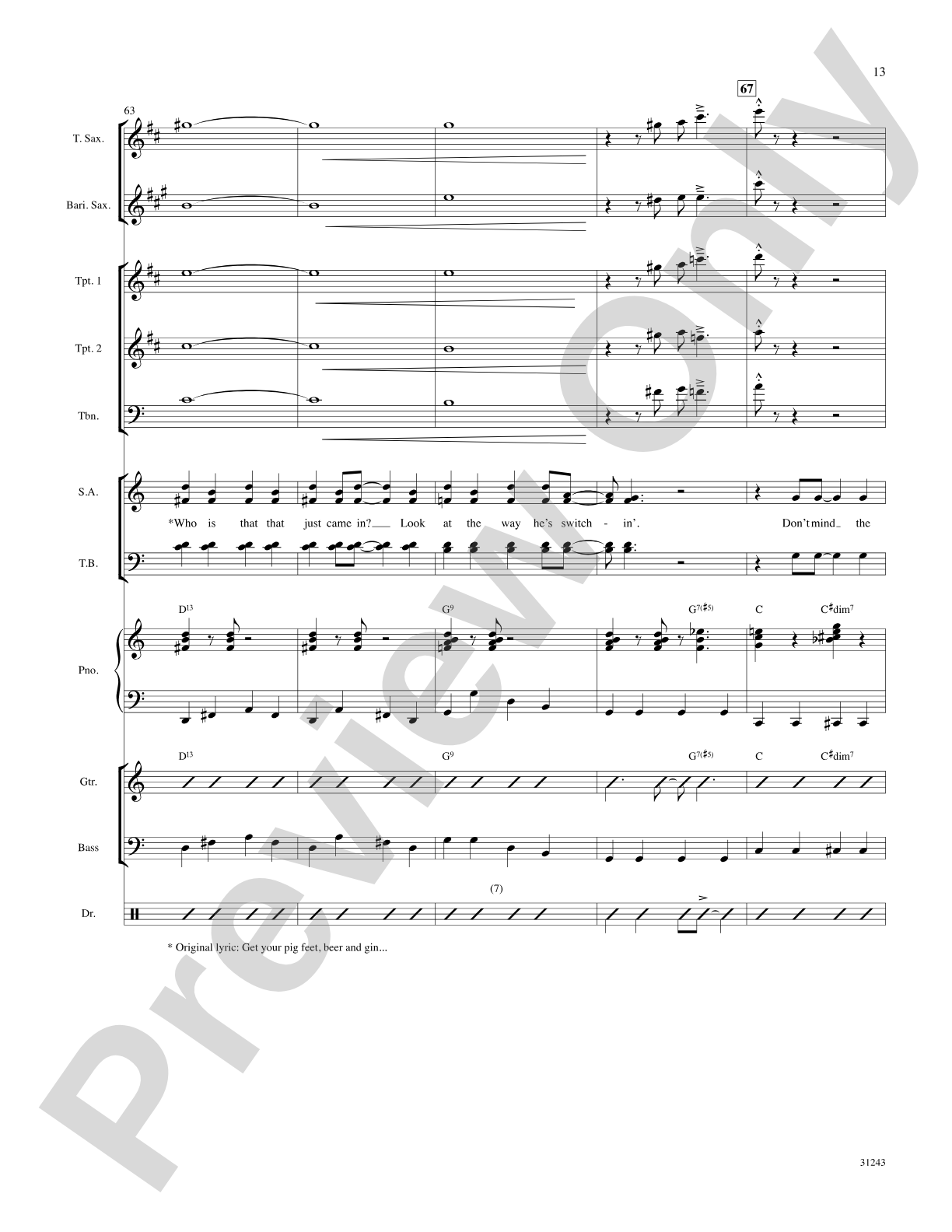
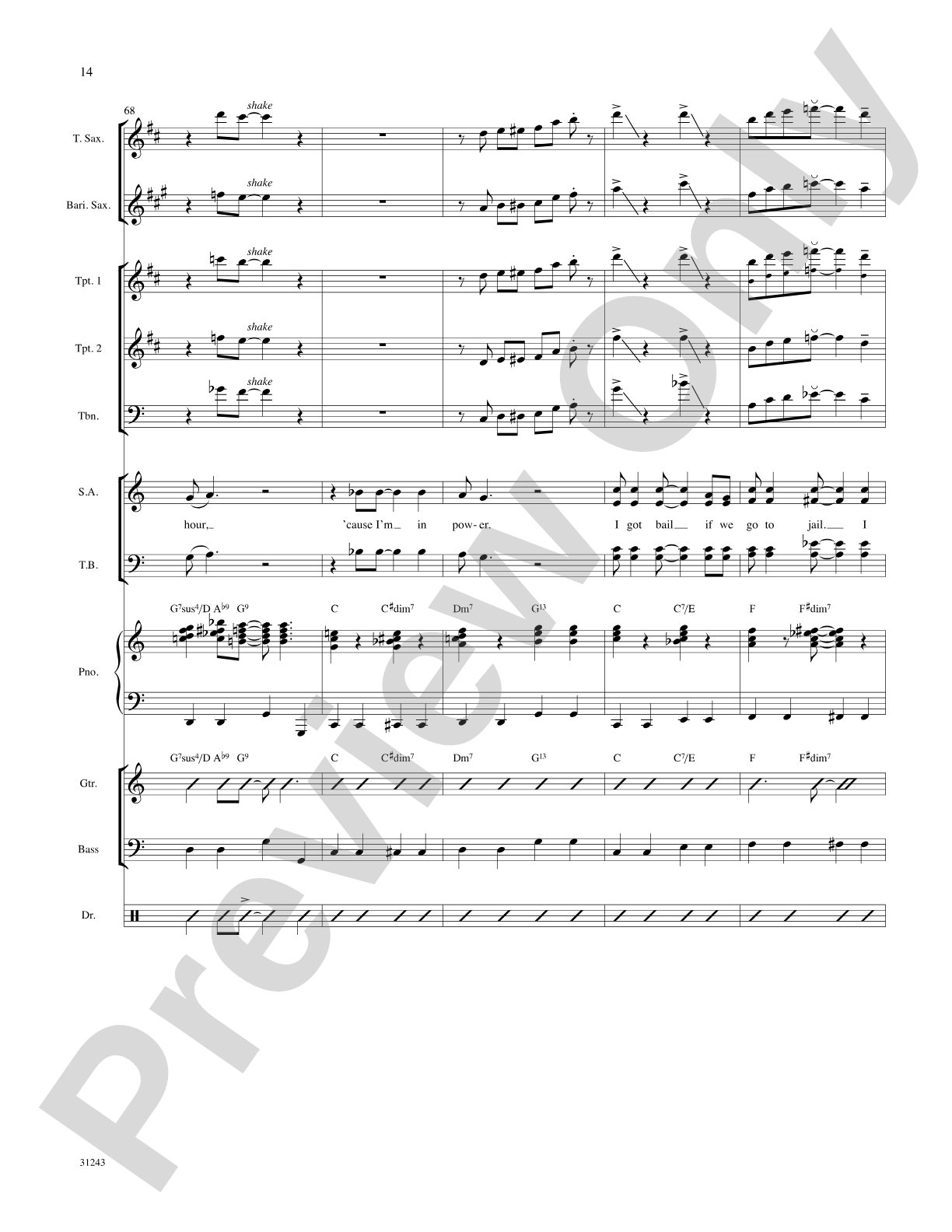
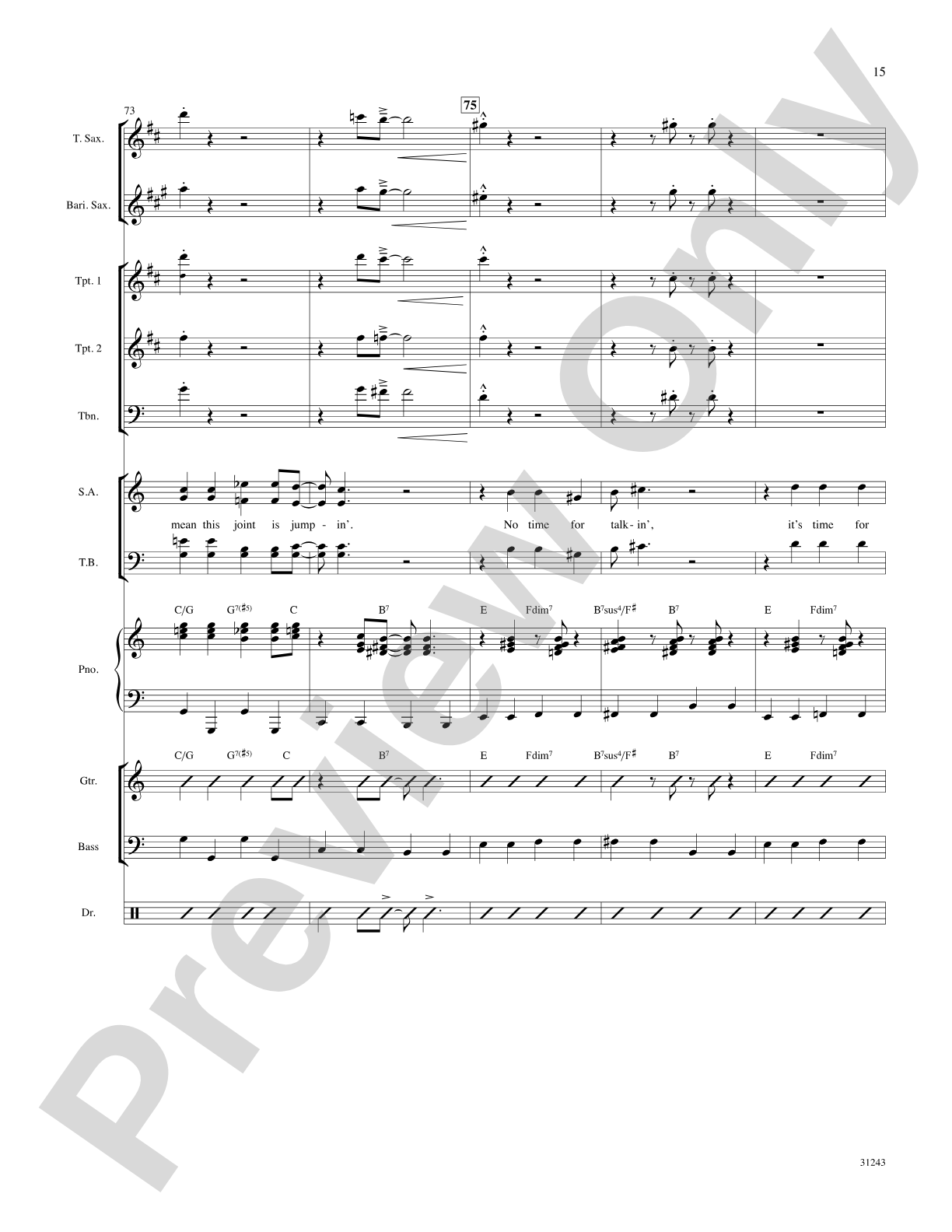
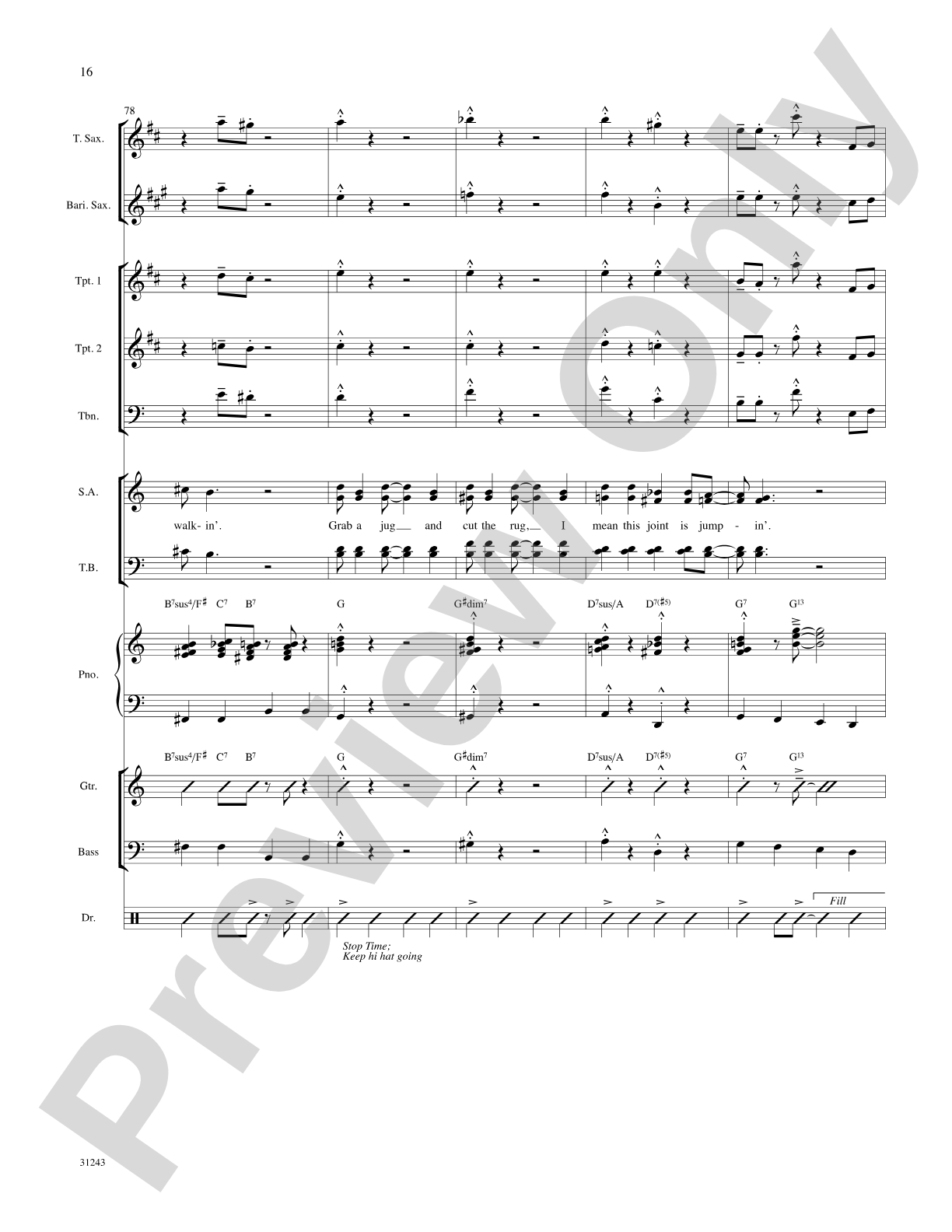
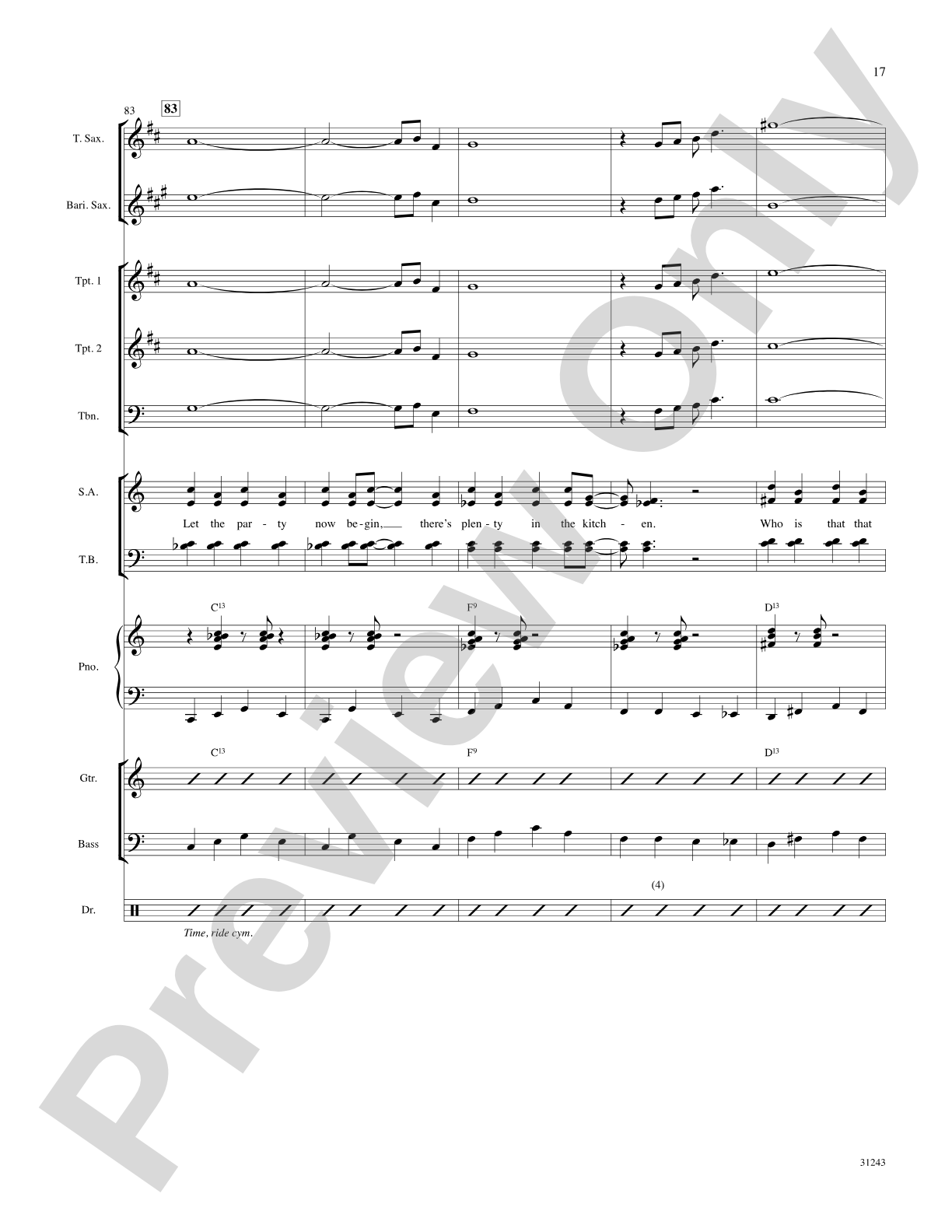
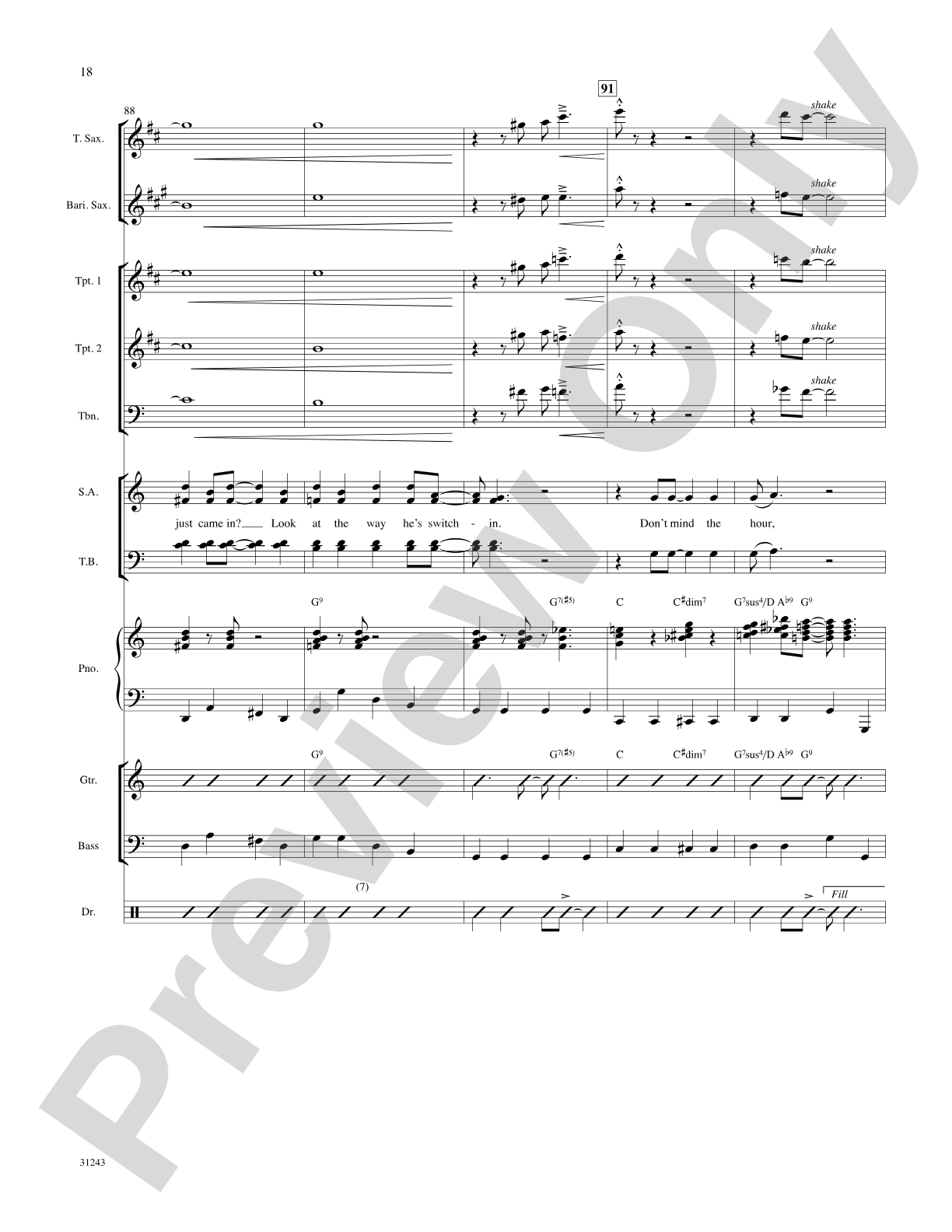
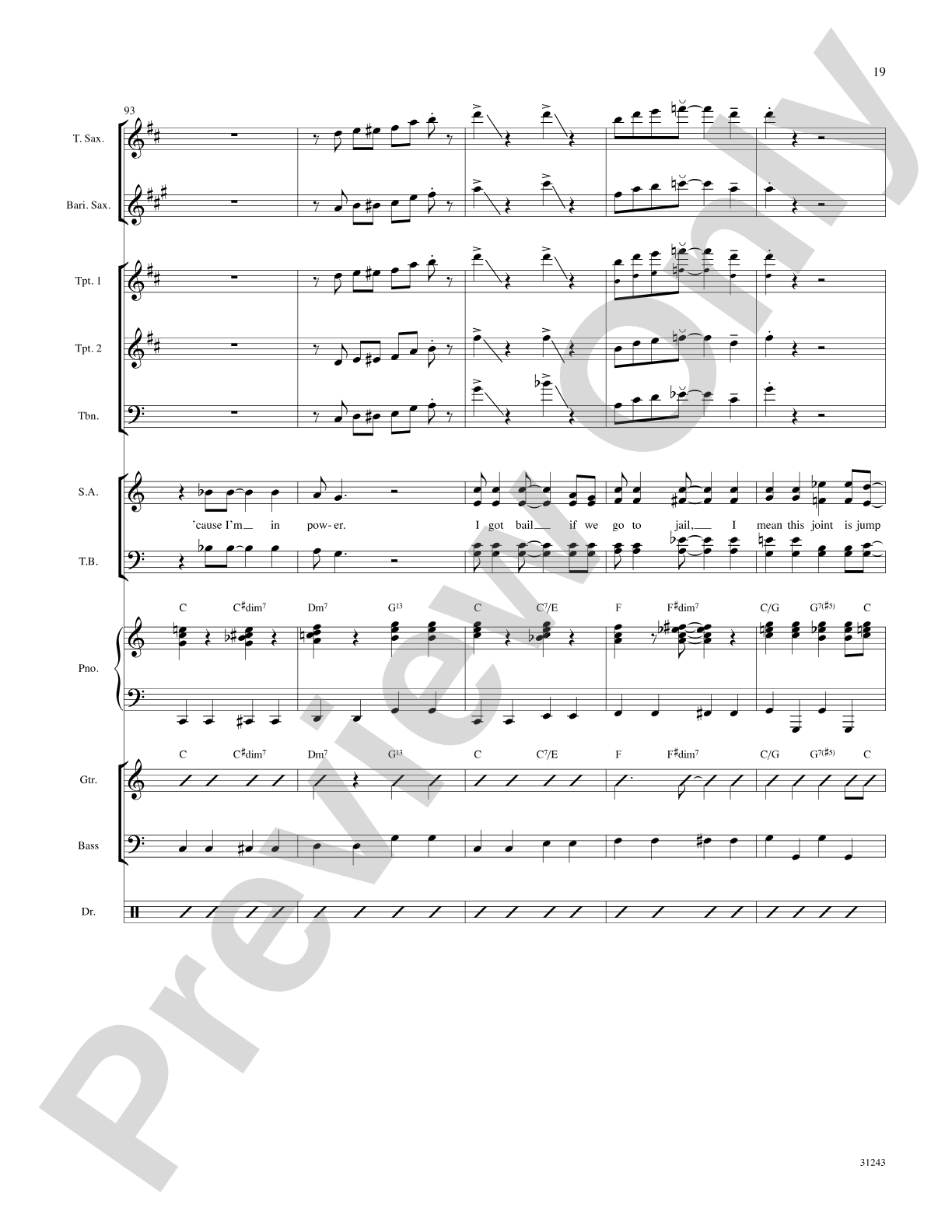
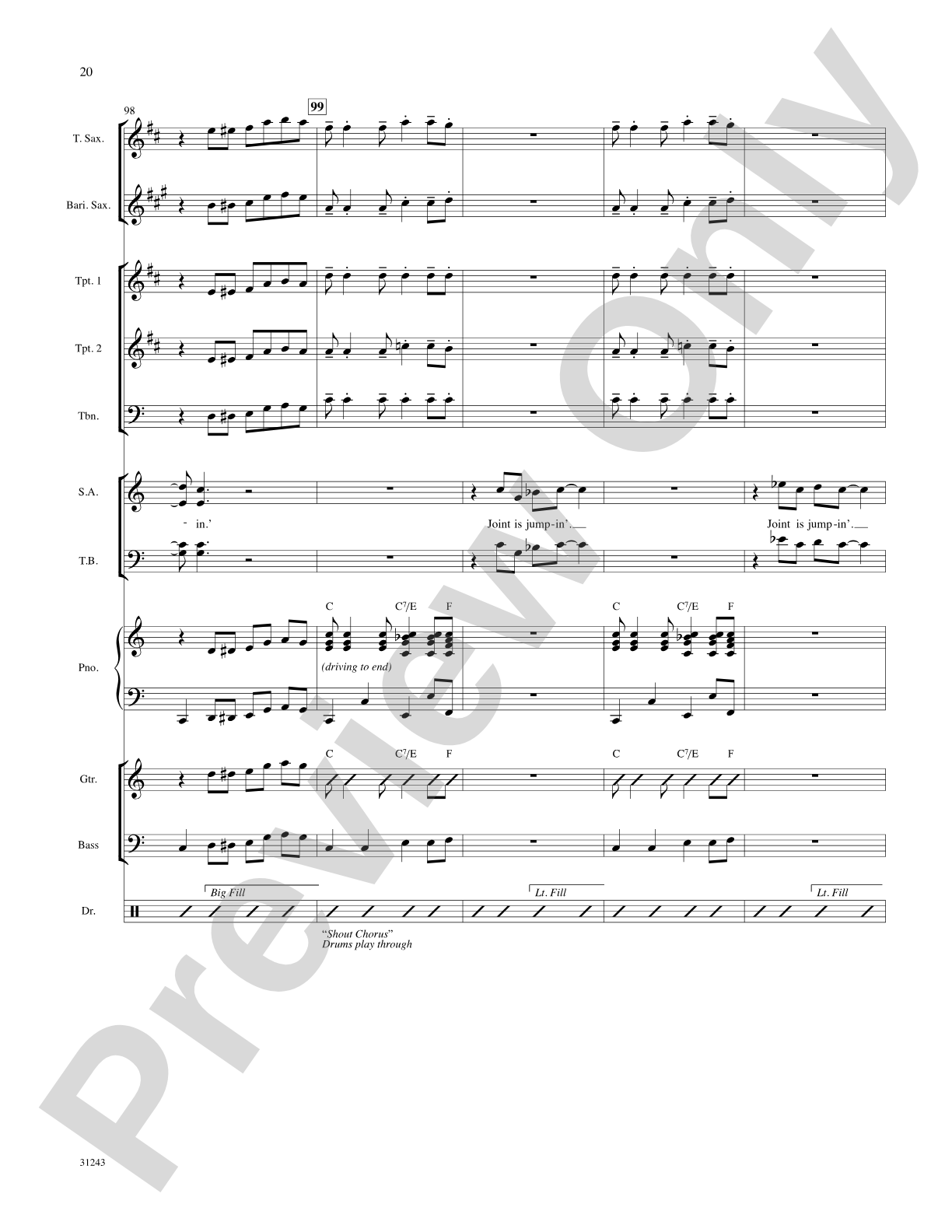
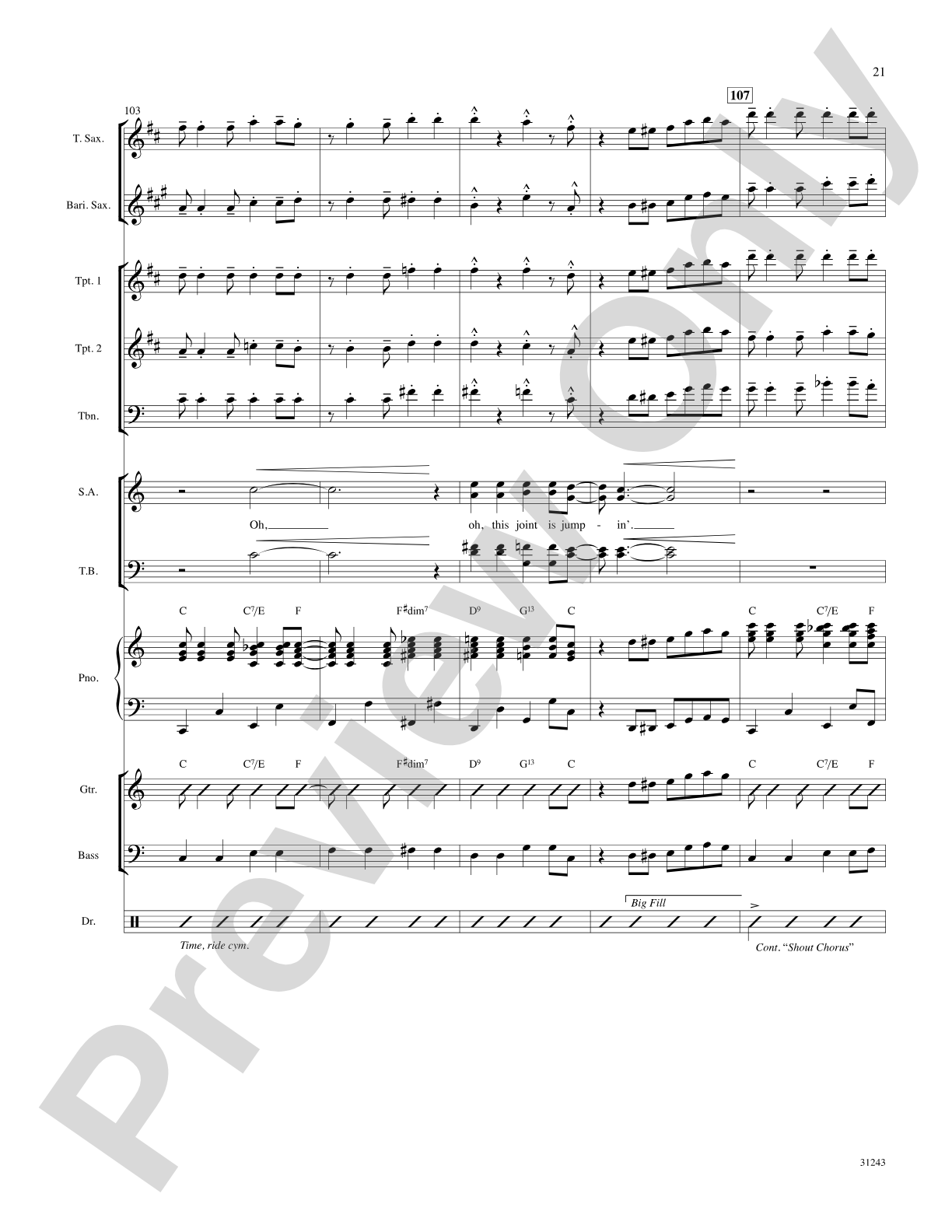
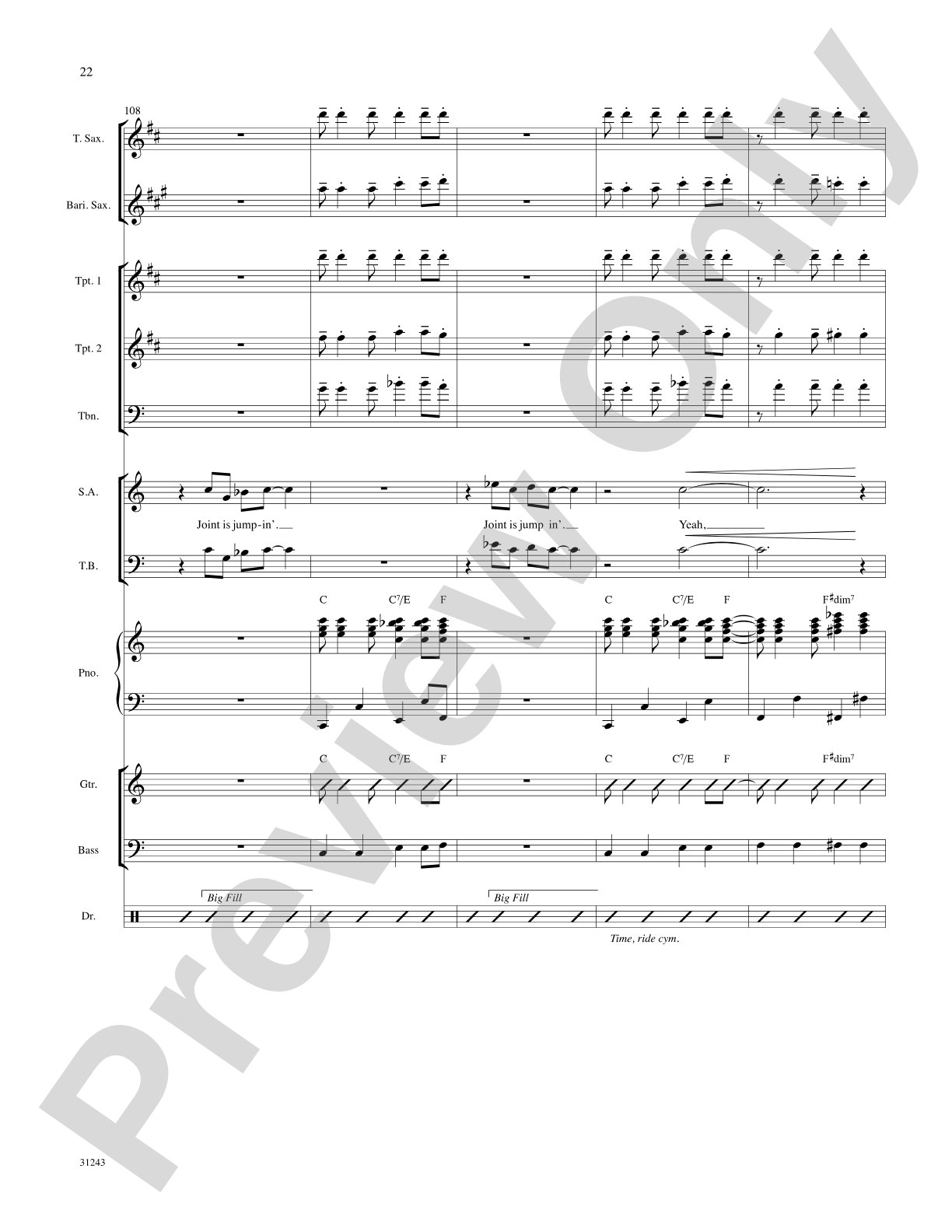
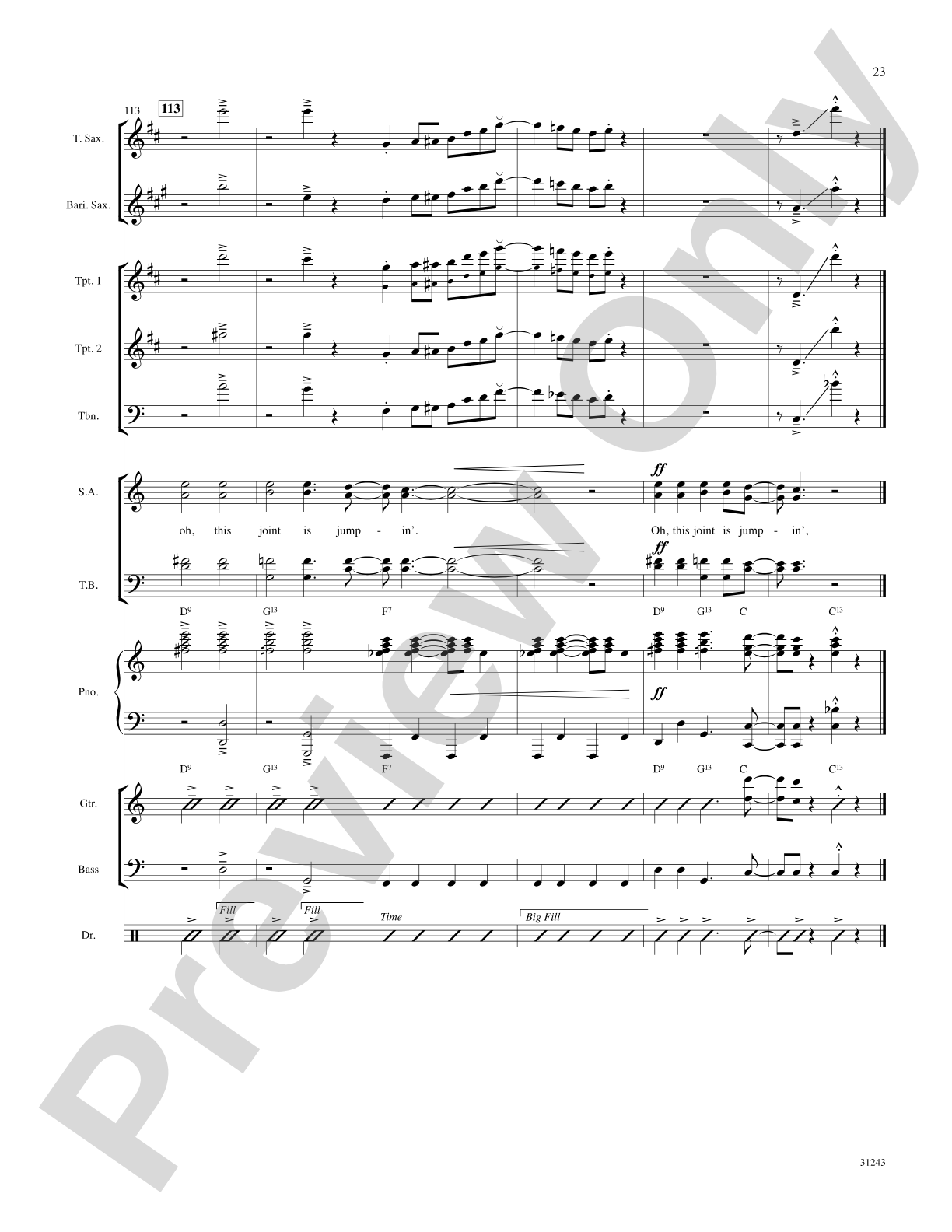


The Joint Is Jumpin' (from the musical Ain't Misbehavin'): Choral SoundPax
From the musical Ain't Misbehavin'
Words by Andy Razaf and J. C. Johnson, music by Thomas "Fats" Waller / arr. Alan Billingsley
Item: 00-PK-0004550

$45.00
One moment…
Related Items
The Joint Is Jumpin': SoundTrax Digital Audio Download |
$27.99
|
View | |
The Joint Is Jumpin': SATB Choral Octavo |
$2.10
|
View | |
The Joint Is Jumpin' (from the musical Ain't Misbehavin'): SAB Choral Octavo |
$2.25
|
View | |
The Joint Is Jumpin' (from the musical Ain't Misbehavin'): SSA Choral Octavo |
$2.25
|
View | |
The Joint Is Jumpin': SATB Choral Octavo |
$2.10
|
View | |
The Joint Is Jumpin': SAB Choral Octavo |
$2.25
|
View | |
The Joint Is Jumpin': SSA Choral Octavo |
$2.25
|
View | |
The Joint Is Jumpin': Choral Octavo SoundTrax CD |
$27.99
|
View | |
The Joint Is Jumpin': Choral SoundPax |
$45.00
|
View |
Description
"Come in cats, and check your hats!" You won't want to miss this fantastic swingin' and sizzlin' arrangement of the favorite tune from the musical Ain't Misbehavin'. Nonstop, jazzy singin' and dancin' fun! SoundPax includes t. sax., b. sax., 2 tpt., tbn., rhy.


Don't just read it, hear it, play along with it, and watch your students grow with it. In MakeMusic Cloud, The Joint Is Jumpin' (from the musical Ain't Misbehavin'): Choral SoundPax comes alive with professional accompaniment, adjustable tempo, and built-in practice tools that turn solo practice into real progress.
Open in the Player
Jump straight in and assign it today.
Start Your Free Trial
Open this title and explore the full library in minutes.
Sample Audio
1
Audio File
--:--
0:00
0:00
Sample Video
No sample videos found.
Additional Details
Series:
Alfred Pop Choral Series
Publisher:
Alfred Music
Page Count:
32
SKU:
00-PK-0004550
Instrumentation:
SoundPax
More about this title
About the Composer: Thomas "Fats" Waller
Thomas "Fats" Waller was one of jazz's most inventive and prolific composers, a stride pianist and bandleader who defined the sound of swing in the 1930s and 1940s. His gift for infectious melodies and rhythmic sophistication made him equally at home in the concert hall, on Broadway, and in the recording studio; Ain't Misbehavin', the 1978 Tony Award-winning revue of his music, introduced generations of performers and audiences to his catalog and cemented his legacy as a cornerstone of American jazz composition.
Waller's arrangement sensibilities favored bright orchestration, clear harmonic language, and material that invited both precision and personality from performers. His work remains a staple in music education because it demands technical skill while rewarding the joy of playing.
Why we love this
Alan Billingsley's arrangement captures the original's irresistible energy without losing the sophistication of Waller's composition. The sax and brass writing sits perfectly for high school singers, offering real jazz vocabulary while the recorded accompaniment gives you complete flexibility in rehearsal and performance.
What to expect
Pure swing optimism. The tune bounces with syncopation and harmonic snap, supported by bright brass and sax colors that feel both playful and sly. Your singers will feel the difference between concert music and performance music the moment they nail the opening rhythm.
Who it's for
This works for intermediate to advanced high school choirs seeking authentic jazz repertoire that doesn't sacrifice musical substance for entertainment value. Directors programming spring concerts, jazz choir festivals, or Broadway-themed shows will find it immediately accessible and deeply rewarding.
How to get the most out of it
- Establish the groove early. The rhythm section (piano, bass, drums in the accompaniment) locks in tight, so have your singers mark the pulse in their bodies before attempting the vocal line.
- Commit to the articulation. Jazz phrasing lives in the spaces between notes. Drill the staccatos and short-long rhythms that give the tune its swing character.
- Balance the solo moments against ensemble passages. When a section carries the melody, they're spotlighted; when the full group comes in, that contrast needs definition.
- Let the staging enhance the music, not replace it. Movement works best when it reflects the rhythmic and melodic content rather than competing with the vocalists' focus.
How to use it
Reserve this for a moment when your audience is ready to move. It pairs naturally with other Waller songs (if you're building a jazz unit), stands out powerfully in a pops concert, and gives your ensemble a guaranteed closer or high-energy second-half opener.
Skills your students will build
- Jazz swing articulation and phrasing conventions
- Singing against a recorded rhythm section
- Ensemble balance between melodic and harmonic voices in a jazz context
- Rhythmic precision in syncopated figures
- Coordinating vocal performance with choreographic staging