The Essence of Bebop: Trombone Cover Image

The Essence of Bebop: Trombone: Trombone Book & Online Audio

$26.95 USD
Sale price  $26.95 USD Regular price 
Skip to product information
The Essence of Bebop: Trombone Cover Image

The Essence of Bebop: Trombone: Trombone Book & Online Audio

10 Great Studies in the Style and Language of Bebop

By Jim Snidero

Level: Intermediate / Advanced

Item: 01-ADV14743

$26.95
Shipped

One moment…

Description
The Essence of Bebop is by critically acclaimed New York saxophonist Jim Snidero and reveals the heart and soul of this groundbreaking jazz style and is the first real "manual" for mastering bebop. The 10 fun-to-play studies are inspired by Miles Davis, Charlie Parker, Dizzy Gillespie, Sonny Rollins, John Coltrane, and many more, offering a unique basis for in-depth study and analysis. Historical insights as well as recommended listening and reading make this edition an indispensable part of jazz education.

Each etude includes a study guide that covers jazz theory, but also goes well beyond the math, providing insight into how bebop masters mold solos into profound musical statements. Concepts of shape, timing, balance and pacing provide the framework in which ideas unfold and flow. Additional examples, practice suggestions, historical perspectives, listening and reading suggestions (60-plus pages total) result in an instant classic that's perfect for individual or classroom study.

The downloadable play-along recording has versions with and without the soloist, and features Michael Dease (trombone), Mike LeDonne (piano), Peter Washington (bass), and Joe Farnsworth (drums). Included is special information on how to play bebop on the trombone. Since being a member of the first class of jazz students at Juilliard School, trombonist Michael Dease has gone on to be included in Downbeat Magazine polls, performing, and recording with many of today's best jazz artists. He has several recordings as a leader, and is a professor at Michigan State University.

The Essence of Bebop: Trombone: Trombone Book & Online Audio isn't in MakeMusic Cloud just yet...but it could be. Let us know you'd like to see it, and you'll help shape what comes next. In the meantime, start a free trial and dive into thousands of interactive titles your students can play along with today.

Sample Pages

Sample Audio
1 03 Monktified_TROMBONE --:--
2 04 The Messengers_TROMBONE --:--
3 10 Freddie slow_TROMBONE --:--
4 TheMessengers --:--

03 Monktified_TROMBONE

0:00
0:00
Sample Video
Additional Details
Series: Advance Music
Publisher: Advance Music
ISBN10: 3-954810-71-9
ISBN13: 978-3-954810-71-0
UPC: 805095147438
SKU: 01-ADV14743

More about this title

About the Composer: Jim Snidero
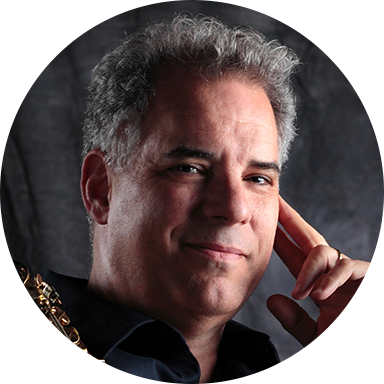
Jim Snidero

Jim Snidero has spent over three decades establishing himself as one of contemporary jazz's most accomplished musicians. An alto saxophonist, composer, arranger, and educator, he has earned recognition from Downbeat Magazine as both a "master musician" and "alto saxophone virtuoso," and appeared in the 2017 Downbeat Critic's Poll. His formative years in the Washington, DC area included study with Phil Woods and membership in the University of North Texas One O'Clock Lab Band, followed by additional mentorship from saxophonist Dave Liebman before relocating to New York in 1981.

After arriving in New York, Snidero quickly established himself through sideman work with Brother Jack McDuff, the Mingus Big Band, Frank Wess, the Toshiko Akiyoshi Jazz Orchestra, Eddie Palmieri, and Frank Sinatra's Duets II recording. His leadership discography spans decades and includes critically acclaimed releases such as Mixed Bag (Criss Cross, 1987) and Blue Afternoon (Criss Cross, 1989), the latter cited in The Penguin Jazz Guide as one of the best jazz records in history. His work as an educator and author has made him an invaluable resource for jazz musicians seeking to understand the deeper architecture of the music.

Why we love this

Snidero's approach transcends typical etude collections by grounding each study in the actual practices of bebop's greatest voices rather than abstract exercises. The study guides dig into how masters like Miles Davis, Parker, and Coltrane construct solos as complete statements, examining shape, timing, and pacing rather than just ornamental facility. This combination of playable material, substantive analysis, and professional-level play-along recordings transforms the trombone book into a genuine apprenticeship tool.

What to expect

Playing through these etudes feels like stepping into the actual practice room with bebop masters. The music swings with authentic harmonic sophistication and melodic urgency; the study guides shift your perspective from copying licks to understanding how great improvisers think in real time.

Who it's for

This resource addresses intermediate to advanced trombonists serious about jazz language, whether you're studying jazz formally or developing your vocabulary independently. It works equally well for musicians in a classroom setting and for private students working one-on-one with a jazz instructor.

How to get the most out of it

  • Study the historical insights and listening recommendations before tackling each etude; understanding the stylistic context of your model soloist will inform your phrasing and rhythmic choices.
  • Use both versions of the play-along recordings (with and without the soloist) strategically: first listen to the full version to absorb the solo's melodic and harmonic logic, then play along over the rhythm section alone to develop your own interpretation.
  • Work through the trombone-specific guidance on how to execute bebop language on your instrument; the slide positions and legato requirements differ significantly from how the concepts sound on alto saxophone.
  • Reference the study guide's discussion of balance and pacing as you practice, paying particular attention to how space and silence function within the solos, not just the notes themselves.

How to use it

Assign one or two etudes throughout the semester as the foundation of a jazz ensemble member's solo development or as core material in a jazz methods course. The accompanying analysis can also serve as handouts for jazz history discussions, grounding students in concrete musical examples rather than abstract chronologies.

Skills your students will build

  • Bebop melodic vocabulary and phrasing on trombone
  • Understanding of jazz harmony and chord tone soloing
  • Recognition of shape, timing, and pacing in improvisation
  • Ability to extract and internalize solos from recorded models
  • Transcription and analysis skills applied to actual masters
  • Trombone-specific execution of jazz articulation and legato

You May Also Like