The Duke Cover Image

The Duke: Jazz Ensemble Conductor Score

$9.00 USD
Sale price  $9.00 USD Regular price 
Skip to product information
The Duke Cover Image

The Duke: Jazz Ensemble Conductor Score

By Dave Brubeck / arr. Les Hooper

Grade: 3 (Medium)

Item: 00-24850S

$9.00
Shipped

One moment…

Description
"The Duke" provides an intimate ensemble setting of a beautiful Dave Brubeck melody with written-out solos for alto sax and trumpet. The lead trumpet plays to a written G on top of the staff. This is a tasty, musical, dynamic, and first-class chart based on a superb tune! This title is available in MakeMusic Cloud.

The Duke: Jazz Ensemble Conductor Score isn't in MakeMusic Cloud just yet...but it could be. Let us know you'd like to see it, and you'll help shape what comes next. In the meantime, start a free trial and dive into thousands of interactive titles your students can play along with today.

Sample Pages

Sample Audio
No sample audio found.
Sample Video
Additional Details
Series: Jazz Band Series
Publisher: Alfred Music
Page Count: 16
UPC: 038081269412
SKU: 00-24850S

More about this title

About the Composer: Dave Brubeck
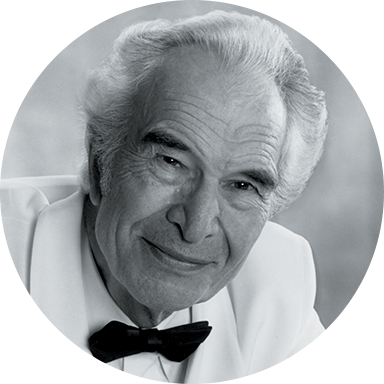
Dave Brubeck

Dave Brubeck stands as one of jazz's most intellectually adventurous pianists and a composer equally at home in classical forms and jazz idioms. His improvisational brilliance found expression not only in landmark recordings like Time Out (the first jazz album to sell over a million copies) and the standard "Take Five," but also in a vast catalog of formally composed works: choral pieces, orchestral suites, chamber music, a string quartet, and large-scale works for chorus and orchestra. His teachers included the French modernist Darius Milhaud, who encouraged him to synthesize jazz language with classical technique—an approach that defined Brubeck's entire output.

Beyond music, Brubeck's career embodied progressive ideals; he was instrumental in dismantling racial barriers in mid-20th-century American jazz and performance. His sacred works, including the mass To Hope!, have circled the globe from Russia to Austria to the cathedrals of America. A Grammy Lifetime Achievement Award recipient, inductee into the American Classical Music Hall of Fame, and holder of both the Presidential Medal of the Arts and Austria's national arts honor, Brubeck demonstrated that jazz excellence and classical composition were not opposing forces but complementary expressions of musical intelligence.

Why we love this

Les Hooper's arrangement captures the lyrical warmth of Brubeck's melody while giving your lead trumpet and alto sax players genuinely musical solos to sink their teeth into—not just changes to blow over, but written voices with character. At Grade 3, this chart sits in that sweet spot where it's accessible to capable high school ensembles but musically sophisticated enough to engage serious players and listeners alike.

What to expect

Intimate and unhurried, "The Duke" unfolds like a conversation between old friends. The melody carries Brubeck's hallmark elegance—lyrical without being sentimental—while the solos invite genuine musicality rather than aggressive virtuosity. It's the kind of tune that sits with you after the rehearsal ends.

Who it's for

This score is for conductors leading college and advanced high school jazz ensembles who want to program a melodically beautiful, emotionally intelligent piece that showcases strong soloists without demanding cutting-edge harmonic complexity. It's an excellent choice if your ensemble has a capable lead trumpet and a solid alto sax voice.

How to get the most out of it

  • Balance the written-out solos carefully; these are compositional statements, not mere improvisations, so the ensemble's support should be subtle and steady rather than pushing the soloist forward.
  • Pay attention to dynamics throughout the chart. Brubeck's melodies often breathe with gentle peaks and valleys; honor those contours so the tune remains the emotional center even during solo sections.
  • Lock the rhythm section into a clear pocket. Jazz ensemble intonation and time-feel depend almost entirely on how locked your piano, bass, and drums are with each other.

How to use it

Program this as a centerpiece for a concert that balances jazz standards with contemporary charts, or use it as a palate cleanser between higher-energy pieces. It works particularly well in a mixed program combining classical and jazz, since Brubeck's compositional voice bridges both worlds naturally.

Skills your students will build

  • Balancing written solo sections with ensemble accompaniment
  • Playing jazz melody with legit phrasing and dynamics
  • Reading and interpreting jazz articulation and rhythmic nuance
  • Listening to harmonic movement while maintaining individual voice independence
  • Developing interpretive choices within a fully notated context

You May Also Like