The Defibrillator Cover Image

The Defibrillator: Jazz Ensemble Conductor Score

$9.00 USD
Sale price  $9.00 USD Regular price 
Skip to product information
The Defibrillator Cover Image

The Defibrillator: Jazz Ensemble Conductor Score

By Adrien Re

Grade: 3 (Medium)

Item: 00-33347S

$9.00
Shipped

One moment…

Description
The Defibrillator is a level 3 Jazz Band Series piece designed for high school and advanced junior high school band. Full instrumentation includes 5 saxophones, 8 brass, and 4 rhythm parts. Optional parts include flute, tuba, horn in F and baritone T.C./tenor sax. Solos are written out with chord changes, the rhythm section parts suggest chord voicings and rhythms and guitar chord frames are provided to help young guitarists.

The Defibrillator: Jazz Ensemble Conductor Score isn't in MakeMusic Cloud just yet...but it could be. Let us know you'd like to see it, and you'll help shape what comes next. In the meantime, start a free trial and dive into thousands of interactive titles your students can play along with today.

Sample Pages

Sample Audio
No sample audio found.
Sample Video
Additional Details
Series: Jazz Band Series
Publisher: Alfred Music
Page Count: 20
UPC: 038081373645
SKU: 00-33347S

More about this title

About the Composer: Adrien Re
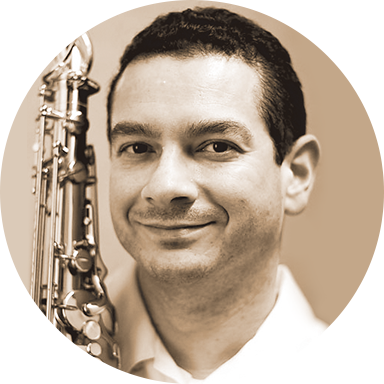
Adrien Re

Adrien Re brings deep experience as both a working jazz musician and academic educator. He holds a Doctor of Arts degree from Ball State University and currently teaches at Shenandoah University and Lord Fairfax Community College, where he shapes the next generation of jazz performers and arrangers.

Re's compositional voice is grounded in real-world performance. As a member of Souled Out Band, which performs over 150 dates annually throughout the East Coast, he understands what works on the bandstand and what resonates with student musicians. His output spans composition, arrangement, and pedagogy, making him a valuable voice in contemporary jazz education.

Why we love this

Re writes jazz that respects student ability without patronizing the ensemble. The written solos with chord changes give young improvisers a real framework to work with, while the rhythm section voicing suggestions and guitar chord frames mean even less experienced players can contribute meaningfully. At Grade 3, this piece demands musicianship without overwhelming logistics.

What to expect

The Defibrillator pulses with modern jazz energy. The title suggests a jolt of electricity, and the writing delivers exactly that: sharp hits, forward-moving grooves, and bright voices trading ideas across the section. This is contemporary working-band jazz adapted for a student ensemble.

Who it's for

High school jazz ensembles and advanced junior high school jazz bands ready to tackle ensemble writing with real harmonic content. Students who have worked through fundamental jazz rhythms and basic chord changes will find the solos and section writing appropriately challenging without becoming inaccessible.

How to get the most out of it

  • Balance the saxophone section across all five voices; the tighter the blend, the more punch the hits will have.
  • Have your guitarist study the chord frames before rehearsal and practice the suggested rhythms separately. Clean guitar work elevates the entire groove.
  • Encourage soloists to listen to the rhythm section's comping as dialogue, not accompaniment. The chord changes are there to support improvisation, not constrain it.
  • Lock the time feel between drums and bass first, then layer in the comping instruments. Everything else depends on that foundation.

How to use it

Pair this with a ballad to showcase your ensemble's range in a concert. The Grade 3 difficulty places it naturally alongside other mid-level jazz standards, making it ideal for a mixed repertoire set that demonstrates your band's versatility. It also works well as a spring semester feature after your students have built stamina on swing tunes.

Skills your students will build

  • Jazz improvisation over written chord changes
  • Listening and responding in ensemble settings (comping, section interplay)
  • Reading and executing jazz articulation and phrasing
  • Chord-based accompaniment and guitar voicing
  • Time feel and groove pocket awareness

You May Also Like