

The Bumblebee: 2-Part Choral Octavo
Words and music by Sally K. Albrecht
Item: 00-PO-0003627
$2.05
Minimum order quantity: 20 copies
Pickup currently not available
Description
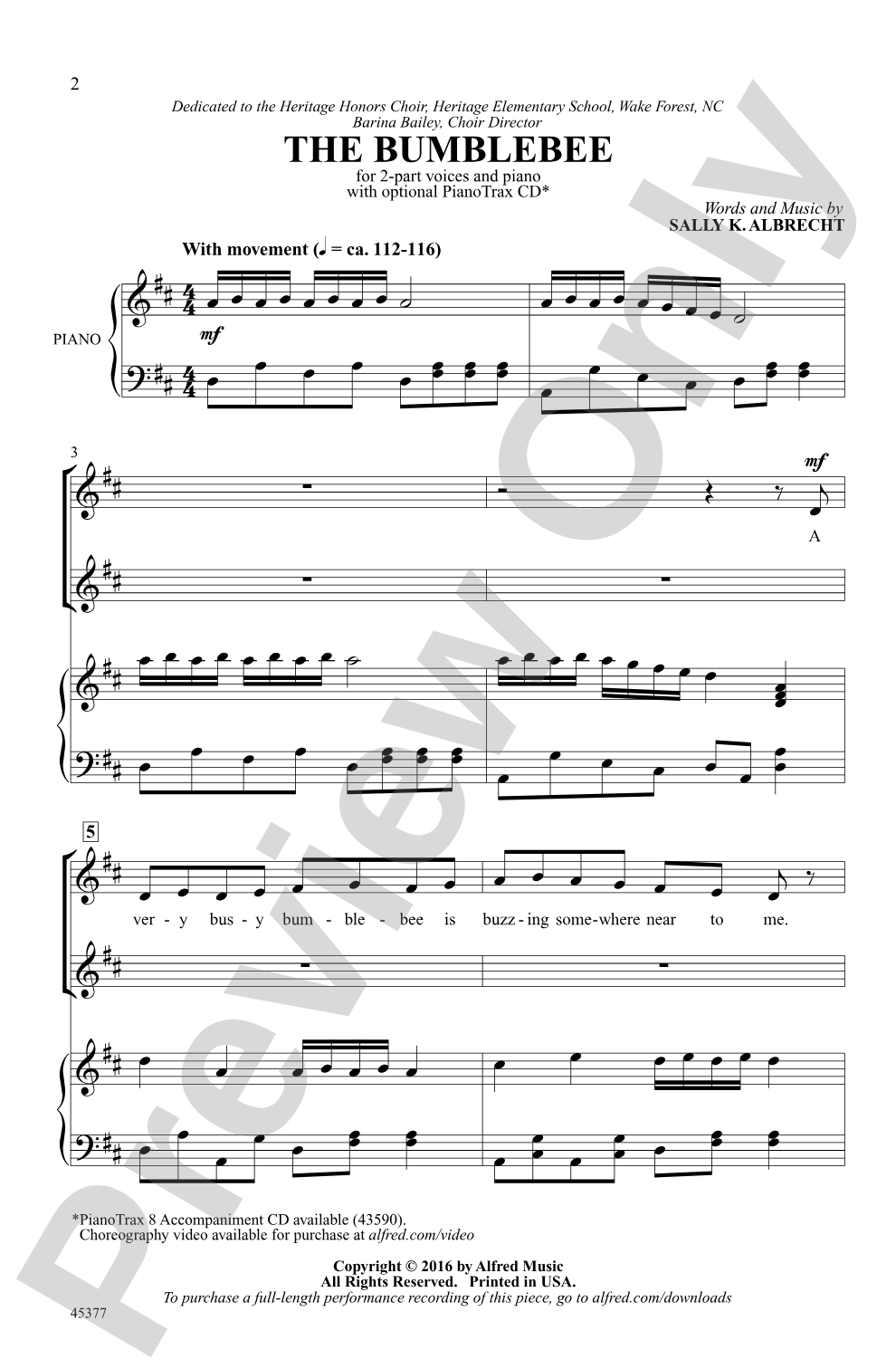
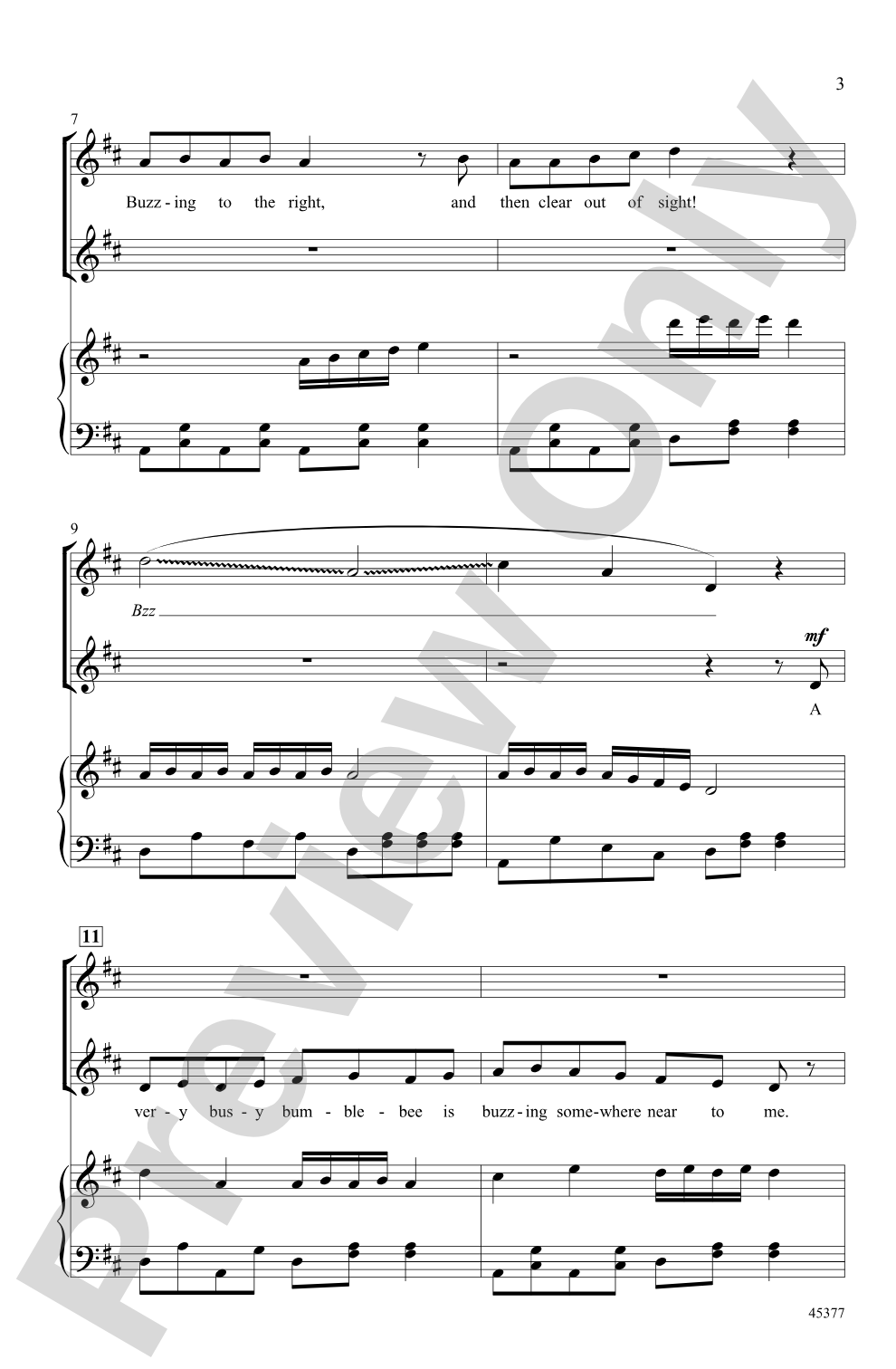
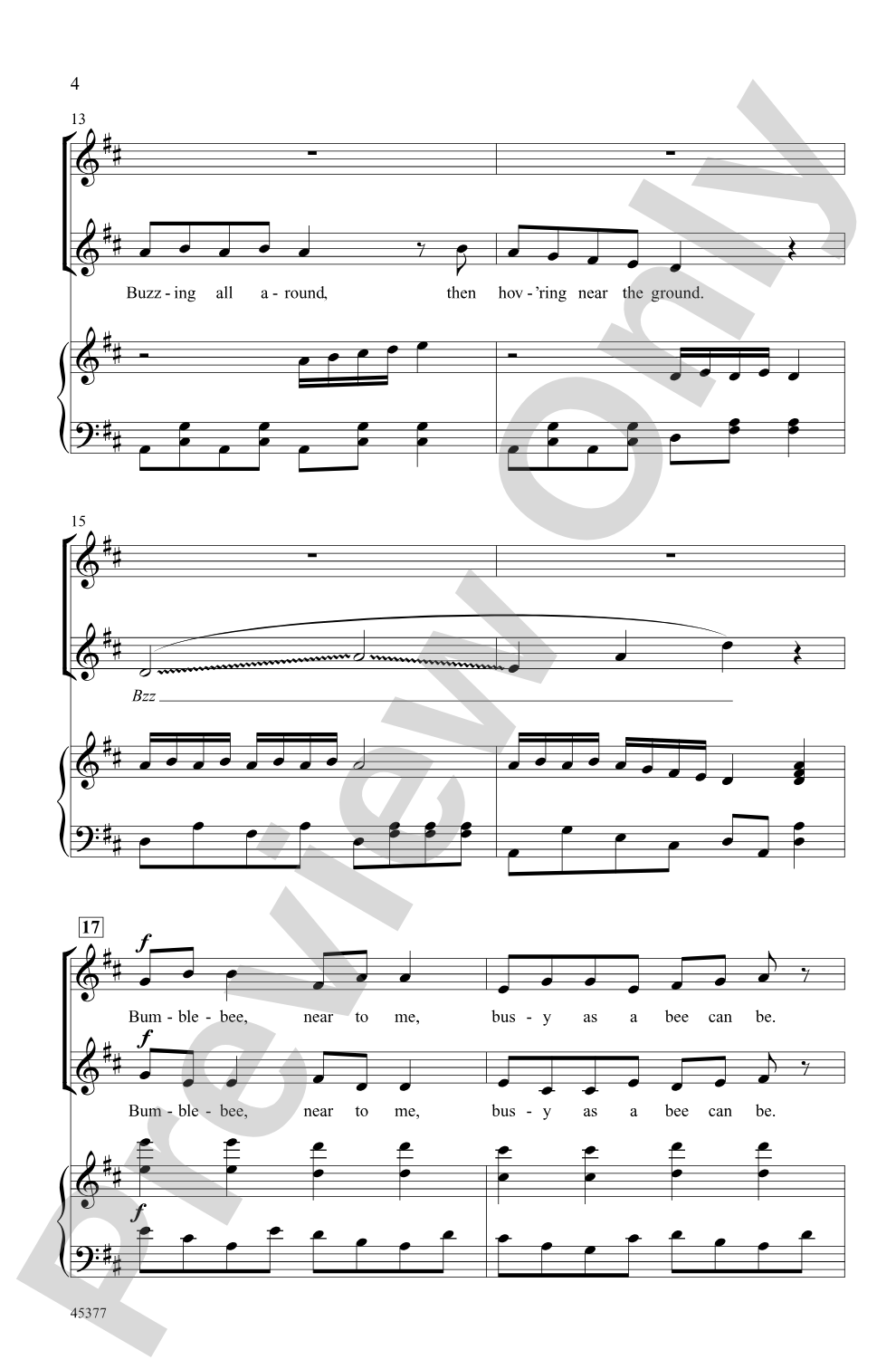
A true charmer that will have your younger singers buzzing with delight! The original text cleverly hovers along the pitches of the major scale, and a slower middle section (in the parallel minor) provides a perfect opportunity to discover and discuss tempo and tonality. Sally's staging suggestions are available on Step One! This title is available in MakeMusic Cloud.


The Bumblebee: 2-Part Choral Octavo isn't in MakeMusic Cloud just yet...but it could be. Let us know you'd like to see it, and you'll help shape what comes next. In the meantime, start a free trial and dive into thousands of interactive titles your students can play along with today.
Request This Title
Tell us you want it.
Start Your Free Trial
Explore everything that's ready to play right now.
Sample Audio
1
Audio File
--:--
0:00
0:00
Sample Video
Additional Details
Series:
Alfred Choral Designs
Publisher:
Alfred Music
Page Count:
12
SKU:
00-PO-0003627
More about this title
About the Composer: Sally K. Albrecht

Sally K. Albrecht has shaped American choral music for over four decades as a prolific composer, conductor, and clinician with a particular gift for choral movement and staging. Since 1987, she has received annual recognition from ASCAP for her contributions to the field, and her catalog now includes more than 600 choral works alongside 75 larger musicals and songbooks. She spent over thirty years developing publications for major educational music publishers, most recently as Director of School Choral, Vocal, and Elementary Publications at Alfred Music, and has conducted honor choirs at prestigious venues including Lincoln Center, Carnegie Hall, and The Kennedy Center.
Albrecht holds degrees from Rollins College (B.A. in Music and Theater, 1976), the University of Miami (M.A. in Drama, 1977, and M.M. in Accompanying, 1979), and has taught at Oakland University, Jersey City State College, and Meredith College. A native of Cleveland, Ohio, she received the Distinguished Alumna Award from both the University of Miami Frost School of Music and Rollins College in 2021, and previously served as Chair of the Board of Trustees for the Omicron Delta Kappa National Leadership Honor Society. She lives in Wake Forest, North Carolina, with her husband, composer and arranger Jay Althouse.
Why we love this
This piece captures what makes Albrecht's choral writing so teachable: a straightforward melody that sits well in young voices, clever text that reinforces scale degrees, and built-in pedagogical moments. The shift to parallel minor in the middle section is not just a charming musical contrast but a direct teaching tool, inviting singers to feel tonality shift beneath their feet rather than simply learning it from a worksheet. Directors will appreciate both the musical integrity and the practical staging notes that make this work come alive in performance.
What to expect
Playful and energetic, with an almost physical hum of motion that matches its subject. The major key opening buzzes with lightness and clarity, then settles into a warmer, more introspective minor section that invites singers to breathe and absorb a different emotional color before returning to the brightness of home.
Who it's for
This two-part octavo works beautifully with elementary and middle school choirs, particularly groups new to part-singing who benefit from secure melodies and clear harmonic structures. It also serves as a confident opener for mixed-age choirs where younger singers need material that will not overshadow older students' contributions to a program.
How to get the most out of it
- Isolate the major scale passages in the opening section to help singers hear how the text itself traces pitch relationships; once they own the melody line, harmonic awareness follows naturally.
- Bring out the tonal shift to parallel minor by adjusting vowel color and release weight in the middle section; this physical change reinforces what their ears are hearing.
- Engage Albrecht's staging suggestions early in rehearsal so singers understand the theatrical dimension; movement connects young performers to the piece emotionally and makes it memorable.
How to use it
Program this early in a concert to set an upbeat, accessible tone and warm up your younger singers' confidence in front of an audience. It pairs well with other Albrecht pieces in a thematic set, or use it as a charming bridge between a more serious opening work and group songs that follow.
Skills your students will build
- Reading and singing major scale passages
- Recognizing and performing in parallel minor tonality
- Identifying and responding to tempo changes
- Two-part voice independence and balance
- Coordinating movement with singing