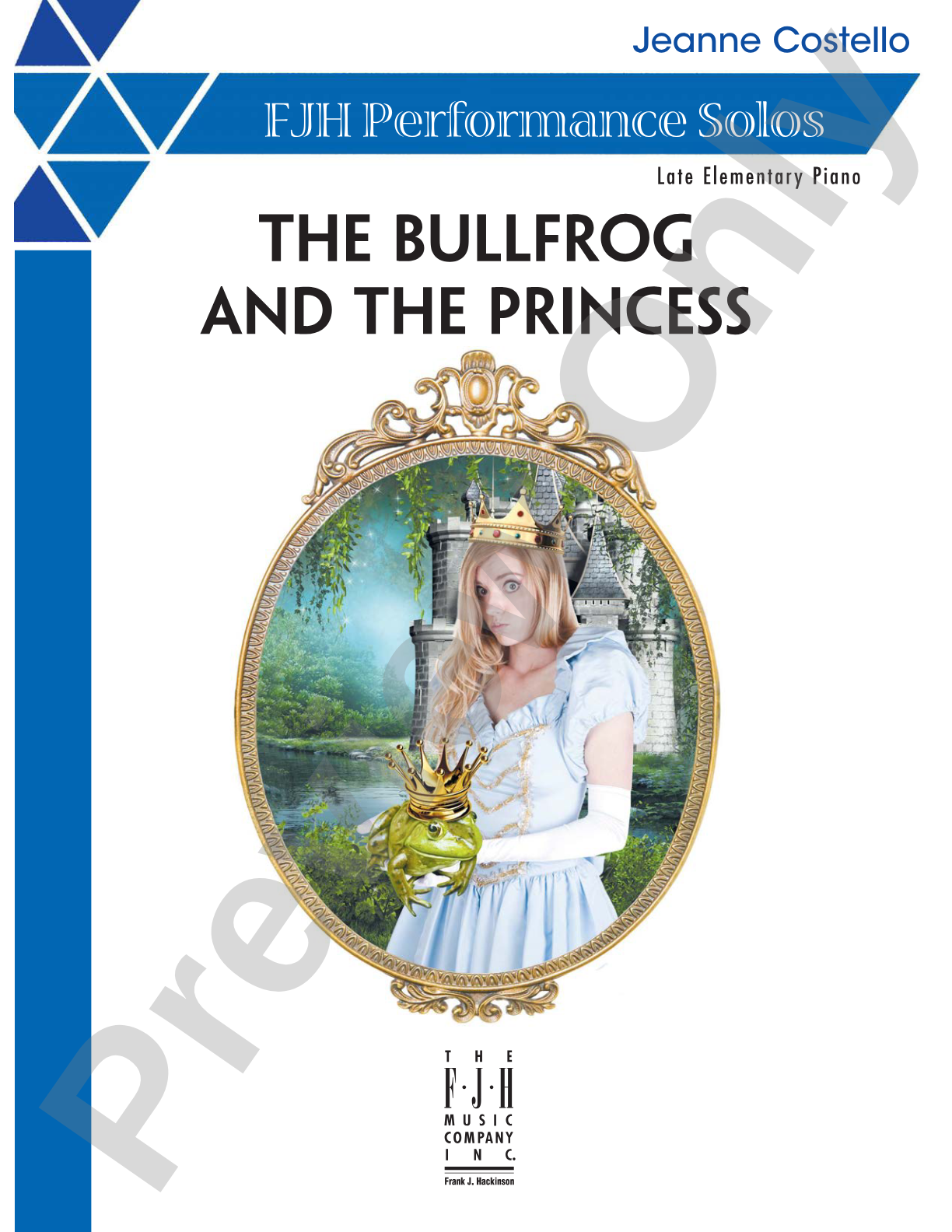
This charming and lyrical solo answers the question: Will the princess kiss the bullfrog and turn him back into her long-lost prince? Beginning with contrary motion two-note slurs, the hands often play the same intervals - L.H. harmonically, R.H. melodically - with some octave shifts.
Discover MakeMusic Cloud: thousands of interactive titles your students can play along with today.
Costello captures genuine lyrical warmth without resorting to saccharine accompaniment patterns. The contrary motion writing at the opening feels fresh and engaging, and the hand-pairing technique (harmonically in the left, melodically in the right) creates an accessible but musically sophisticated learning experience that rewards careful attention to voicing.
What to expect
A storybook illustration set to music. The piece unfolds with gentle curiosity, its contrary motion creating a sense of two perspectives in conversation. There's charm here, but also restraint; the emotional truth lives in the lyricism, not in bombast.
Who it's for
Intermediate pianists ready to work with hand independence and interval training. This solo suits students who respond well to character pieces and narrative prompts, and who benefit from seeing how harmonic thinking shapes the accompaniment.
How to get the most out of it
Shape the opening two-note slurs with clear direction in both hands. These aren't ornamental; they carry the emotional weight of the opening.
When the hands play the same intervals, differentiate their roles: let the right hand sing while the left hand supports harmonically. Don't let them blur together.
Mark the octave shifts visually before you practice. They're easy to miss in score reading and can derail otherwise confident playing.
Let the storytelling guide your tempo choices. Slow enough for the listener to hear the princess's deliberation, but not so slow that the narrative feels stuck.
How to use it
Pair this with other character pieces for a recital that celebrates storytelling in music. It works especially well for younger pianists performing solo work early in the year, when confidence building matters as much as technical challenge.
Skills your students will build
Contrary motion in both hands independently
Interval recognition and execution (L.H. harmonic, R.H. melodic)
Hand independence with shared intervallic material
Octave shifts and position changes
Lyrical shaping and musical phrasing
Left-hand harmonic voicing while supporting melody
You May Also Like
Scan to Complete Your Purchase
Use your phone's camera to scan the code below
You'll log in on your phone and the order will be added to your account