

That's Entertainment: 2-Part Choral Octavo
Words by Howard Dietz, music by Arthur Schwartz / arr. Alan Billingsley
Item: 00-PO-0007552
$2.45
Minimum order quantity: 20 copies
One moment…
Related Items
That's Entertainment: SATB Choral Octavo |
$2.45
|
View | |
That's Entertainment: SAB Choral Octavo |
$2.45
|
View | |
That's Entertainment: SoundTrax Digital Audio Download |
$29.99
|
View | |
That's Entertainment: Choral Octavo SoundPax |
$30.00
|
View | |
That's Entertainment: SATB Choral Octavo |
$2.45
|
View | |
That's Entertainment: SAB Choral Octavo |
$2.45
|
View | |
That's Entertainment: 2-Part Choral Octavo |
$2.45
|
View | |
That's Entertainment: Choral SoundTrax CD |
$29.99
|
View | |
That's Entertainment: Choral Octavo SoundPax |
$30.00
|
View |
Description
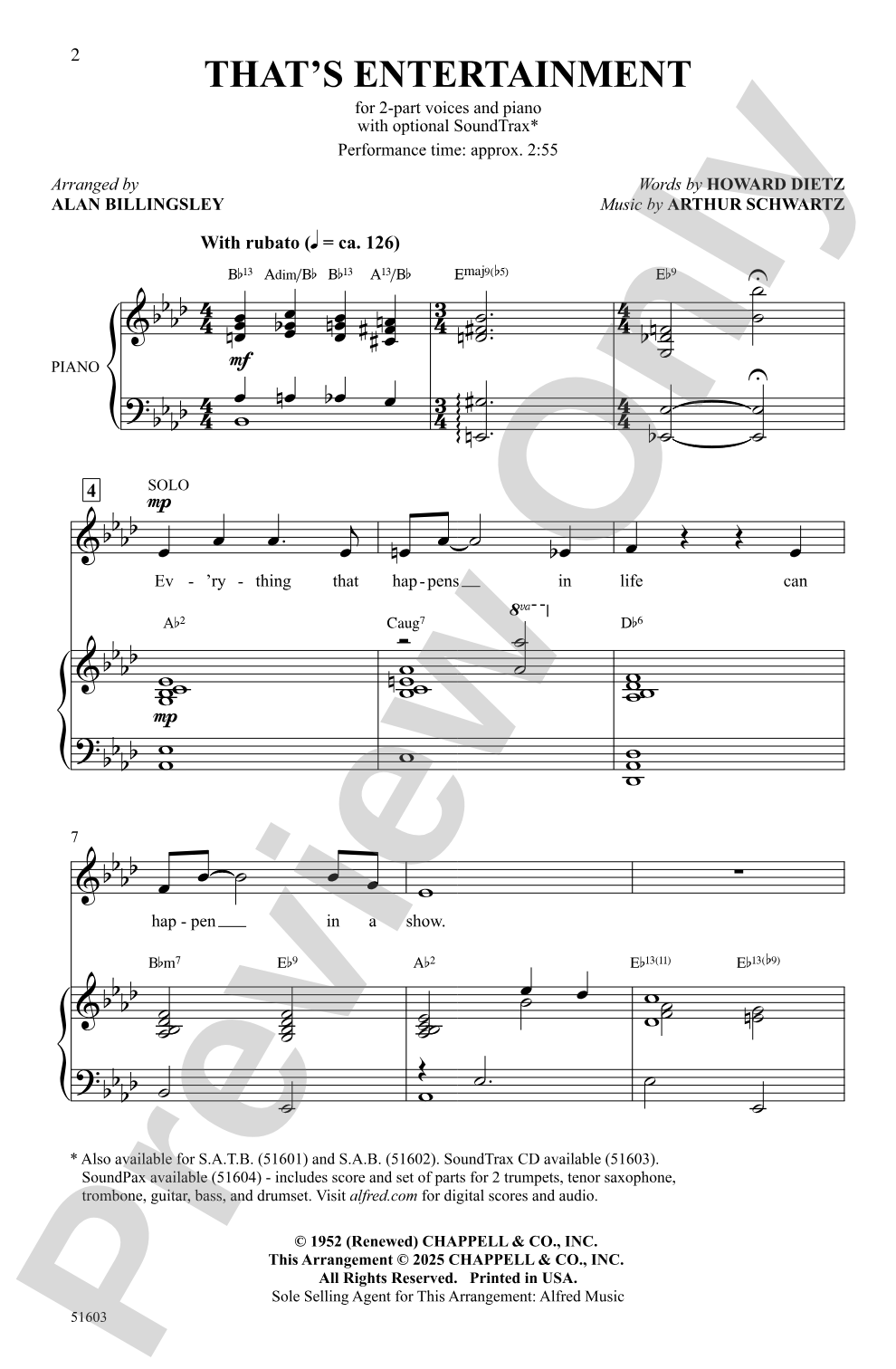
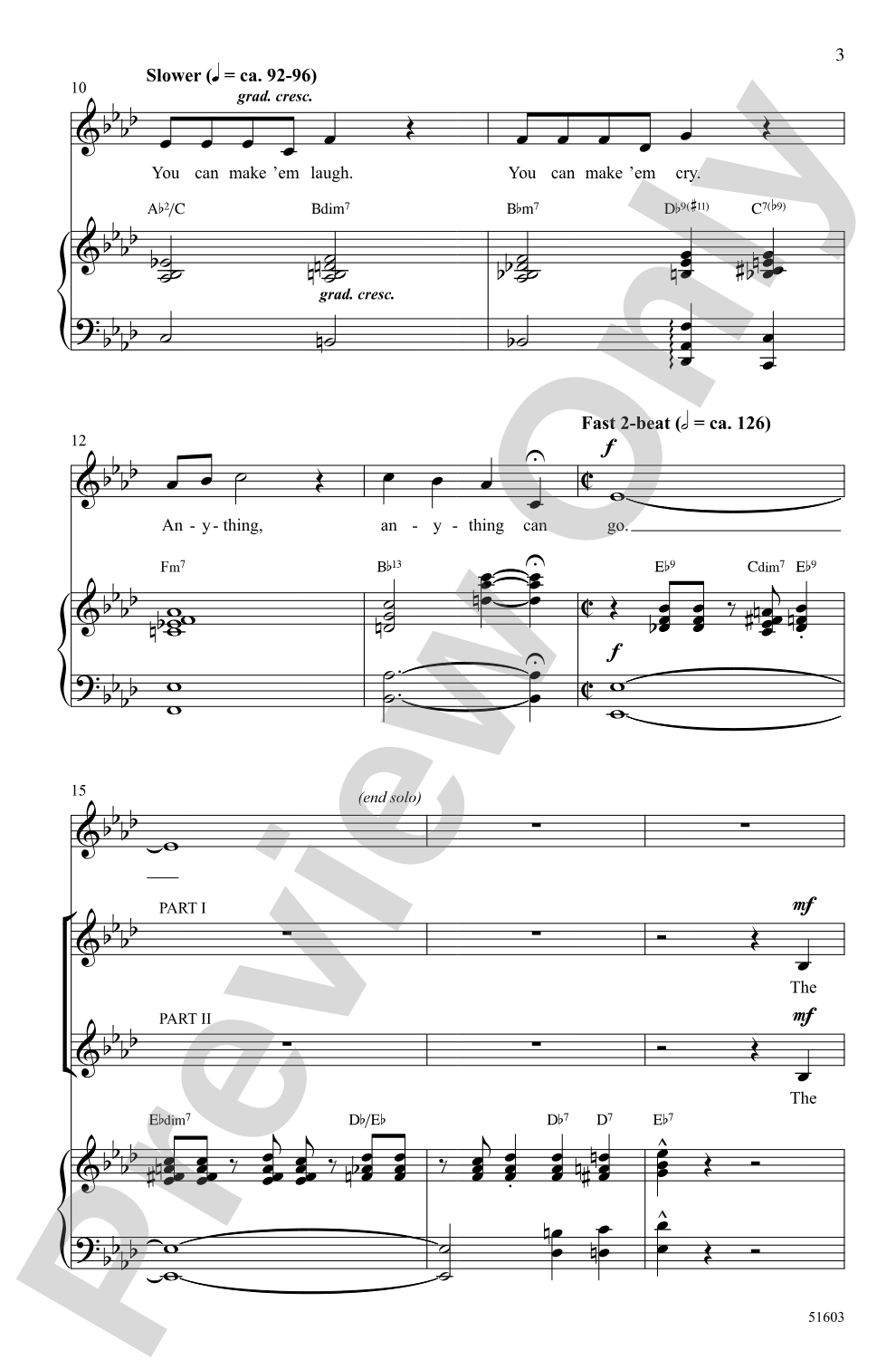
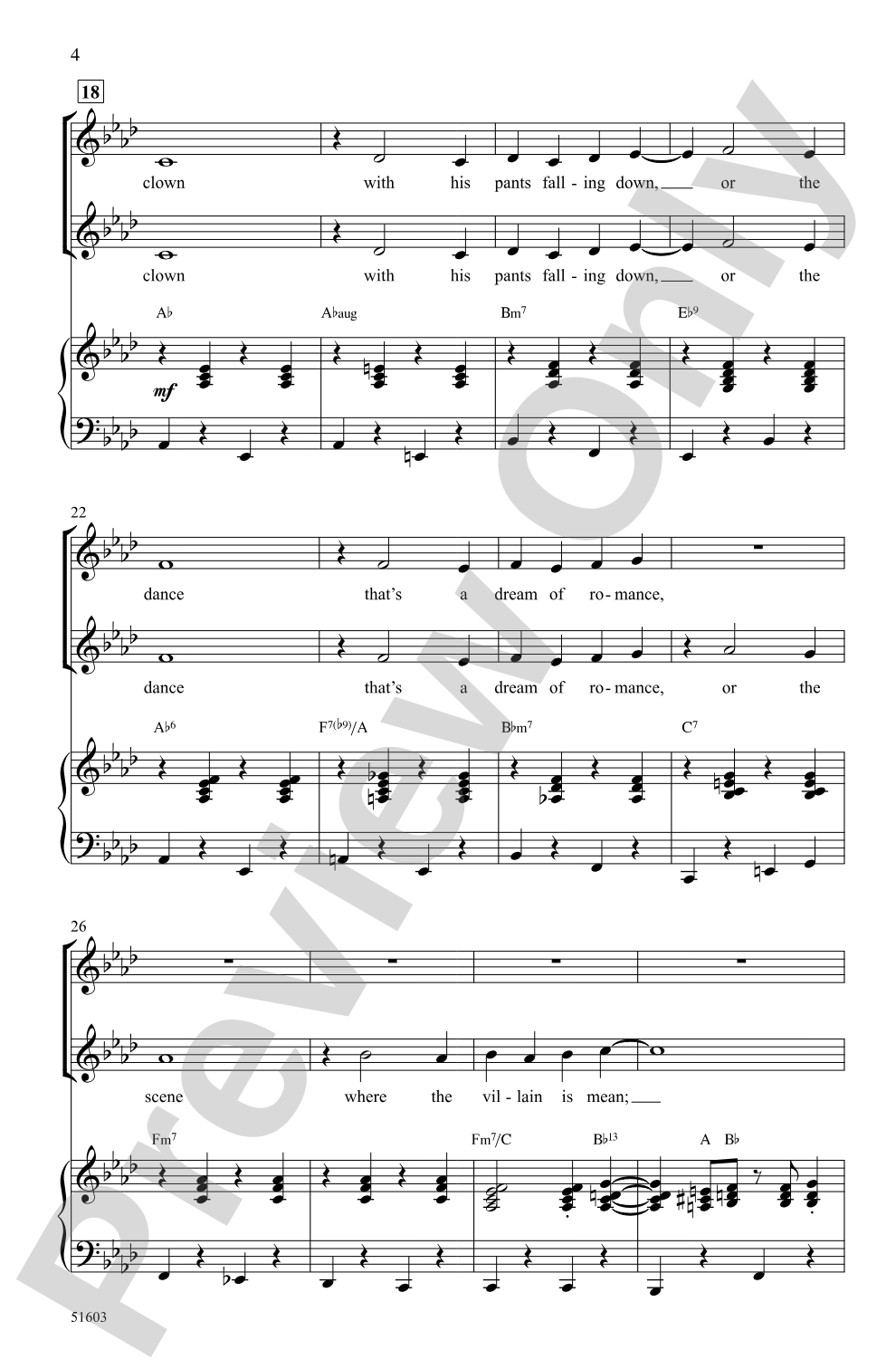
Lady Gaga released her cover of this showbiz standard on Harlequin, a companion album to the film Joker: Folie à Deux. Opening with a short spotlight solo and then breaking into a bouncy Broadway 2-beat, this theatrical arrangement is sure to thrill choirs of all ages! This stage-worthy opener, finale, or concert theme song craves choreo, including even a kick-line toward the rousing finish. Don't miss the spectacular orchestration on our pizazzy SoundTrax and SoundPax accompaniment.


Discover MakeMusic Cloud: thousands of interactive titles your students can play along with today.
Sample Audio
1
Audio File
--:--
0:00
0:00
Sample Video
Additional Details
Series:
Alfred Pop Choral Series
Publisher:
Alfred Music
Page Count:
16
SKU:
00-PO-0007552
More about this title
About the Composer: Howard Dietz
Howard Dietz (1896-1983) was a lyricist and librettist who shaped the American musical theater landscape across five decades. Working primarily with composer Arthur Schwartz, Dietz crafted sophisticated lyrics that balanced wit, elegance, and accessibility, earning him recognition as one of Broadway's most literate songwriters. His catalog spans revues, operettas, and film scores, establishing standards that remain central to the Great American Songbook.
Beyond his stage work, Dietz served as head of publicity for MGM during Hollywood's Golden Age, a dual career that positioned him at the intersection of Broadway and film. This unique vantage point informed his theatrical sensibility; his lyrics often captured the glamour and showbiz energy that audiences craved during the Depression and postwar eras. For music educators, Dietz's work offers students access to the sophisticated song craft and theatrical storytelling that define the golden age of American musical theater.
Why we love this
Alan Billingsley's arrangement strips away the orchestral grandeur of the original and rebuilds it for young voices with brassy energy and genuine theatrical flair. The spotlight solo that opens the piece gives choirs a built-in character moment, while the bouncy 2-beat that follows sits naturally in a 2-part voicing without sounding thin. This is the kind of opener that makes audiences lean forward in their seats from the first note.
What to expect
Opening with spotlight glamour and then launching into pure theatrical joy, this arrangement captures the optimism and showbiz magic of classic Broadway. The arrangement sparkles with comedic timing and rhythmic sass; it feels like stepping onto a stage under bright lights, ready to entertain an audience that came to have fun.
Who it's for
This arrangement works for middle school through adult choirs seeking an energetic, accessible showstopper with genuine Broadway credibility. Young singers benefit from the theatrical scaffolding Billingsley builds in, while more experienced ensembles will appreciate the stylistic demands of executing authentic 2-beat swing and the performance sophistication the piece invites.
How to get the most out of it
- Treat the opening solo as a genuine theatrical moment. Whether it's sung by a confident section or a featured soloist, it should have personality and presence; let the vulnerability in the lyric breathe before the ensemble crashes in.
- Nail the rhythmic precision of the 2-beat. This style lives or dies by pocket and bounce; use the recorded accompaniment to lock the ensemble's sense of lift and forward motion.
- Choreography isn't optional here; even simple staging (the referenced kick-line, unified gestures on key moments) transforms this from a fun arrangement into a complete theatrical experience. Start early and build intentionally toward that rousing finish.
- Balance the upper and lower voices so the harmony reads clearly without either part disappearing. 2-part writing can expose balance issues quickly, especially in a rhythmically driven piece like this.
How to use it
Program this as a concert opener to set an immediately upbeat tone, or use it as a finale that leaves audiences smiling and humming on their way out. It also functions brilliantly as a thematic anchor in a concert built around Great American Songbook material, film music, or music from the Golden Age of Hollywood.
Skills your students will build
- Executing swing rhythm and 2-beat feel in a choral context
- Building character and presence in a solo passage before ensemble entry
- Balancing parts in 2-part voicing so both lines support the overall sound
- Interpreting theatrical staging and choreography as integral to musical performance
- Reading and responding to rhythmic cues in an accompaniment track