

Te Deum: TBB Choral Octavo
By Ruth Morris Gray
Item: 00-PO-0005530
$1.90
Minimum order quantity: 20 copies
Pickup currently not available
Description
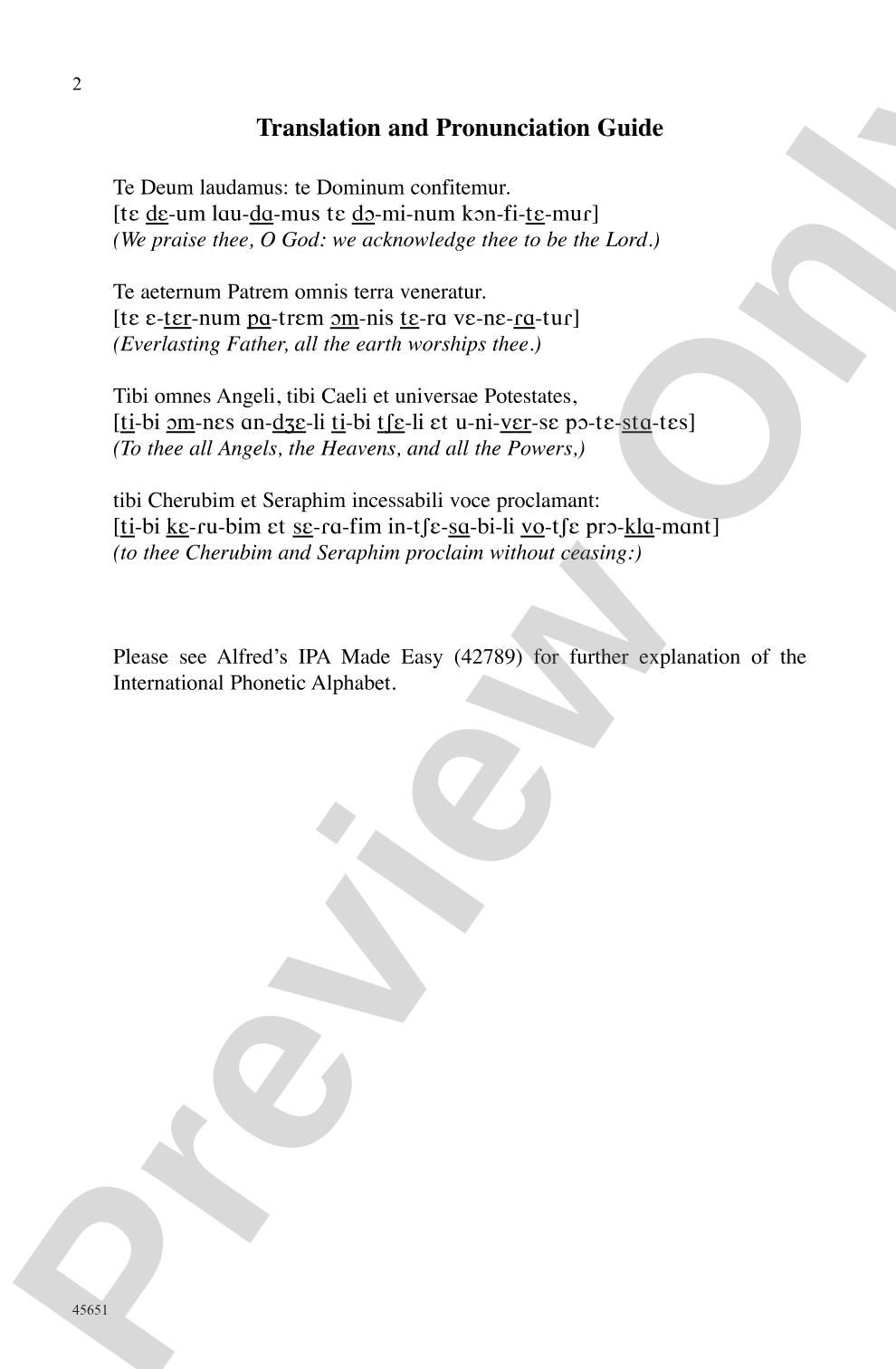
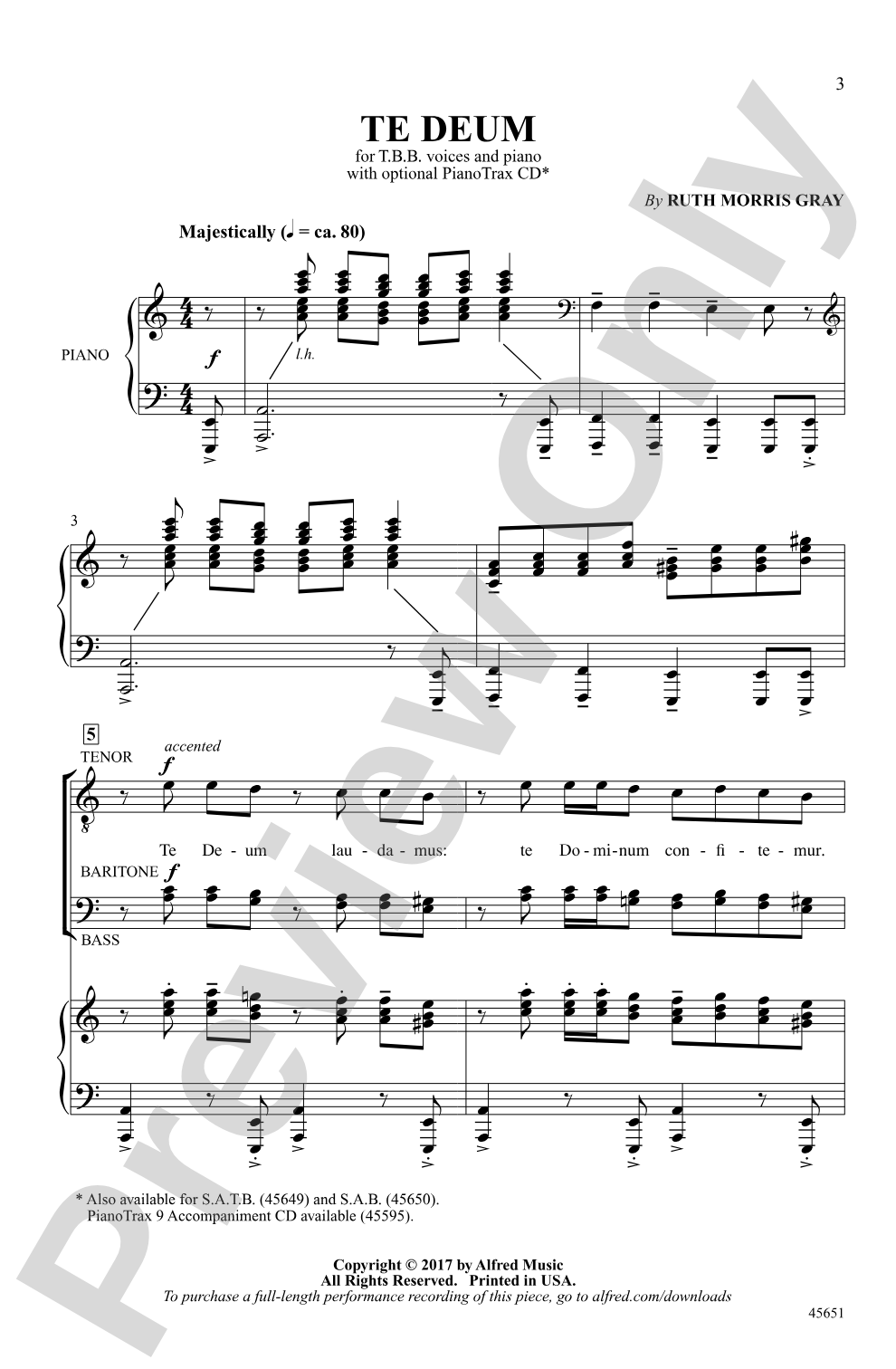
Riveting and majestic, this contemporary setting of the traditional Latin text is sure to impress. Choirs both large and small will easily achieve a big sound. Modal harmonies convey a sense of urgency throughout, and an optional descant brings the piece to a dramatic close.


Te Deum: TBB Choral Octavo isn't in MakeMusic Cloud just yet...but it could be. Let us know you'd like to see it, and you'll help shape what comes next. In the meantime, start a free trial and dive into thousands of interactive titles your students can play along with today.
Request This Title
Tell us you want it.
Start Your Free Trial
Explore everything that's ready to play right now.
Sample Audio
1
Audio File
--:--
0:00
0:00
Sample Video
No sample videos found.
Additional Details
Series:
Alfred Choral Designs
Publisher:
Alfred Music
Page Count:
12
SKU:
00-PO-0005530
More about this title
About the Composer: Ruth Morris Gray

Ruth Morris Gray has been directing choirs and teaching piano at Rosemead High School since 2004. She holds a Bachelor of Music in Piano Performance and Composition from Biola University and earned both a Master of Arts in Music Composition from UC Santa Barbara and her California Single Subject Music Credential from Cal State Northridge.
With over 100 published choral compositions to her name, Gray has established herself as a prolific voice in contemporary sacred and secular choral writing. Beyond the classroom and rehearsal hall, she is an active performer and composer who finds inspiration in travel, reading, and outdoor pursuits with her husband.
Why we love this
Gray's setting cuts through with genuine drama while remaining highly singable for mid-size and smaller choirs. The modal harmonies create architectural interest without requiring advanced harmonic literacy, and the optional descant gives you control over the final moment: you can end with elegant restraint or build to something electrifying.
What to expect
There is an unmistakable sense of arrival in this Te Deum. Modal harmonies create an almost ancient quality, yet the contemporary language and rhythmic drive keep the piece firmly in the present. The optional descant lifts the final moments into something transcendent.
Who it's for
This octavo works for treble choirs, male-voice ensembles, or mixed groups using the TBB or TTBB voicing. Whether your group is performing in a concert setting, festival, or competition, the piece delivers impact without demanding virtuosity.
How to get the most out of it
- Shape the modal harmonies so they feel inevitable rather than ornamental. Let the voice lines breathe within each chord change, and your singers will feel the urgency Gray has built in.
- If your ensemble includes strong soloists, highlight the descant option for rehearsal so singers understand what it adds dramatically before deciding whether to use it.
- Balance the three parts carefully in the opening sections. The modal writing means no part should disappear; each voice contributes to the harmonic color.
How to use it
Pair this with other sacred works by contemporary composers to anchor a concert exploring how modern voices approach traditional liturgical texts. It also holds its own as a contest or festival selection where emotional maturity and harmonic sophistication matter more than technical flash.
Skills your students will build
- Singing in modal harmonic contexts
- Balancing three independent lines while maintaining harmonic awareness
- Approaching contemporary sacred literature with musicality and respect for text
- Building dynamic and tonal control in dramatic moments