

Tant Que Vivray: 3-Part Mixed Choral Octavo
(Long Shall I Live)
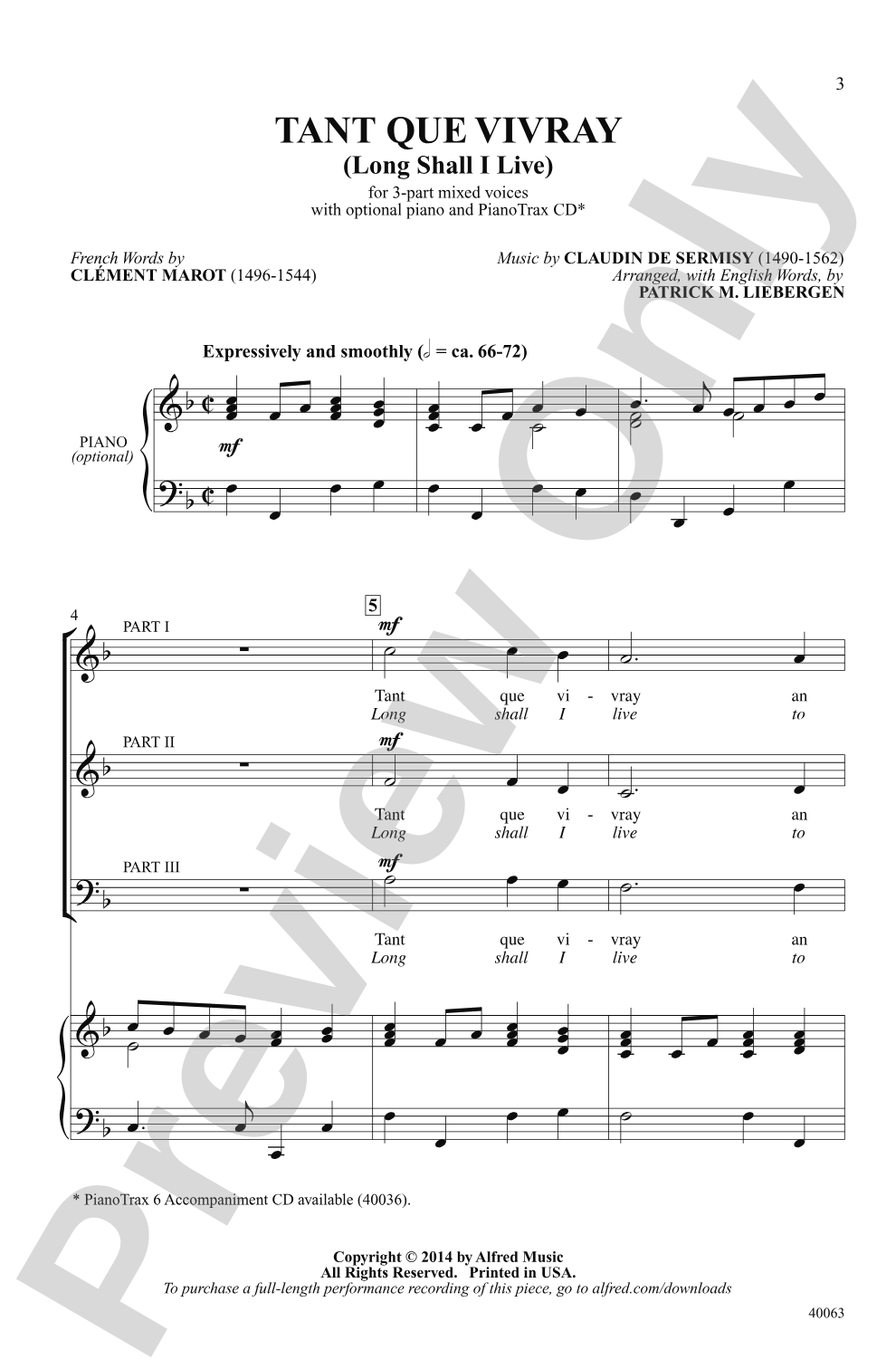
French words by Clément Marot, music by Claudin de Sermisy / arr., with English words, by Patrick M. Liebergen
Item: 00-PO-0001775
$1.85
Minimum order quantity: 20 copies
Pickup currently not available
Description
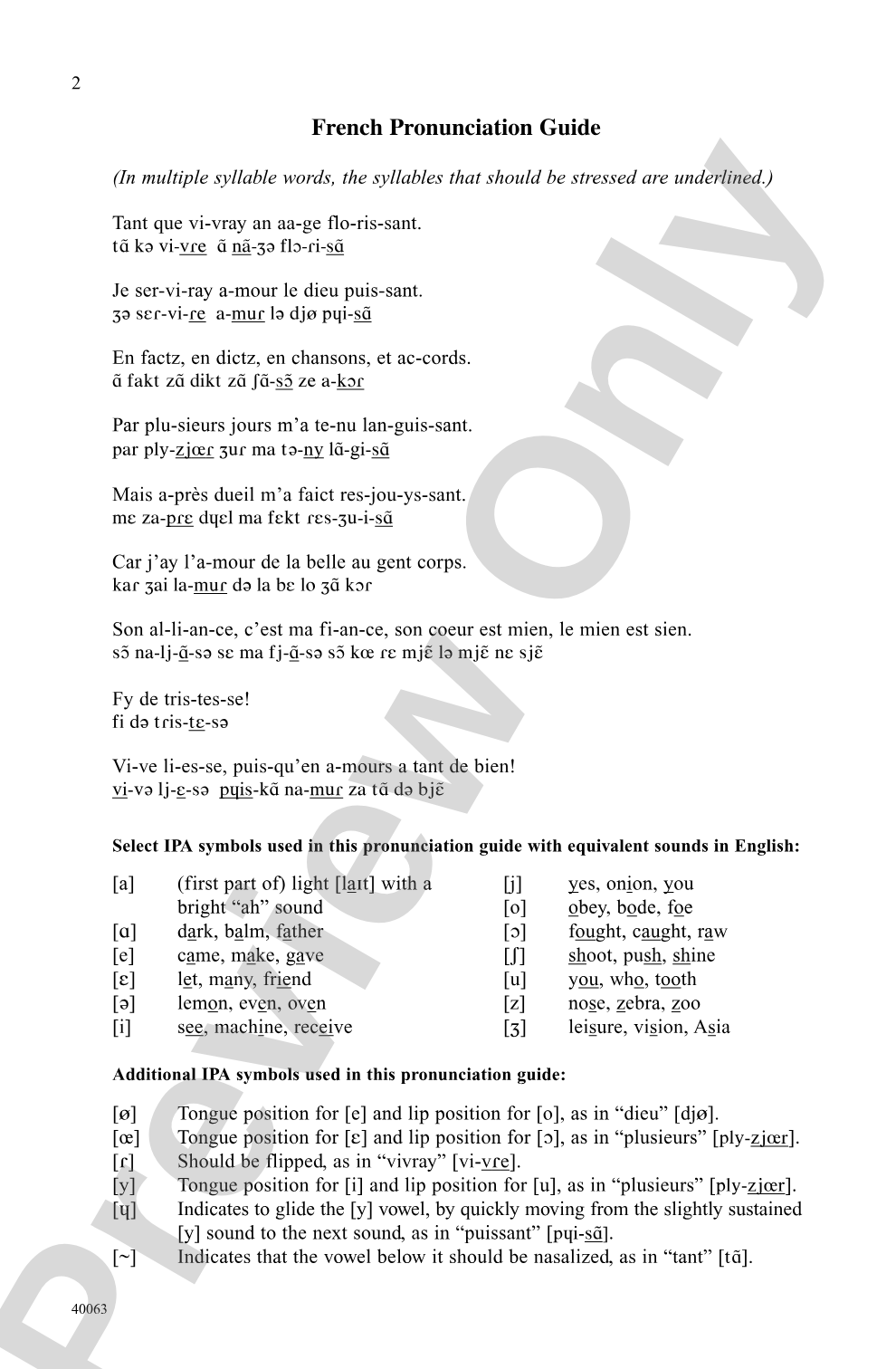
Excellent 3-part writing, right on the mark for young men and women. Teach the song in English before introducing the optional French text (an IPA pronunciation guide is included). When your students are ready to sing a cappella, consider eliminating the piano accompaniment---it works either way.


Tant Que Vivray: 3-Part Mixed Choral Octavo isn't in MakeMusic Cloud just yet...but it could be. Let us know you'd like to see it, and you'll help shape what comes next. In the meantime, start a free trial and dive into thousands of interactive titles your students can play along with today.
Request This Title
Tell us you want it.
Start Your Free Trial
Explore everything that's ready to play right now.
Sample Audio
1
Audio File
--:--
0:00
0:00
Sample Video
No sample videos found.
Additional Details
Series:
Alfred Choral Designs
Publisher:
Alfred Music
Page Count:
12
SKU:
00-PO-0001775
More about this title
About the Composer: Claudin de Sermisy
Claudin de Sermisy (c. 1490-1562) was among the most prolific and celebrated composers of the French Renaissance. A member of the royal chapel under Francis I, he composed over 170 chansons that defined the secular vocal style of his era. His works balanced sophisticated polyphonic writing with singable, memorable melodies, making him a bridge between late medieval traditions and the emerging Renaissance aesthetic.
Why we love this
Liebergen's arrangement preserves the melodic charm and elegant simplicity of this Renaissance favorite while crafting vocal lines that sit naturally for young singers. The flexibility to teach in English first, add French later, and perform with or without piano gives you multiple pathways into the piece depending on your rehearsal timeline and ensemble readiness.
What to expect
Tant que vivray carries the lyrical lightness of a Renaissance love song, with elegant voice leading that moves naturally across the staff. The piece has an unpretentious warmth, neither overly complex nor simplistic, offering singers the satisfaction of sounding polished without laboring through thick counterpoint.
Who it's for
This arrangement suits developing mixed choirs with voices still finding their blend and independence. The 3-part texture reduces the complexity of full four-part writing while preserving the harmonic sophistication that makes Renaissance music rewarding for high school and early college singers.
How to get the most out of it
- Start learning with English text and the piano accompaniment in place. This anchors the harmonic movement and helps singers hear how their line fits within the texture before tackling the rhythmic independence that a cappella singing demands.
- Once the melodic and harmonic content are secure, gradually reduce piano support in rehearsal by having the pianist play fewer sections or softer dynamics. This transition prepares singers to sing independently without the shock of dropping accompaniment entirely at performance.
- Attend to clarity of text projection when moving to French. The IPA guide is your foundation, but work with singers on where natural stress falls in the language so phrasing doesn't fight against French speech patterns.
- Shape the piece with gentle dynamic contours that follow the text rather than uniform mezzo-forte singing throughout. Renaissance chansons gain character through subtle dynamic shaping that supports the poetic narrative.
How to use it
This works beautifully in a concert exploring Renaissance secular music, especially paired with other Sermisy works or choral music from the French court. It also serves as a gateway piece for festival programming, where the contest-ready arrangement and manageable page count (12 pages) fit easily into a developing ensemble's season.
Skills your students will build
- Reading 3-part mixed voicing with independent lines moving simultaneously
- Singing a cappella in Renaissance style without harmonic support
- Pronunciation and diction in French (using IPA as a reference tool)
- Text expression and phrasing in both English and the original language
- Balancing blend in ensemble while maintaining line independence