
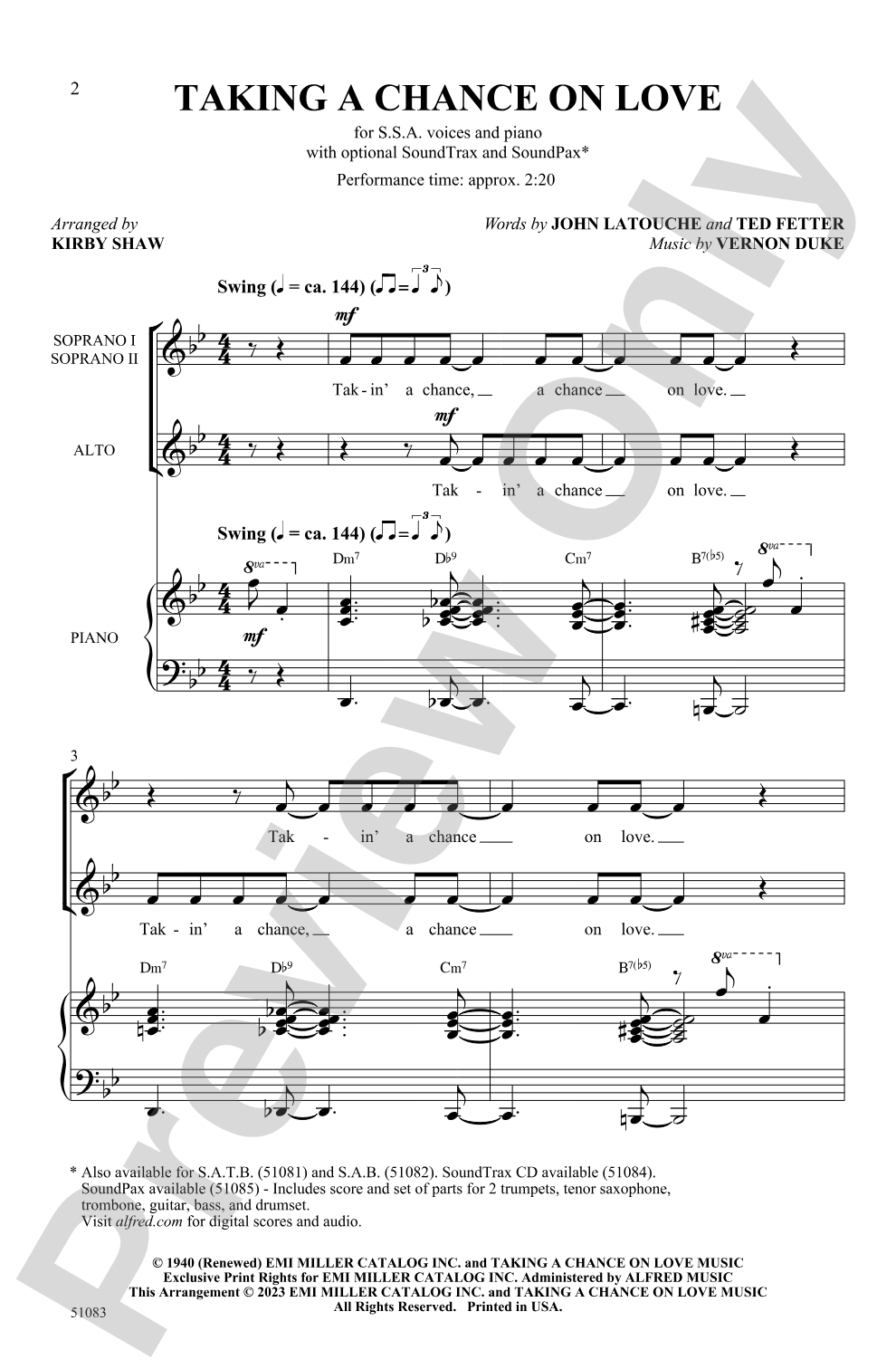
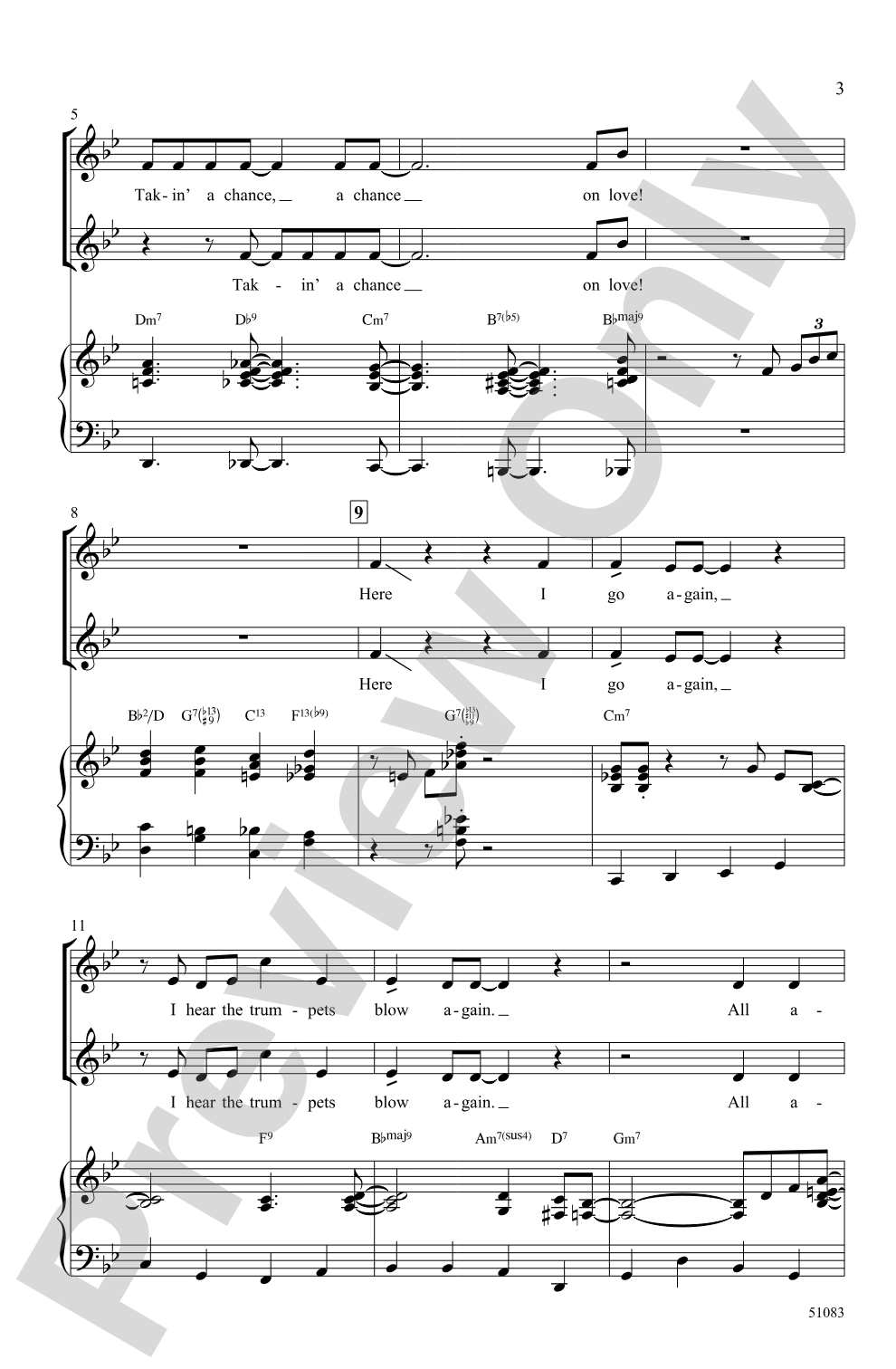
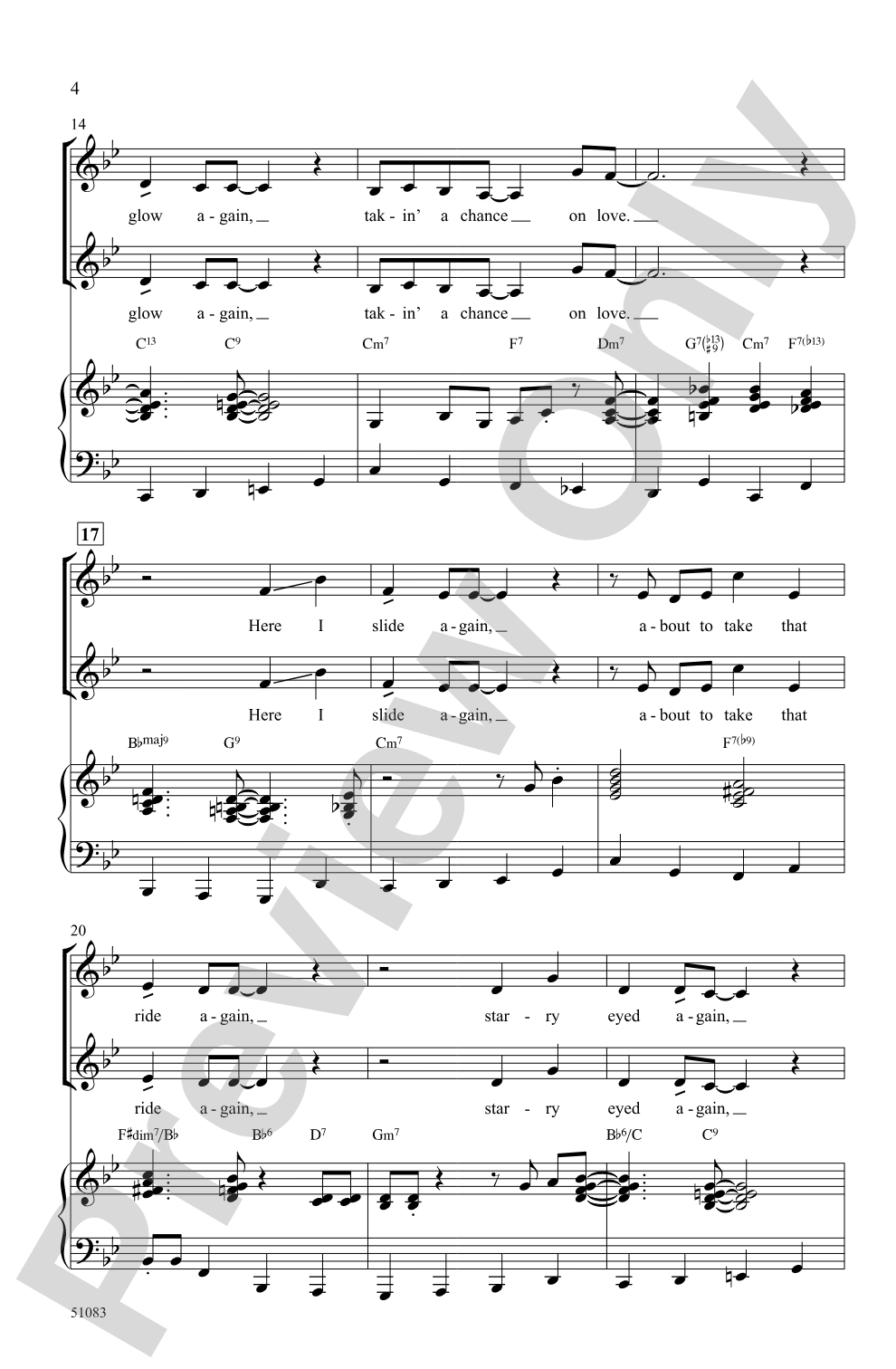

Taking a Chance on Love: SSA Choral Octavo
Words and music by John LaTouche, Vernon Duke, and Ted Fetter / arr. Kirby Shaw
Item: 00-PO-0007166
$2.35
Minimum order quantity: 20 copies
One moment…
Related Items
Taking a Chance on Love: SATB Choral Octavo |
$2.35
|
View | |
Taking a Chance on Love: SAB Choral Octavo |
$2.35
|
View | |
Taking a Chance on Love: SoundTrax Digital Audio Download |
$29.99
|
View | |
Taking a Chance on Love: SATB Choral Octavo |
$2.35
|
View | |
Taking a Chance on Love: SAB Choral Octavo |
$2.35
|
View | |
Taking a Chance on Love: SSA Choral Octavo |
$2.35
|
View | |
Taking a Chance on Love: Choral Octavo SoundTrax CD |
$29.99
|
View | |
Taking a Chance on Love: Choral SoundPax |
$30.00
|
View |
Description
A timelss jazz standard in a classic Kirby Shaw arrangement! The snappy rhythms, tasty contrapuntal writing, and clever lyrics keep things interesting but always accessible. Perform with the included piano accompaniment or the swingin' SoundPax featuring trumpets, saxophone, trombone, and rhythm section. Vocal jazz singing at its best!


Taking a Chance on Love: SSA Choral Octavo isn't in MakeMusic Cloud just yet...but it could be. Let us know you'd like to see it, and you'll help shape what comes next. In the meantime, start a free trial and dive into thousands of interactive titles your students can play along with today.
Request This Title
Tell us you want it.
Start Your Free Trial
Explore everything that's ready to play right now.
Sample Audio
1
Audio File
--:--
0:00
0:00
Sample Video
Additional Details
Series:
Alfred Pop Choral Series
Publisher:
Alfred Music
Page Count:
12
SKU:
00-PO-0007166
More about this title
About the Composer: John LaTouche
John LaTouche (1914-1956) was an American lyricist and librettist who shaped the sound of mid-century American musical theater. His wit and sophisticated wordplay appeared in Broadway productions and film scores alongside composers including Vernon Duke and others. Though his career was cut short, his lyrics remain standards of the jazz and theatrical repertoire, prized for their clever construction and emotional directness.
Ted Fetter was a lyricist and performer who collaborated with composers across jazz and popular music in the mid-20th century. Vernon Duke, a Russian-born composer who worked extensively in American musical theater, contributed the memorable melody that LaTouche and Fetter's words so perfectly complement.
Why we love this
Kirby Shaw's SSA voicing opens this swinging standard to choirs that might otherwise bypass jazz repertoire. The arrangement balances rhythmic snap with genuine harmonic interest, never sacrificing accessibility for sophistication. Your singers will sound polished and contemporary, whether backed by piano or the full SoundPax.
What to expect
Sophisticated and joyful. The tune glides with an easy confidence while the arrangement keeps the ear engaged through clever counterpoint and rhythmic detail. Singers feel the style without strain; the voicing breathes naturally for SSA range and sits where the voice wants to sit.
Who it's for
SSA choirs seeking genuine jazz literature that sits comfortably for upper voices without requiring extended range or advanced sight-reading. Directors building a mixed repertoire season will appreciate material that feels both contemporary and rooted in American songbook tradition. This works for treble-voiced ensembles from upper middle school through adult community choirs.
How to get the most out of it
- Lock into the swing eighth-note feel from the first rehearsal. The rhythmic precision of the contrapuntal sections depends on consistent articulation and relaxed forward motion.
- Use the recorded accompaniment sparingly during early rehearsals so singers internalize the harmonic movement and entrances independently.
- Shape the dynamics carefully around the interplay of lines. Overpowering any single voice defeats the clever voice-leading Shaw has written.
- If performing with the full SoundPax, rehearse with it well before the performance date so the singers adjust to the richer harmonic and rhythmic texture.
How to use it
Pair this with other standards or contemporary pop arrangements to anchor a concert segment that celebrates American song. The 12-page score and flexibility between piano and full band backing make it ideal for a spring concert or jazz-focused program. It also works beautifully as a closing number for a pops concert, leaving the audience smiling.
Skills your students will build
- Swing eighth-note feel and jazz articulation
- Reading and executing contrapuntal voice-leading in SSA texture
- Balancing multiple melodic lines while maintaining rhythmic cohesion
- Interpreting jazz phrasing and lyrical expression within ensemble context