
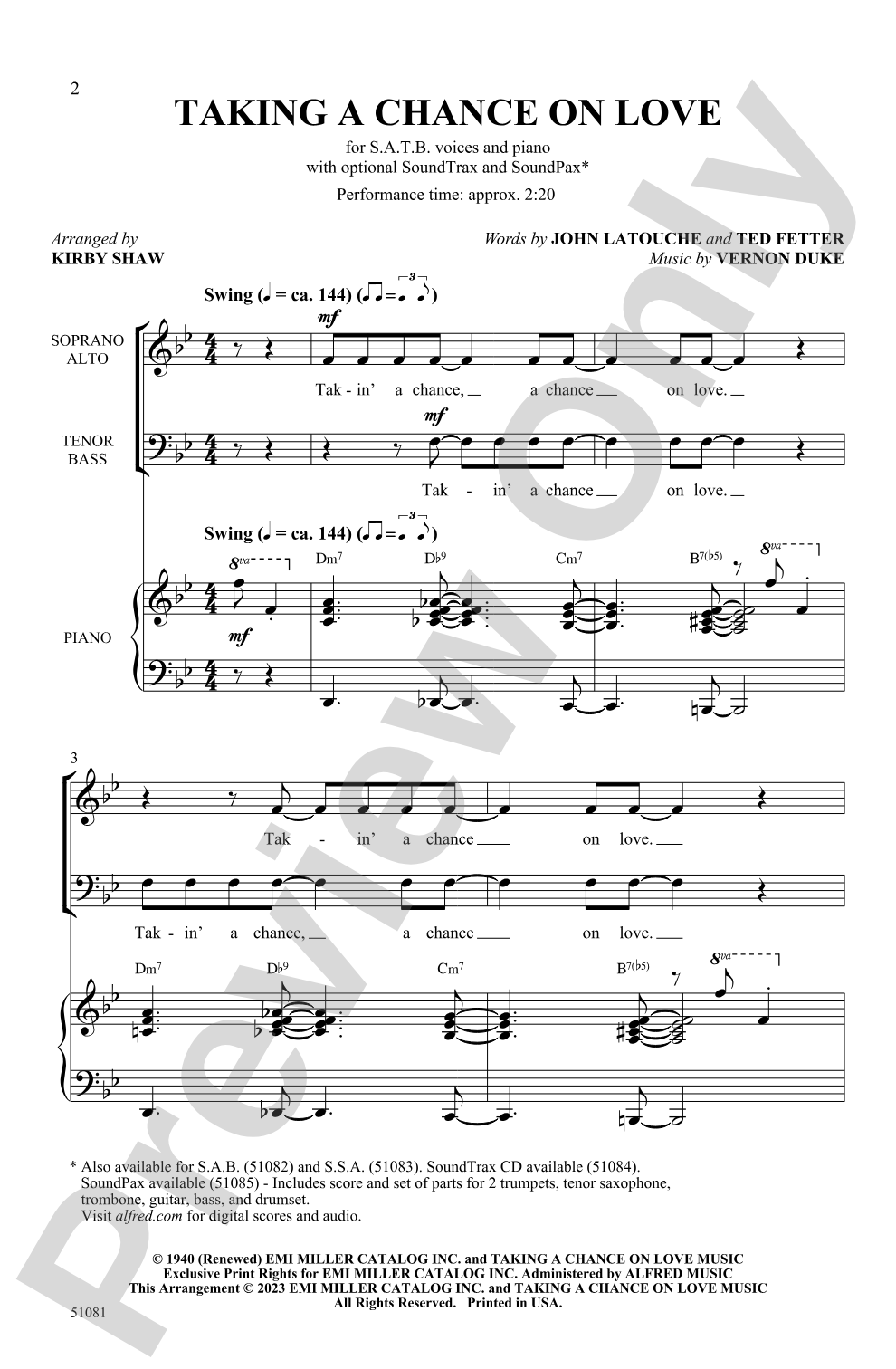
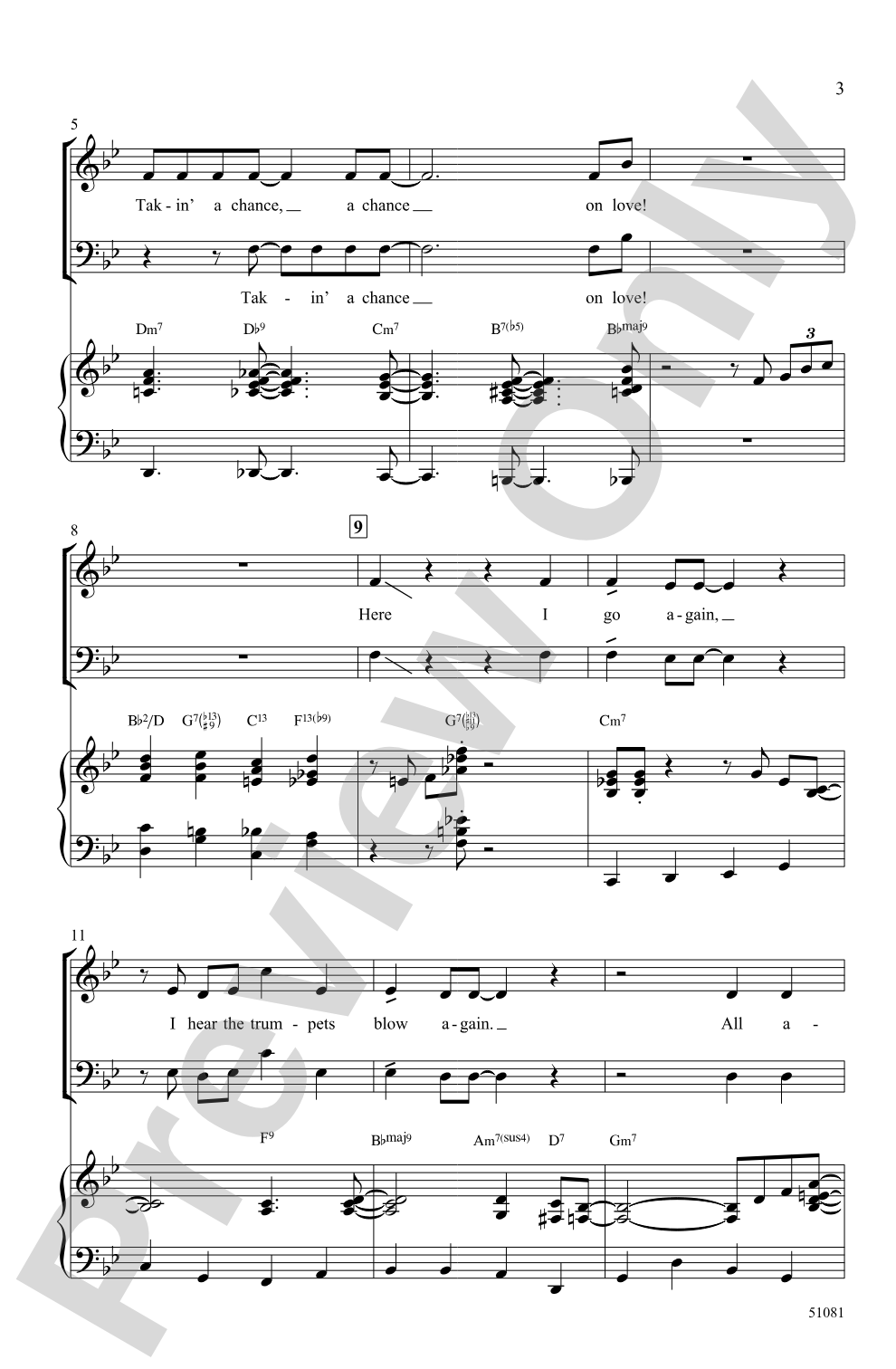
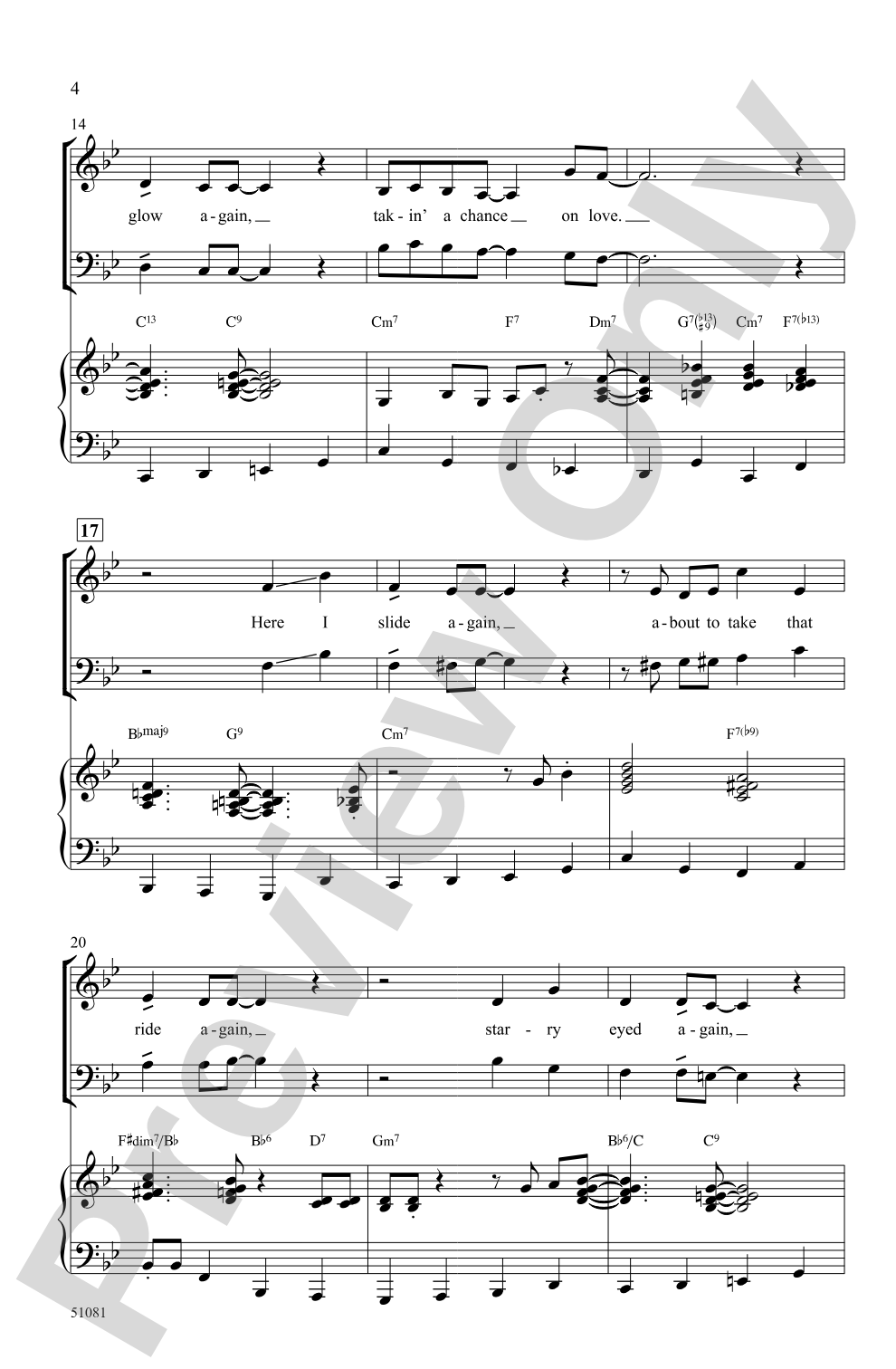

Taking a Chance on Love: SATB Choral Octavo
Words and music by John LaTouche, Vernon Duke, and Ted Fetter / arr. Kirby Shaw
Item: 00-PO-0007164
$2.35
Minimum order quantity: 20 copies
One moment…
Related Items
Taking a Chance on Love: SAB Choral Octavo |
$2.35
|
View | |
Taking a Chance on Love: SSA Choral Octavo |
$2.35
|
View | |
Taking a Chance on Love: SoundTrax Digital Audio Download |
$29.99
|
View | |
Taking a Chance on Love: SATB Choral Octavo |
$2.35
|
View | |
Taking a Chance on Love: SAB Choral Octavo |
$2.35
|
View | |
Taking a Chance on Love: SSA Choral Octavo |
$2.35
|
View | |
Taking a Chance on Love: Choral Octavo SoundTrax CD |
$29.99
|
View | |
Taking a Chance on Love: Choral SoundPax |
$30.00
|
View |
Description
A timelss jazz standard in a classic Kirby Shaw arrangement! The snappy rhythms, tasty contrapuntal writing, and clever lyrics keep things interesting but always accessible. Perform with the included piano accompaniment or the swingin' SoundPax featuring trumpets, saxophone, trombone, and rhythm section. Vocal jazz singing at its best!


Taking a Chance on Love: SATB Choral Octavo isn't in MakeMusic Cloud just yet...but it could be. Let us know you'd like to see it, and you'll help shape what comes next. In the meantime, start a free trial and dive into thousands of interactive titles your students can play along with today.
Request This Title
Tell us you want it.
Start Your Free Trial
Explore everything that's ready to play right now.
Sample Audio
1
Audio File
--:--
0:00
0:00
Sample Video
Additional Details
Series:
Alfred Pop Choral Series
Publisher:
Alfred Music
Page Count:
12
SKU:
00-PO-0007164
More about this title
About the Composer: John LaTouche
John LaTouche (1917-1956) was an American lyricist and librettist who shaped the sound of mid-century musical theatre and popular song. Working alongside composers like Vernon Duke and Harold Arlen, LaTouche crafted witty, sophisticated lyrics that balanced playfulness with emotional depth. His contributions to jazz standards and Broadway scores remain essential to the American songbook.
LaTouche's collaborative work with Duke on "Taking a Chance on Love" exemplifies his gift for clever wordplay paired with memorable melody. His lyrics have been recorded by countless jazz singers and continue to appear in vocal jazz curricula because they reward careful diction and interpretive singing.
Why we love this
Kirby Shaw's arrangement captures all the swing and sophistication of this classic without overwhelming younger or less experienced singers. The counterpoint is genuinely clever, yet the piece never loses its accessibility or fun factor. Your singers get to sound like jazz professionals while building real vocal jazz vocabulary.
What to expect
Playful, sophisticated, and immediately engaging. The piece swings with genuine confidence while the clever lyrics and interlocking vocal lines create a sense of musical intrigue that keeps both singers and audiences smiling. It's the sound of performers who know how to have fun without sacrificing musicality.
Who it's for
Treble and lower voice singers at the intermediate level and beyond who are ready to engage with jazz style and swing vocabulary. Directors building a vocal jazz or pop repertoire will find this accessible enough for mixed-ability choirs while sophisticated enough to perform at jazz festivals or community concerts.
How to get the most out of it
- Nail the rhythmic precision of the swing eighth-note feel from the very first rehearsal. Sloppy timing undermines the arrangement's snappy charm.
- Shape the lyrical phrases with swing inflection rather than straight diction. Think "Ooh, ooh" and "Yeah!" placement that sits naturally in the groove, not on top of it.
- Balance the contrapuntal voices so each line remains audible. Mark dynamic balance points in rehearsal so sopranos and altos don't overshadow tenors and basses when lines overlap.
- Use the recorded accompaniment to lock the groove early, then consider rehearsing with just piano to deepen the singers' ownership of the rhythm section feel.
How to use it
This is a natural fit for jazz-focused concerts, pops nights, or spring shows where you want something that entertains and impresses simultaneously. It pairs beautifully alongside other vocal jazz standards or contemporary pop arrangements, and its 12-page length makes it manageable without overwhelming your rehearsal schedule.
Skills your students will build
- Swing eighth-note subdivision and rhythmic precision in jazz context
- Tracking independent melodic lines within four-part counterpoint
- Vocal jazz phrasing and interpretation
- Ensemble balance when multiple voice parts move simultaneously
- Style and diction appropriate to jazz standards of the American songbook