Take Five (2p, 8h) Cover Image

Take Five (2p, 8h): Piano Quartet (2 Pianos, 8 Hands) Sheet (score & 4 parts included)

$8.99 USD
Sale price  $8.99 USD Regular price 
Skip to product information
Take Five (2p, 8h) Cover Image

Take Five (2p, 8h): Piano Quartet (2 Pianos, 8 Hands) Sheet (score & 4 parts included)

Arrangement for Two Pianos / Eight Hands

By Paul Desmond / arr. Melody Bober

Level: Late Intermediate

Item: 00-48593

$8.99
Shipped

One moment…

Description
Take Five was written by Paul Desmond, a jazz alto saxophonist, and first recorded by the Dave Brubeck Quintet on the album Time Out. Melody Bober's arrangement for two pianos, eight hands is written for late intermediate pianists and laid out as two duets (Piano 1 and Piano 2) with the primo and secondo parts on facing pages. The arrangement begins in the original key of E-flat minor and modulates to E minor. A favorite of all jazz enthusiasts, it is an excellent choice for recitals, piano ensemble classes, and "monster" concerts. Score and four parts included.

Take Five (2p, 8h): Piano Quartet (2 Pianos, 8 Hands) Sheet (score & 4 parts included) isn't in MakeMusic Cloud just yet...but it could be. Let us know you'd like to see it, and you'll help shape what comes next. In the meantime, start a free trial and dive into thousands of interactive titles your students can play along with today.

Sample Pages

Sample Audio
No sample audio found.
Sample Video
Additional Details
Publisher: Alfred Music
Page Count: 32
ISBN10: 1-4706-4334-0
ISBN13: 978-1-4706-4334-8
UPC: 038081556680
SKU: 00-48593

More about this title

About the Composer: Dave Brubeck
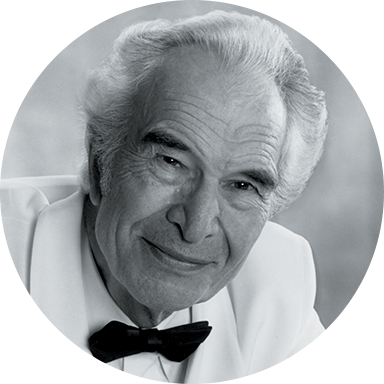
Dave Brubeck

Dave Brubeck built his reputation as a jazz pianist with extraordinary improvisational gifts, yet his ambitions extended far beyond the jazz idiom. He composed extensively across genres: choral works, hymns, orchestral pieces, chamber music, ballet suites, and large-scale vocal works that have been performed and recorded by prestigious ensembles including the London Symphony Orchestra and London Voices. His album Time Out became the first jazz recording to sell over a million copies, cementing his cultural impact.

Beyond music, Brubeck was a trailblazer in racial integration during the mid-20th century, using his platform and his art to challenge social barriers. His teacher, French composer Darius Milhaud, encouraged him to synthesize jazz language with classical forms, a fusion that defined his compositional voice. Recognition came steadily: a Grammy Lifetime Achievement Award, the Presidential Medal of the Arts, election to the American Classical Music Hall of Fame in 2003, and a lifetime achievement award from the London Symphony Orchestra.

Why we love this

Four hands on two pianos transforms "Take Five" into something energizing and social. Melody Bober's voicing captures the harmonic sophistication and rhythmic swagger of the original while being entirely pianistic, making this accessible for late intermediate duets without sacrificing the jazz attitude that makes the piece so engaging.

What to expect

Cool, swinging, and urbane, yet immediately friendly. The arrangement bounces with the easy confidence of a piece that knows what it is, and the two-piano texture creates a layered, almost orchestral richness that surprises listeners expecting a simple duet.

Who it's for

Piano teachers seeking genuine jazz repertoire for intermediate ensemble classes will find this arrangement straightforward to conduct and rewarding to hear. Pianists preparing for recitals or monster concerts appreciate the collaborative appeal and the chance to play music that audiences recognize and love.

How to get the most out of it

  • Balance the melody between the two pianos, especially during the opening statements. The primo part should sing clearly, but the secondo provides crucial harmonic and rhythmic support that shouldn't fade into the background.
  • The key modulation from E-flat minor to E minor is a structural moment, not just a transposition. Prepare the shift in color and energy, letting your ensemble feel the lift even as the harmonic language stays sophisticated.
  • Lock the rhythm together as a unit of four. The ensemble pulse is tighter when all four hands think as one meter rather than four separate parts.

How to use it

Program this as a centerpiece in a recital that mixes classical and contemporary styles. In ensemble classes, it works beautifully as a springboard for discussing jazz harmony and rhythm without requiring improvisation skills, and its popularity makes it an audience highlight at any group piano concert.

Skills your students will build

  • Reading quartal and chromatic harmonic language in jazz context
  • Maintaining independent rhythmic lines while supporting ensemble pulse
  • Executing smooth key modulations between distantly related tonalities
  • Balancing articulation and touch to project melody while sustaining harmonic foundation
  • Coordinating rubato and swing feel across four hands

You May Also Like