
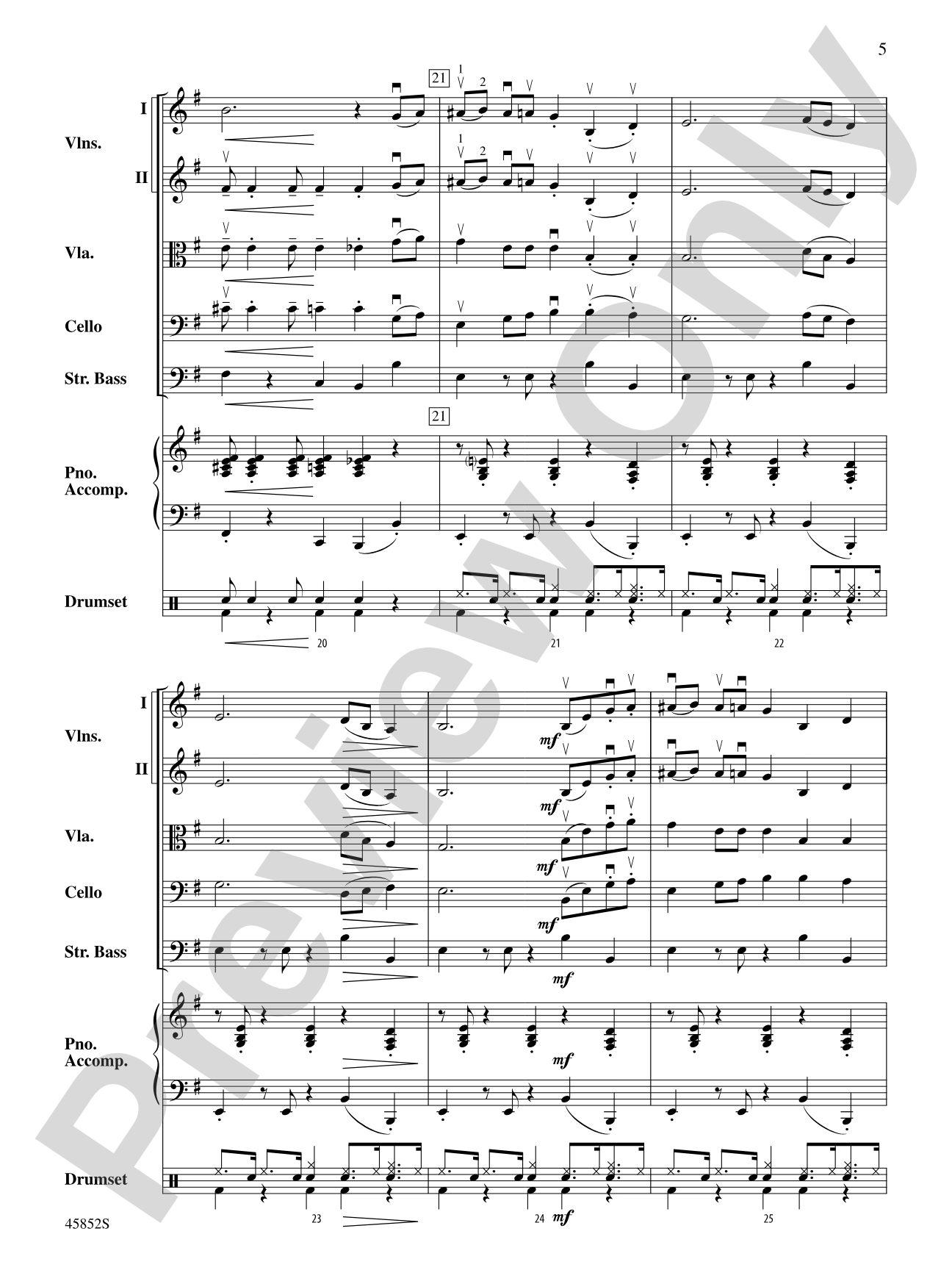
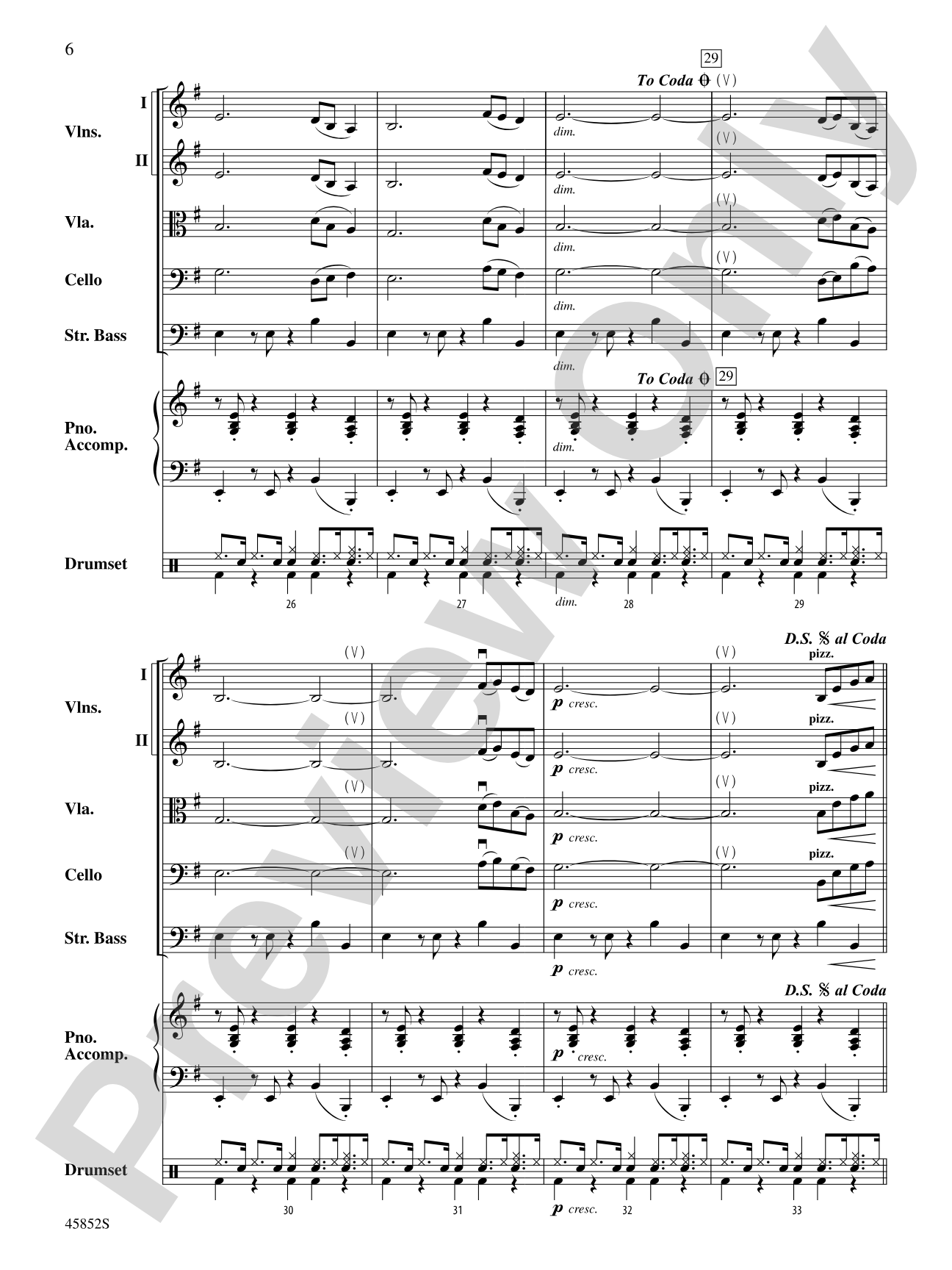
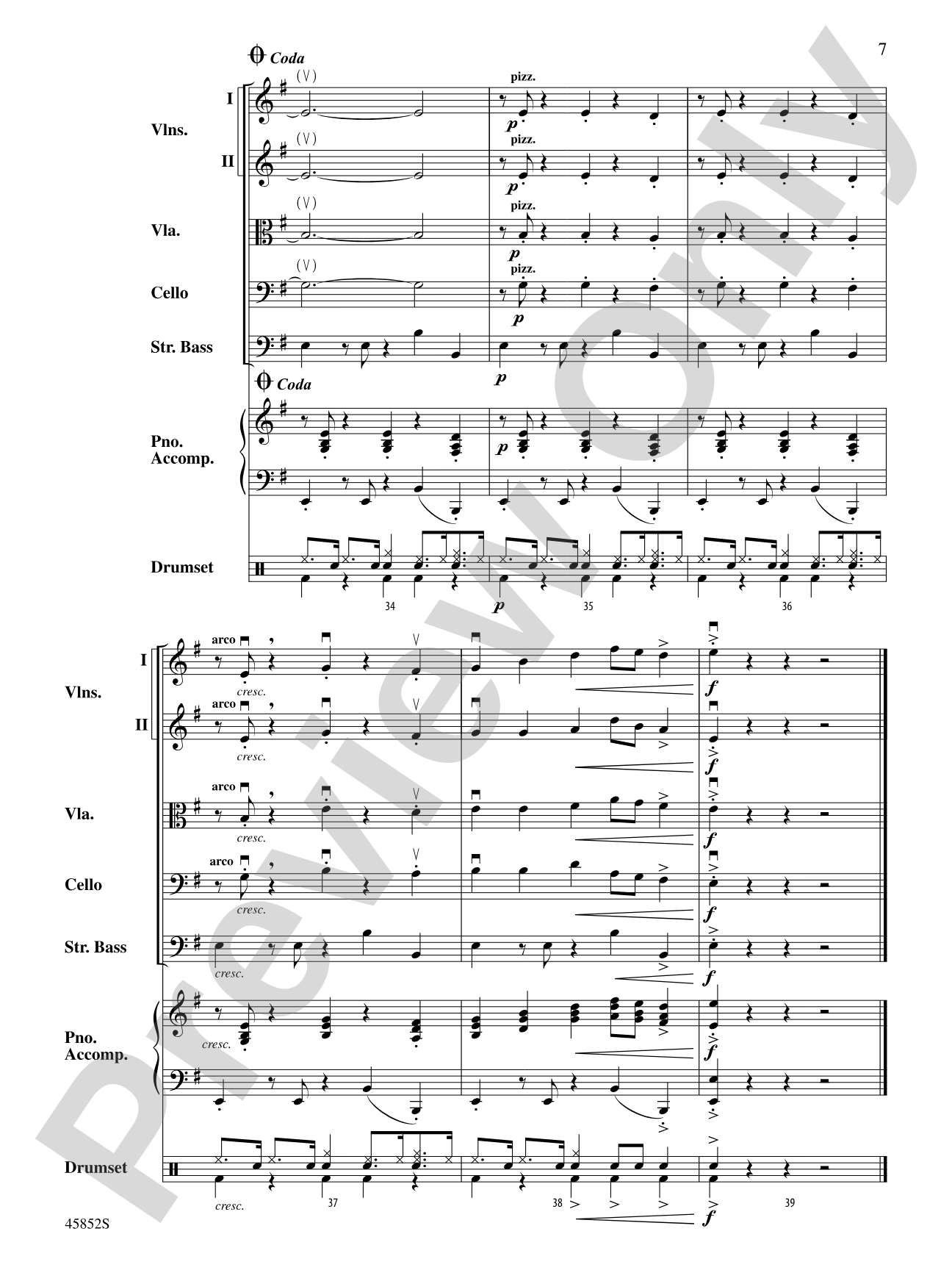

Take Five: String Orchestra Conductor Score & Parts
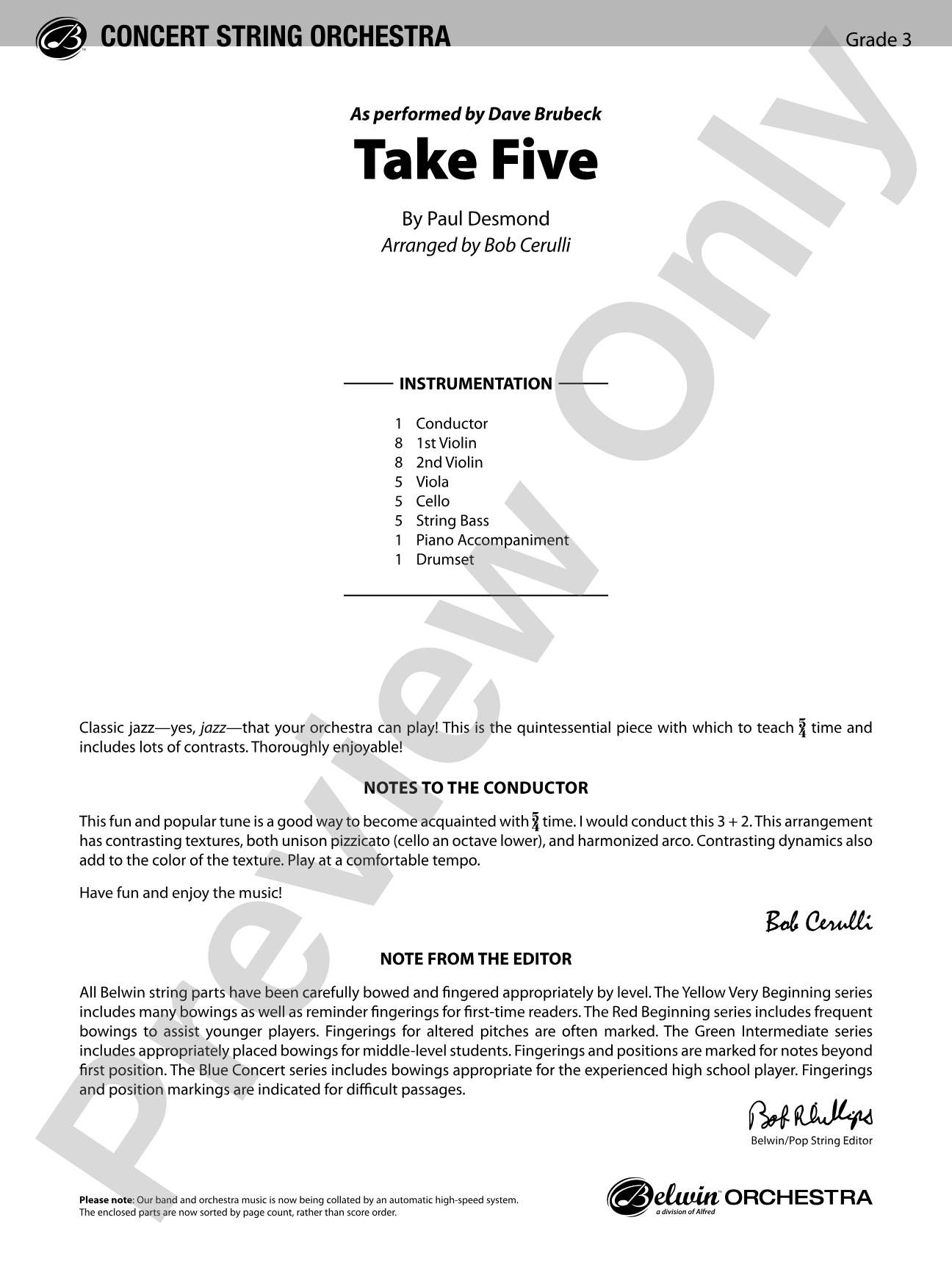
As Performed by Dave Brubeck
By Paul Desmond / arr. Bob Cerulli
Grade: 3
Item: 00-PK-0007358

$65.00
One moment…
Related Items
Take Five: Full Orchestra Conductor Score & Parts |
$65.00
|
View | |
Take Five: Full Orchestra Conductor Score & Parts |
$65.00
|
View | |
Take Five: Full Orchestra Conductor Score |
$8.00
|
View | |
Take Five: String Orchestra Conductor Score & Parts |
$65.00
|
View | |
Take Five: String Orchestra Conductor Score |
$9.00
|
View |
Description
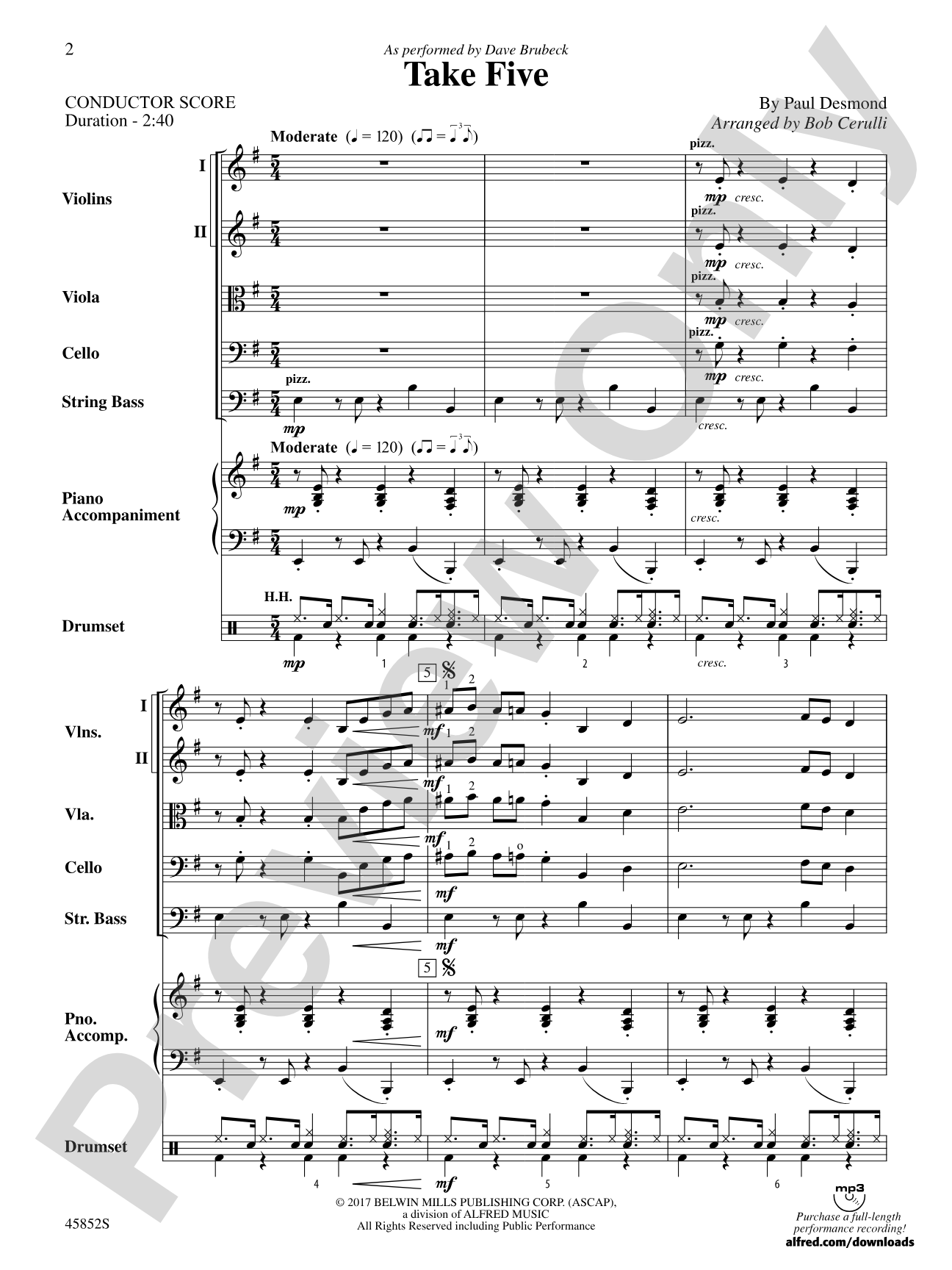
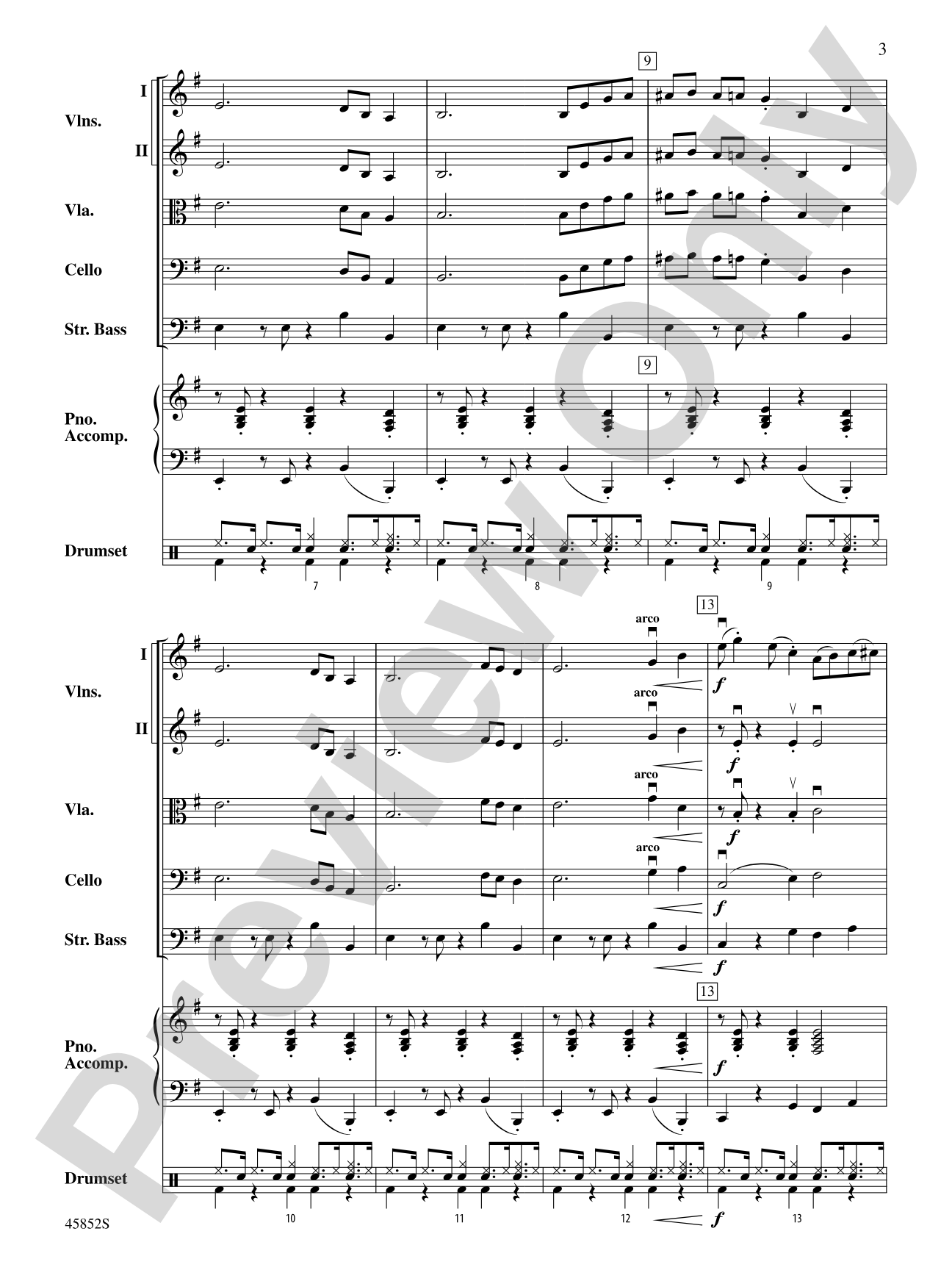
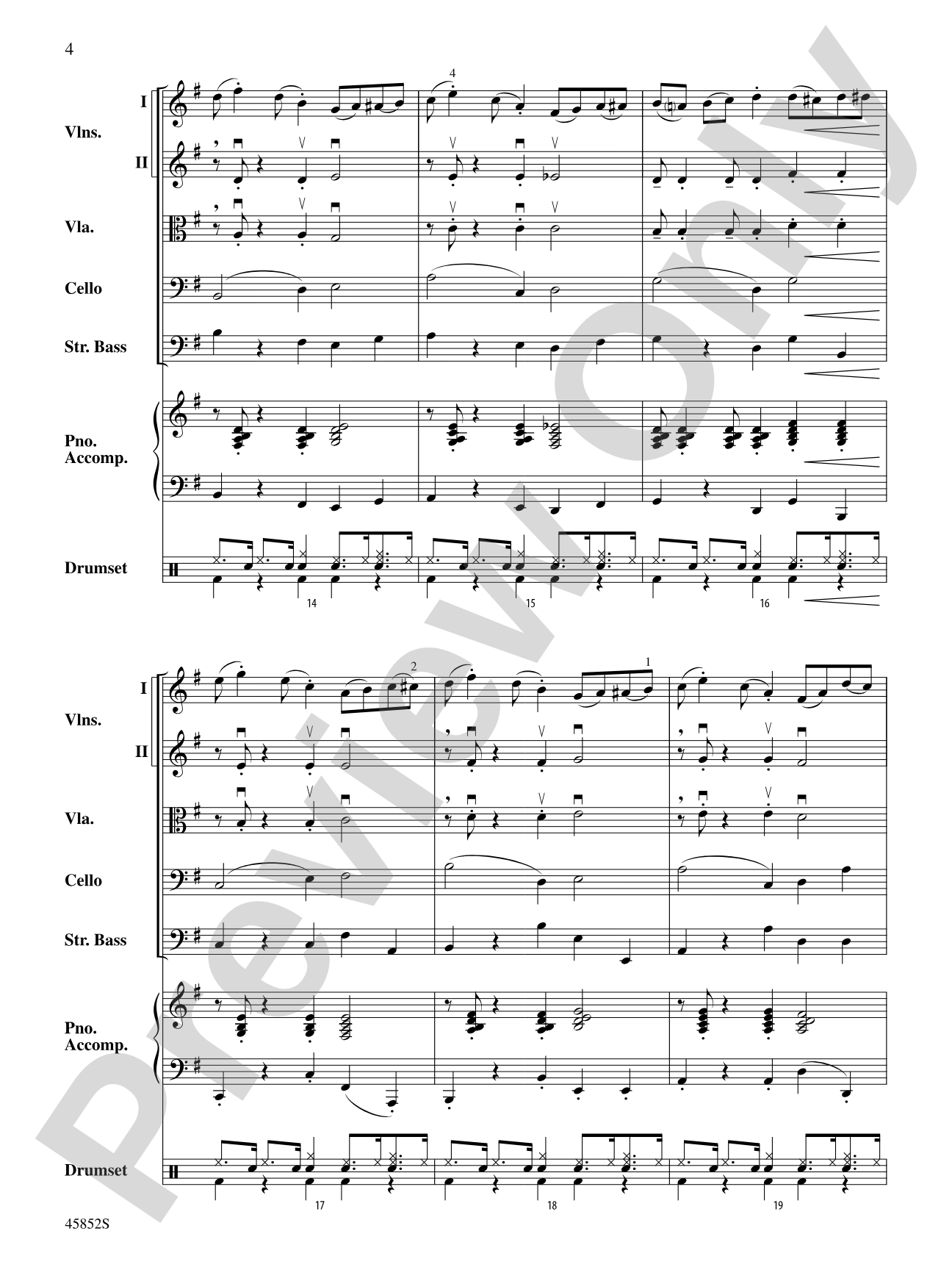
Classic jazz---yes, jazz---that your orchestra can play! "Take Five," arranged by Bob Cerulli, is the quintessential piece with which to teach 5/4 time. This arrangement has contrasting textures, both unison pizzicato (cello an octave lower), and harmonized arco. Contrasting dynamics also add to the color of the texture. Thoroughly enjoyable! (2:40)


Don't just read it, hear it, play along with it, and watch your students grow with it. In MakeMusic Cloud, Take Five: String Orchestra Conductor Score & Parts comes alive with professional accompaniment, adjustable tempo, and built-in practice tools that turn solo practice into real progress.
Open in the Player
Jump straight in and assign it today.
Start Your Free Trial
Open this title and explore the full library in minutes.
Sample Audio
1
Audio File
--:--
0:00
0:00
Sample Video
Additional Details
Series:
Pop Concert String Orchestra
Publisher:
Alfred Music
Page Count:
68
SKU:
00-PK-0007358
More about this title
About the Composer: Paul Desmond
Paul Desmond was a saxophonist and composer whose harmonic sophistication and melodic sensibility defined the sound of the Dave Brubeck Quartet. His approach to jazz composition emphasized accessible, singable lines without sacrificing harmonic depth, a quality that makes his work surprisingly effective in educational settings.
Desmond's "Take Five" became a cultural phenomenon despite its unconventional meter, proving that compelling melodies and clean arrangements could make complex musical concepts feel natural to listeners and performers alike. For string musicians encountering jazz vocabulary for the first time, his writing offers an ideal entry point: the material is genuinely musical, never condescending.
Why we love this
This arrangement gives string orchestras authentic access to one of jazz's defining moments without requiring improvisation skills or specialized jazz technique. Cerulli's scoring balances textural variety (pizzicato unison passages, harmonized arco sections, dynamic contrast) with accessibility, making it genuinely rewarding to conduct and play while the 5/4 meter becomes the core learning vehicle rather than an obstacle.
What to expect
Cool, clean, and more sophisticated than its accessibility suggests. The melody glides over a steady pulse that never feels urgent, while the pizzicato-to-arco transitions create subtle shifts in energy. There's a conversational quality to the writing, passages where one section responds to another, creating the sense of a musical conversation rather than a march from beginning to end.
Who it's for
String orchestra directors teaching intermediate ensembles (Grade 3) who want to authentically explore non-standard meters without resorting to abstract exercises. Students experienced enough to handle independent rhythmic thinking but who may never have encountered jazz literature in an orchestral context will find this accessible, engaging, and genuinely fun to perform.
How to get the most out of it
- The unison pizzicato passages (with cello an octave lower) establish the groove; lock this rhythm section sound across the section before adding harmonic layers on top.
- Shape the dynamics thoughtfully to reveal the arrangement's colors. Desmond's melody benefits from sensitive phrasing, not just academic precision on the meter.
- Let the jazz articulation breathe. String attacks in this style sit somewhere between classical legato and the rhythmic snap of a jazz horn line; experiment with how much weight the ensemble brings to each entrance.
- The contrasting arco sections should feel like they're floating above the rhythmic foundation, not locked into it. This textural shift is where the arrangement gains its richness.
How to use it
Program this as a bridge piece that contextualizes jazz within an orchestra concert, pairing it with contemporary classical works or other genre-blending pieces to show students how musical language evolves. It works particularly well in a "20th-Century Voices" or "Beyond Boundaries" themed concert, and its three-minute length makes it ideal for filling out a concert or demonstrating metric flexibility to audiences unfamiliar with jazz.
Skills your students will build
- Reading and performing in 5/4 meter with rhythmic independence
- Pizzicato technique and articulation in a rhythmic, jazz-inflected context
- Balancing unison and harmonic textures with dynamic clarity
- Responding to jazz phrasing and articulation conventions in a classical ensemble setting
- Listening and locking to a non-standard groove across the entire orchestra