
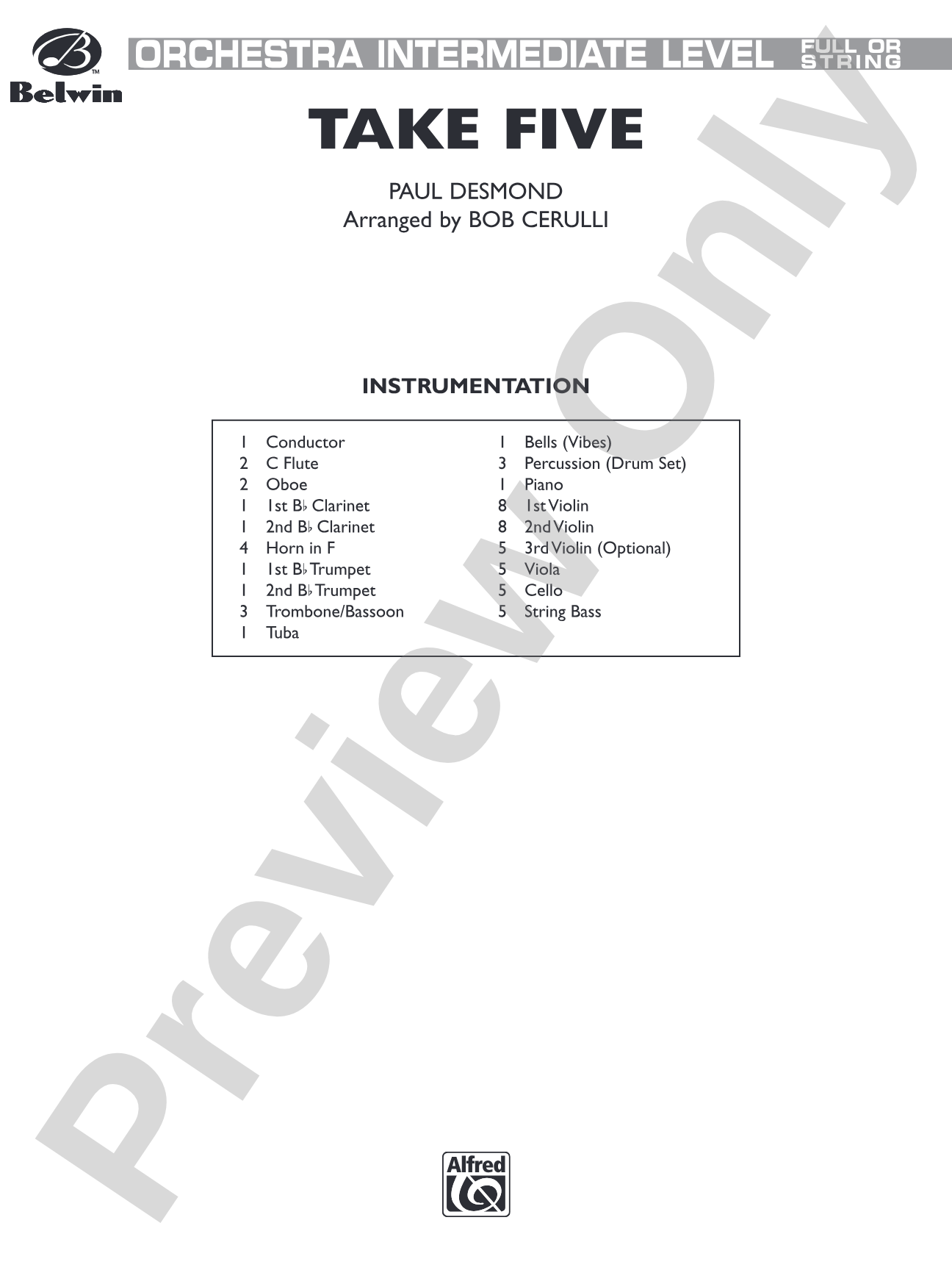

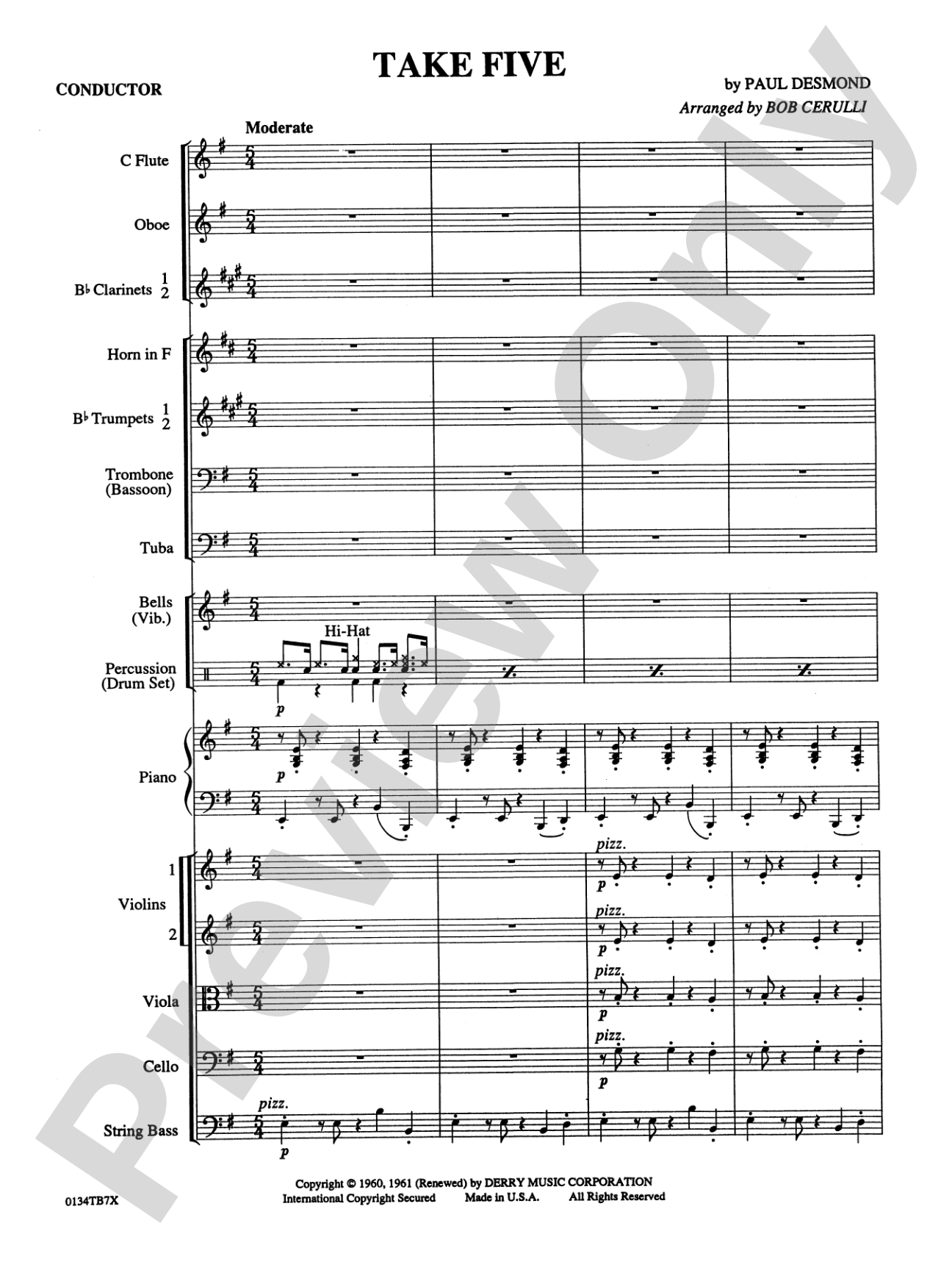
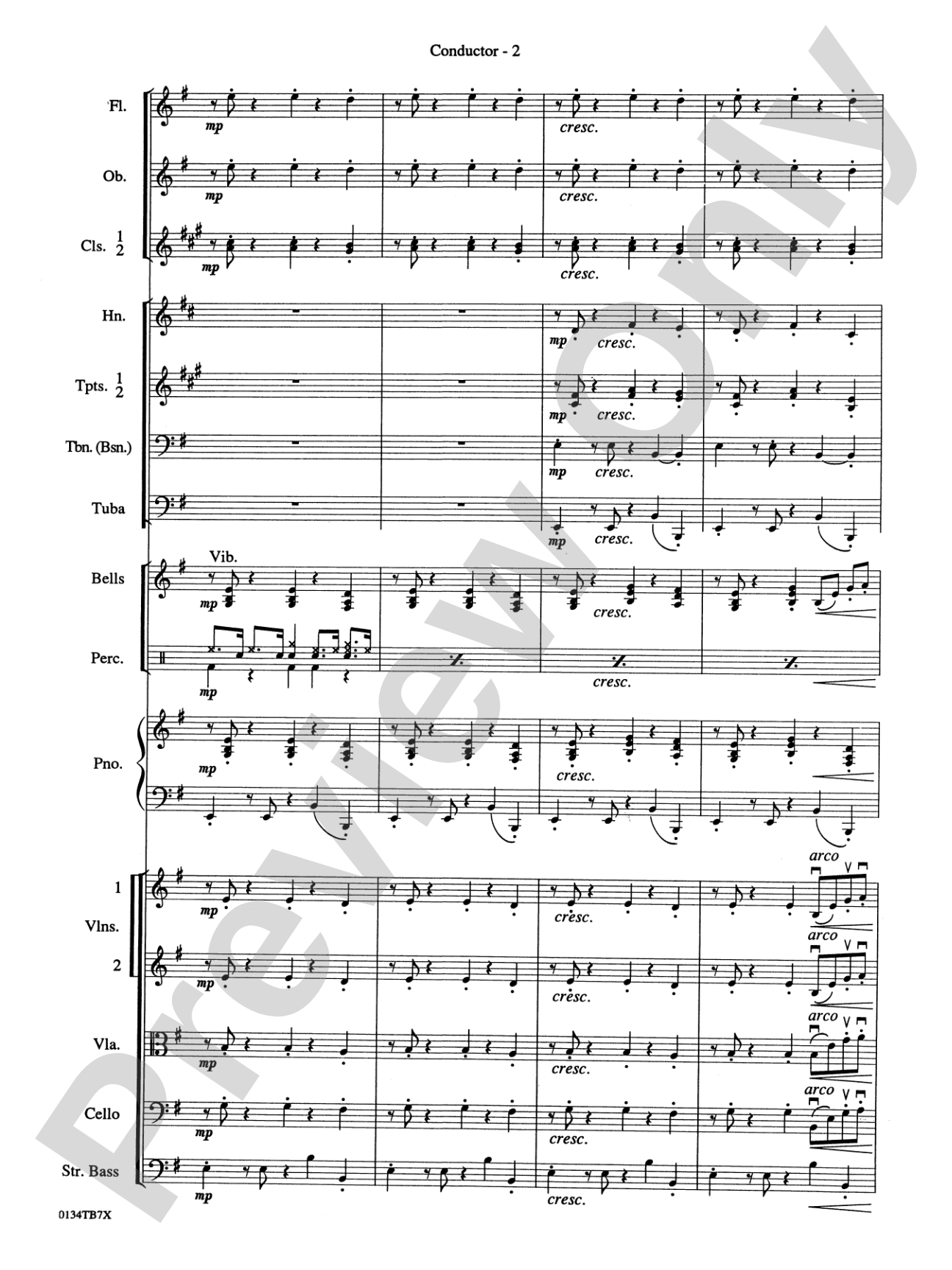
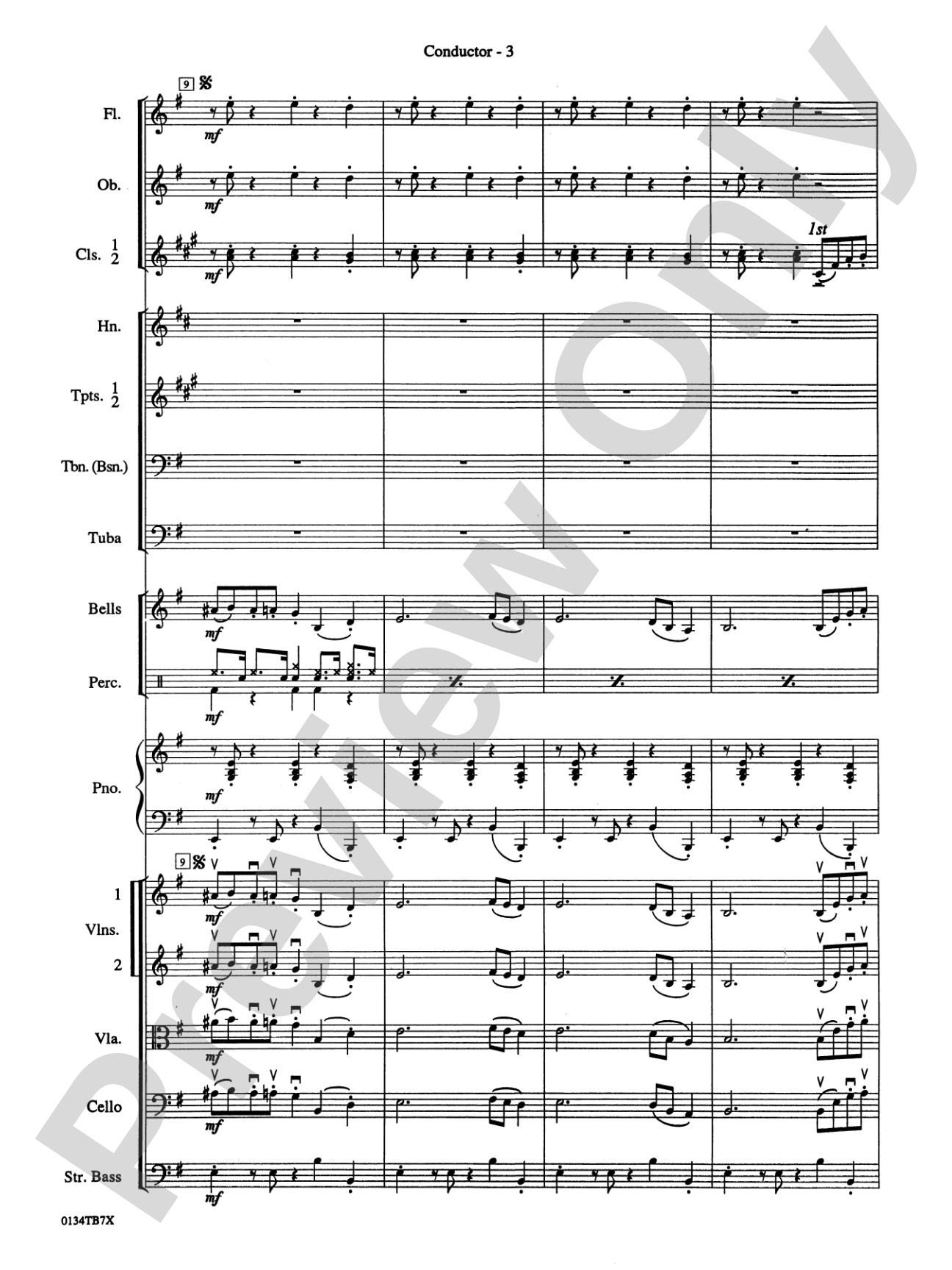
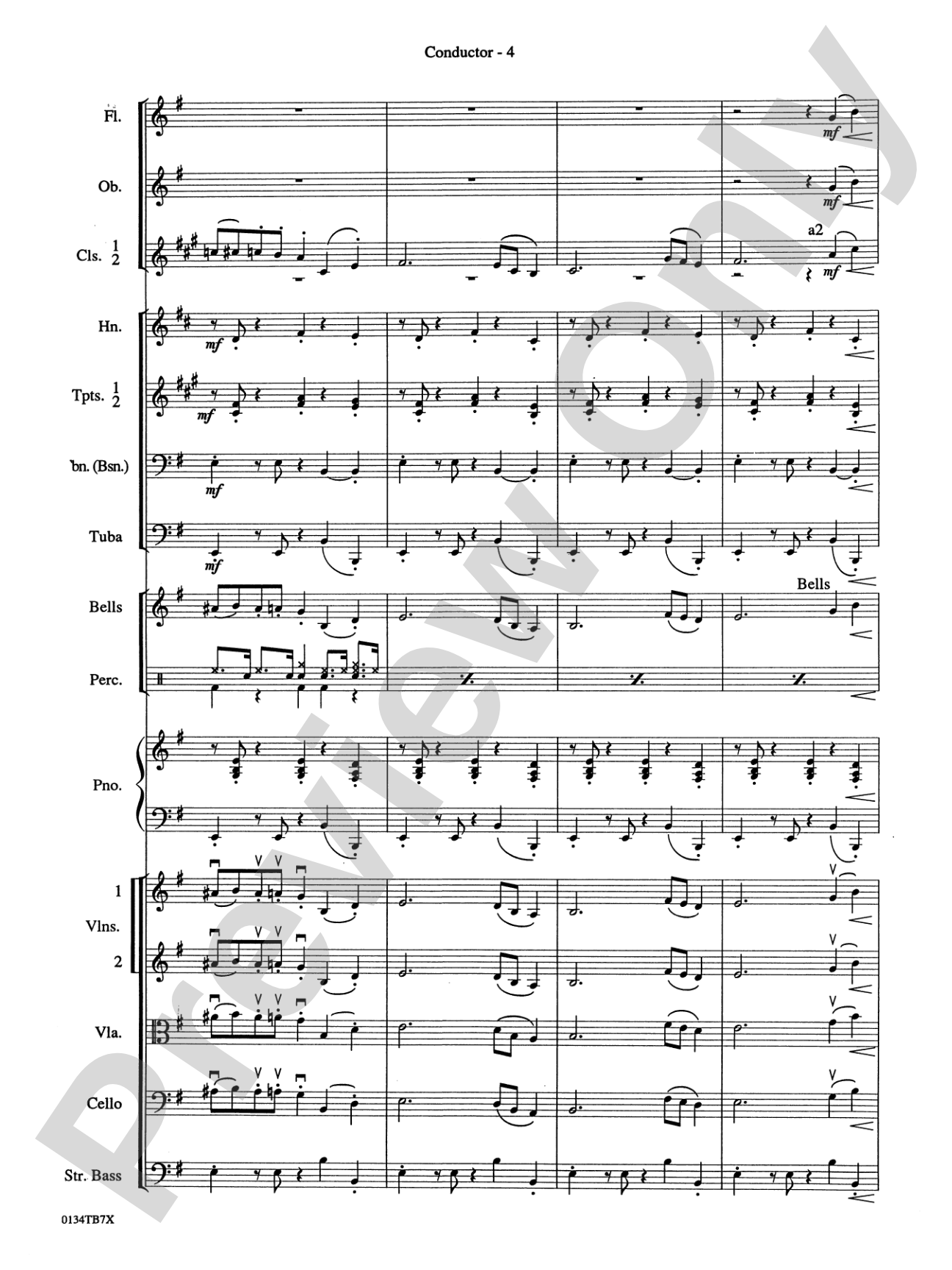
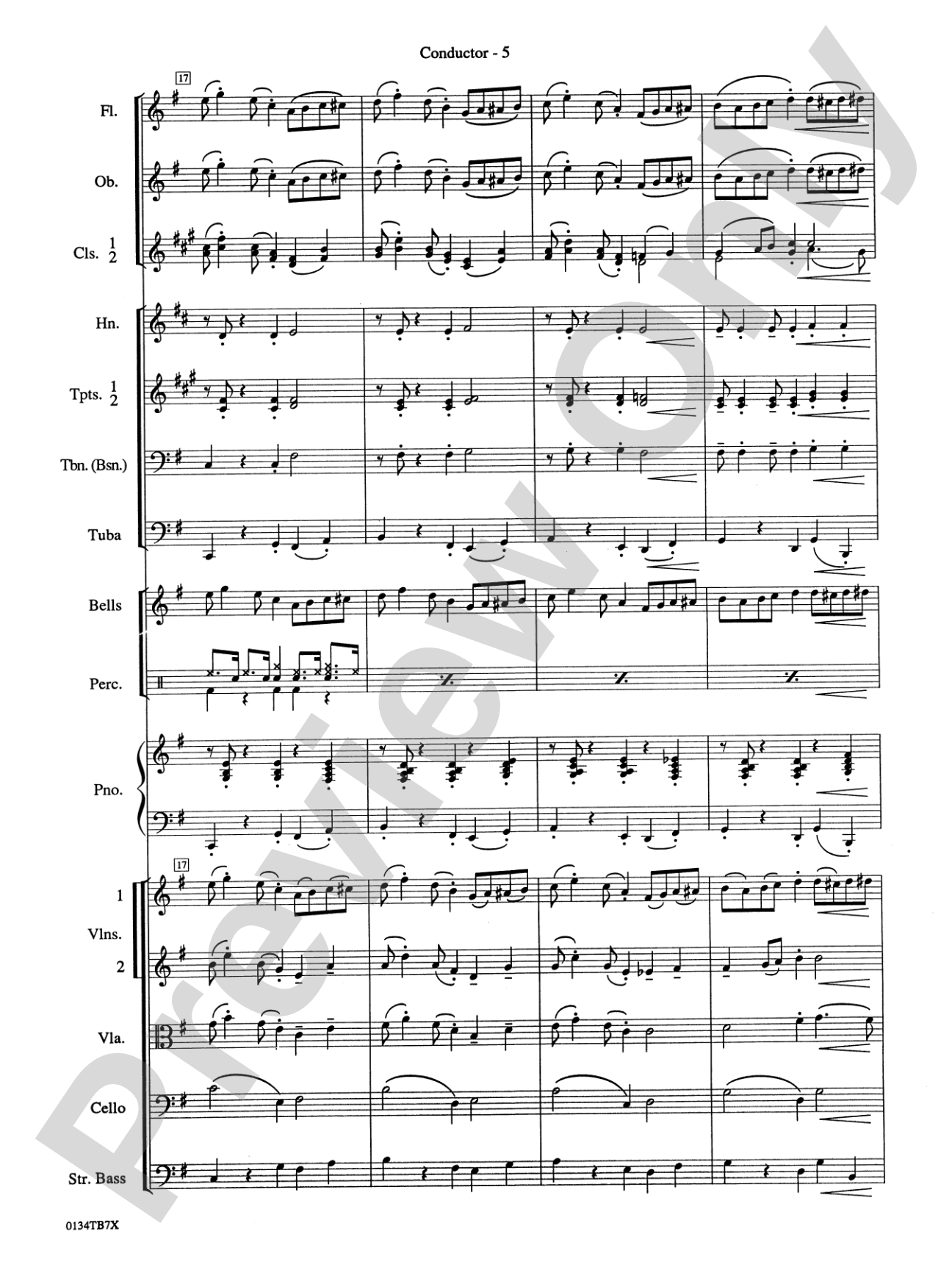
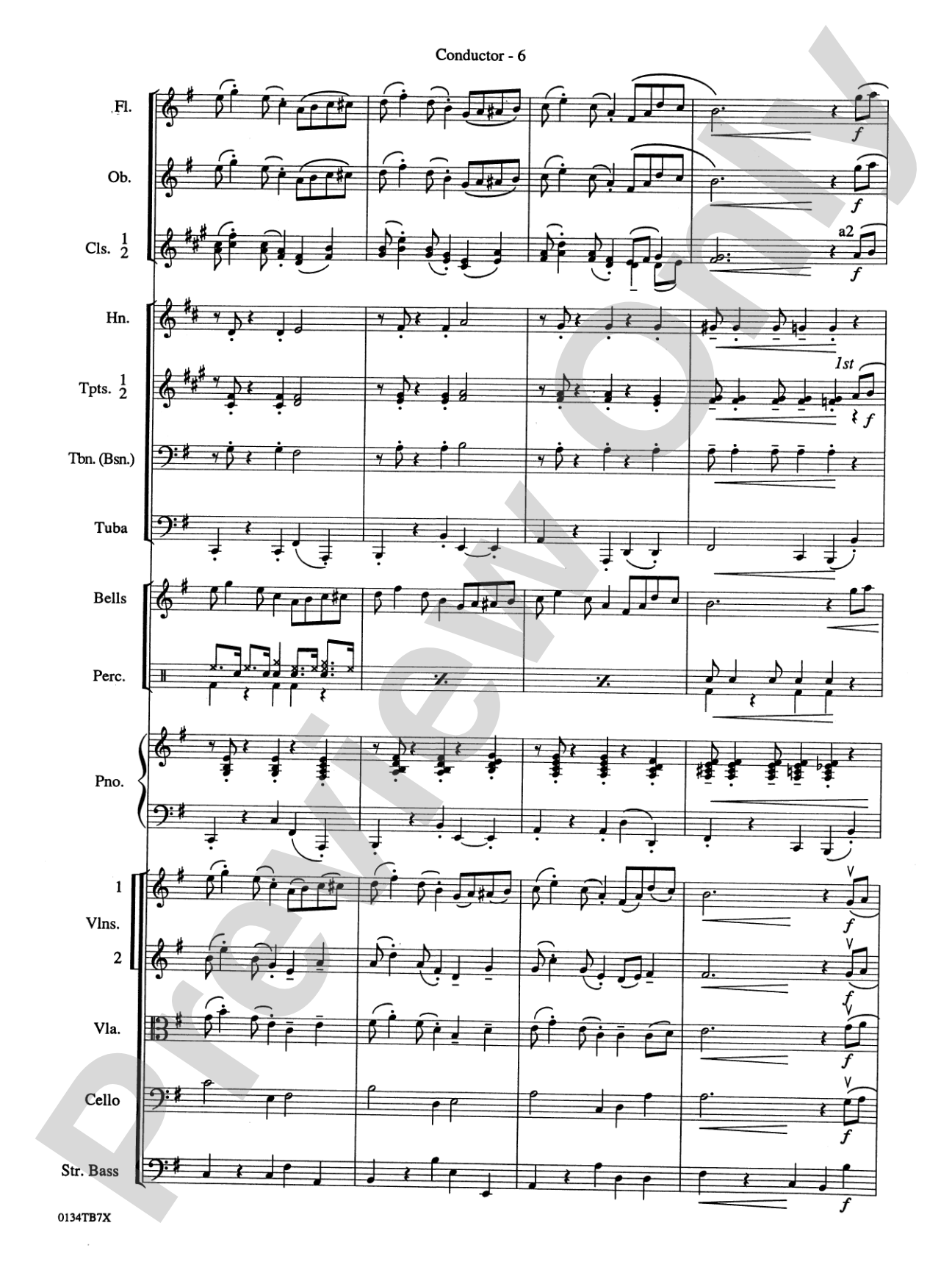
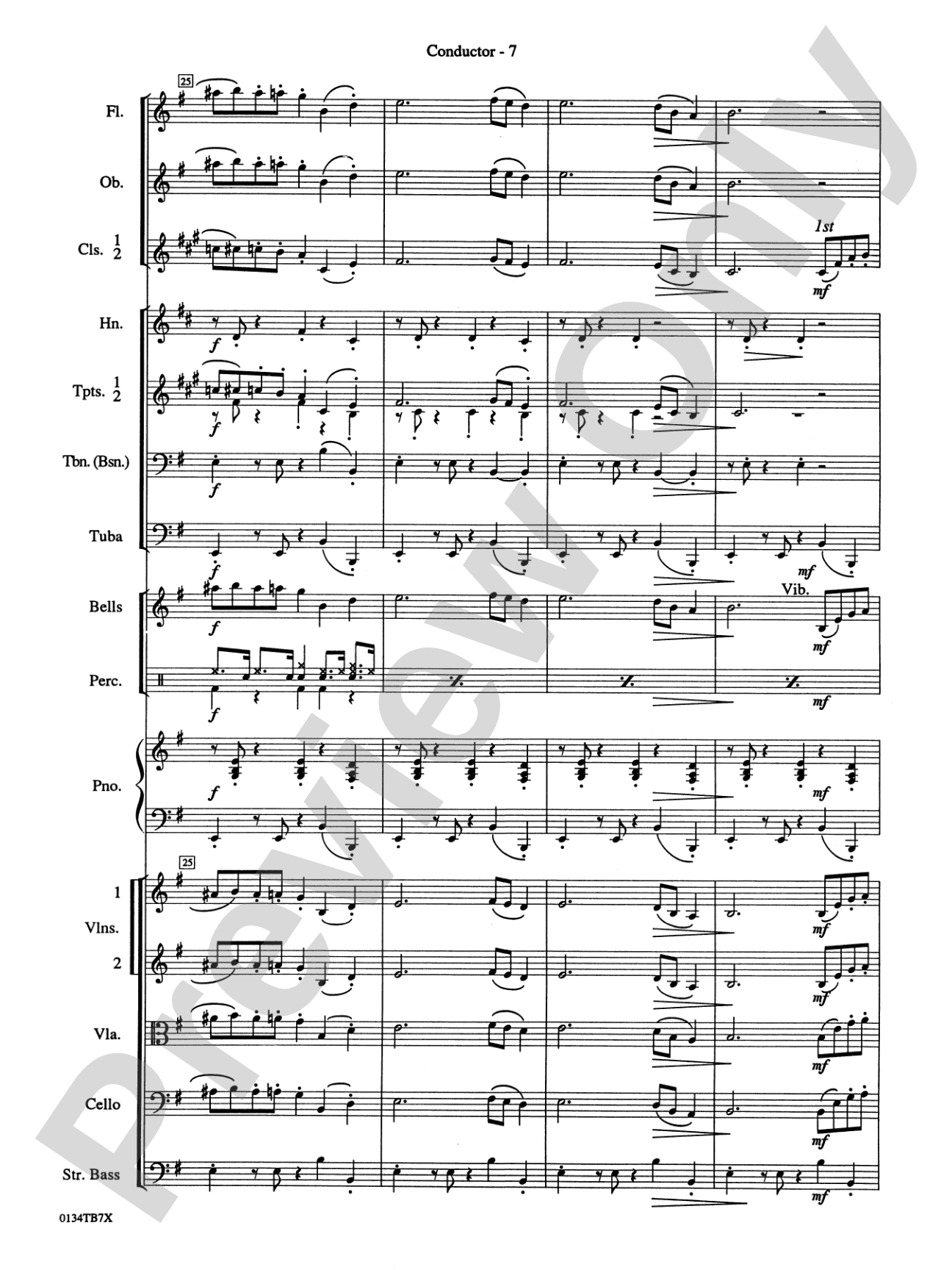
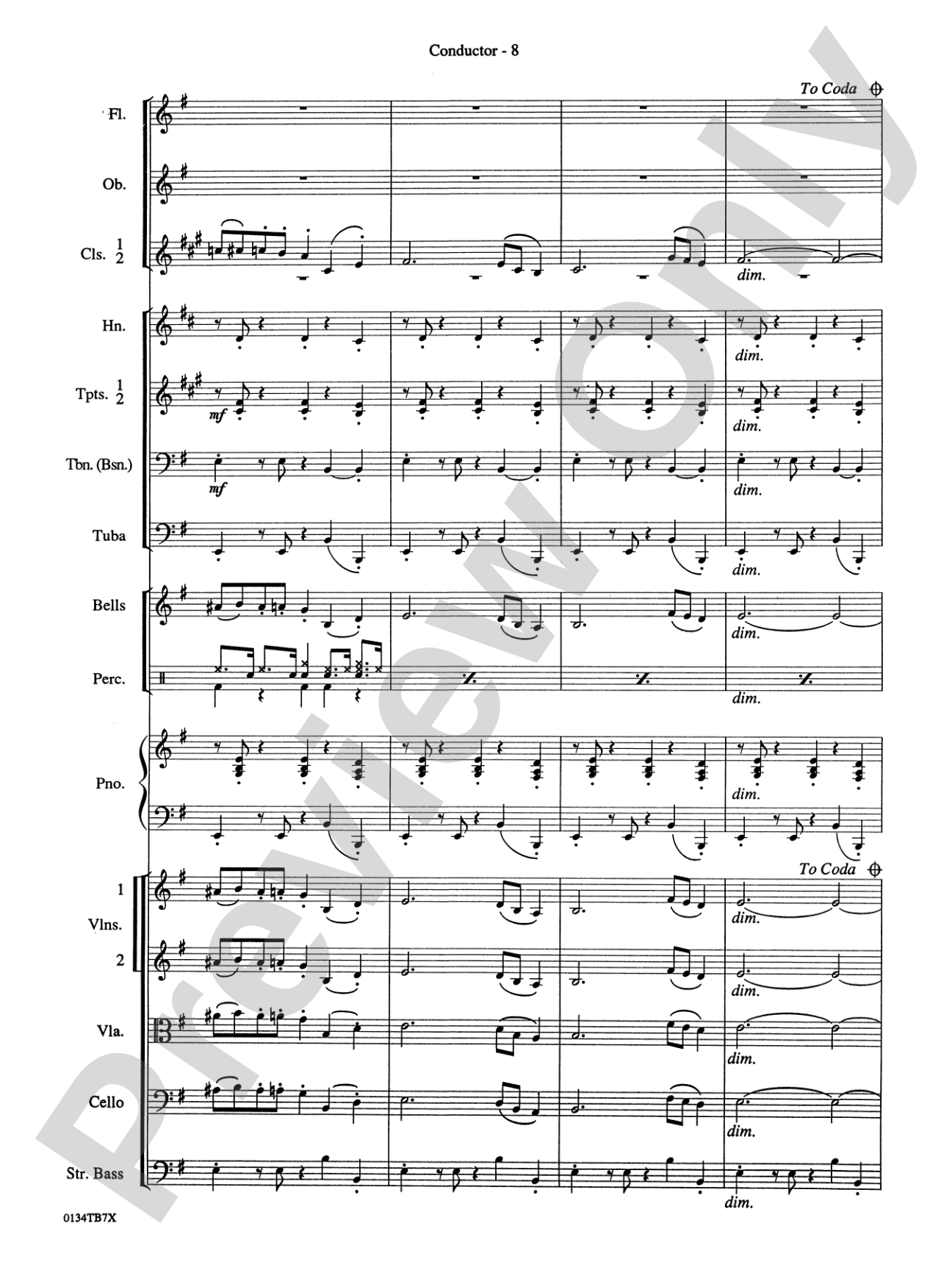
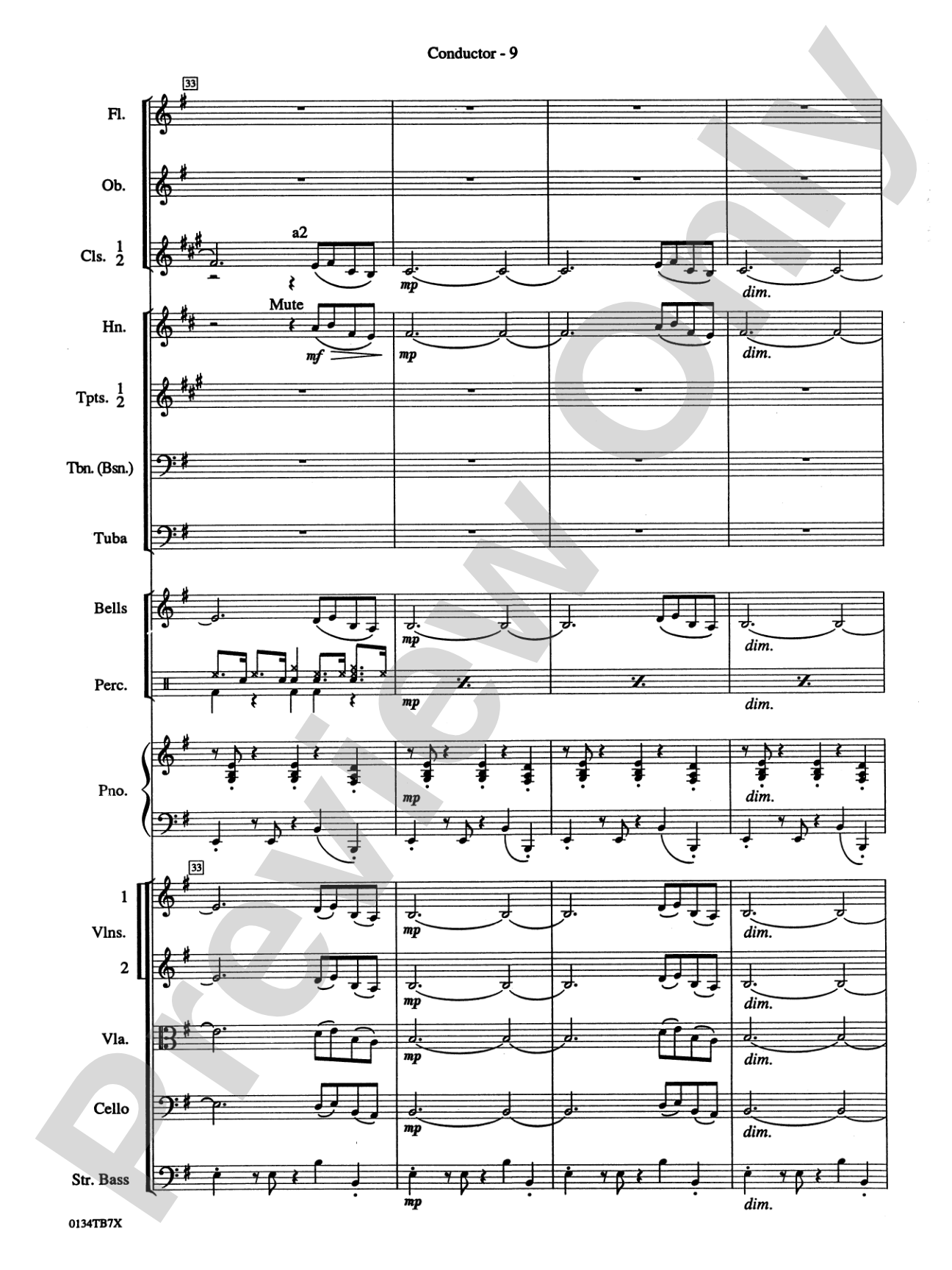
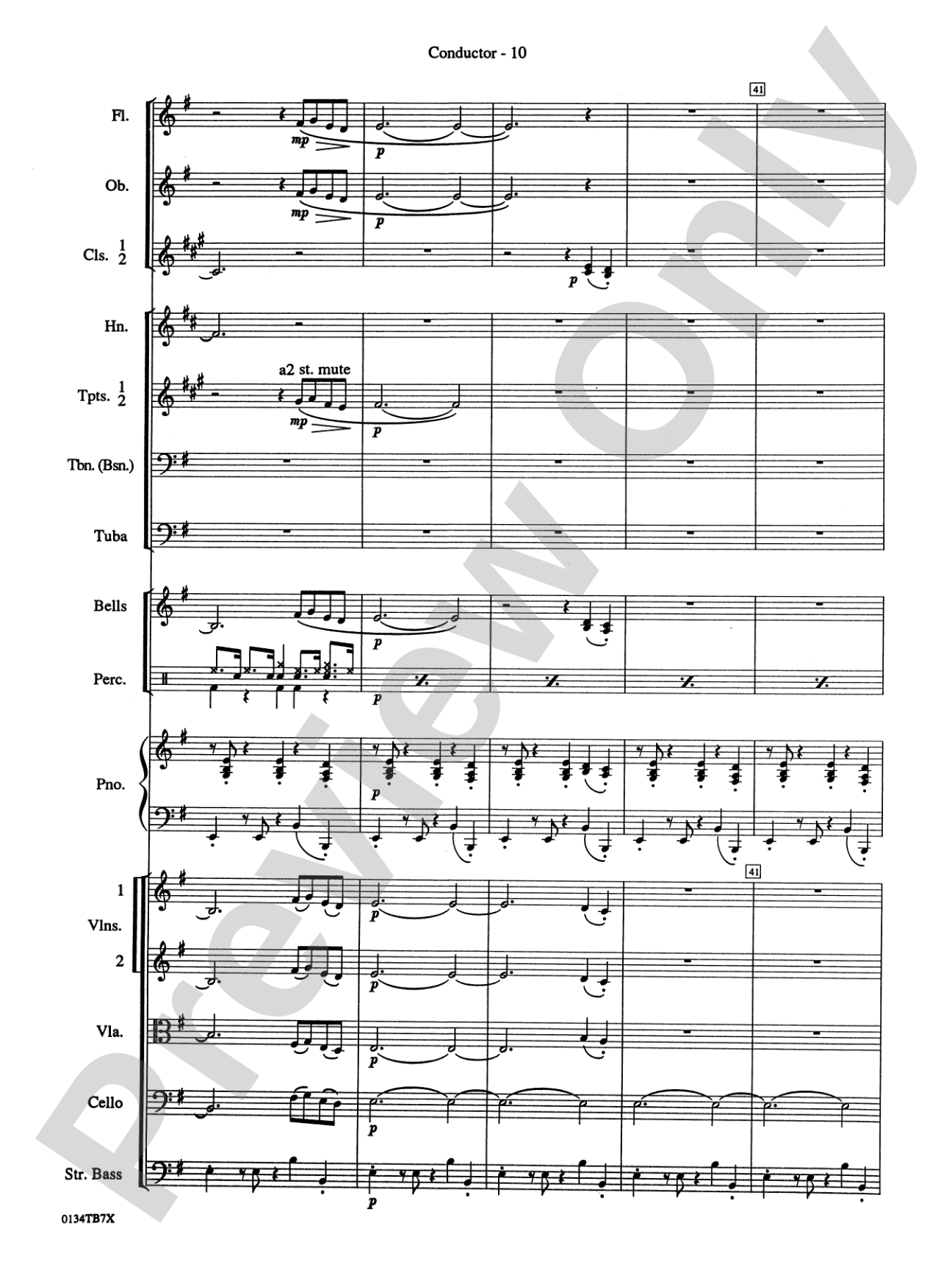
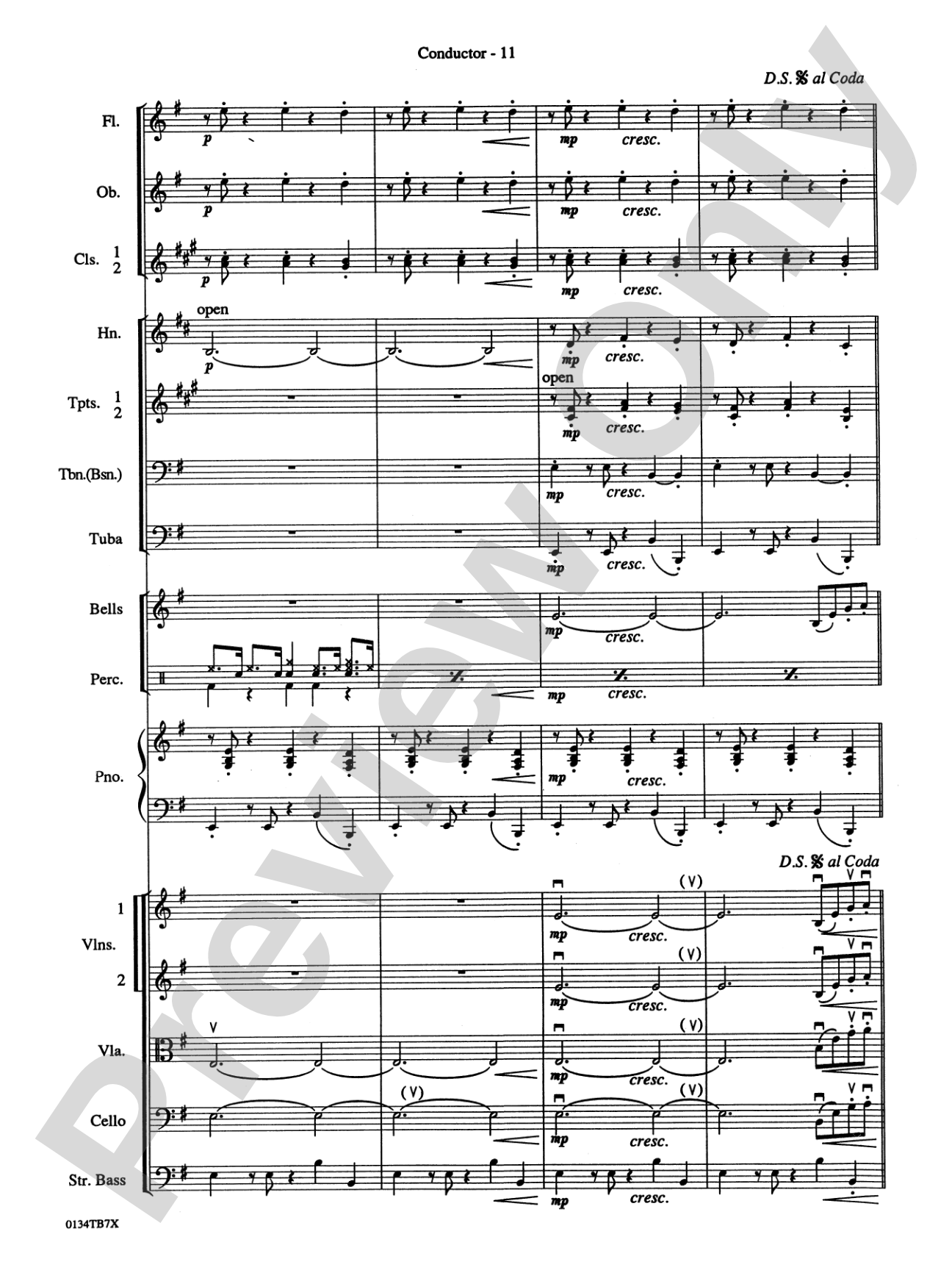
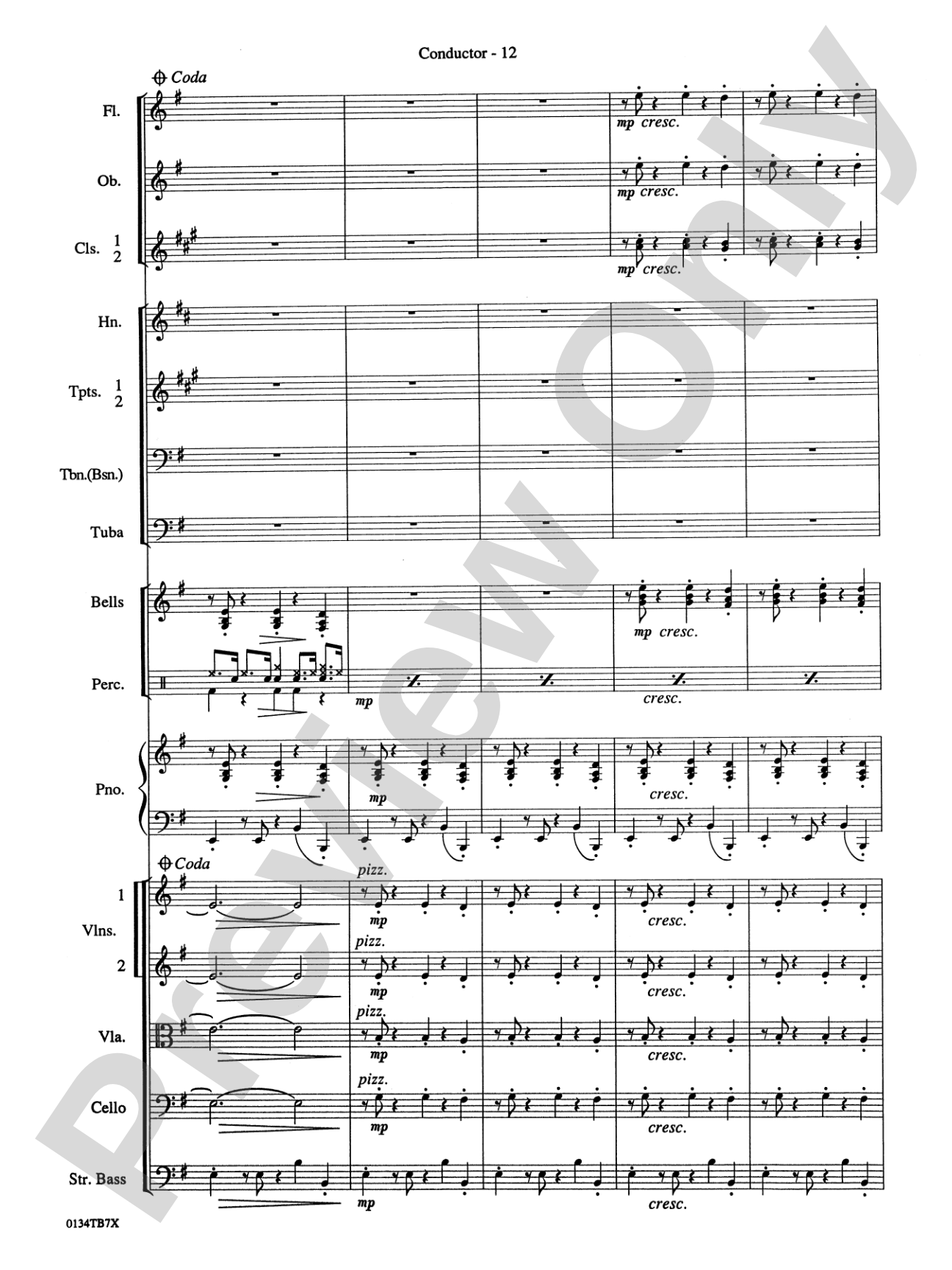
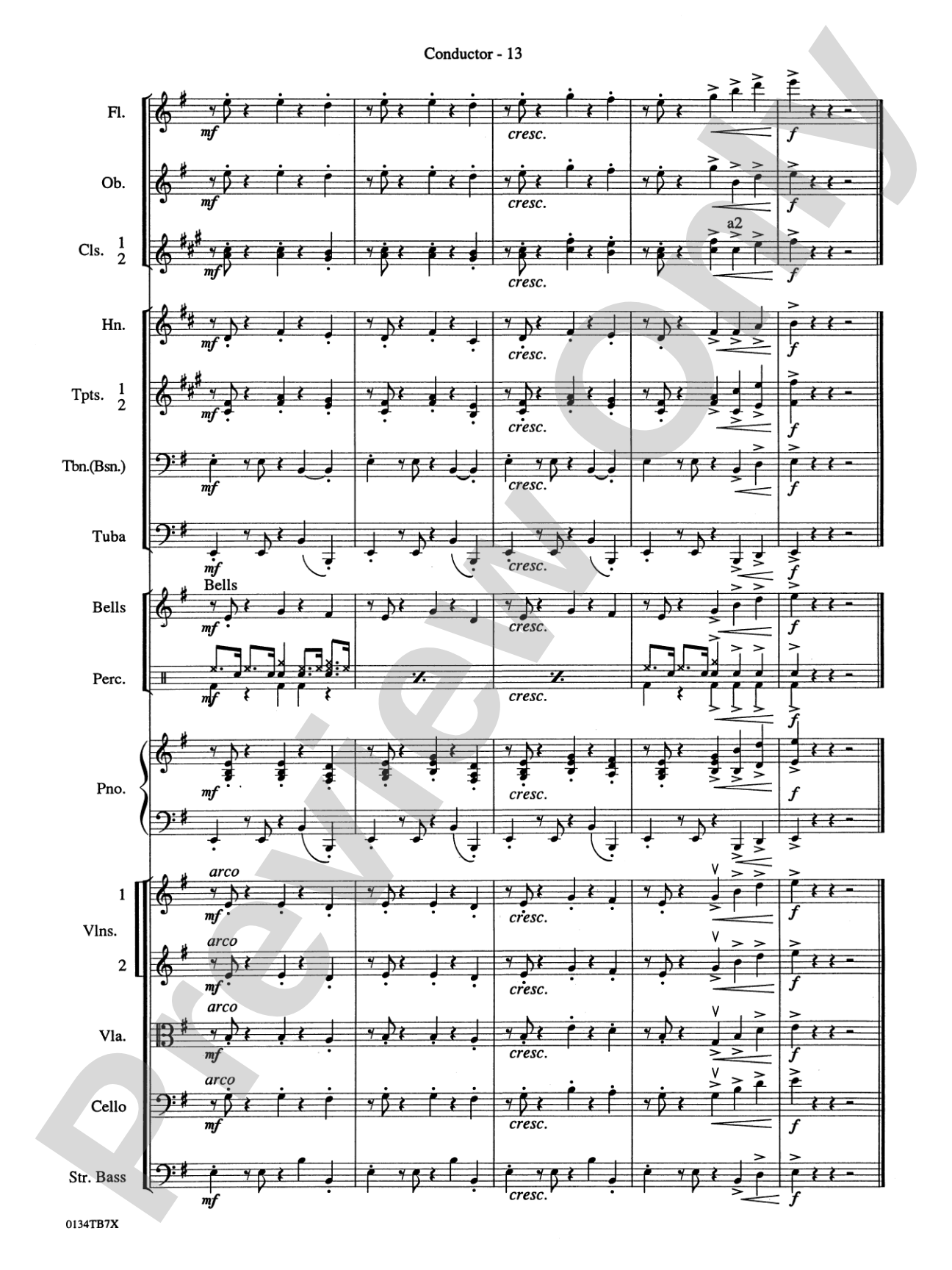


Take Five: Full Orchestra Conductor Score & Parts
By Paul Desmond / arr. Bob Cerulli
Grade: 2.5
Item: 00-PK-0000002

$65.00
One moment…
Related Items
Take Five: String Orchestra Conductor Score & Parts |
$65.00
|
View | |
Take Five: Full Orchestra Conductor Score & Parts |
$65.00
|
View | |
Take Five: Full Orchestra Conductor Score |
$8.00
|
View | |
Take Five: String Orchestra Conductor Score & Parts |
$65.00
|
View | |
Take Five: String Orchestra Conductor Score |
$9.00
|
View |
Description
This jazz standard is known the world over as one of the first to use 5/4 meter. Bob Cerulli has arranged this classic for full orchestra, retaining the original jazz feeling while making it both appealing and playable by younger performers. Look at this one! (2:29)


Don't just read it, hear it, play along with it, and watch your students grow with it. In MakeMusic Cloud, Take Five: Full Orchestra Conductor Score & Parts comes alive with professional accompaniment, adjustable tempo, and built-in practice tools that turn solo practice into real progress.
Open in the Player
Jump straight in and assign it today.
Start Your Free Trial
Open this title and explore the full library in minutes.
Sample Audio
1
Audio File
--:--
0:00
0:00
Sample Video
Additional Details
Series:
Pop Intermediate Full Orchestra
Publisher:
Alfred Music
Page Count:
48
SKU:
00-PK-0000002
More about this title
About the Composer: Paul Desmond
Paul Desmond (1924-1977) was an alto saxophonist and composer whose melodic sensibility and harmonic sophistication shaped the sound of cool jazz. As a founding member of the Dave Brubeck Quartet, he co-wrote "Take Five," the quartet's signature piece and one of the first jazz standards to explore 5/4 meter in a way that achieved mainstream commercial success. His compositions emphasized lyricism over virtuosity, making them accessible entry points into jazz for students encountering the genre.
Why we love this
This arrangement captures what makes the original so compelling—that hypnotic vamp and the coolness of the melody—while scaling it for an ensemble where younger players can actually inhabit the piece rather than just execute it. Cerulli distributes the solos and background textures across the orchestra in ways that keep everyone engaged, and the 5/4 meter feels organic here rather than gimmicky. It's the kind of standard that builds genuine musical taste.
What to expect
The opening vamp creates an almost meditative state; the melody arrives like a question being asked gently and repeatedly. Even when the arrangement swells and more voices join in, there's a cool, unrushed confidence to it all. This is music that makes you want to listen closely.
Who it's for
Grade 2.5 orchestras looking for a piece that teaches rhythm section discipline, introduces players to swing style, and demonstrates that modern jazz standards have as much to teach as classical repertoire. Ensembles preparing for festivals will appreciate both the accessibility and the musical substance here.
How to get the most out of it
- Establish the groove in the rhythm section first. The piano and bass need to lock the vamp so tightly that everything else can float over it; record a rhythm section rehearsal if possible and have the winds and strings listen to it before the full ensemble reads.
- Resist the urge to swing too hard. The original sits in a pocket between straight eighths and a shuffle, and younger players often overstate the swing feel. Conduct it as written and let the rhythm section's touch define the style.
- Balance the melody line carefully across the changes in orchestration. When the melody passes from saxophones to strings or trumpets, the dynamic should remain consistent even though the tone color shifts completely.
- Give soloists permission to breathe and phrase over the bar line. The vamp repeats long enough that they have room to play musically without rushing back into the notated material.
How to use it
Open a concert with this piece to establish that jazz is concert music, worthy of the same attention as anything else on the program. Pair it with a classical work in a different meter or key to highlight what makes 5/4 distinctive. It also works as a bridge piece midway through a program, shifting the energy and reminding audiences what jazz orchestration can sound like.
Skills your students will build
- Reading and performing in 5/4 meter with fluency and confidence
- Understanding swing style and the difference between straight and swung rhythms
- Balancing melodic lines across different instrumental colors and register changes
- Playing in a rhythm section with locked ensemble pulse
- Responding to and supporting improvised or semi-improvised solo passages
- Listening across the ensemble to maintain groove and texture rather than just individual part accuracy