
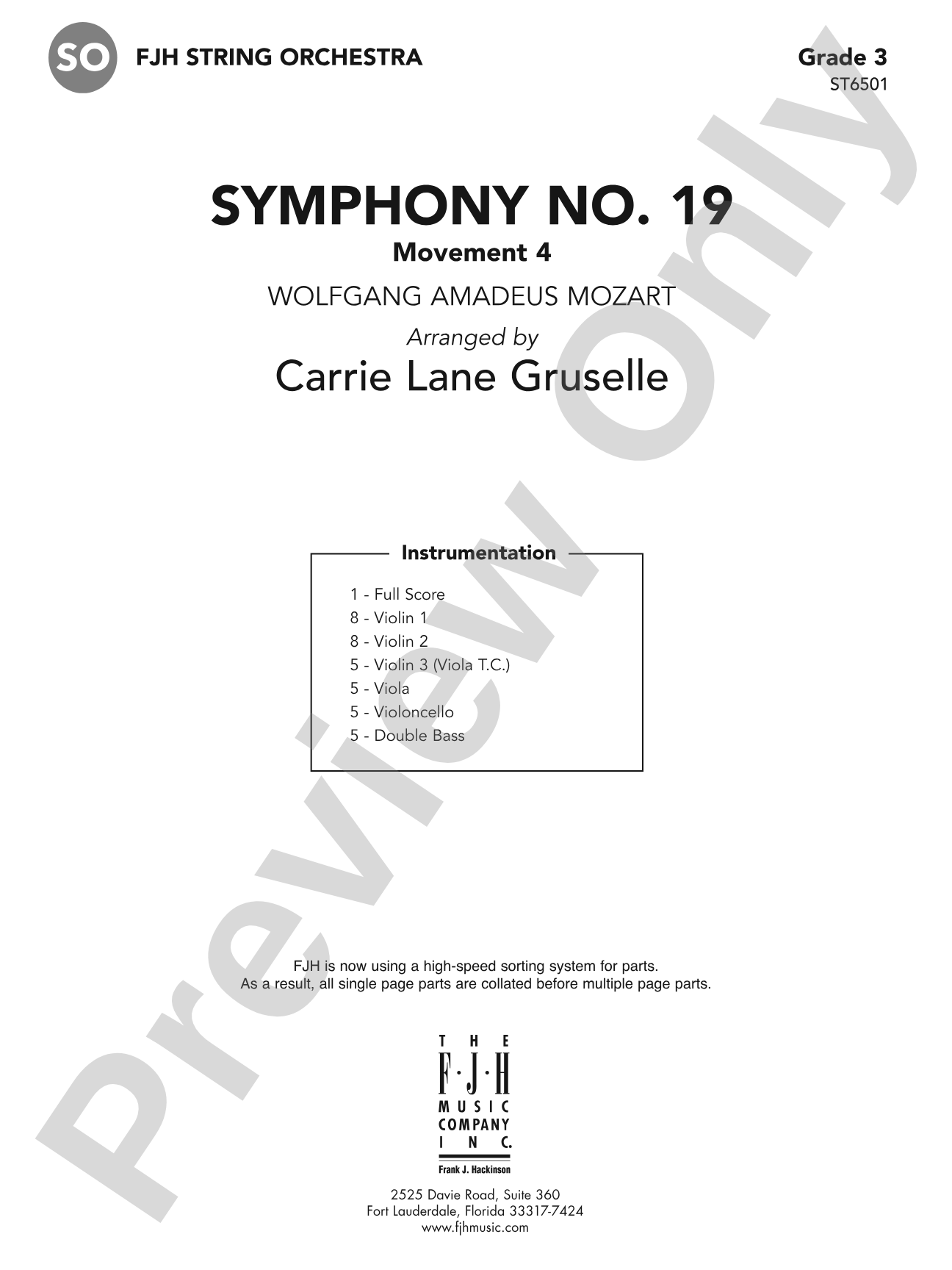
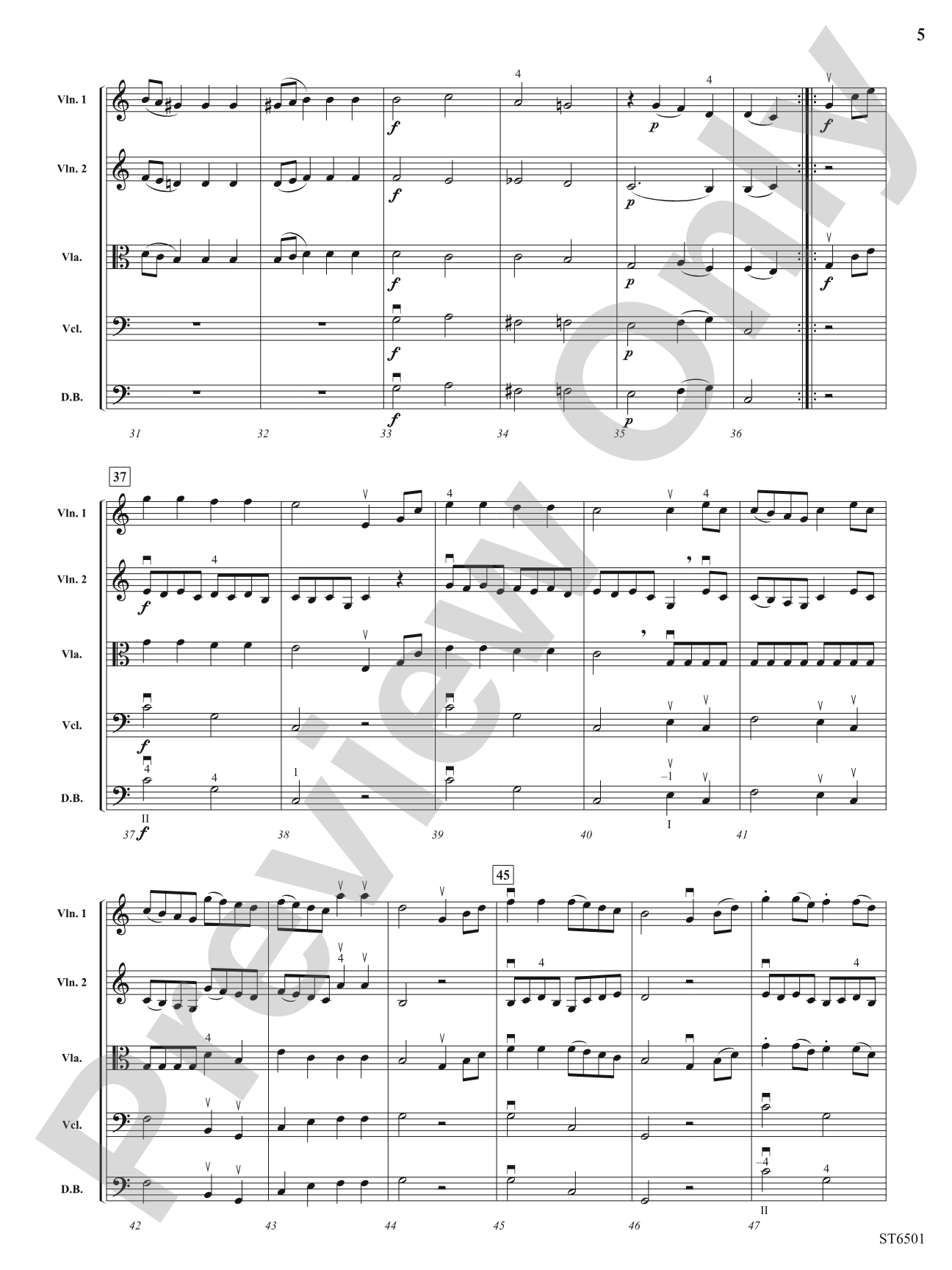
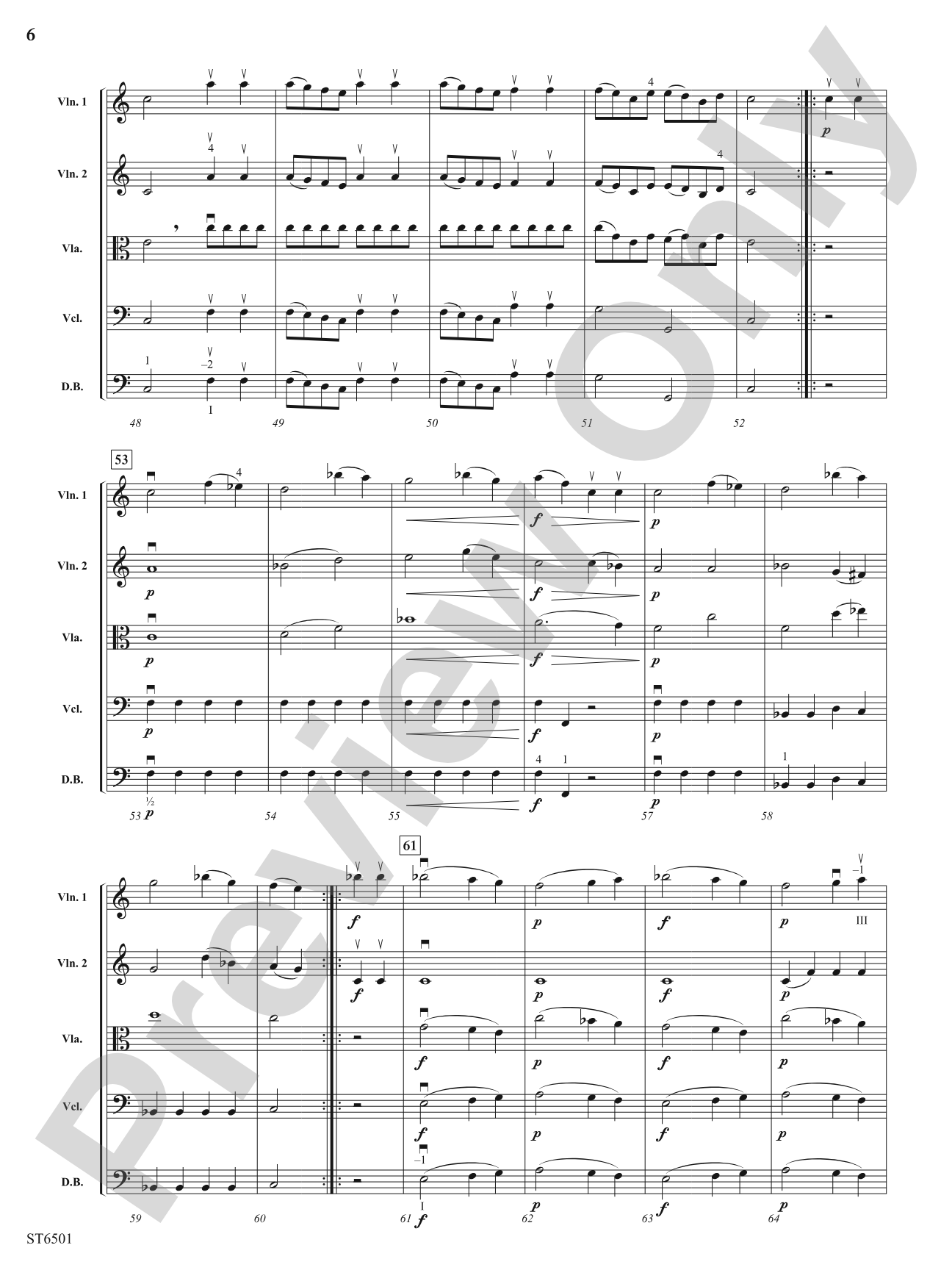
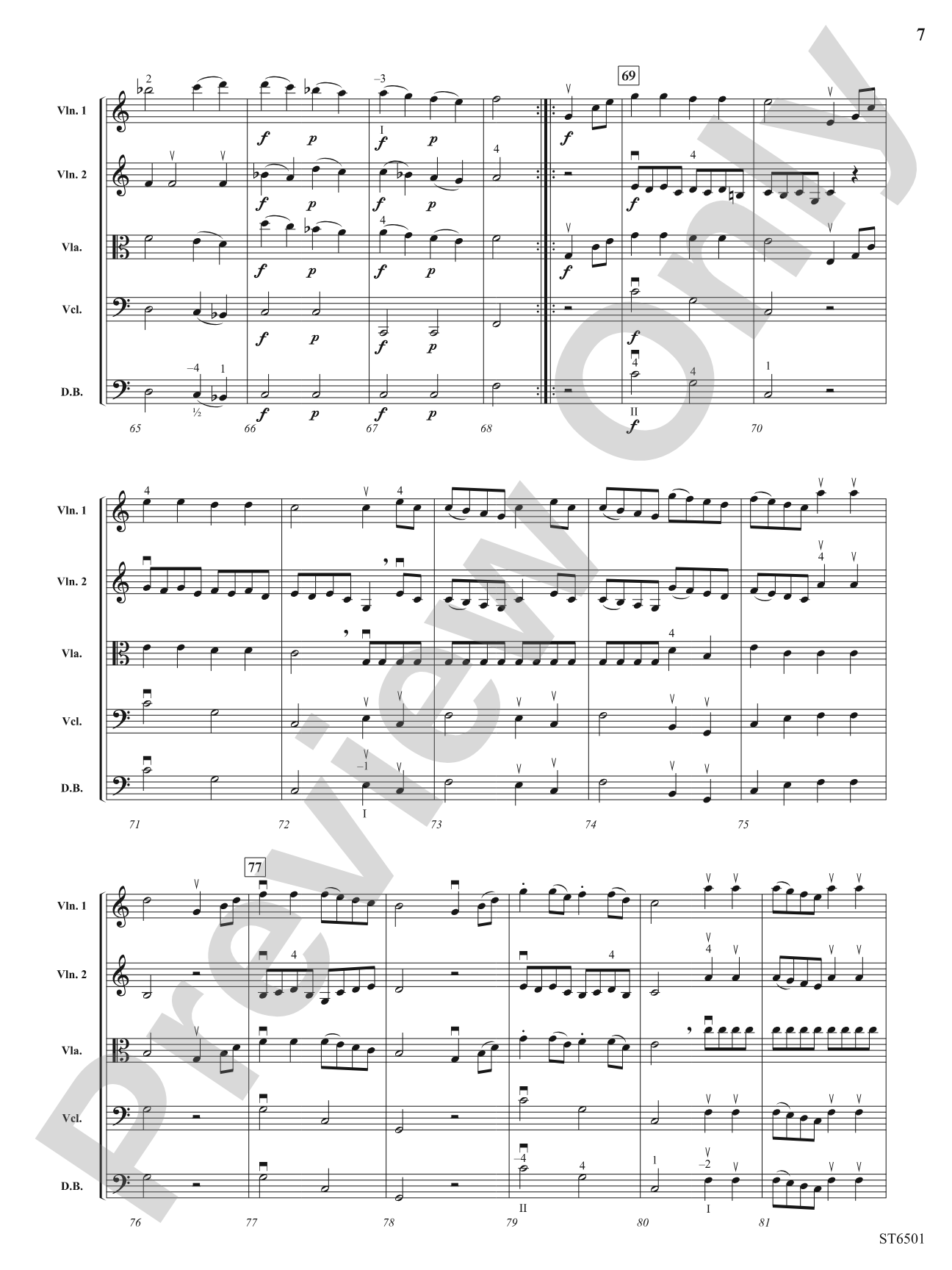
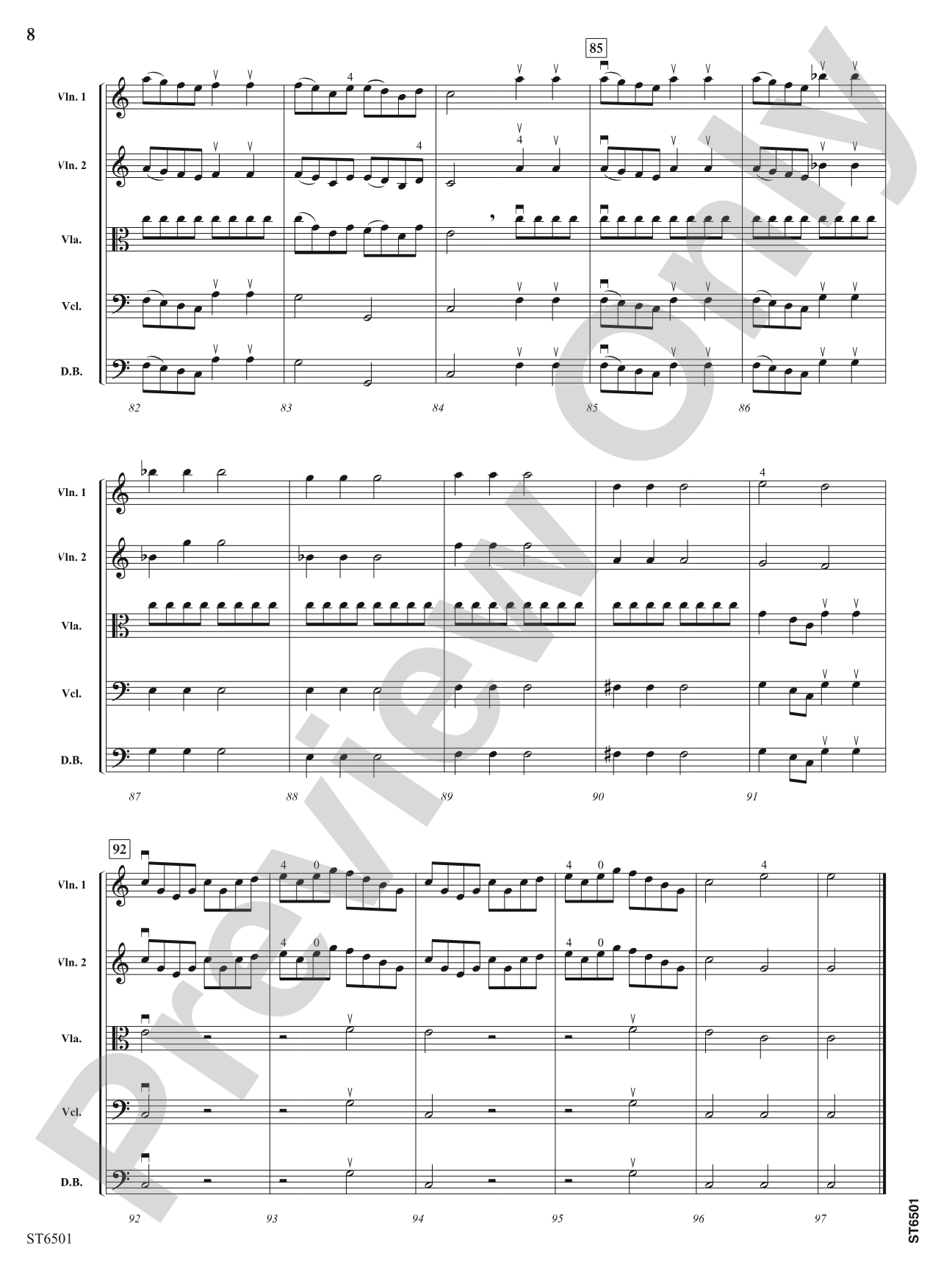

Symphony No. 19: String Orchestra Conductor Score & Parts
By Wolfgang Amadeus Mozart / arr. Carrie Lane Gruselle
Grade: 3
Item: 98-DST6501

$60.00
Pickup currently not available
Buy Extra Parts (Digital PDF Download)
| Product | Price | Quantity |
|---|---|---|
| Symphony No. 19: Score | $5.00 | |
| Symphony No. 19: Violin 1 | $7.00 | |
| Symphony No. 19: Violin 2 | $7.00 | |
| Symphony No. 19: Violin 3 (Viola T.C.) | $7.00 | |
| Symphony No. 19: Viola | $7.00 | |
| Symphony No. 19: Violoncello | $7.00 | |
| Symphony No. 19: Double Bass | $7.00 |
Parts Added to Cart!
Description
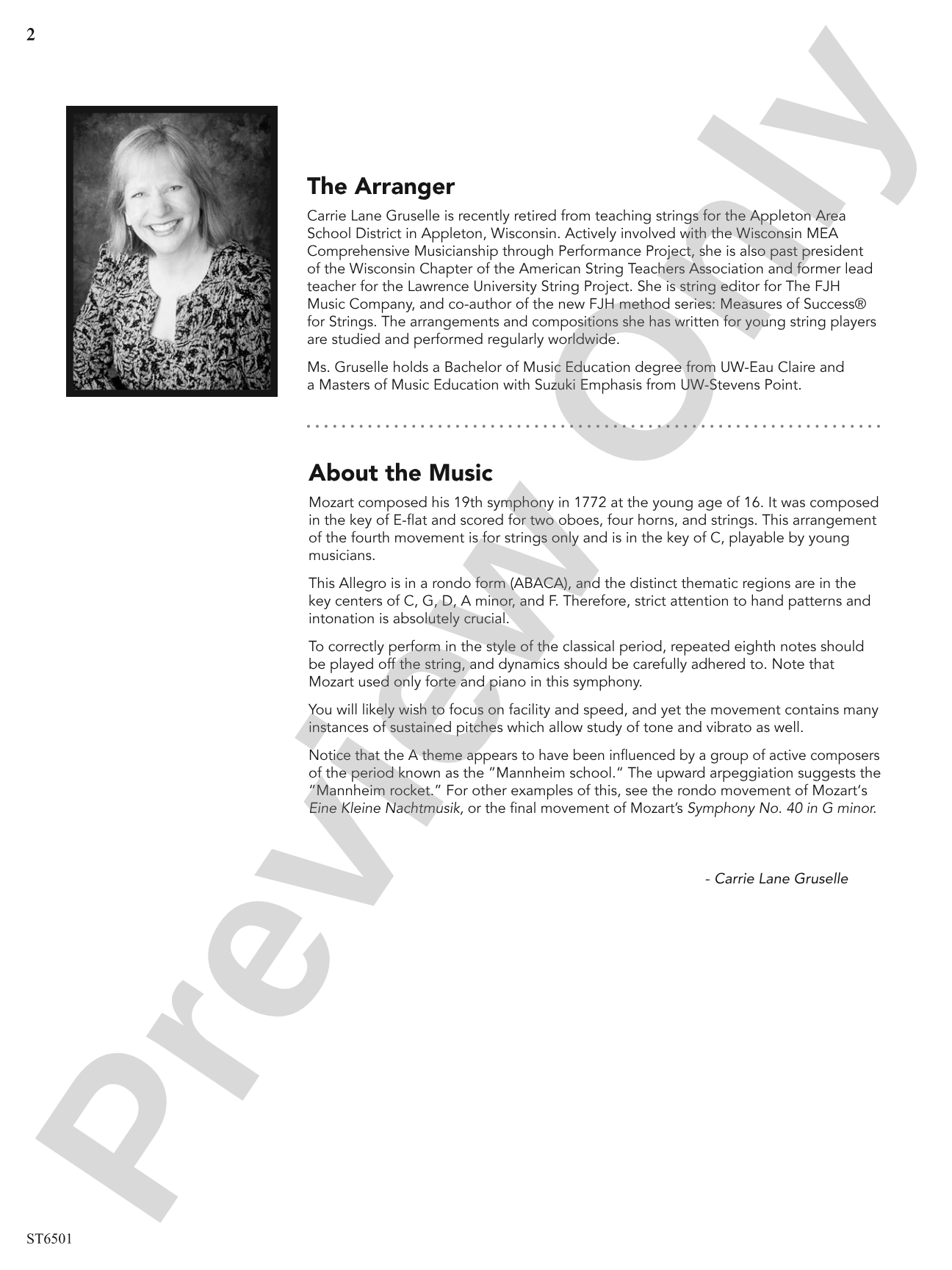
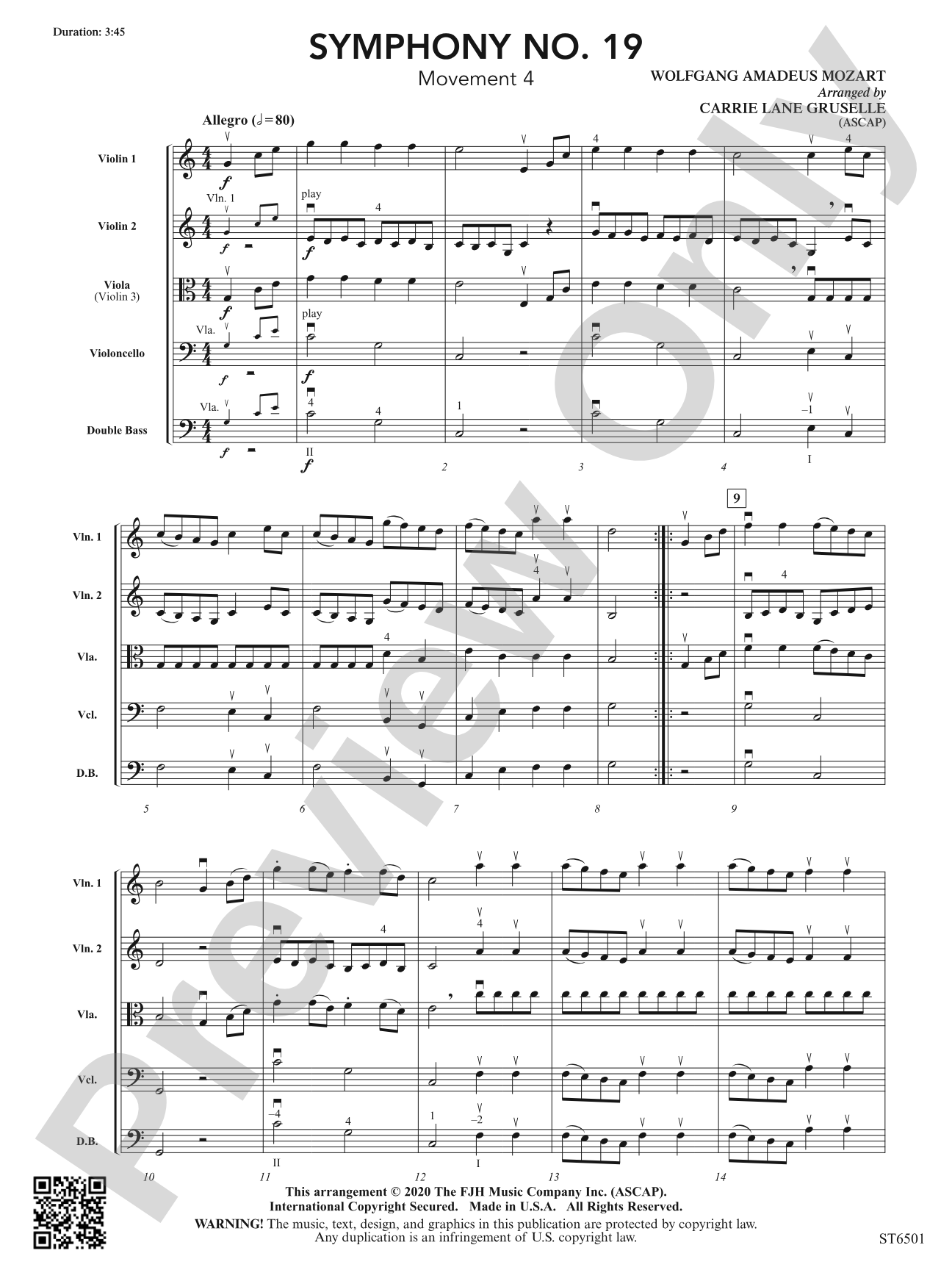
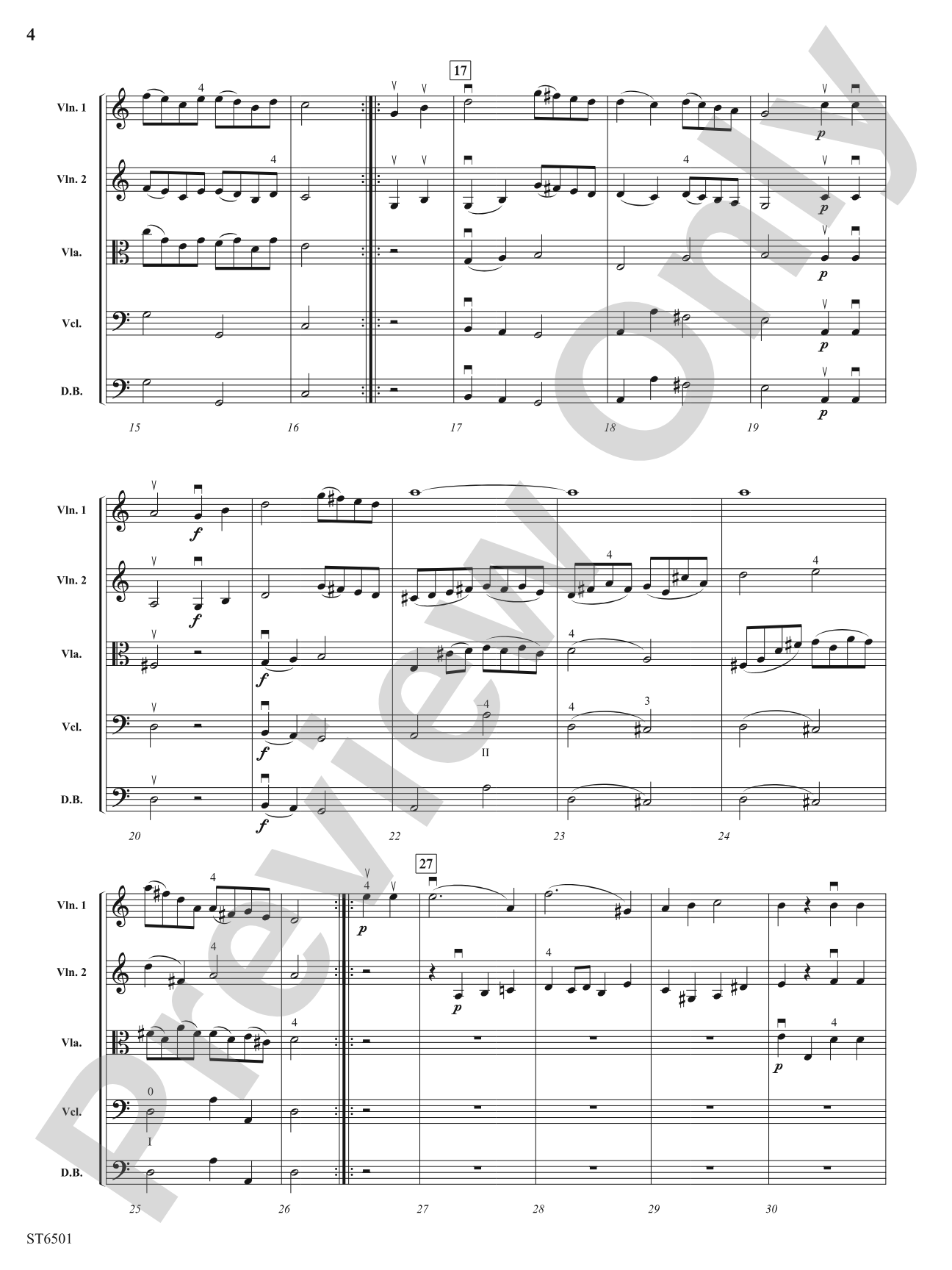
This arrangement is rich with pedagogical and musical opportunity! Written by a 16-year-old Mozart, it is in Rondo form with distinct key centers to establish hand patterns and excellent intonation. It uses sudden dynamic changes for dramatic effect, reinforces off-the-string bowing, and further develops speed and facility in the left hand. A complete package from the Classical era!


Don't just read it, hear it, play along with it, and watch your students grow with it. In MakeMusic Cloud, Symphony No. 19: String Orchestra Conductor Score & Parts comes alive with professional accompaniment, adjustable tempo, and built-in practice tools that turn solo practice into real progress.
Open in the Player
Jump straight in and assign it today.
Start Your Free Trial
Open this title and explore the full library in minutes.
Sample Audio
1
Audio File
--:--
0:00
0:00
Sample Video
Additional Details
Series:
FJH String Orchestra
Publisher:
The FJH Music Company, Inc.
SKU:
98-DST6501
More about this title
About the Composer: Wolfgang Amadeus Mozart
Wolfgang Amadeus Mozart (1756-1791) was an Austrian composer whose prolific output across every major genre established him as one of the foundations of Western classical music. His early symphonies, written while still a teenager, reveal a mature command of form and orchestration that belies his age; these works showcase the clarity, balance, and structural logic that define the Classical style.
For string orchestra programs, Mozart's symphonies offer an invaluable window into how the Classical masters thought about orchestral color and voice leading. His writing is direct and efficient, never wasting a note, yet always musically generous. These pieces reward careful attention to articulation, phrasing, and the interplay between sections.
Why we love this
This arrangement captures Mozart's architectural clarity while building specific technical skills that Grade 3 orchestras genuinely need. The rondo form gives students a reliable harmonic roadmap, and the deliberate use of key centers creates natural intonation reference points rather than asking students to guess. You'll also appreciate how the writing justifies off-the-string bowing not as an abstract technique but as a genuine musical choice that serves the Classical idiom.
What to expect
Elegant and purposeful, with the lightness and conversational quality that defines Mozart's voice. The rondo structure creates a sense of journey and return, while the dynamic contrasts keep the music engaging and dramatic without sacrificing the Classical aesthetic of clarity and balance. It feels like music that knows exactly what it wants to say.
Who it's for
String orchestras at the Grade 3 level who are ready to move beyond simple melodic writing into genuine structural thinking. This arrangement works equally well for middle school ensembles building technical foundations and advanced high school programs seeking a well-crafted Classical work that doesn't condescend to younger players.
How to get the most out of it
- Establish the tonal center of each key section early in rehearsal by having students play sustained unison passages in those keys. This transforms intonation work from corrective to foundational.
- Shape the sudden dynamic changes as dramatic gestures rather than mechanical shifts. Younger orchestras often execute dynamics but forget to breathe and respond musically to them.
- Work the off-the-string passages in isolation first, establishing the bounce and independence of the bow arm before layering in the harmonic context.
- Balance the rondo's returns carefully so that familiar material doesn't become static. Each time the main theme reappears, encourage the ensemble to find something fresh in the phrasing or articulation.
How to use it
Program this as an anchor point in a Classical-era concert, pairing it with a Haydn work or a contemporary piece in a similar formal structure. It also serves beautifully as a mid-season showpiece when students have built sufficient bow control and ensemble awareness to handle the technical and musical demands without struggle.
Skills your students will build
- Reading and performing rondo form with confidence
- Sustaining consistent intonation across key center changes
- Executing off-the-string bowing with rhythmic precision and musicality
- Responding to sudden dynamic shifts as expressive choices, not technical exercises
- Left-hand facility and speed development through Classical-era violin writing