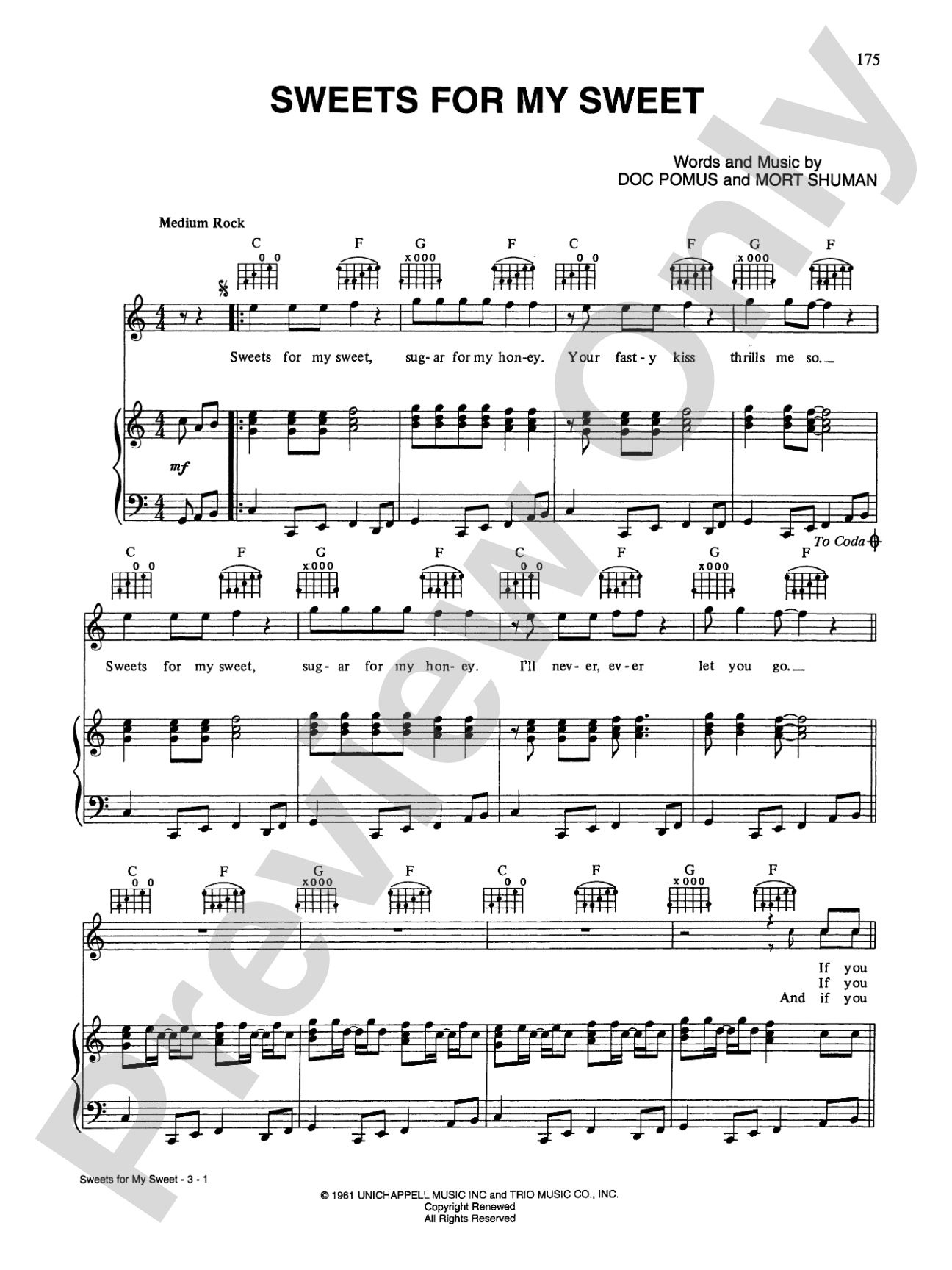
Sweets for My Sweet Sheet Music Preview

Sweets for My Sweet: Piano/Vocal/Chords

Item: 00-XS-0000069

Digital Download
$4.99

One moment…

Description
Eighty-seven titles including: Bad Moon Rising * Both Sides Now * Can't Get Used to Losing You * Chain of Fools * Dear Heart * Do You Want to Know a Secret? * Everyday People * Hey! Paula * Hold Me, Thrill Me, Kiss Me * I Go to Pieces * I Got You Babe * Little Town Flirt * The Monkey Time * More Than I Can Say * Nice 'n' Easy * People * The Pink Panther * Proud Mary * Put a Little Love in Your Heart * Roses Are Red (My Love) * Runaround Sue * Save the Last Dance for Me * Sealed with a Kiss * Sweets for My Sweet * This Magic Moment * Time Is on My Side * Viva! Las Vegas * To Love Somebody * When a Man Loves a Woman * When I Fall in Love * Wipe Out * Words * and many, many more!

Sweets for My Sweet: Piano/Vocal/Chords isn't in MakeMusic Cloud just yet...but it could be. Let us know you'd like to see it, and you'll help shape what comes next. In the meantime, start a free trial and dive into thousands of interactive titles your students can play along with today.

Sample Audio
No sample audio found.
Sample Video
Additional Details
Publisher: Alfred Music
Page Count: 248
SKU: 00-XS-0000069

More about this title

About the Composer: Doc Pomus

Doc Pomus (1920-1992) was a prolific songwriter and lyricist whose career spanned rock and roll, doo-wop, R&B, and pop music from the 1950s through the 1980s. Born Jerome Felder, Pomus became one of the most recorded songwriters of his era, often collaborating with composer Mort Shuman to create standards that defined multiple generations of popular music. His work appeared in films, on Broadway, and across countless recordings by artists ranging from Elvis Presley to Cher.

Pomus's gift for crafting memorable melodies and emotionally direct lyrics made his songs ideal for music educators seeking accessible, recognizable material for mixed ensembles. Many of his compositions have become staples in jazz and popular music curricula because they balance melodic appeal with harmonic sophistication, offering performers of all levels something to discover.

Why we love this

This collection captures some of the most singable and pianistically rewarding pop standards of the last seventy years, all arranged with chord symbols for flexible accompaniment. The sheer range of styles means you can program everything from novelty numbers to genuine emotional depth in a single rehearsal, and every title carries the kind of instant recognition that engages singers and audiences alike.

What to expect

You're stepping into an era when songwriting meant writing songs that stayed in people's heads for decades. These pieces carry genuine melody underneath their commercial appeal, with enough harmonic interest to keep pianists engaged across 248 pages of material that spans upbeat novelties, aching ballads, and everything in between.

Who it's for

This collection serves jazz ensembles, pop choirs, cabaret performers, and piano teachers seeking a repertoire book with immediate musical payoff. It works equally well for someone preparing audition material as it does for a director building a mixed-voice program around recognizable hits.

How to get the most out of it

  • Lead the vocal line with intention even when comping underneath it; these melodies deserve to sing through the harmony rather than disappear into block chords.
  • Listen to original recordings as a starting point for phrasing and rhythm, but encourage singers to make choices that fit your arrangement and their own voices.
  • Use the chord symbols as a foundation, not a cage; reharmonization and rhythmic variation are part of the tradition these songs come from.
  • Balance the vocal melody against your left-hand voicings so the singer doesn't have to fight for presence in the room.

How to use it

Build a concert around songs from different decades in this collection to show how consistent melody and solid songcraft remain across eras; or use individual titles as warm-ups and musical breaks during longer rehearsals since nearly every piece here is short and instantly accessible. The breadth makes it perfect for a cabaret-style show where variety and audience familiarity are assets.

Skills your students will build

  • Reading lead sheets with chord symbols and rootless voicings
  • Coordinating vocal phrasing with piano accompaniment figures
  • Recognizing common harmonic progressions across pop standards
  • Interpreting rhythmic swing and groove from chord charts
  • Adapting melody and harmony choices for different voice types and ranges

You May Also Like