
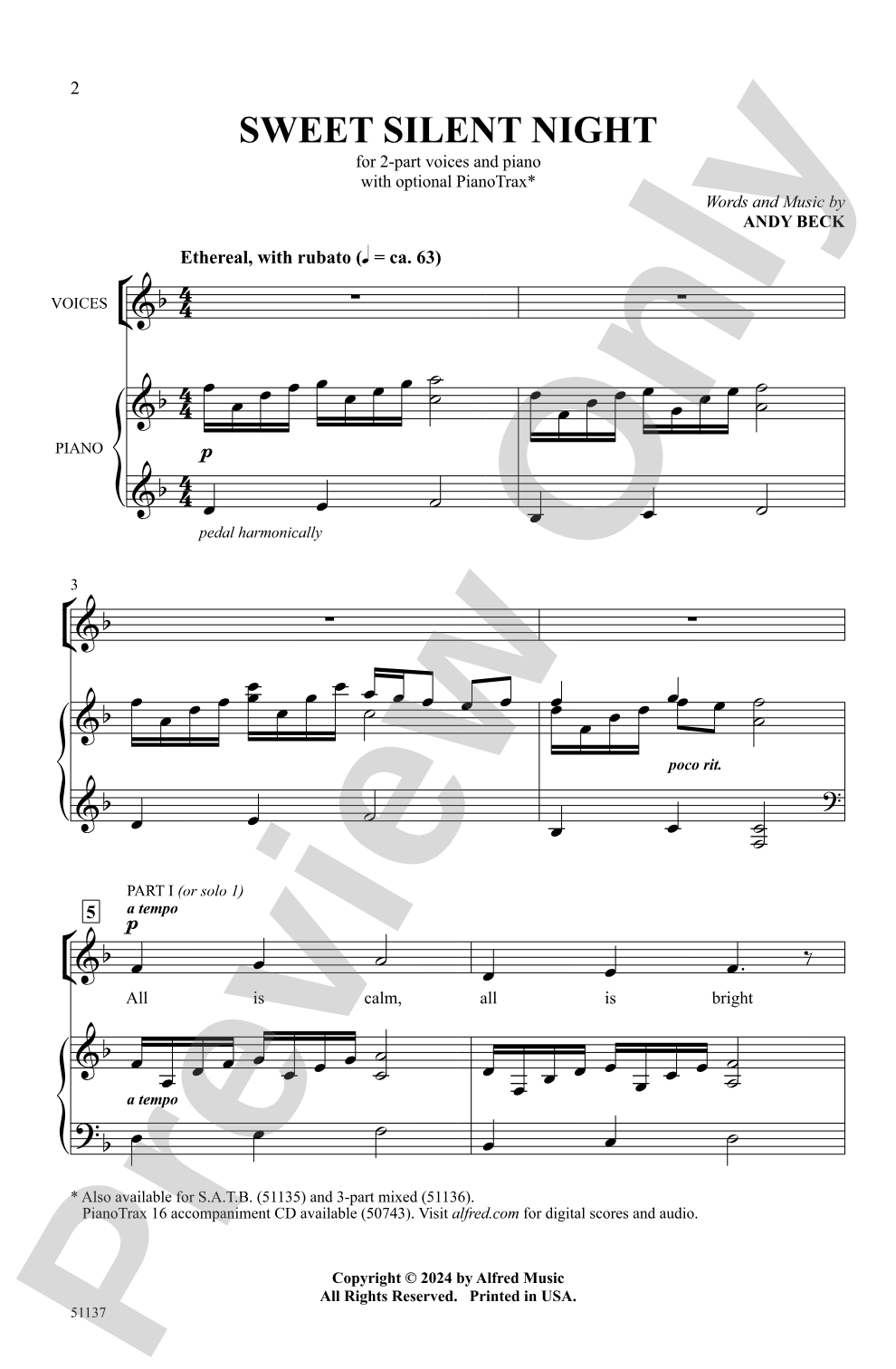

Sweet Silent Night: 2-Part Choral Octavo
Words and music by Andy Beck
Item: 00-PO-0007216

$2.20
Minimum order quantity: 20 copies
Pickup currently not available
Related Items
Sweet Silent Night: SATB Choral Octavo |
$2.20
|
View | |
Sweet Silent Night: 3-Part Mixed Choral Octavo |
$2.20
|
View | |
Sweet Silent Night: PianoTrax Digital Audio Download |
$9.99
|
View | |
Sweet Silent Night: SATB Choral Octavo |
$2.20
|
View | |
Sweet Silent Night: 3-Part Mixed Choral Octavo |
$2.20
|
View | |
Sweet Silent Night: 2-Part Choral Octavo |
$2.20
|
View |
Description
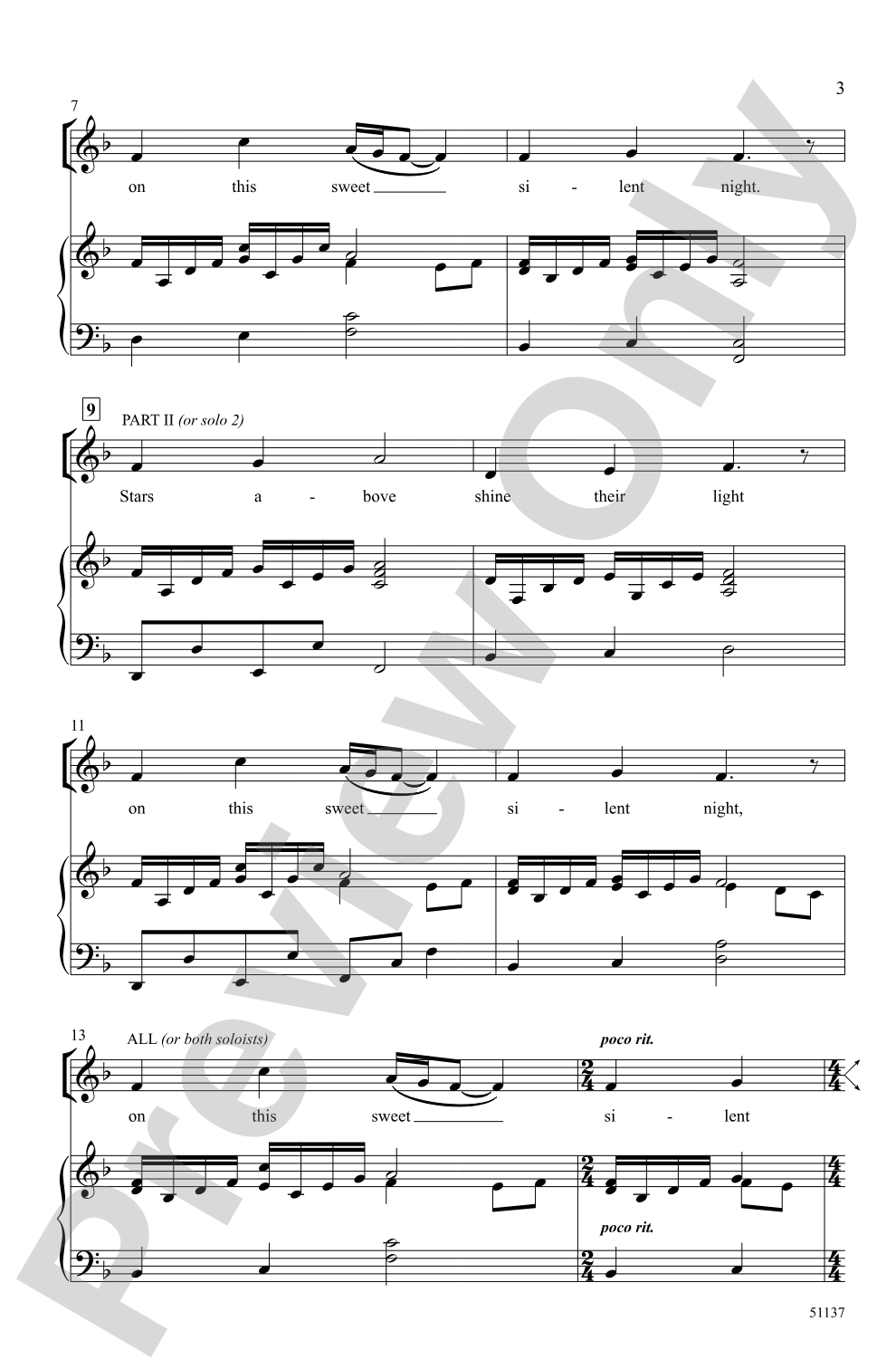
Paint a peaceful winter scene with the tender vocal lines and ethereal piano accompaniment of this striking original. A gentle ode to heavenly stars and falling snow, it is appropriate for any winter concert and features the kind of harmony you love to teach and sing. As a special touch, perform the final verse a cappella to heighten the quiet wonder. "Hearts take hold, dreams take flight, on this sweet silent night."


Don't just read it, hear it, play along with it, and watch your students grow with it. In MakeMusic Cloud, Sweet Silent Night: 2-Part Choral Octavo comes alive with professional accompaniment, adjustable tempo, and built-in practice tools that turn solo practice into real progress.
Open in the Player
Jump straight in and assign it today.
Start Your Free Trial
Open this title and explore the full library in minutes.
Sample Audio
1
Audio File
--:--
0:00
0:00
Sample Video
Additional Details
Series:
Alfred Choral Designs
Publisher:
Alfred Music
Page Count:
8
SKU:
00-PO-0007216
More about this title
About the Composer: Andy Beck

Andy Beck directs choral publications at Alfred Music and has composed and arranged more than 450 choral works now in circulation. His output spans vocal resources, children's musicals, and foundational texts like Sing at First Sight and Vocalize! 45 Vocal Warm-Ups That Teach Technique. His compositions reach singers across the globe, as evidenced by countless performances shared online.
Beyond the page, Beck maintains an active career as a guest conductor, adjudicator, and clinician. He has been commissioned to conduct and compose for honor choirs throughout the Southeast, including all-state ensembles. A trained tenor with degrees from Ithaca College and Northwest Missouri State University, he sings with the North Carolina Master Chorale Chamber Choir and directs musical theatre. His work at Alfred Music reflects a deep commitment to choral literacy, artistry, and music education.
Why we love this
Beck writes music that feels both singable and sophisticated. The two-part writing here sits in a comfortable range for mixed voices while the harmonic content rewards careful listening. The final verse performed a cappella transforms what could be a straightforward winter piece into a moment of genuine intimacy.
What to expect
Snow falling in still darkness; light caught in ice crystals. The tender vocal lines breathe gently over the piano's hushed support, creating a sense of waiting and wonder. The final verse, stripped of accompaniment, leaves singers and listeners in shared silence.
Who it's for
Directors programming winter or Christmas concerts with mixed-age choirs will find this accessible 2-part setting engaging for high school and adult ensembles. The moderate difficulty makes it suitable for groups still building unison and two-part technique, yet the harmonic language keeps experienced singers invested.
How to get the most out of it
- Shape the phrase endings with a gradual diminuendo to honor the quiet, reflective text; avoid letting the final a cappella verse rush or tighten up in tempo.
- Balance the piano accompaniment so it never overpowers the voices. The ethereal quality depends on singers hearing themselves clearly while the accompaniment provides harmonic and textural support.
- Rehearse the a cappella final verse separately to build confidence and intonation. Mark any breaths clearly in rehearsal so singers commit to the same placement.
- Use the recorded accompaniment in early rehearsals to establish the harmonic vocabulary, then work toward independence as singers internalize the voicing.
How to use it
Position this as an opening or closing number on a winter concert to set an introspective tone. The a cappella conclusion provides a natural transition point between larger ensemble pieces, or it can stand alone as a moment of repose in a longer program.
Skills your students will build
- Sustaining tone and breath control through longer phrase lengths
- Blending in two-part harmony with attention to balance and vowel unification
- Reading and executing dynamic markings (particularly soft dynamics)
- Maintaining intonation and ensemble focus without instrumental support in the final verse
- Interpreting text-painting and translating imagery into vocal expression