

Sweet Silent Night: SATB Choral Octavo
Words and music by Andy Beck
Item: 00-PO-0007214

$2.20
Minimum order quantity: 10 copies
Please note: Under U.S. copyright law, you must purchase the exact number of copies needed for your ensemble. Printing, duplicating or sharing additional copies is strictly prohibited.
Pickup currently not available
Related Items
Sweet Silent Night: 3-Part Mixed Choral Octavo |
$2.20
|
View | |
Sweet Silent Night: 2-Part Choral Octavo |
$2.20
|
View | |
Sweet Silent Night: PianoTrax Digital Audio Download |
$9.99
|
View | |
Sweet Silent Night: SATB Choral Octavo |
$2.20
|
View | |
Sweet Silent Night: 3-Part Mixed Choral Octavo |
$2.20
|
View | |
Sweet Silent Night: 2-Part Choral Octavo |
$2.20
|
View |
Description
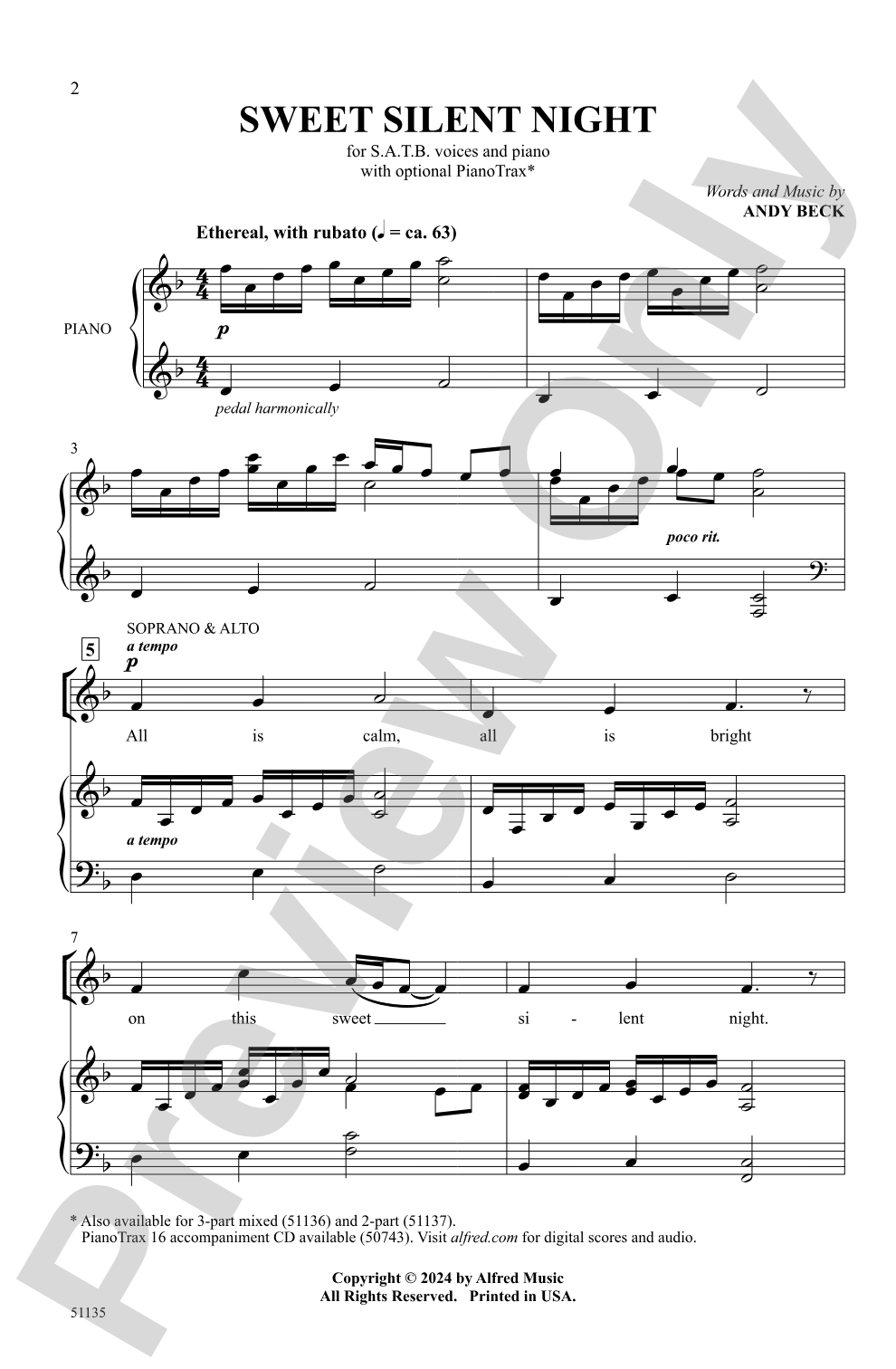
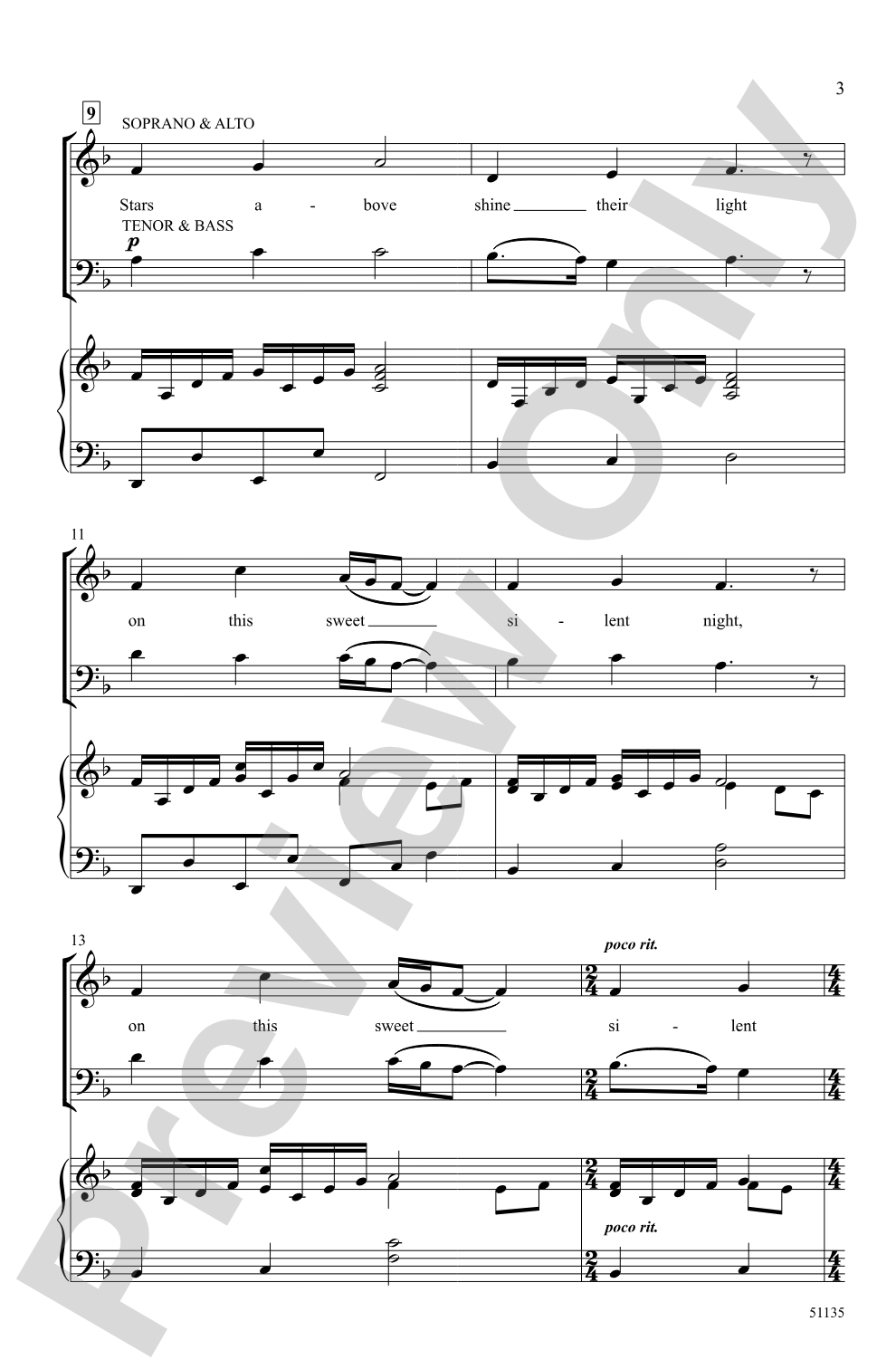
Paint a peaceful winter scene with the tender vocal lines and ethereal piano accompaniment of this striking original. A gentle ode to heavenly stars and falling snow, it is appropriate for any winter concert and features the kind of harmony you love to teach and sing. As a special touch, perform the final verse a cappella to heighten the quiet wonder. "Hearts take hold, dreams take flight, on this sweet silent night."


Don't just read it, hear it, play along with it, and watch your students grow with it. In MakeMusic Cloud, Sweet Silent Night: SATB Choral Octavo comes alive with professional accompaniment, adjustable tempo, and built-in practice tools that turn solo practice into real progress.
Open in the Player
Jump straight in and assign it today.
Start Your Free Trial
Open this title and explore the full library in minutes.
Sample Audio
1
Audio File
--:--
0:00
0:00
Sample Video
Additional Details
Series:
Alfred Choral Designs
Publisher:
Alfred Music
Page Count:
8
SKU:
00-PO-0007214
More about this title
About the Composer: Andy Beck

Andy Beck leads the choral publications department at Alfred Music and has authored over 450 choral compositions, arrangements, and vocal resources used in classrooms and concert halls worldwide. His instructional publications—including Sing at First Sight, Foundations in Choral Sight Singing, and Vocalize! 45 Vocal Warm-Ups That Teach Technique—have shaped how singers develop literacy and technique. A tenor vocalist and accomplished conductor, Beck has served as a guest clinician, adjudicator, and commissioned composer for honor choirs across the United States, with particular engagement throughout the Southeast. He holds degrees in Music Education from Ithaca College and Northwest Missouri State University.
Beyond his work at Alfred, Beck remains active in performance with the North Carolina Master Chorale Chamber Choir and brings his deep understanding of choral pedagogy to musical theatre direction and studio singing. His dual commitment to compositional craft and music education is reflected in every publication he creates and curates.
Why we love this
Beck writes with genuine understanding of what singers find both musically rewarding and technically instructive. The choice to remove accompaniment in the final verse is a masterful touch that shifts the concert moment without demanding extra rehearsal time or requiring an alternate arrangement. Winter concerts often feel cramped with similar material; this piece stands apart through its harmonic sophistication and the specific emotional arc that the a cappella ending creates.
What to expect
Like stepping outside on a quiet winter night when the world has stopped moving. The piano accompaniment creates a soft blanket of sound around tender melodic lines, while the harmony glows with subtle warmth rather than brightness. Removing the piano for the final verse deepens that sense of stillness and invites listeners into intimate contemplation.
Who it's for
Directors building a winter concert that balances festive energy with genuine moments of reflection, and singers ready for the focused listening required in a cappella singing. Secondary choirs and first-time contest participants will find appropriate challenge here without excessive technical demands.
How to get the most out of it
- Bring the piano accompaniment into rehearsal early enough that singers can hear how their lines sit within the harmonic context, but plan substantial time singing without it so the a cappella verse feels natural and integrated, not like a surprise switch.
- Shape the phrase "Hearts take hold, dreams take flight" with slight dynamic lift to distinguish it from the reflective passages around it; this moment anchors the emotional arc without overshadowing the piece's inherent quiet.
- Use the recorded accompaniment strategically in rehearsal to set a tempo baseline and allow singers to listen for balance, then conduct live performances to allow more freedom in the final verse transition.
- Work carefully on the blend between soprano and alto in any divisi passages; the ethereal quality depends on hearing both voices as equal partners rather than one leading the other.
How to use it
Position this as a closing piece or as a gentle transition between more energetic selections; its unhurried pacing and introspective text make it especially effective late in a concert when audiences are ready to settle. It pairs naturally with other original seasonal works and provides a welcome tonal contrast if your program includes traditional carols or upbeat ensemble numbers.
Skills your students will build
- Blending sustained vowels in four-part harmony
- Transitioning cleanly from accompanied to a cappella singing without losing pitch or rhythm
- Listening across voice parts to maintain harmonic balance
- Singing lyrical phrasing within a slower harmonic rhythm
- Maintaining vocal resonance and ensemble cohesion without instrumental support