

Sutoku In: 3-Part Mixed Choral Octavo
Words by Emperor Sutoku, music by Ruth Morris Gray
Item: 00-PO-0007030
$2.05
Minimum order quantity: 20 copies
Pickup currently not available
Description
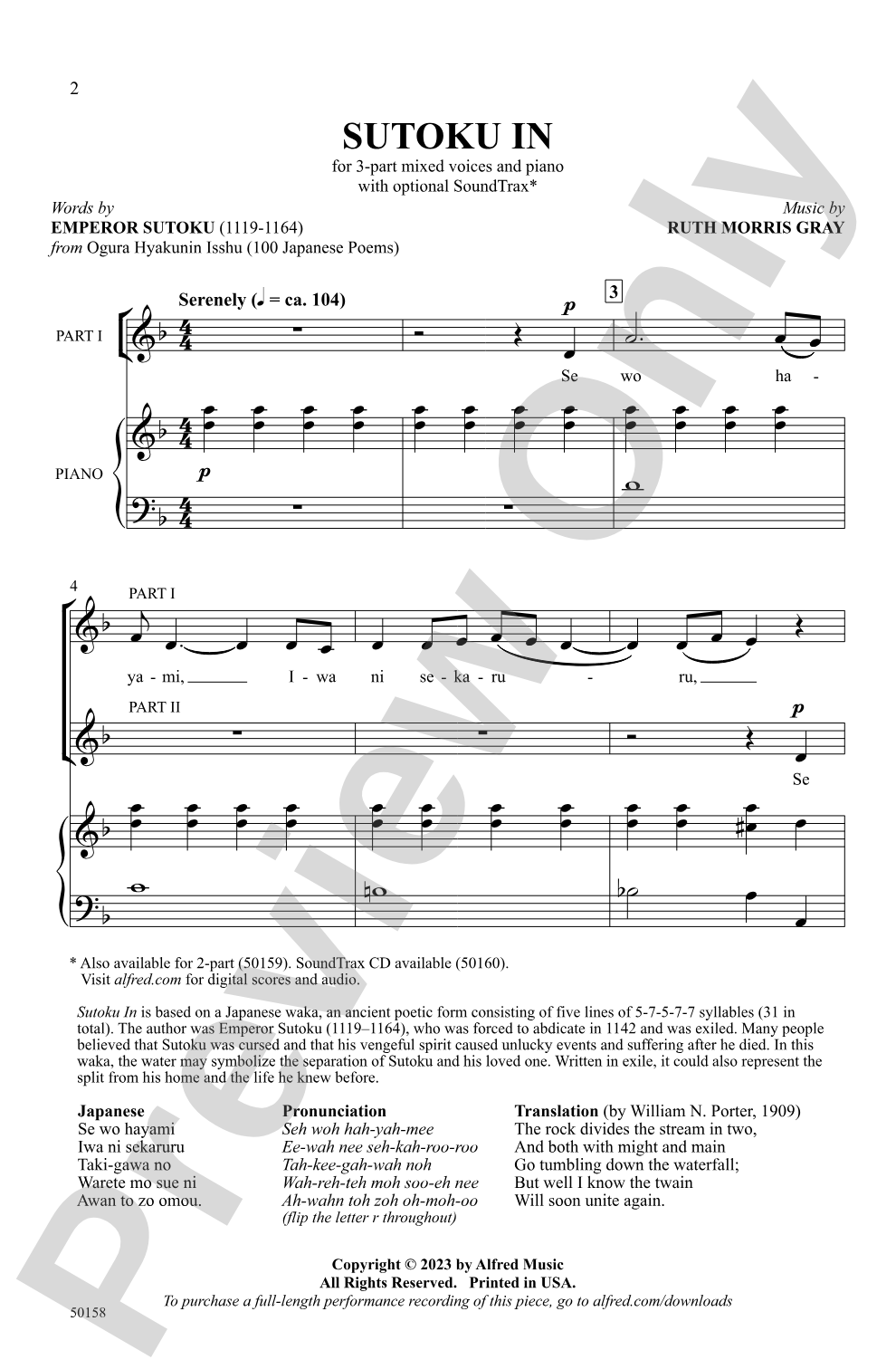
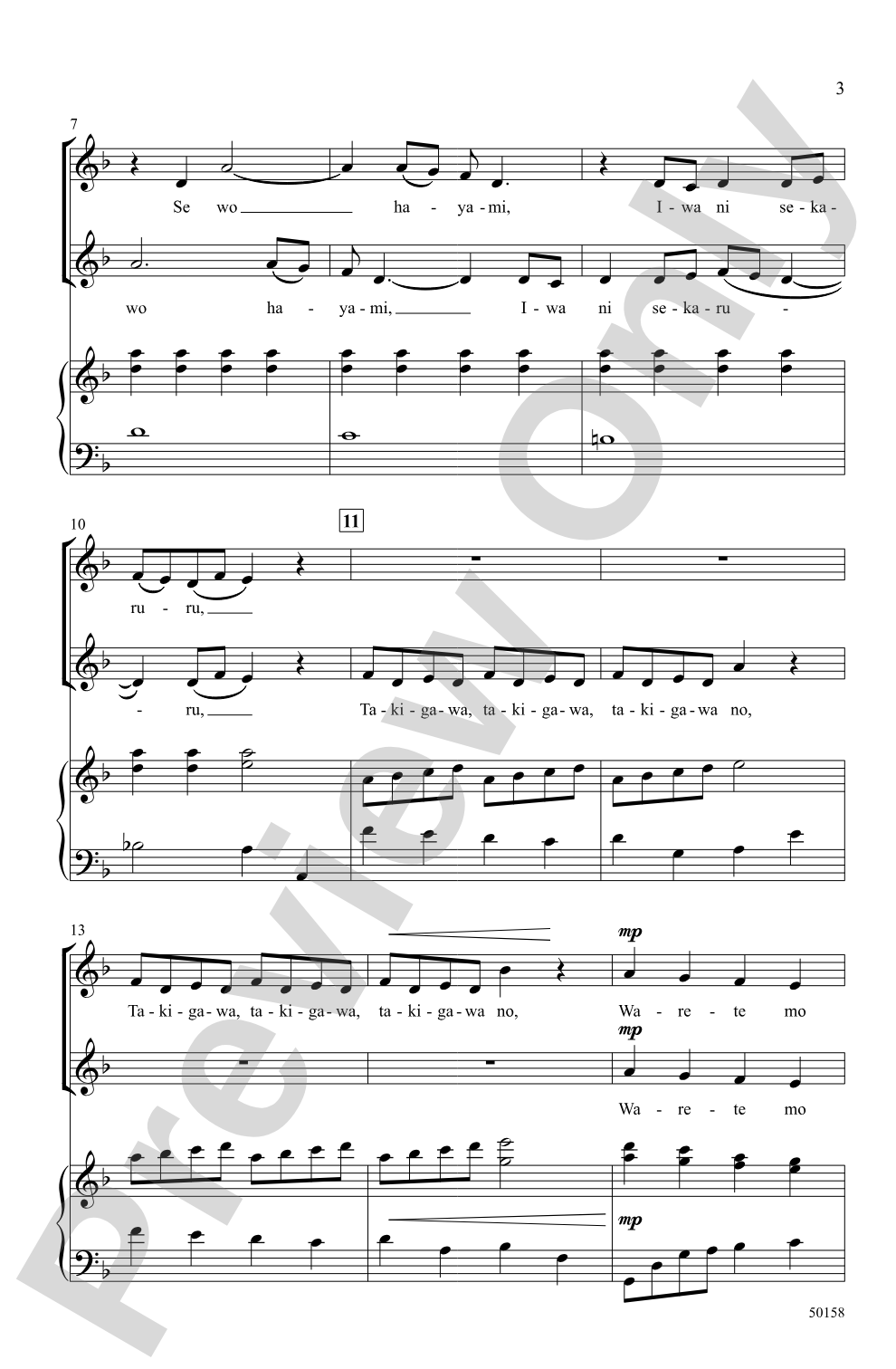
The text of this multicultural feature is a waka (an ancient Japanese poetic form) written by 12th-century ruler Emperor Sutoku. Ruth Morris Gray's original music highlights the poem's depth and explores its theme of separation. Crafted with two minor-key melodies (one sung in Japanese, the other in English) that artfully intertwine at the pinnacle moment. A pronunciation guide is included in the publication.


Discover MakeMusic Cloud: thousands of interactive titles your students can play along with today.
Sample Audio
1
Audio File
--:--
0:00
0:00
Sample Video
Additional Details
Series:
Alfred Choral Designs
Publisher:
Alfred Music
Page Count:
12
SKU:
00-PO-0007030
More about this title
About the Composer: Ruth Morris Gray

Ruth Morris Gray directs choirs at Rosemead High School in California, where she has taught since 2004. She holds degrees in Piano Performance and Composition from Biola University and a Master of Arts in Music Composition from UC Santa Barbara, along with her California Single Subject Music Credential.
With over 100 published choral works to her name, Gray has established herself as a composer deeply invested in both her students and the repertoire she creates for them. Beyond the music classroom, she is an active performer and traveler who finds inspiration in diverse cultures and artistic forms.
Why we love this
Gray's setting honors the emotional weight of Emperor Sutoku's 12th-century poem while creating an entirely fresh musical landscape. The architecture of two interwoven melodies, one in Japanese and one in English, transforms the theme of separation into something tangible and moving, giving singers a genuine artistic puzzle to solve rather than a surface-level multicultural exercise. The included pronunciation guide removes barriers and signals that cultural authenticity matters here.
What to expect
Introspective and crystalline. The minor-key setting creates a contemplative mood that never veers into melancholy; instead, the music feels spacious and deliberate, allowing the weight of a medieval Japanese poem to resonate across centuries. When the two melodies finally converge, there is a moment of profound stillness.
Who it's for
Choirs with SAB voicing ready to tackle a sophisticated literary text and layered musical writing. This works for both secondary school ensembles seeking concert or contest material and for community and collegiate choirs wanting meaningful multicultural repertoire with real historical substance.
How to get the most out of it
- Study the poem's context before rehearsals begin. Understanding what Sutoku wrote about and why will shape how singers approach both melody lines and their eventual convergence.
- Balance the two languages carefully in the intertwining section. Neither melody should overwhelm; the goal is luminous clarity from both parts singing simultaneously.
- Use the recorded accompaniment to lock in the minor-key harmonic language. The recording will anchor the somewhat unusual intervallic relationships that give this piece its character.
- Mark the Japanese pronunciation guide directly into your scores and spend rehearsal time hearing native speaker inflection. Authenticity in sound matters as much as accuracy in notes.
How to use it
Program this as a concert centerpiece alongside other world poetry settings, or use it as a festival selection where judges value literary substance and compositional craft. The 12 pages and moderate difficulty make it accessible within a single season of rehearsal, yet its cultural and musical depth rewards careful preparation and lingering attention.
Skills your students will build
- Singing in Japanese with authentic pronunciation and phrasing
- Reading and performing two independent melodic lines that interweave at structural pivot points
- Balancing lyric clarity across different languages within a single harmonic texture
- Interpreting minor-key harmonic language and understanding modal or non-traditional intervallic relationships
- Connecting text meaning (separation, distance, time) to musical gesture and voicing choices