
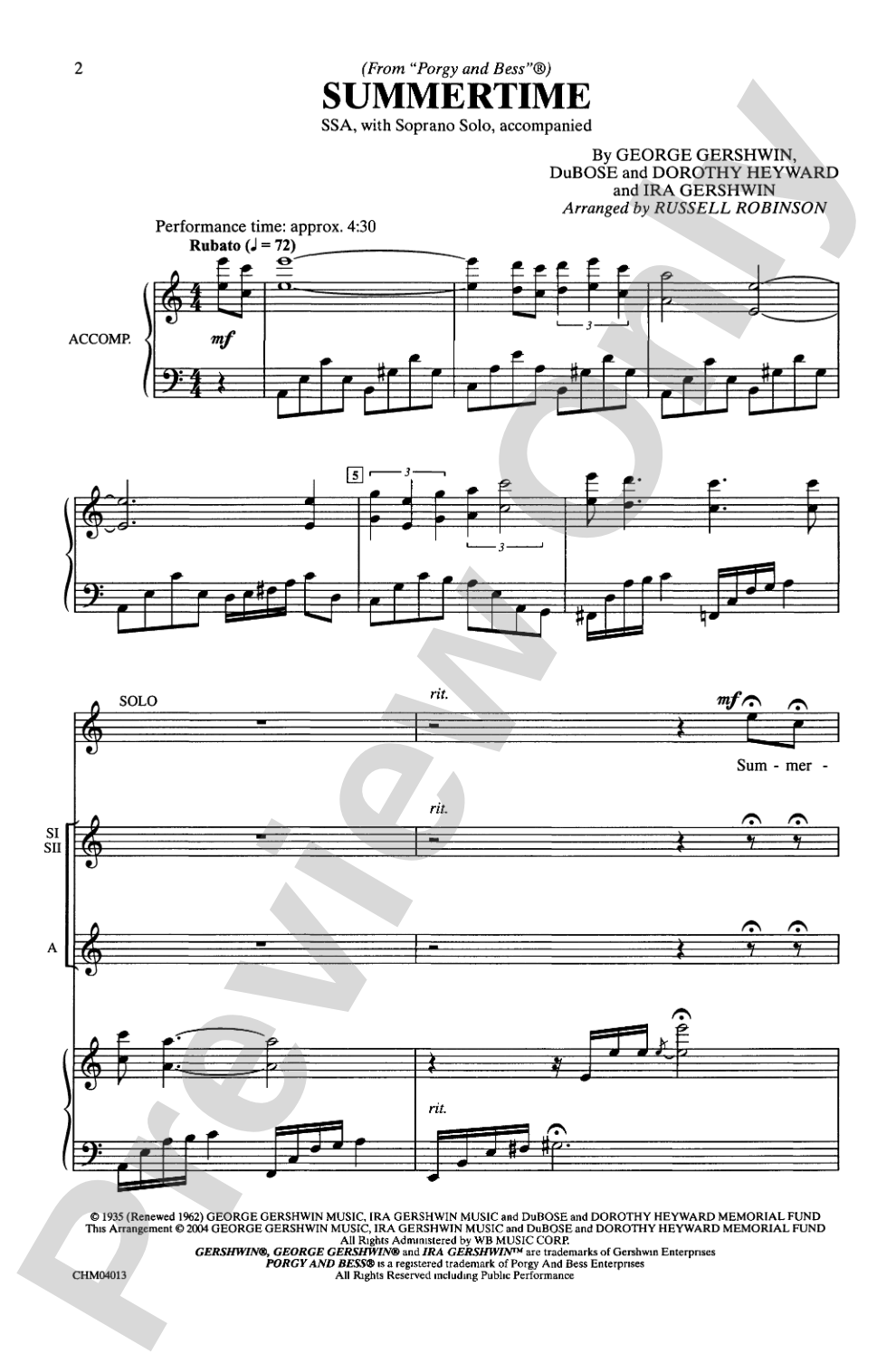
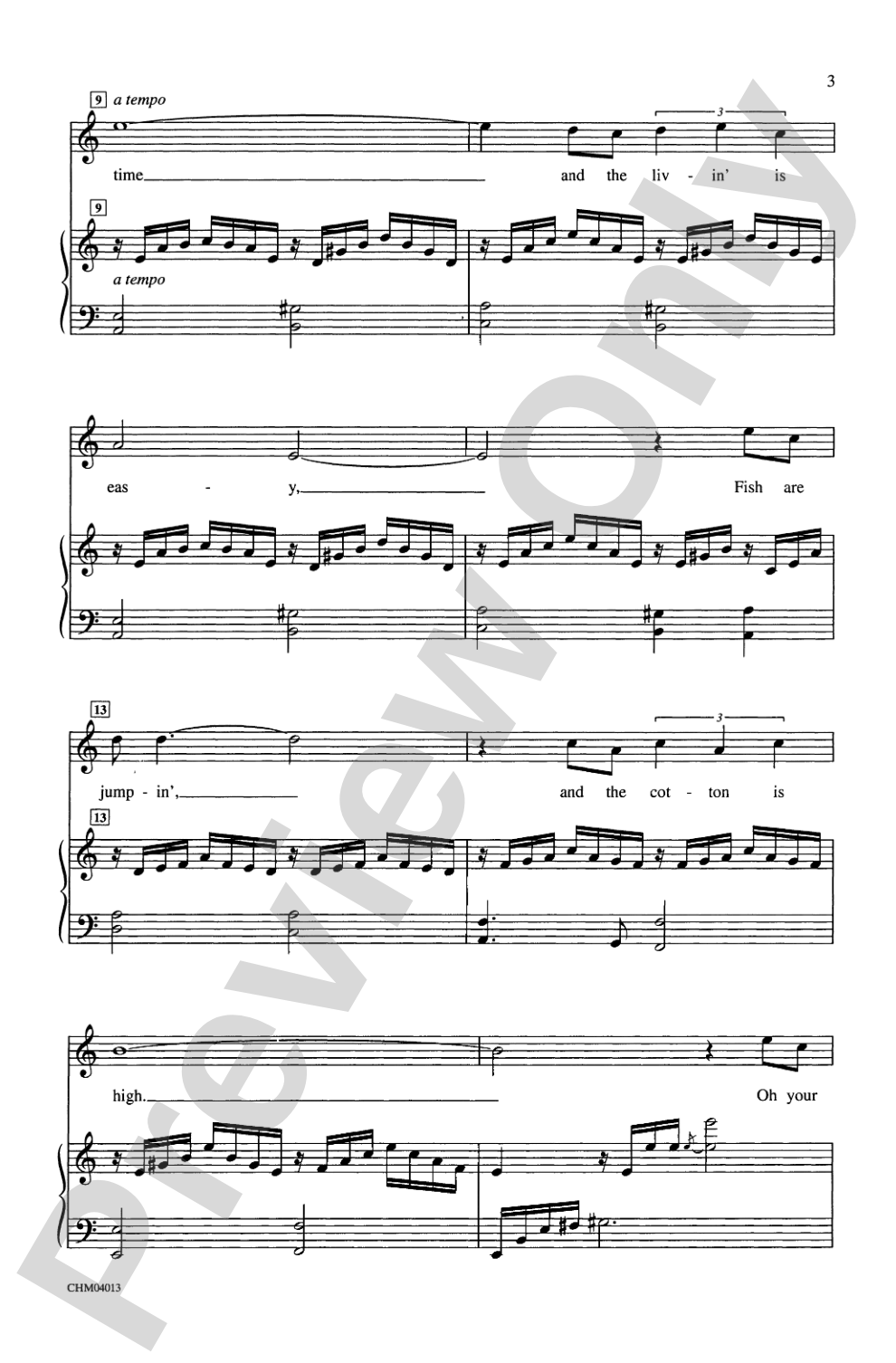
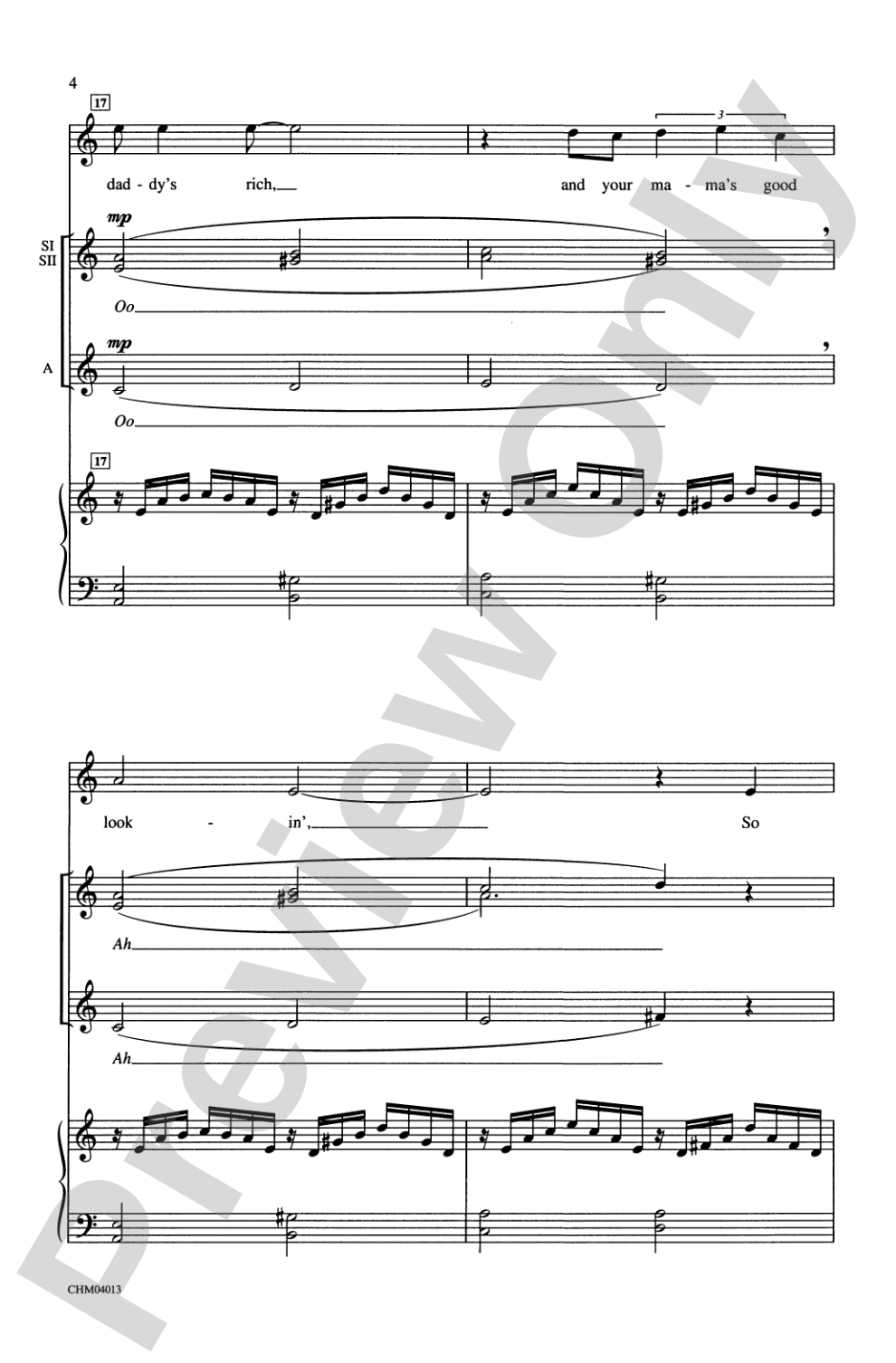

Summertime (from Porgy and Bess®): SSA and Soprano Solo Choral Octavo
From the Musical Porgy and Bess
Words and music by George Gershwin, DuBose and Dorothy Heyward, and Ira Gershwin / arr. Russell Robinson
Level: Moderate
Item: 00-PO-0004835
$2.95
Minimum order quantity: 20 copies
One moment…
Description
This Gershwin® classic from Porgy and Bess truly comes to life in this exceptional new choral arrangement by Russell Robinson. While it is not without its challenges, this Broadway concert piece is well worth the effort to prepare.


Summertime (from Porgy and Bess®): SSA and Soprano Solo Choral Octavo isn't in MakeMusic Cloud just yet...but it could be. Let us know you'd like to see it, and you'll help shape what comes next. In the meantime, start a free trial and dive into thousands of interactive titles your students can play along with today.
Request This Title
Tell us you want it.
Start Your Free Trial
Explore everything that's ready to play right now.
Sample Audio
No sample audio found.
Sample Video
No sample videos found.
Additional Details
Series:
Alfred Archive Edition: Alfred Pop Choral Series
Publisher:
Alfred Music
Page Count:
16
SKU:
00-PO-0004835
More about this title
About the Composer: George Gershwin
George Gershwin (1898-1937) was an American composer who bridged classical music and popular song with unprecedented sophistication. His operatic masterpiece Porgy and Bess, composed with lyricists DuBose Heyward, Ira Gershwin, and Dorothy Heyward, remains one of the most performed American operas and introduced melodies that have become part of the standard repertoire across genres.
Gershwin's gift for memorable melody combined with jazz harmonies and orchestral craftsmanship created music that appeals to both concert audiences and popular listeners. His early death at 38 left a relatively small but immensely influential catalog that continues to challenge and inspire musicians.
Why we love this
Russell Robinson's arrangement captures the sultry, contemplative beauty of this iconic song while making it genuinely achievable for SSA choirs. The writing balances accessibility with artistic substance, so singers emerge with something musically satisfying rather than a simplified version. Programming Gershwin at this level signals to audiences and students alike that Broadway and opera are not separate from serious choral music.
What to expect
The music settles into a warm, sultry atmosphere, with the melody lying like heat shimmer over gently shifting harmonies. There is melancholy beneath the surface calm, a weariness and tenderness that the Gershwin melody expresses without sentimentality. Singers feel the weight of the song's emotional restraint alongside its undeniable lyrical beauty.
Who it's for
Intermediate to advanced treble choirs ready for a meaty Broadway standard that requires real musical maturity and vocal control. Solo singers who have developed secure technique and the ability to carry a melody over complex harmony will thrive with the soprano solo part. This arrangement works well for directors building toward a concert that honors both classical and American musical theater traditions.
How to get the most out of it
- Shape the melody with long, connected phrases that suggest the languid heat of the opening. Avoid clipping the ends of notes even as the accompaniment parts move.
- Balance the soprano solo spotlight carefully with the supporting SSA parts so the solo never feels stranded or the harmony never overwhelms it.
- Let the blues inflections breathe naturally rather than forcing them. The flatted seventh and the overall harmonic color should come from listening and blending, not from overwrought stylistic choices.
- Attend to the text underlay throughout, particularly in the arpeggiated or rhythmically intricate passages, so diction remains clear even as voices move between parts.
How to use it
Place this in a spring or end-of-year concert that celebrates American musical theater and opera, perhaps pairing it with other Broadway standards or concert songs at similar difficulty. The sixteen pages make it substantial enough to anchor a program section, and the sophistication of the arrangement signals that your choir engages with repertoire beyond pop and traditional choral literature. Early to mid-season rehearsal allows adequate time to solve the harmonic and rhythmic challenges without rushing.
Skills your students will build
- Balancing solo and ensemble parts simultaneously
- Reading and sustaining jazz harmonies and chromatic voice leading
- Phrasing longer melodic lines with breath control and legit tone
- Interpreting blues inflections and stylistic nuance without exaggeration
- Blending altered harmonies (flatted sevenths, extended chords) in tune