
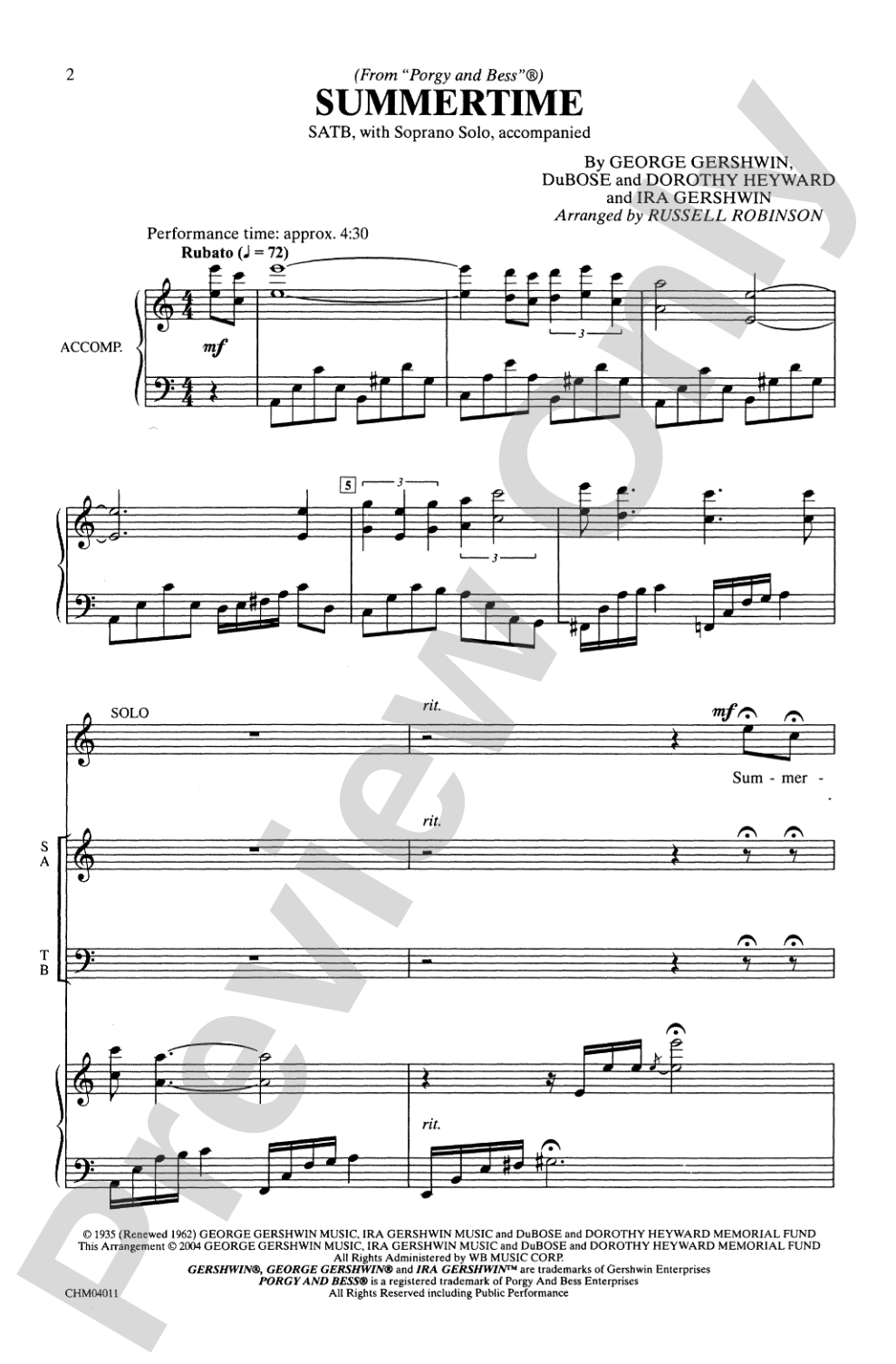
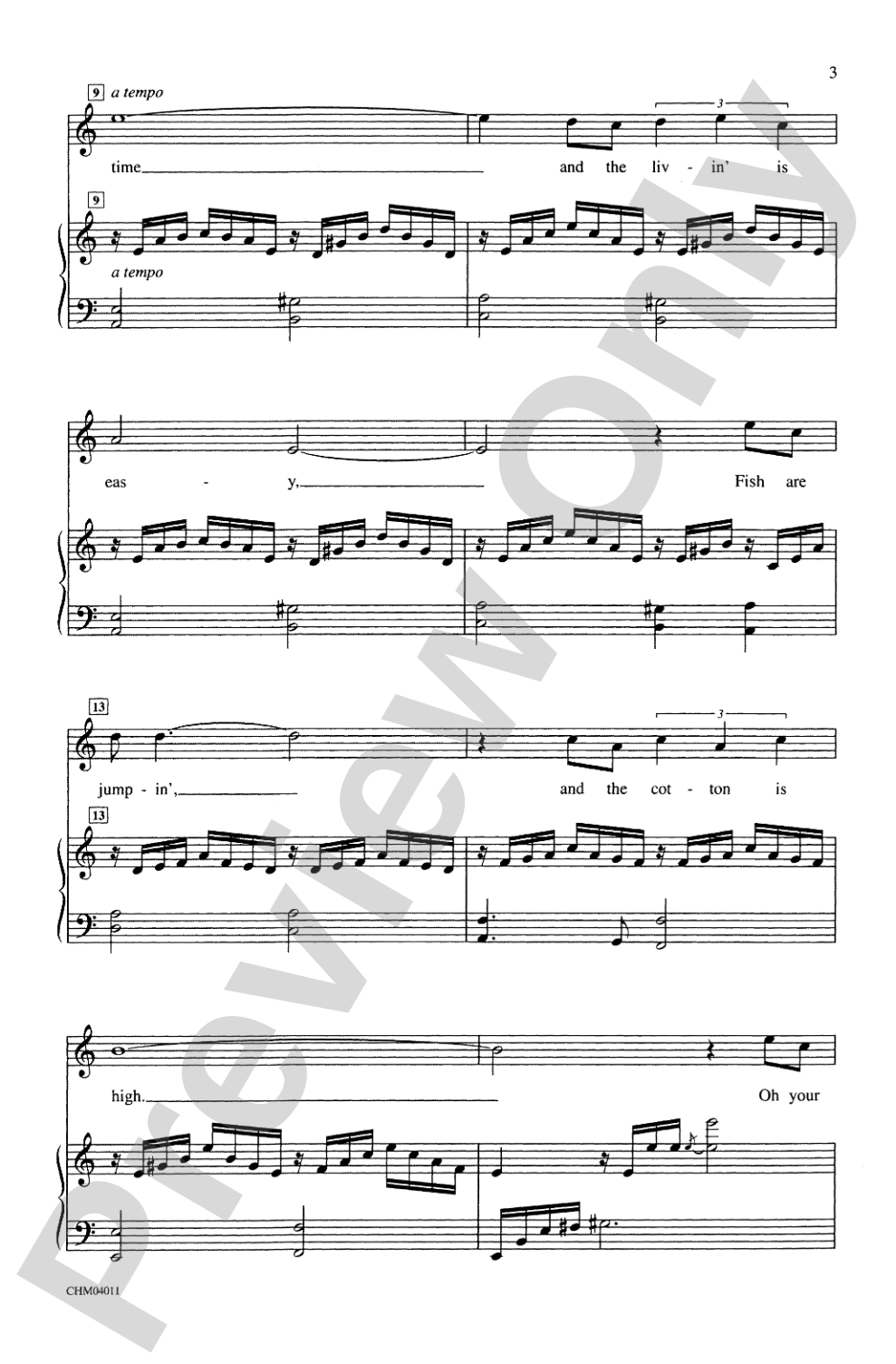
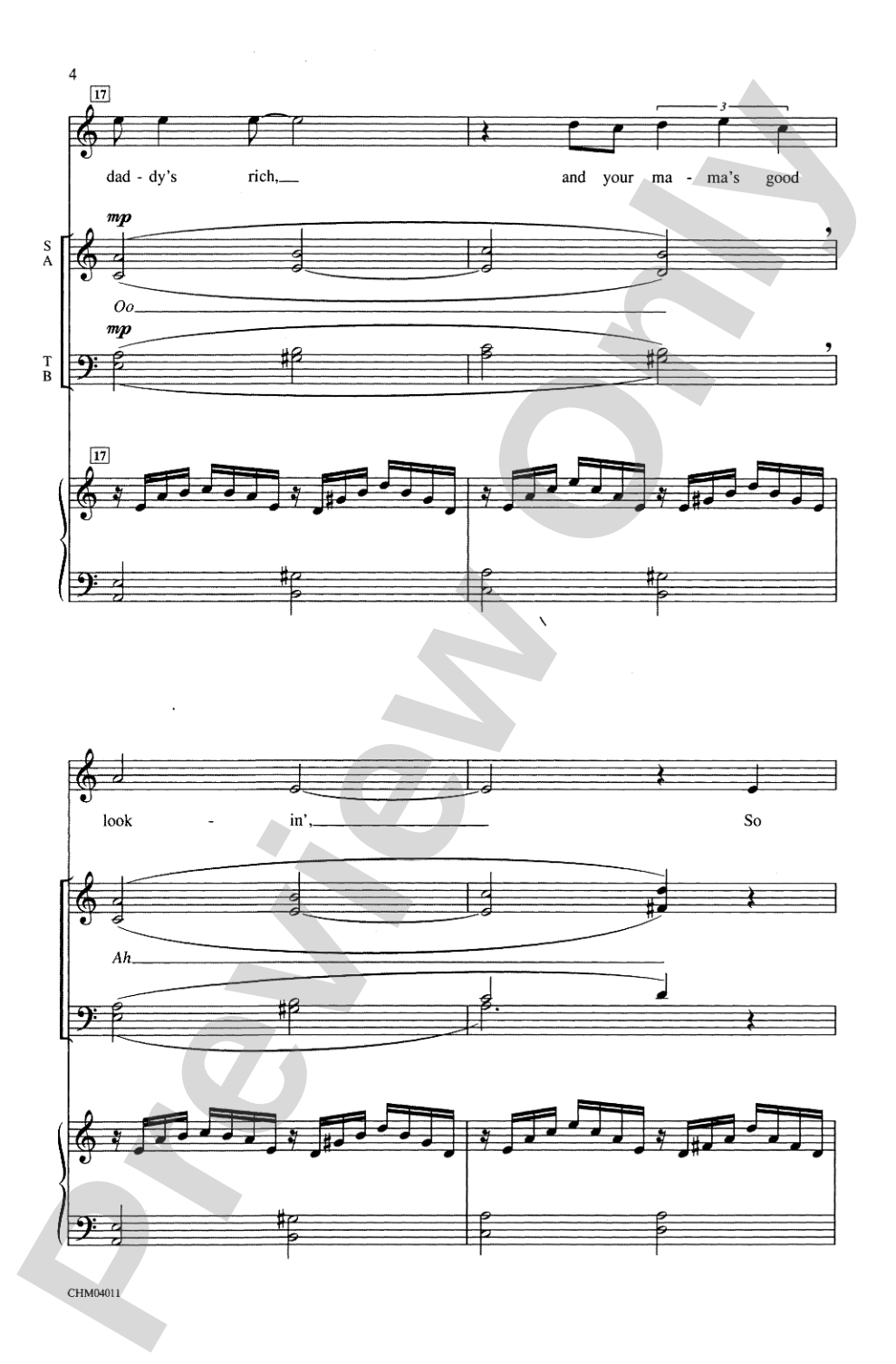

Summertime (from Porgy and Bess®): SATB and Soprano Solo Choral Octavo
From the Musical Porgy and Bess
Words and music by George Gershwin, DuBose and Dorothy Heyward, and Ira Gershwin / arr. Russell Robinson
Level: Moderate
Item: 00-PO-0002562
$2.95
Minimum order quantity: 20 copies
One moment…
Description
This Gershwin® classic from Porgy and Bess truly comes to life in this exceptional new choral arrangement by Russell Robinson. While it is not without its challenges, this Broadway concert piece is well worth the effort to prepare.


Summertime (from Porgy and Bess®): SATB and Soprano Solo Choral Octavo isn't in MakeMusic Cloud just yet...but it could be. Let us know you'd like to see it, and you'll help shape what comes next. In the meantime, start a free trial and dive into thousands of interactive titles your students can play along with today.
Request This Title
Tell us you want it.
Start Your Free Trial
Explore everything that's ready to play right now.
Sample Audio
No sample audio found.
Sample Video
No sample videos found.
Additional Details
Series:
Alfred Archive Edition: Alfred Pop Choral Series
Publisher:
Alfred Music
Page Count:
16
SKU:
00-PO-0002562
More about this title
About the Composer: George Gershwin
George Gershwin (1898-1937) bridged the worlds of classical composition and American popular music with an ease few composers have matched. His operatic masterpiece Porgy and Bess, written in collaboration with librettist DuBose Heyward and lyricist Ira Gershwin, remains one of the most performed operas in the American canon and a touchstone for music educators seeking to teach the evolution of American musical theater.
Gershwin's gift for melody and harmonic sophistication made even his popular songs substantial enough for serious concert performance. Summertime, one of the opera's most iconic numbers, demonstrates his ability to craft something simultaneously accessible and musically rich, making it ideal for choir programs aiming to introduce students to the standards of American musical theater.
Why we love this
Russell Robinson's arrangement respects the song's inherent beauty while giving it genuine choral substance. The writing distributes melodic interest across the ensemble in ways that keep all voices engaged, and the addition of a soprano solo line creates natural opportunities for featured soloists while maintaining the piece's lyrical flow. This is masterwork material that doesn't require operatic experience to sing well.
What to expect
Summertime evokes a languid, dreamy quality that sits somewhere between lullaby and blues number. There's a gentle melancholy underneath the beauty; the harmonic motion suggests both comfort and longing. The piece invites singers to find the emotional truth in simplicity.
Who it's for
This arrangement suits choirs with solid musicianship and the ability to balance transparency with warmth. It works for concert choirs, show choirs seeking sophisticated Broadway material, or any ensemble ready to tackle a piece of genuine American musical theater literature that has more depth than its popular familiarity might suggest.
How to get the most out of it
- Shape the opening unison or primary melodic line with the awareness that this tune is meant to feel unhurried and warm; let the text carry the phrasing rather than forcing mechanical regularity.
- Balance the solo voice with the harmonic support from the ensemble; the soprano soloist should project without the choir retreating into accompaniment mode.
- Attend to the harmonic color changes throughout the arrangement; Gershwin's use of jazz and blues inflections requires sensitive intonation, especially in chords with altered tones.
- Use the 16-page score to identify where Robinson builds texture and where he strips it back; these contrasts are essential to building musical architecture across the piece.
How to use it
Program this as a centerpiece for a Broadway or American songbook concert, where it can anchor a set of lighter or more energetic theater selections. Its moderate difficulty makes it accessible enough for a spring concert or festival performance without requiring the full operatic context of Porgy and Bess. The piece also works beautifully as a palette-cleanser between more demanding contemporary works or classical fare.
Skills your students will build
- Legit jazz and blues-inflected harmony and intonation
- Balancing melodic and harmonic textures within an ensemble
- Performing with a featured solo voice while maintaining ensemble cohesion
- Interpreting American musical theater material with stylistic authenticity
- Phrasing lyrical lines with sensitivity to both text and harmonic color