Summer Holiday Cover Image

Summer Holiday: String Orchestra Conductor Score

$7.00 USD
Sale price  $7.00 USD Regular price 
Skip to product information
Summer Holiday Cover Image

Summer Holiday: String Orchestra Conductor Score

By Loreta Fin

Grade: 1.5

Item: 76-37449S

$7.00
Shipped

One moment…

Description
Written in G Major, this piece features syncopated rhythms and retakes. Violins and violas are required to use low 2nd fingers. 1st violins use high 3rds, while violas need to play low firsts for D-sharps. As the rhythms are quite repetitive, it is an excellent vehicle for introducing these new finger patterns. It has a bright, happy feel and is in 4/4 time. (2:02)

Summer Holiday: String Orchestra Conductor Score isn't in MakeMusic Cloud just yet...but it could be. Let us know you'd like to see it, and you'll help shape what comes next. In the meantime, start a free trial and dive into thousands of interactive titles your students can play along with today.

Sample Pages

Sample Audio
No sample audio found.
Sample Video
Additional Details
Series: Wilfin String Orchestra: Young String Ensemble Series
Publisher: Wilfin Music
Page Count: 8
UPC: 038081419305
SKU: 76-37449S

More about this title

About the Composer: Loreta Fin
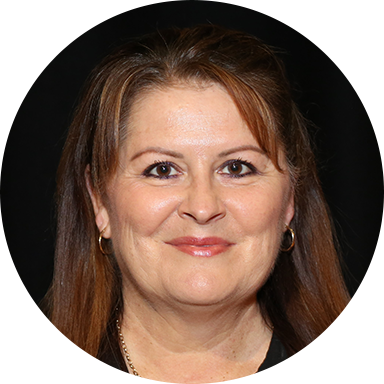
Loreta Fin

Loreta Fin AM is an Australian violist and string educator whose career spans performance, teaching, and composition. A graduate of the Sydney Conservatorium of Music and former first violinist with the Sydney Youth Orchestra, she spent over 25 years as Principal Viola with the Queensland Pops Orchestra while maintaining an active chamber music practice. Since 1993, she has directed strings at Somerville House School in Brisbane, building a reputation as both a compelling educator and sought-after adjudicator at competitions across Australia and North America.

Fin has composed more than 100 works for string orchestra, all published internationally, and was instrumental in the Australian Strings Association for three decades, serving as both state and national president. Her contributions to music education earned her a Queensland State Award in 2009 and a National Award for Services to Music and String Teaching. She currently examines for the Australian Music Examinations Board, advises on strings curriculum at the state level, and regularly conducts the Honours Ensembles Programs in Brisbane. In 2017, she released a beginner string series for all orchestral instruments; her work has since expanded internationally to include conducting projects in Malaysia.

Why we love this

Fin designs pedagogical purpose into every measure, and this piece proves it. She uses bright, syncopated rhythms and repetitive figures to anchor new finger patterns without burying students in complex musical content. The G Major tonality and straightforward 4/4 pulse give you a solid foundation for targeting left-hand technique while students experience success immediately.

What to expect

Sunny and propulsive, with the kind of optimism that makes rehearsals feel light rather than laborious. The syncopated rhythms give it forward momentum, while the G Major brightness suggests warm afternoons and outdoor concerts. Students hear themselves making music that feels intentional and complete, not like an exercise.

Who it's for

This works beautifully for Grade 1.5 ensembles ready to expand their left-hand vocabulary. String directors looking to introduce lower 2nd finger positions and higher registers will find a supportive context here; the musical narrative is accessible enough that technique doesn't overshadow the joy of playing.

How to get the most out of it

  • Isolate the syncopated figures in rehearsal separate from the melodic material. Once the rhythm sits securely, add the pitch, and the piece opens up naturally.
  • Spend extra time on the viola transition between low first finger D-sharps and the surrounding passage work. Mark these shifts clearly in parts so players know exactly where the technique change occurs.
  • Balance the 1st violin high 3rds carefully; they should sing without dominating. Remind players that these higher positions are meant to add brightness, not force the texture.

How to use it

Program this early in your spring or early summer concerts when you want a crowd-pleaser that doesn't demand technical depth beyond your ensemble's current reach. It pairs well alongside more lyrical Grade 1 or 1.5 pieces, giving your program shape and variety. The short runtime (just over two minutes) makes it ideal filler or a confident closer for young ensemble showcases.

Skills your students will build

  • Low 2nd finger positions on violins and violas
  • High 3rd positions on 1st violins
  • Low first finger D-sharps on violas
  • Syncopated rhythmic reading in 4/4
  • Bow coordination across rhythmically active passages

You May Also Like