
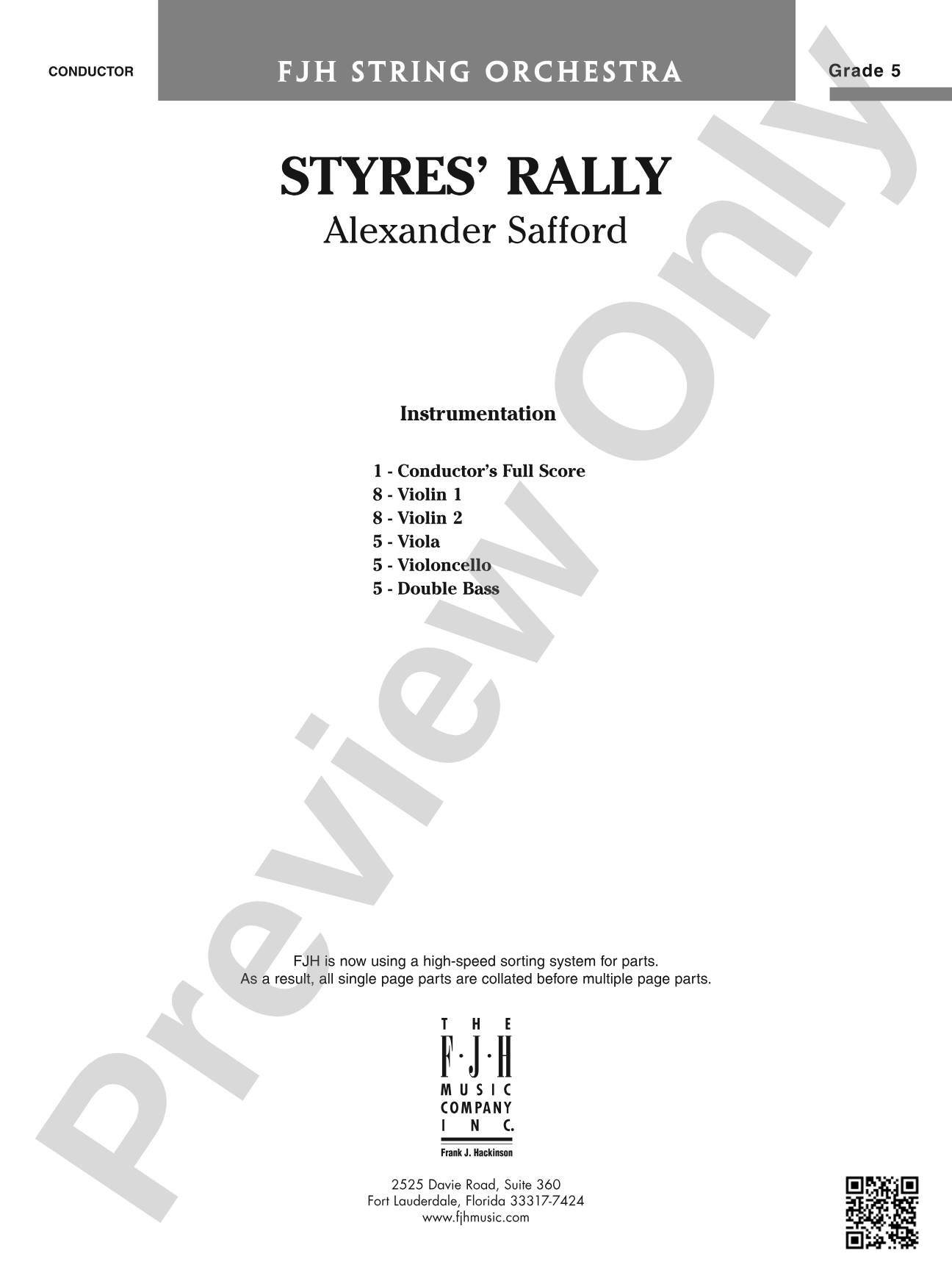
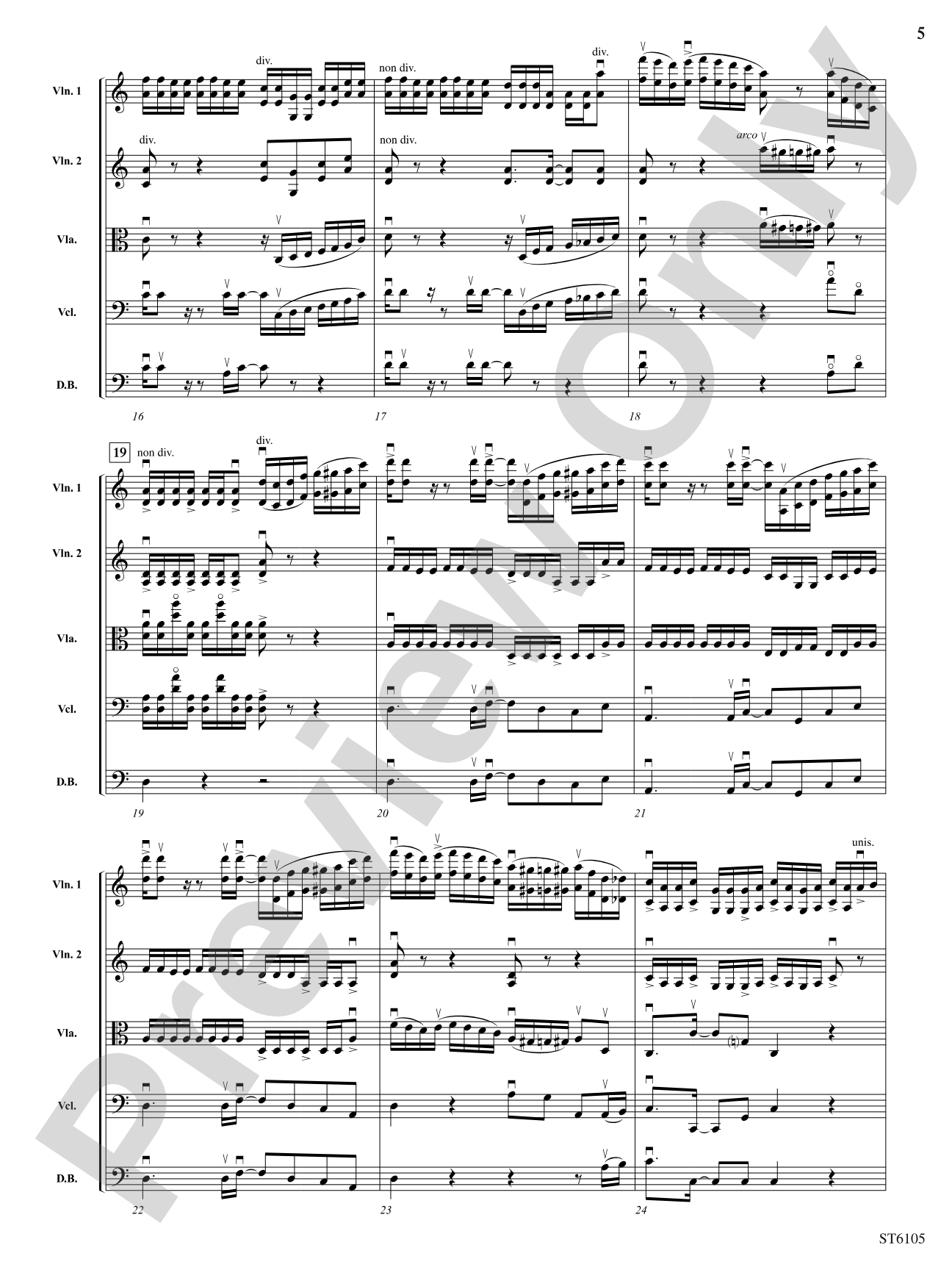
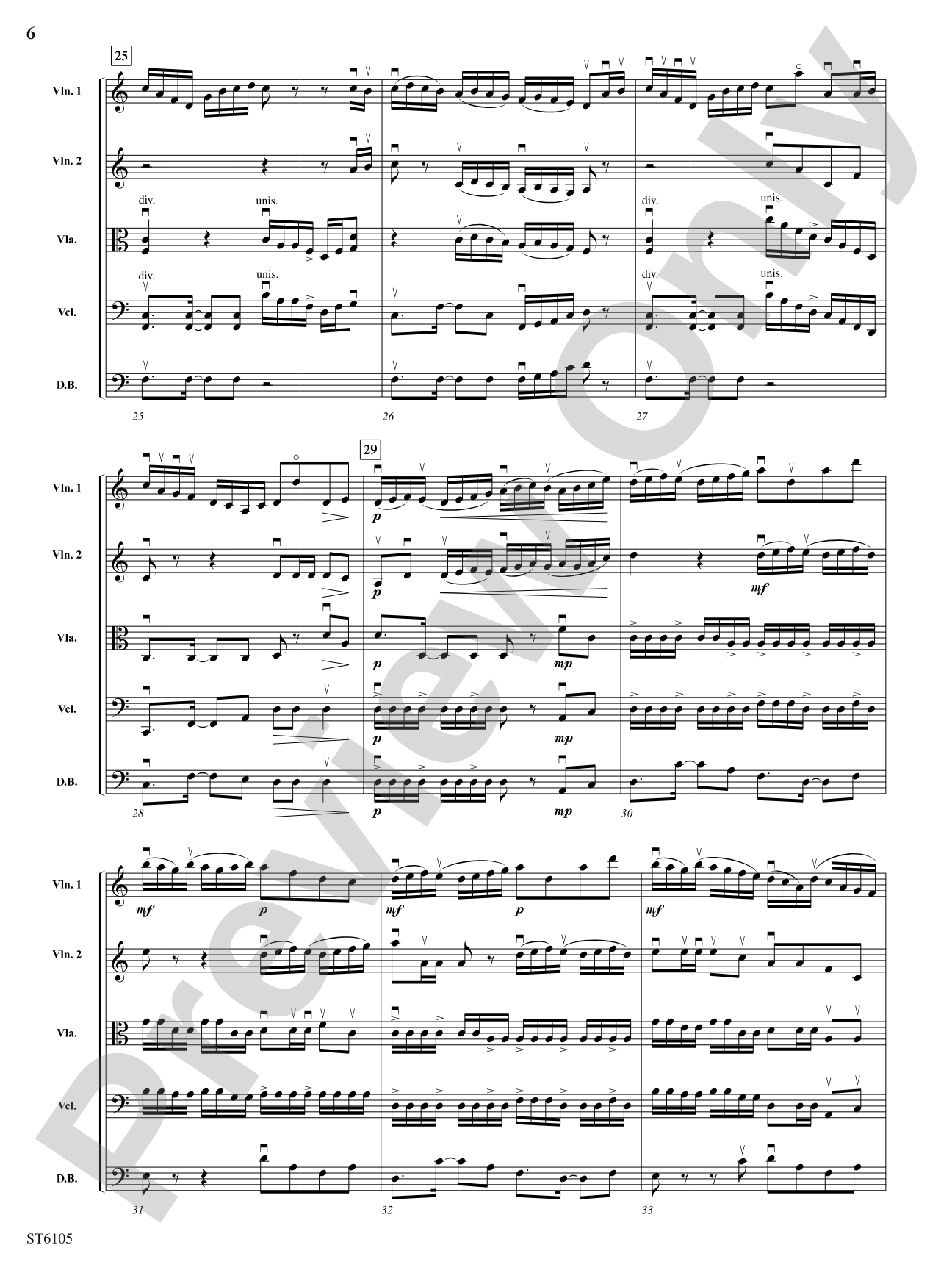
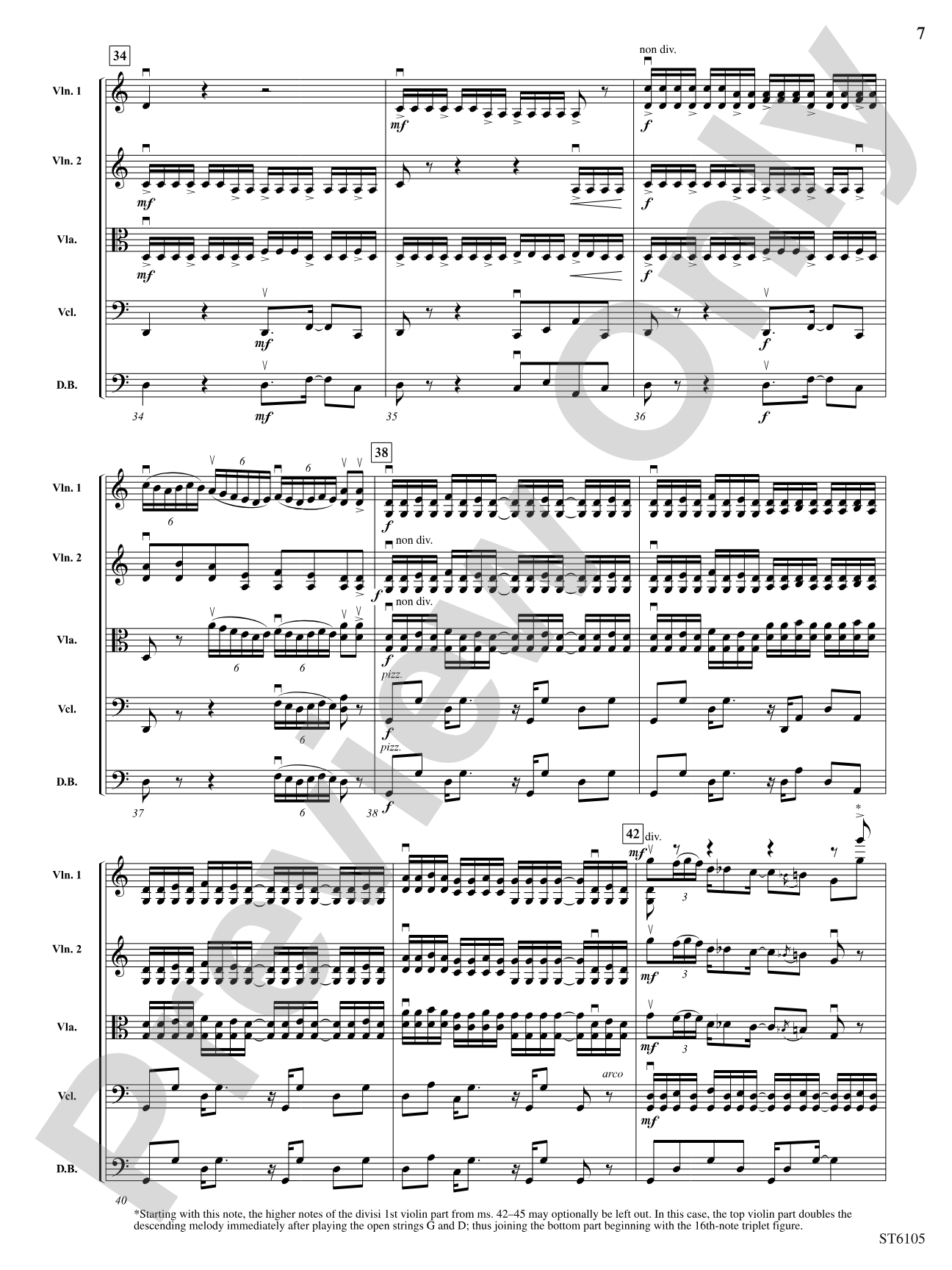
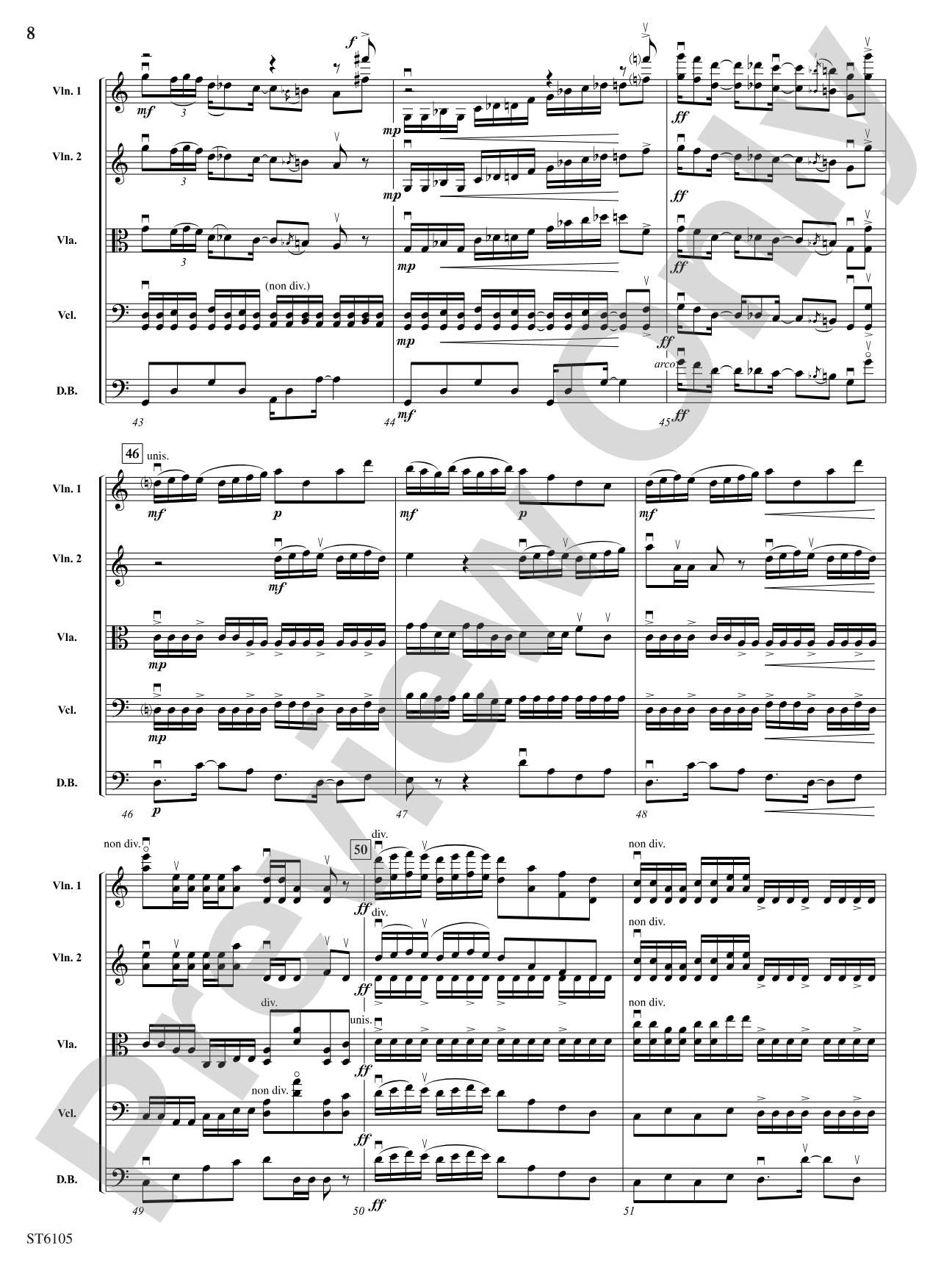

Styres' Rally: String Orchestra Conductor Score & Parts
By Alexander Safford
Grade: 5
Item: 98-DST6105

$55.00
Pickup currently not available
Buy Extra Parts (Digital PDF Download)
| Product | Price | Quantity |
|---|---|---|
| Styres' Rally: Score | $5.00 | |
| Styres' Rally: Violin 1 | $7.00 | |
| Styres' Rally: Violin 2 | $7.00 | |
| Styres' Rally: Viola | $7.00 | |
| Styres' Rally: Violoncello | $7.00 | |
| Styres' Rally: Double Bass | $7.00 |
Parts Added to Cart!
Description
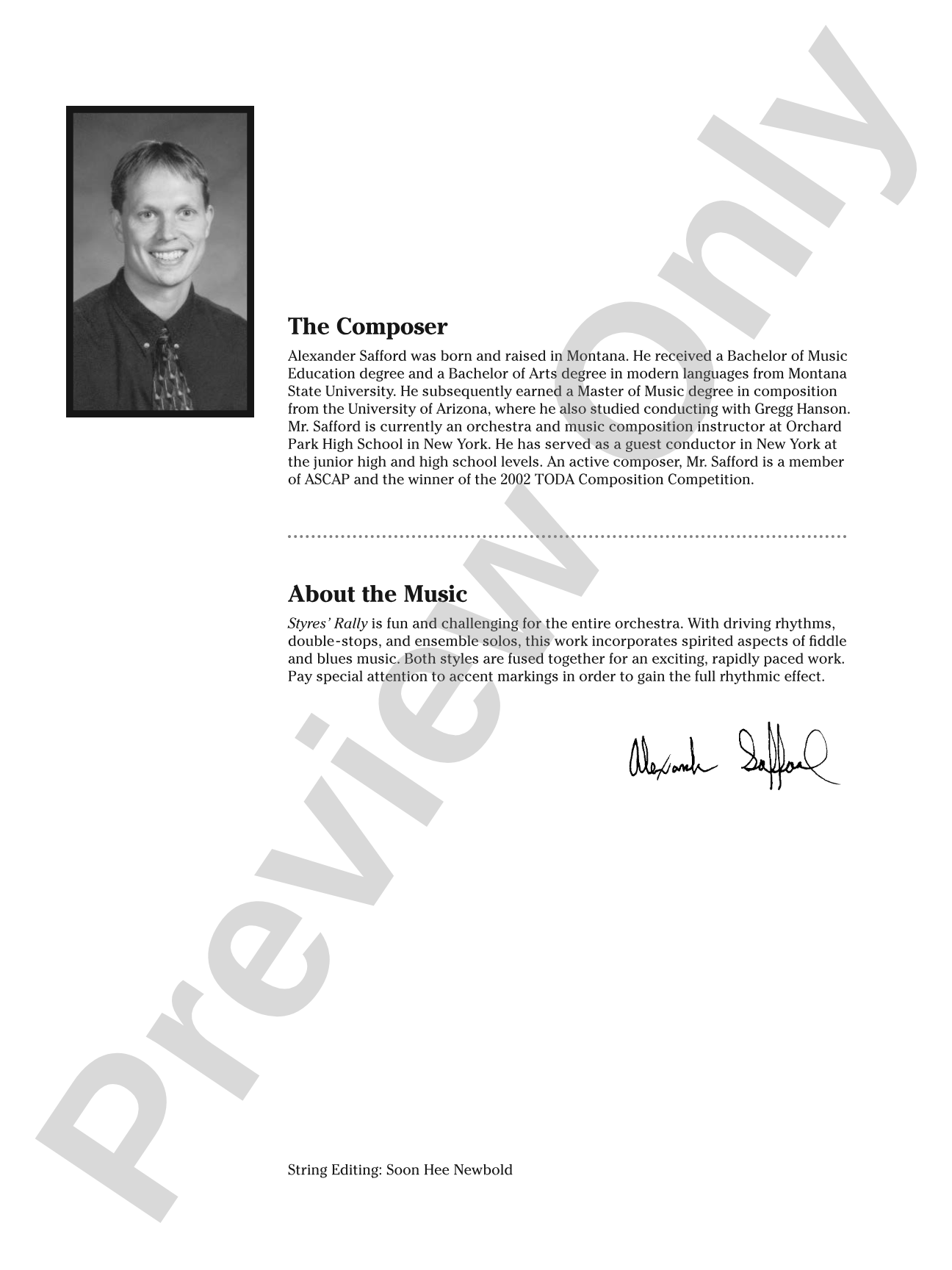
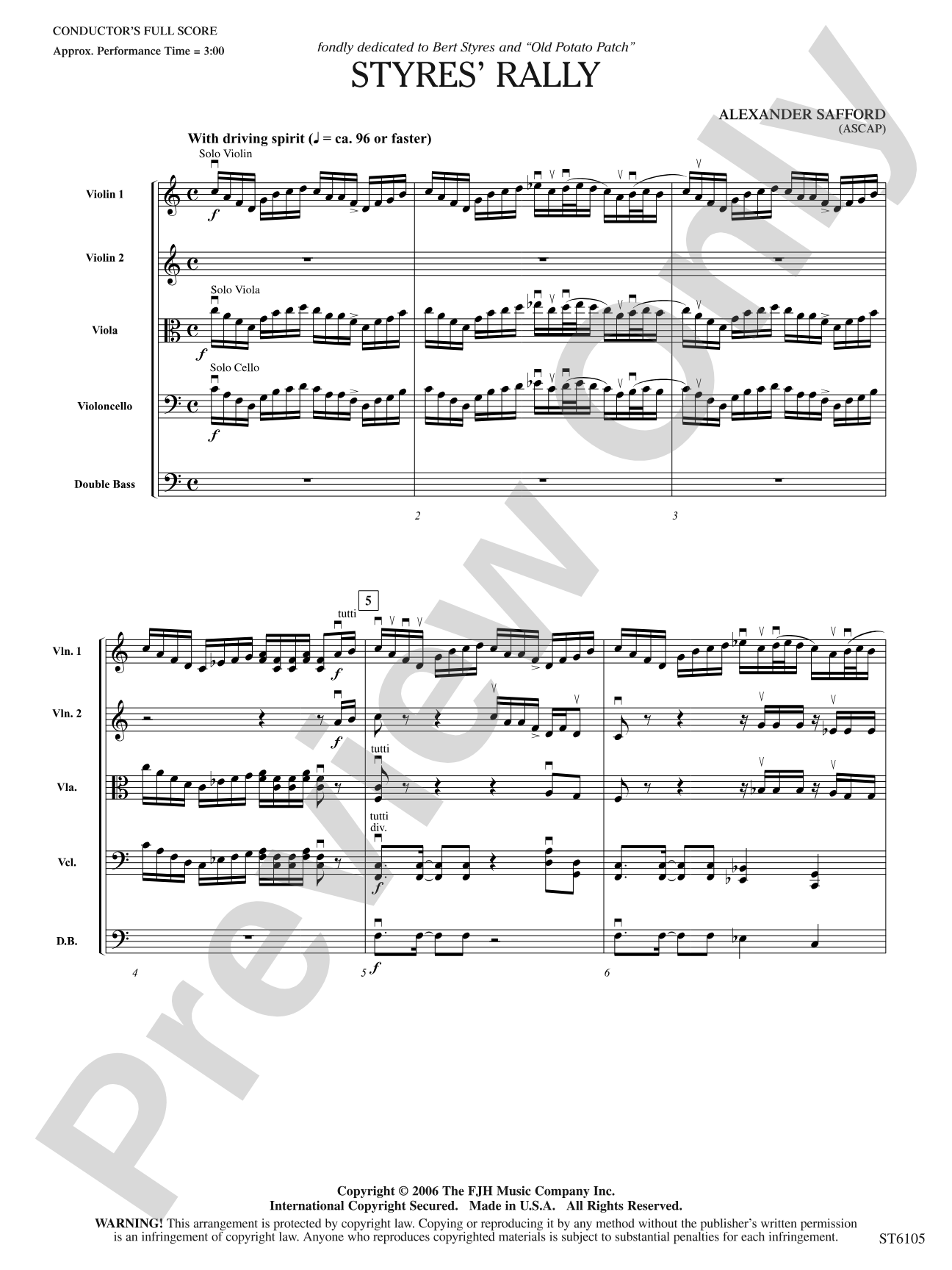
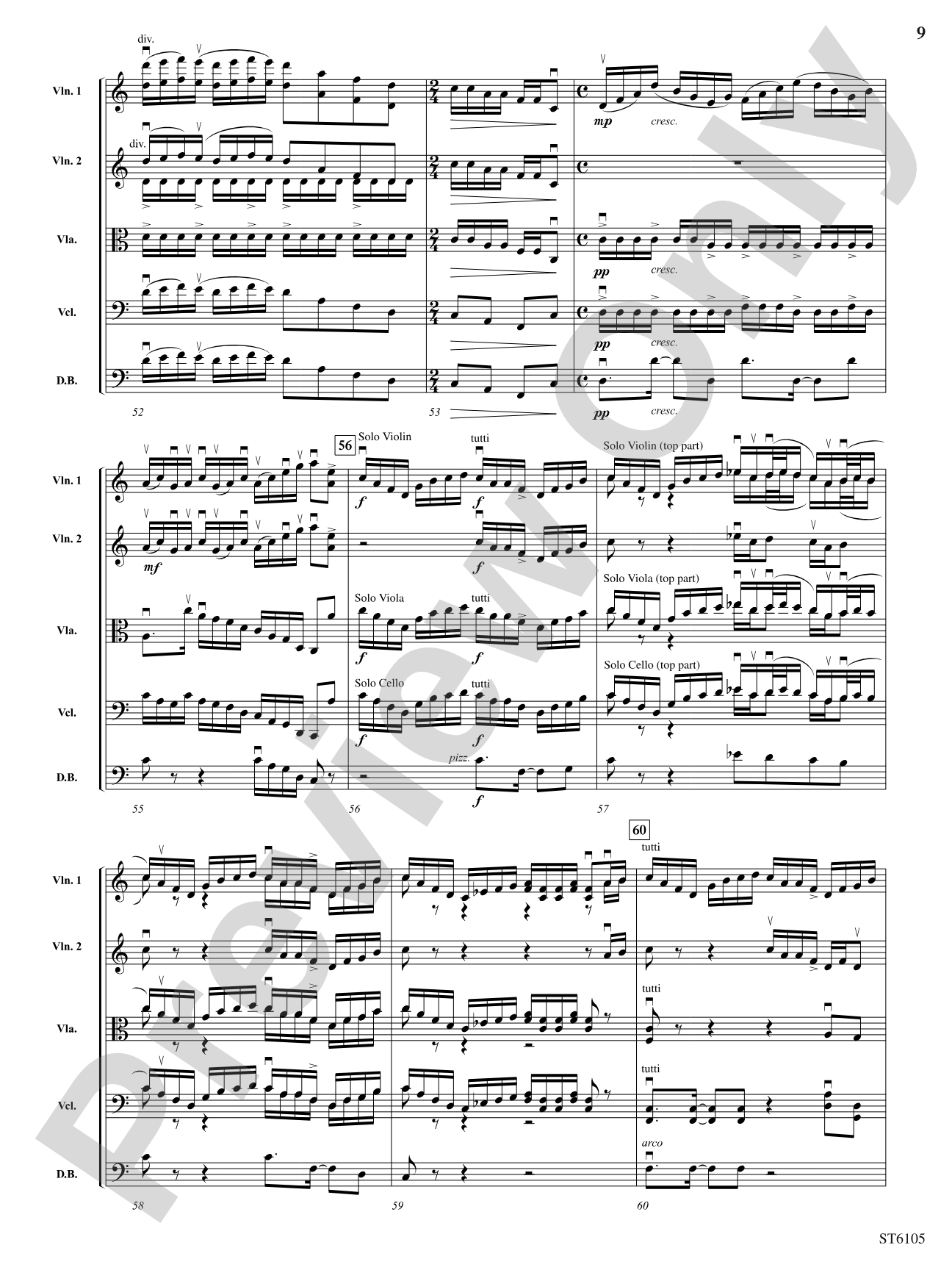
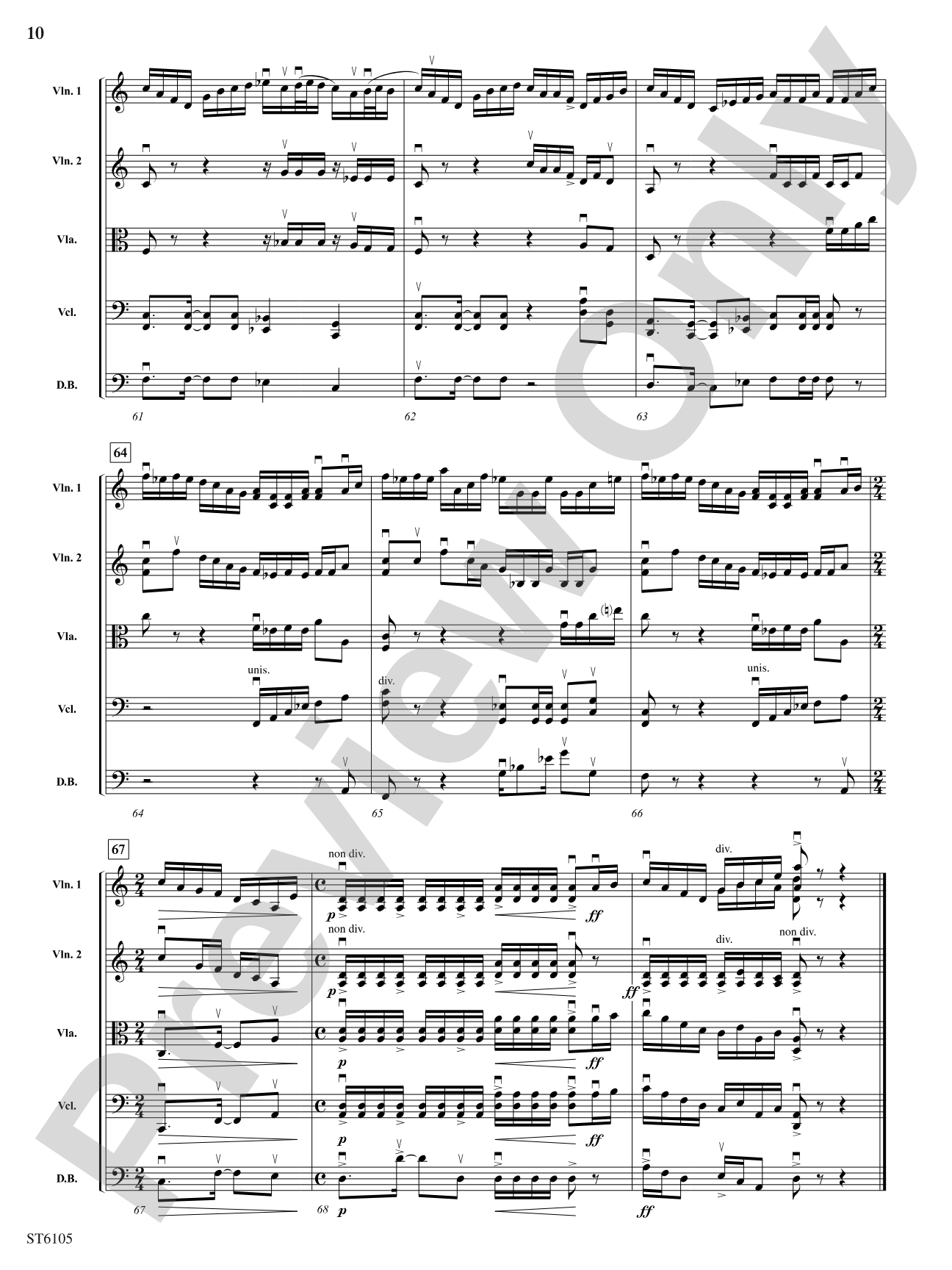
Styres' Rally is fun and challenging for he entire orchestra. With driving rhythms, double-stops, and ensemble solos, this work incorporates spirited aspects of fiddle and blues music. Both styles are fused together for an exciting, rapidly paced work.


Don't just read it, hear it, play along with it, and watch your students grow with it. In MakeMusic Cloud, Styres' Rally: String Orchestra Conductor Score & Parts comes alive with professional accompaniment, adjustable tempo, and built-in practice tools that turn solo practice into real progress.
Open in the Player
Jump straight in and assign it today.
Start Your Free Trial
Open this title and explore the full library in minutes.
Sample Audio
1
Audio File
--:--
0:00
0:00
Sample Video
No sample videos found.
Additional Details
Series:
FJH String Orchestra
Publisher:
The FJH Music Company, Inc.
SKU:
98-DST6105
More about this title
Why we love this
Safford writes for string orchestras with genuine understanding of what makes young players excited to come to rehearsal. The fiddle idioms and blues inflections feel natural to the ensemble rather than tacked on, and the pacing moves fast enough that every section gets moments to shine without anyone sitting idle.
What to expect
Styres' Rally charges forward with infectious momentum, blending the scrappy, blue-note swagger of fiddle music with blues grooves that sit comfortably in string textures. The piece feels less like a classical showpiece and more like an ensemble discovering its own voice, all driving rhythms and playful musical conversations.
Who it's for
String orchestras at the Grade 5 level looking for repertoire that challenges players technically while keeping the energy high and the appeal immediate. Directors programming contests or festivals will find a piece that demonstrates musicianship and control without sacrificing fun.
How to get the most out of it
- Establish the rhythmic drive early in rehearsals. The work's energy depends on crisp articulation and locked pulse, especially in the lower strings where the groove lives.
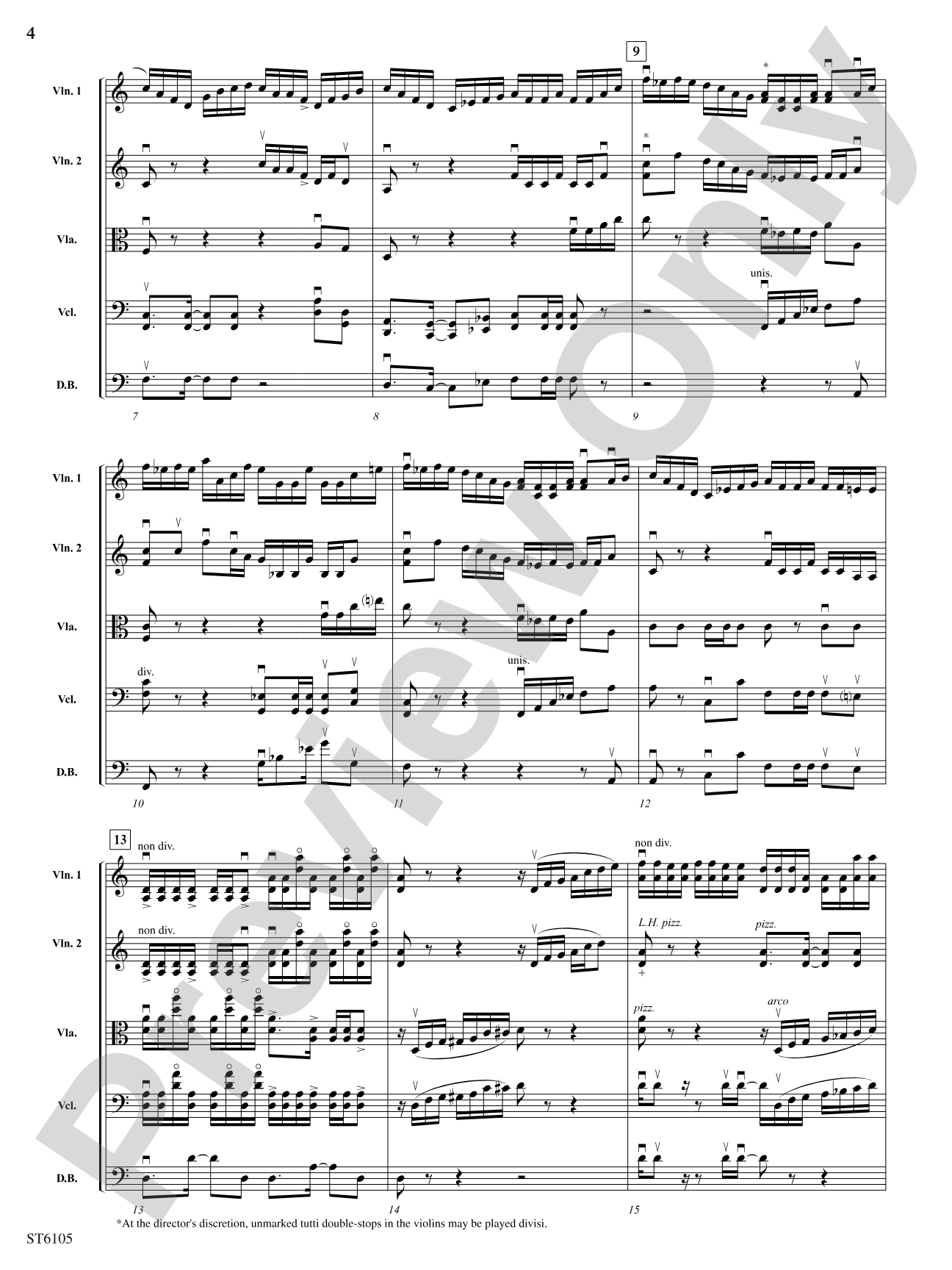
- Isolate the double-stop passages for intonation work. Safford uses them expressively, so accuracy here lifts the entire sound.
- Balance the ensemble solos carefully. Each section needs enough confidence to step forward, but the overall texture should remain cohesive rather than fragmenting into spotlight moments.
- Let the fiddle and blues vocabularies inform your interpretive choices. Slides, rhythmic flexibility within the pulse, and a slightly grittier tone color than classical playing will serve this piece well.
How to use it
This works perfectly as a concert opener or as a festival entry that establishes your group's range beyond traditional classical fare. Its accessible idiom pairs well with standard repertoire, showing audiences that string orchestra can command a stage with contemporary energy.
Skills your students will build
- Double-stop intonation and technique
- Blues and fiddle articulation styles
- Rhythmic precision and ensemble lock
- Sectional balance in ensemble solos
- Style-specific interpretation