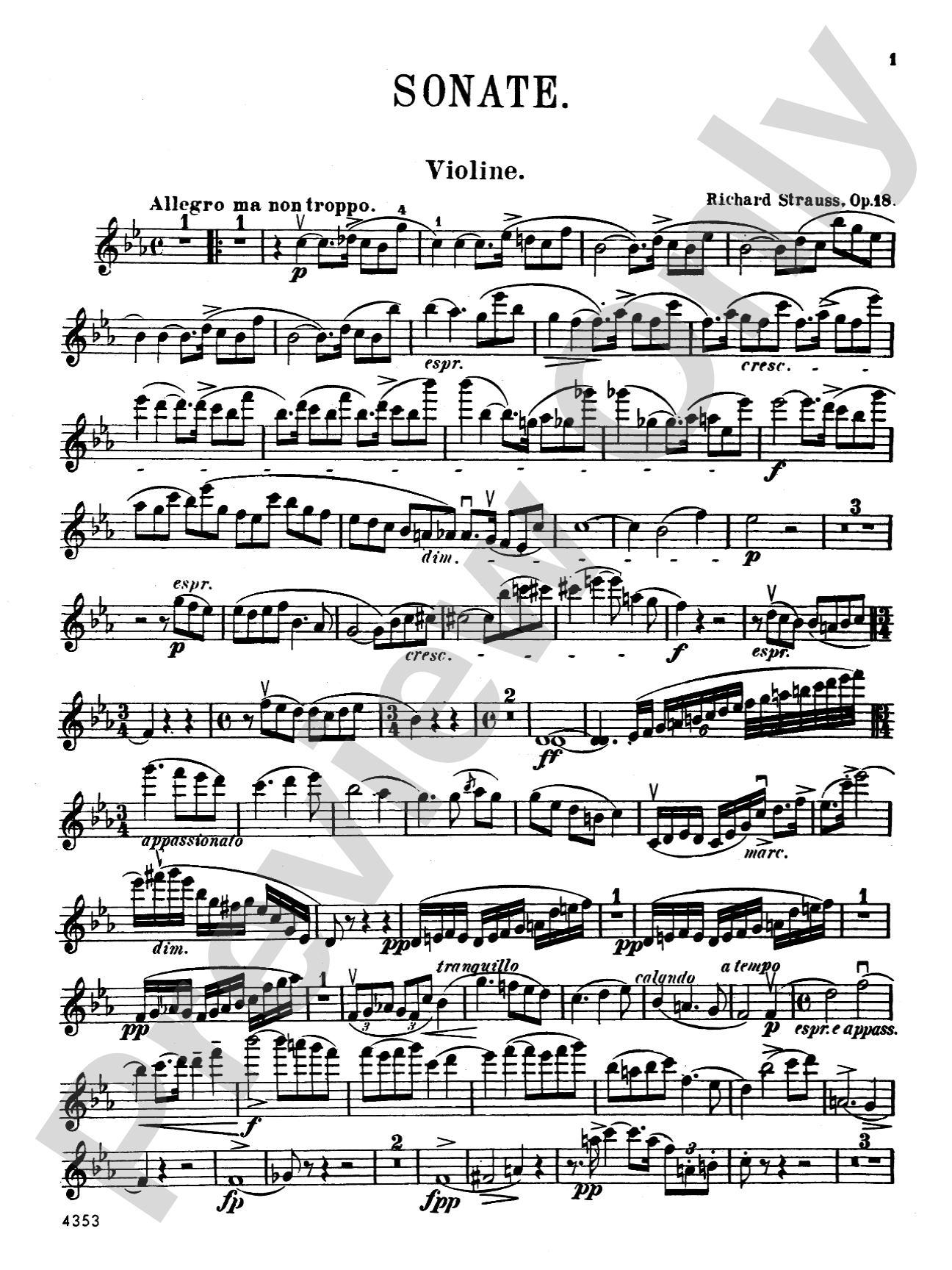
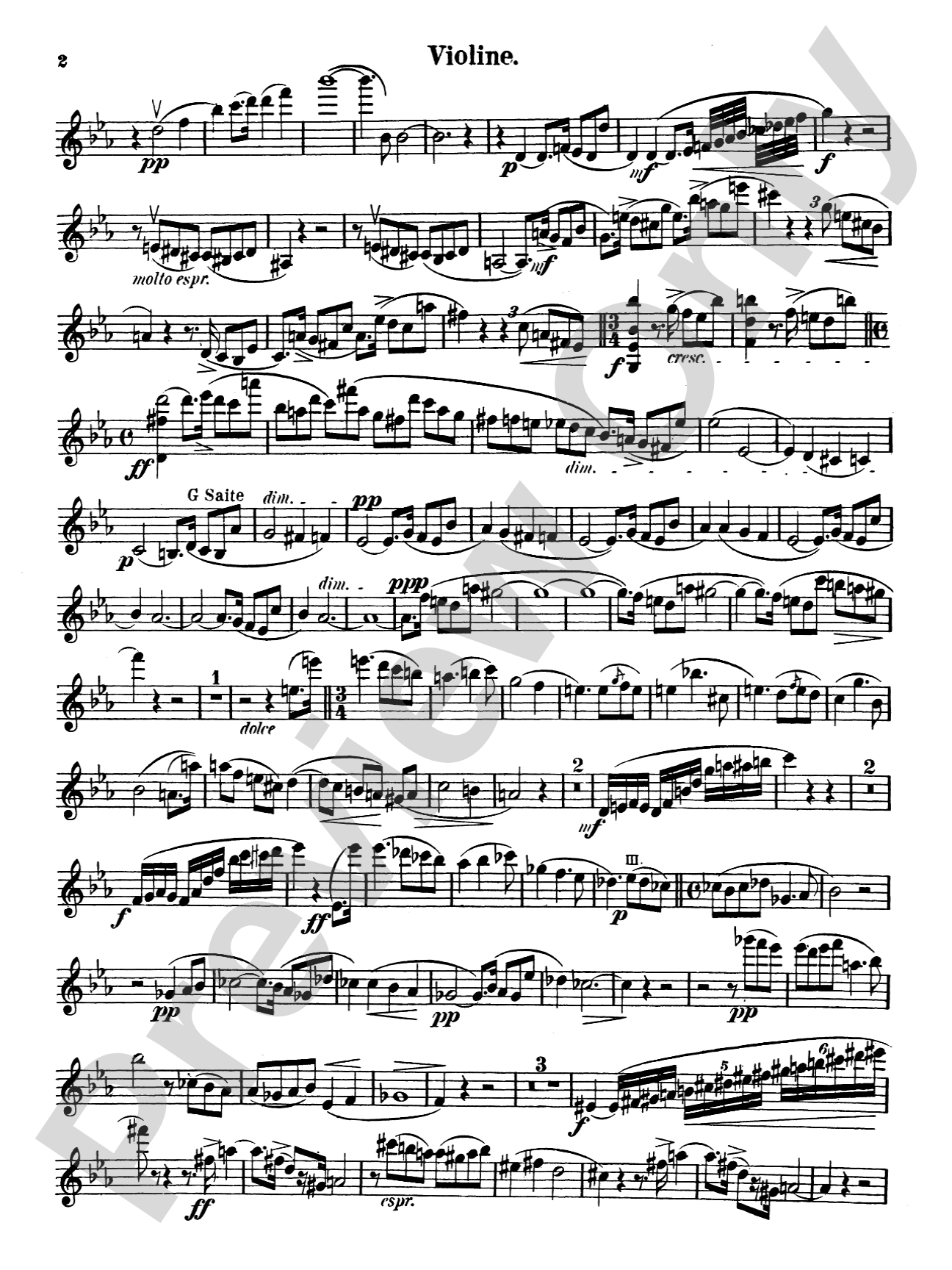
Richard Strauss (1864-1949) stands as one of the most significant orchestral and operatic composers of the late 19th and early 20th centuries. Born in Munich, he built a career that spanned conducting, composing, and advocating for contemporary music, creating works that expanded the harmonic language and structural possibilities of the Romantic tradition. His violin sonata reveals the same gift for lyrical melody and sophisticated harmony that defines his larger orchestral works, making it an essential piece for violinists seeking to understand the transition from Romanticism into the modern era.
Stauss's output includes nearly 150 published works across opera, orchestral music, chamber music, and songs. He served as conductor of major opera houses and concert halls throughout Europe, championing new music while remaining rooted in the classical traditions of Mozart and Brahms. His chamber works, though sometimes overshadowed by his operatic fame, demonstrate his mastery of intimate instrumental writing and continue to reward performers with rich musical substance.