

Stormy Weather: SAB Choral Octavo
Music by Harold Arlen and Ted Koehler / arr. Jay Althouse
Item: 00-PO-0004501
$2.25
Minimum order quantity: 20 copies
One moment…
Description
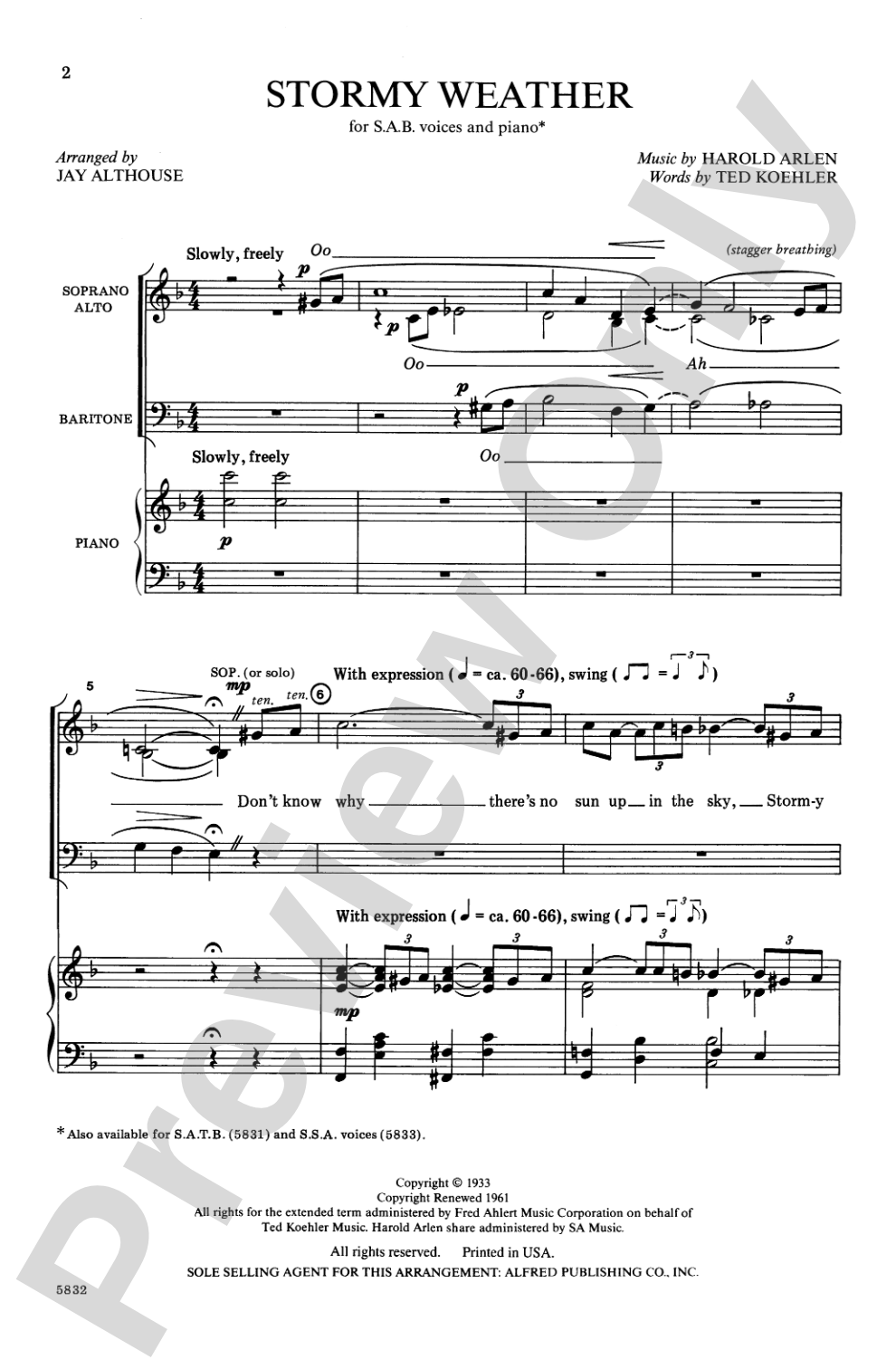
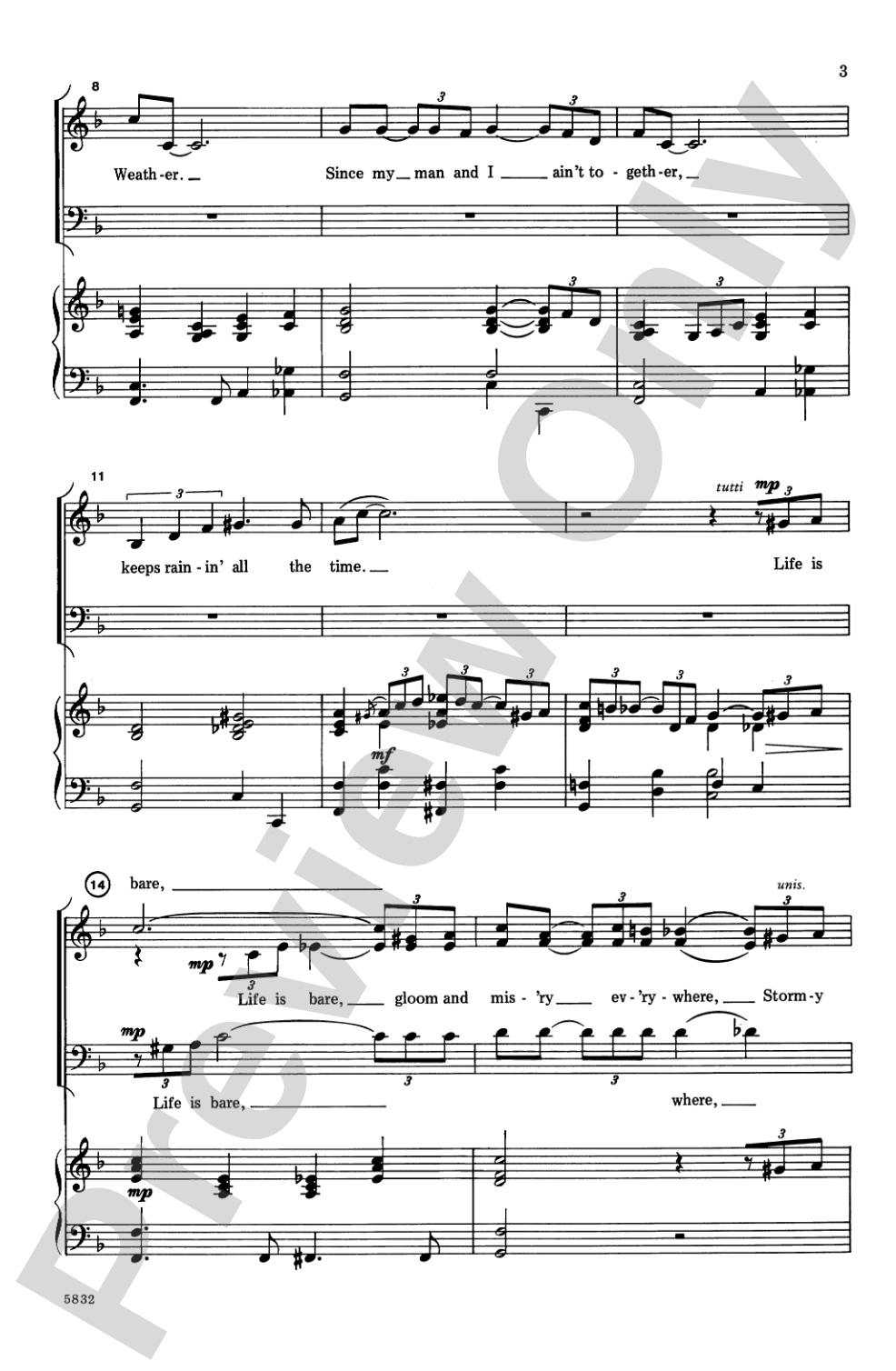
An exceptional arrangement of an American standard in a classic, concert-choral style. Jay's arrangement opens and closes with a brief, lush, a cappella setting. In between are beautiful harmonies and great choral writing to help your singers sound their best. It's a sensitive "concert" arrangement suitable for large choirs or small ensembles. Introduce your singers to one of our great American songs with this superb choral work.


Stormy Weather: SAB Choral Octavo isn't in MakeMusic Cloud just yet...but it could be. Let us know you'd like to see it, and you'll help shape what comes next. In the meantime, start a free trial and dive into thousands of interactive titles your students can play along with today.
Request This Title
Tell us you want it.
Start Your Free Trial
Explore everything that's ready to play right now.
Sample Audio
1
Audio File
--:--
0:00
0:00
Sample Video
No sample videos found.
Additional Details
Series:
Alfred Archive Edition: Alfred Choral Designs
Publisher:
Alfred Music
Page Count:
8
SKU:
00-PO-0004501
More about this title
About the Composer: Harold Arlen
Harold Arlen (1905-1986) composed some of the most enduring melodies in American popular music, with a gift for writing songs that felt both sophisticated and instantly singable. His partnership with lyricist Ted Koehler in the 1930s produced a string of standards that have become central to the American songbook, many of them now fixtures in choral repertoire because of their emotional depth and harmonic richness.
Arlen's music education legacy rests on songs that challenge singers to phrase with maturity while remaining accessible to ensemble singers at all levels. His melodies invite interpretation without requiring virtuosity, making them ideal for developing musicianship in young and developing choirs.
Why we love this
Jay Althouse's arrangement honors the emotional core of this American standard while giving SAB choirs a genuine concert piece rather than a simplified version. The framing of a cappella sections at the beginning and end creates dramatic shape, and the three-part writing in between sits naturally for mixed voices without sacrificing harmonic interest.
What to expect
The piece wraps you in warm, sophisticated harmony from the first notes. There's a cinematic quality to the sound, with the opening and closing a cappella moments creating intimate bookends around the fuller choral writing in the middle. The emotional arc feels both intimate and grand, like a moment shared with an entire audience.
Who it's for
This arrangement works equally well for established choral programs building concert programs and smaller ensembles looking to add repertoire with genuine musical substance. The SAB voicing makes it accessible for mixed choirs with developing alto sections, while the classic arrangement satisfies singers and audiences who know and love this standard.
How to get the most out of it
- Shape the opening a cappella section with clear phrase direction; the lush harmonies need ensemble balance, so rehearse the blend before adding any accompaniment.
- Treat the middle section's "beautiful harmonies" as opportunities for expression rather than technical exercises. Encourage singers to find the emotional arc within each phrase.
- Support the final a cappella return by securing solid intonation and vertical alignment during sectional rehearsals; this closing moment carries the weight of the arrangement.
- Use the eight-page length to your advantage in rehearsal. With only eight pages, you can focus on interpretive refinement rather than memorization.
How to use it
This works beautifully as a standalone feature on a concert of American standards or as a bridge between classical and contemporary repertoire. Its eight-page length makes it ideal for programming alongside shorter works, or as a moment of contrast within a longer choral concert.
Skills your students will build
- Blend and intonation in a cappella singing
- Phrasing with emotional intention rather than technical display
- Reading three-part mixed voicing
- Sustaining legit vocal production across longer phrases
- Interpreting standards with respect for the original melody while owning the arrangement