
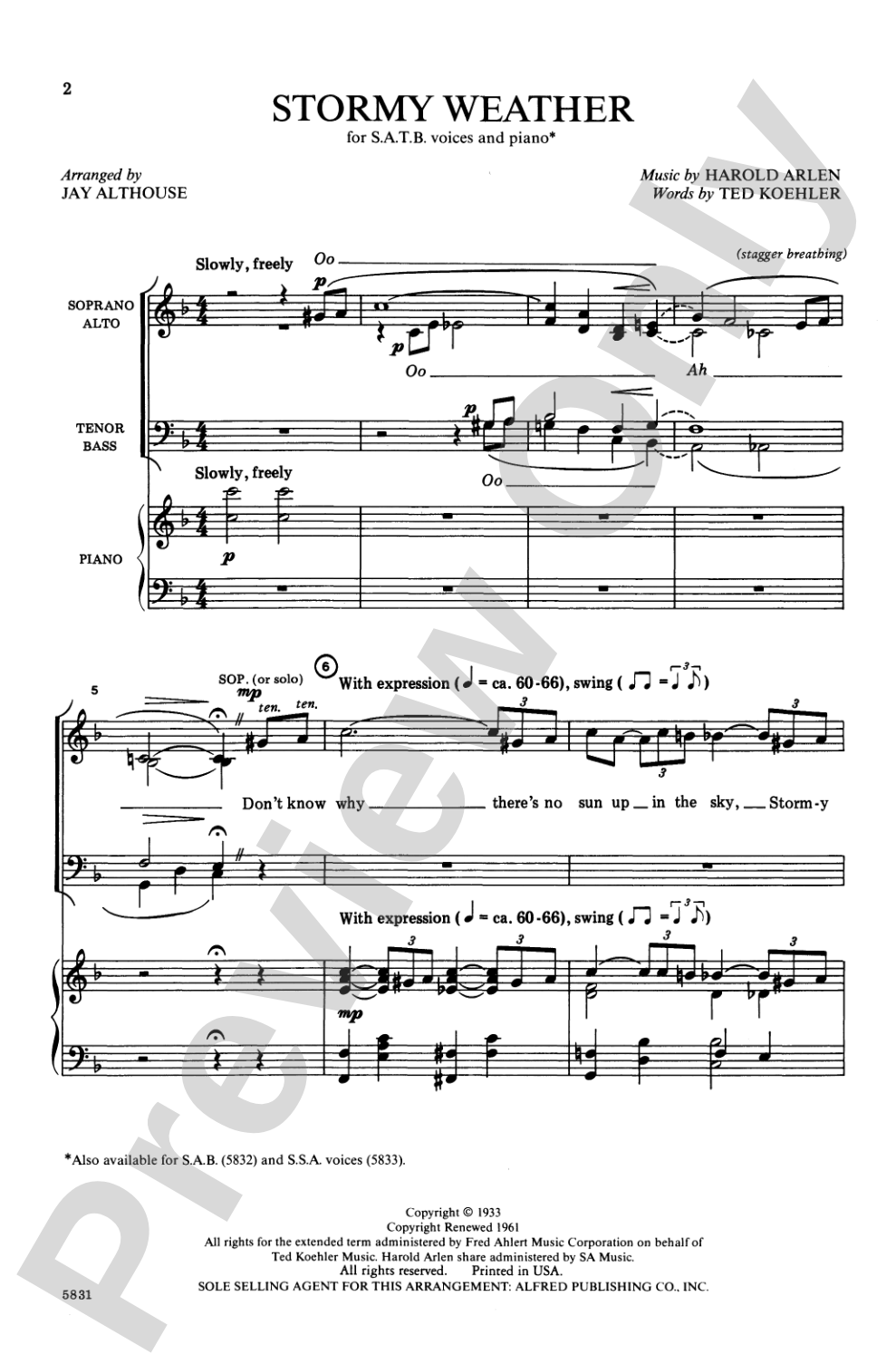
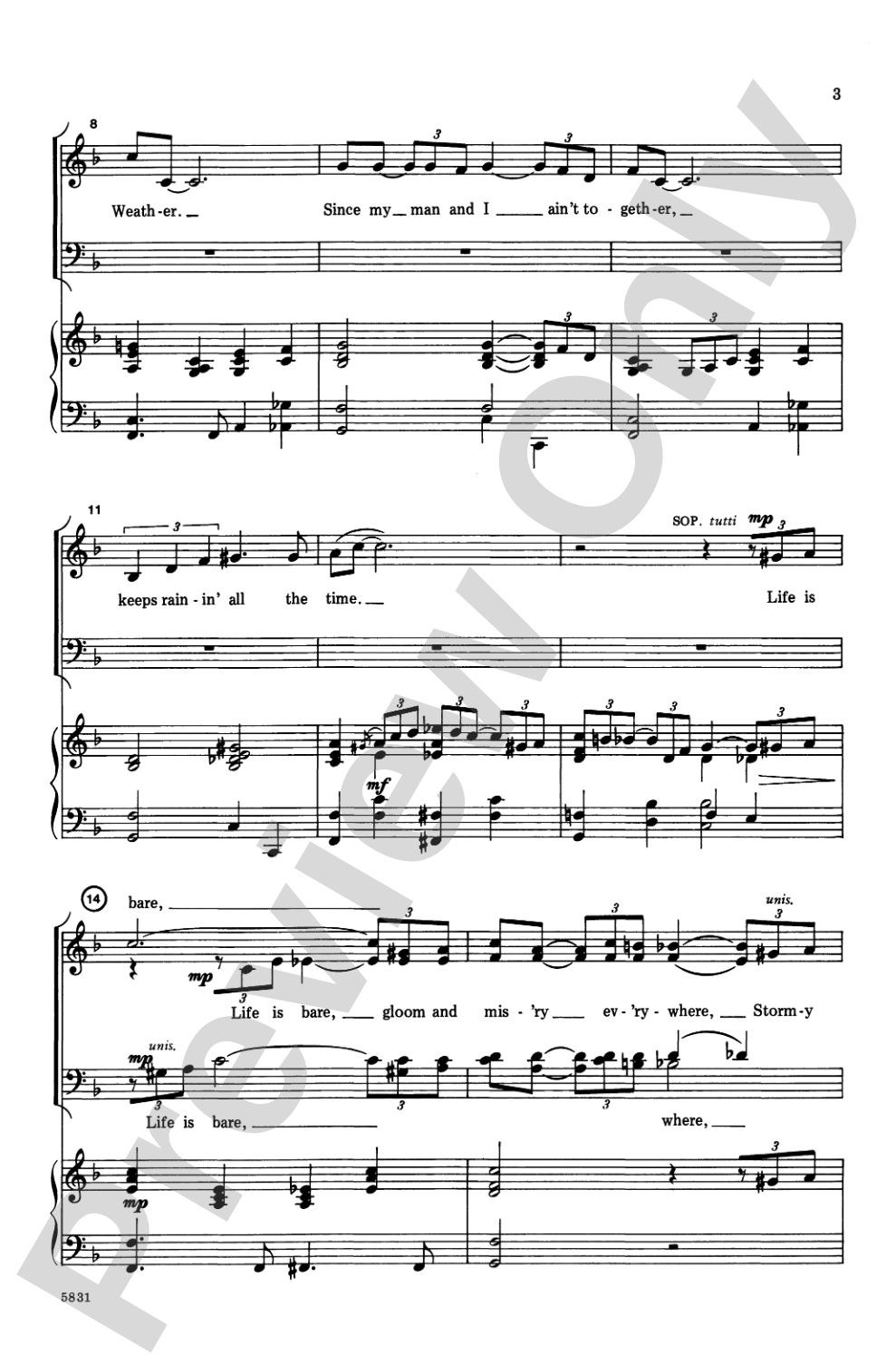

Stormy Weather: SATB Choral Octavo
Music by Harold Arlen and Ted Koehler / arr. Jay Althouse
Item: 00-PO-0004500
$2.25
Minimum order quantity: 20 copies
One moment…
Description
An exceptional arrangement of an American standard in a classic, concert-choral style. Jay's arrangement opens and closes with a brief, lush, a cappella setting. In between are beautiful harmonies and great choral writing to help your singers sound their best. It's a sensitive "concert" arrangement suitable for large choirs or small ensembles. Introduce your singers to one of our great American songs with this superb choral work.


Discover MakeMusic Cloud: thousands of interactive titles your students can play along with today.
Sample Audio
1
Audio File
--:--
0:00
0:00
Sample Video
No sample videos found.
Additional Details
Series:
Alfred Archive Edition: Alfred Choral Designs
Publisher:
Alfred Music
Page Count:
8
SKU:
00-PO-0004500
More about this title
About the Composer: Harold Arlen
Harold Arlen (1905–1986) composed some of the most memorable melodies in American popular song, working primarily in theater and film. His gift for crafting singable, emotionally resonant lines made his music instantly appealing to audiences and vocalists alike, and his songs have remained central to the American songbook for nearly a century.
Arlen's collaboration with lyricist Ted Koehler produced several standards, including "Stormy Weather," which became an iconic piece associated with Lena Horne. For choral directors, Arlen's melodies offer the rare gift of being both familiar to audiences and deeply rewarding to arrange and perform, providing singers with material that sits naturally in the voice while carrying genuine emotional weight.
Why we love this
Jay Althouse's treatment respects the song's emotional core while giving singers something genuinely interesting to sing. The a cappella framing feels sophisticated and intentional rather than gimmicky, and the harmonic writing in the middle section sits well for voices of varying experience levels, allowing even developing singers to contribute meaningfully to a full, rich sound.
What to expect
The song carries its characteristic melancholy and longing from the start, but Althouse's arrangement finds warmth and beauty within that mood. The harmonies are lush without becoming saccharine, and the a cappella sections create moments of vulnerability that make the full harmonic textures feel earned and moving.
Who it's for
This octavo works equally well for concert choirs, show choirs with a classical bent, and chamber ensembles seeking quality popular standards. It's particularly valuable for directors who want to teach singers an American classic in an arrangement that feels concert-appropriate and allows genuine musical growth rather than simply recreating a famous recording.
How to get the most out of it
- Balance the a cappella opening so the melody sings over harmonies that support rather than overpower. The lush writing can easily obscure the line if upper voices aren't careful about their dynamic placement.
- Shape the transition into the accompanied section deliberately; treat it as a deliberate shift in color rather than simply adding instruments. A clear breath or pause before the first accompanied phrase helps the arrangement breathe.
- Attend to the text's emotional arc across the middle section. This arrangement gives you room to let darker moments land and brighten moments lift, so don't default to a single dynamic throughout.
- Return to stillness in the final a cappella passage. By contrast with the fuller middle section, this closing should feel intimate and reflective, even in a large choir setting.
How to use it
This works beautifully on a concert where you want to include American songbook standards alongside other repertoire. Its eight pages make it manageable for singers learning new material, and the sophisticated yet accessible arrangement gives you a piece that sounds polished in performance while remaining genuinely enjoyable to rehearse and sing.
Skills your students will build
- Balancing melody and harmony in a cappella contexts
- Shaping a consistent phrase across longer harmonic progressions
- Singing with style-appropriate expression in secular popular standards
- Transitioning between a cappella and accompanied textures
- Supporting ensemble blend in close harmonic writing