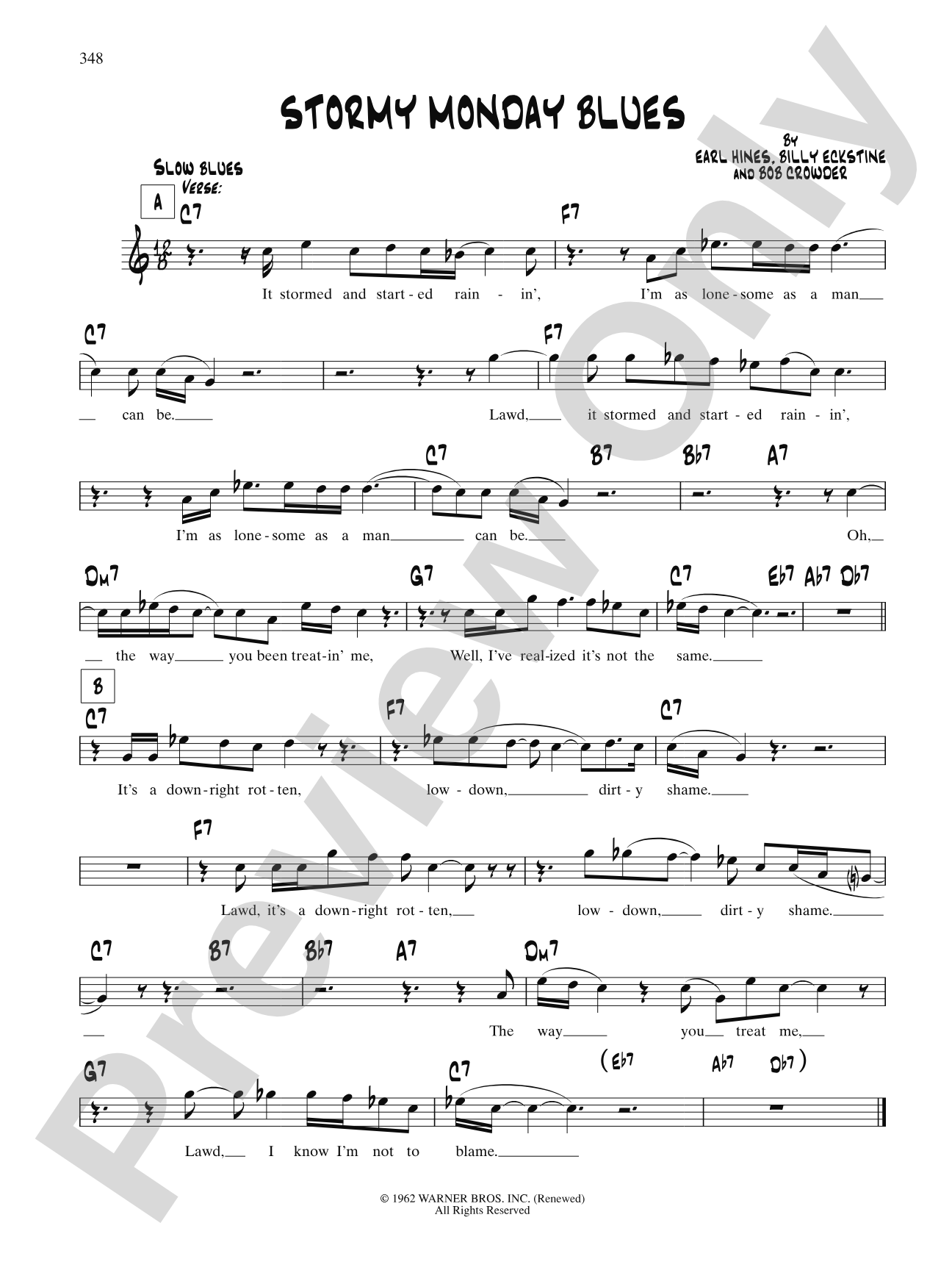
Stormy Monday Blues Sheet Music Preview

Stormy Monday Blues: Lead Sheet

Count Basie

Item: 00-PSL-000475

Digital Download
$4.99

One moment…

Description
Contains: April in Paris * Avenue C * Basie Boogie * Blue and Sentimental * Blues in the Dark * Cherry Point * Cool Blue * Coral Reef * I Left My Baby * Jive at Five * Oh! What a Night for Love * Panassie Stomp * Rockabye Basie * Shorty George * Splanky * Take Me Back Baby * Taps Miller * Teddy the Toad * Way Back Blues * You Can't Run Around and many more.

Stormy Monday Blues: Lead Sheet isn't in MakeMusic Cloud just yet...but it could be. Let us know you'd like to see it, and you'll help shape what comes next. In the meantime, start a free trial and dive into thousands of interactive titles your students can play along with today.

Sample Audio
No sample audio found.
Sample Video
Additional Details
Publisher: Alfred Music
Page Count: 100
SKU: 00-PSL-000475

More about this title

About the Artist: Count Basie

Count Basie (1904-1984) shaped the sound of American jazz through his role as bandleader, pianist, and composer. His Kansas City style emphasized the rhythm section as the engine of swing, creating a feel so infectious and groove-oriented that it became the template for big band jazz. Basie's compositions and arrangements, many of which appear in this collection, reveal his gift for writing riffs that balance simplicity with sophistication—melodies that feel inevitable once you hear them, yet never sound obvious.

Why we love this

This lead sheet collection captures the working repertoire of one of jazz's greatest bandleaders, giving improvisers direct access to the head arrangements and blues variations that defined the Basie sound. The breadth here is remarkable: standards, original blues heads, and obscure cuts all sit side by side, making it an essential resource for understanding how Kansas City swing vocabulary actually functioned in performance. You get the charts without the bloat—just melody, changes, and the freedom to find your own voice.

What to expect

Organized swing meeting raw blues sensibility. These heads hit hard and settle deep into the pocket, whether you're hearing a bouncy riff number or a slow 12-bar burn. The collection breathes the confidence of a working bandleader's book—no filler, just tunes that have been tested on thousands of dance floors and jam sessions.

Who it's for

Jazz musicians at intermediate to advanced levels who need reliable melody and changes for big band, small ensemble, or solo contexts. Instrumentalists working toward jazz fluency will find this collection invaluable for learning how to navigate blues heads, understand harmonic function in swing language, and connect melody to rhythm on real bandstand standards.

How to get the most out of it

  • Study the head melody in isolation first, then compare it against recordings to hear how Basie's band phrased the tune. Note where they pushed ahead or laid back, and apply that sensibility to your own interpretation.
  • Use chord symbols as a starting point, not a ceiling. The changes here are functional guides to the harmonic landscape; leave room for reharmonization, substitution, and your own melodic response.
  • Treat the rhythm section as your collaborator. These are swinging blues heads designed to sit on top of a locked groove; lock in with the time and let the changes breathe rather than pushing them.
  • Approach solos with the Basie philosophy: simplicity in service of swing. Fewer notes, deeper pockets, and a focus on behind-the-beat placement often cut through the band more effectively than running changes.

How to use it

Use individual heads as opening numbers, interludes, or closers in jazz concerts and rehearsals. Pair them with longer modern jazz works to show continuity of language and approach. Consider pulling 3-4 related pieces (e.g., "Basie Boogie" and "Rockabye Basie") as a medley to highlight compositional wit and rhythmic variation within a theme.

Skills your students will build

  • Reading and playing jazz melody from lead sheet notation
  • Understanding 12-bar blues changes and their variations
  • Swing phrasing and rhythmic feel (behind-the-beat placement, groove awareness)
  • Blues vocabulary and call-and-response structures
  • Head arrangement interpretation and harmonic navigation
  • Connecting melody to rhythm section in small and large ensemble contexts

You May Also Like