Li'l Darlin' Sheet Music Preview

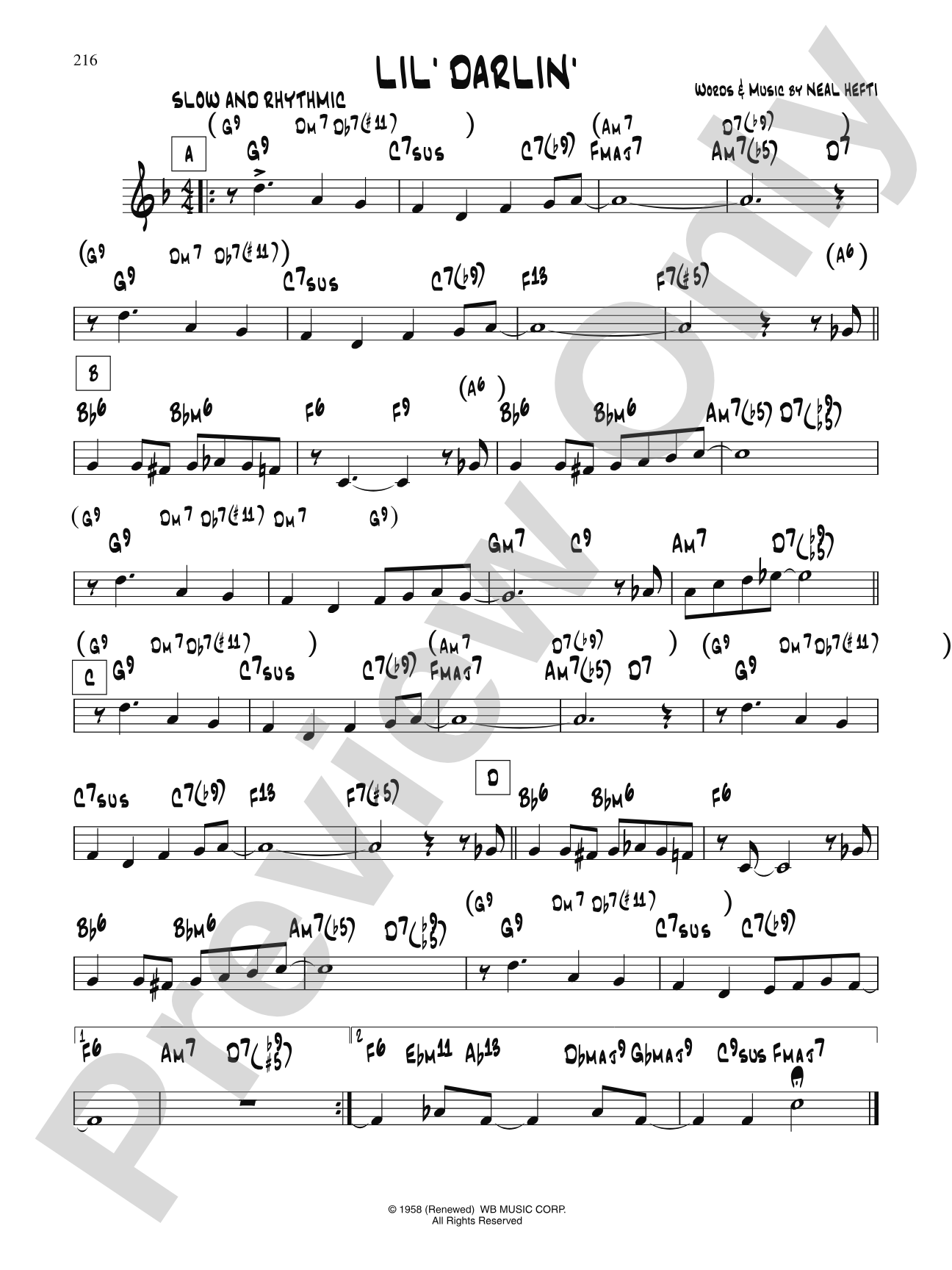
Li'l Darlin': Lead Sheet

Count Basie

Item: 00-PSL-000350

Digital Download
$4.99

One moment…

Description
Contains: April in Paris * Avenue C * Basie Boogie * Blue and Sentimental * Blues in the Dark * Cherry Point * Cool Blue * Coral Reef * I Left My Baby * Jive at Five * Oh! What a Night for Love * Panassie Stomp * Rockabye Basie * Shorty George * Splanky * Take Me Back Baby * Taps Miller * Teddy the Toad * Way Back Blues * You Can't Run Around and many more.

Li'l Darlin': Lead Sheet isn't in MakeMusic Cloud just yet...but it could be. Let us know you'd like to see it, and you'll help shape what comes next. In the meantime, start a free trial and dive into thousands of interactive titles your students can play along with today.

Sample Audio
No sample audio found.
Sample Video
Additional Details
Publisher: Alfred Music
Page Count: 100
SKU: 00-PSL-000350

More about this title

About the Artist: Count Basie

Count Basie (1904-1984) shaped the sound of American jazz through his work as a pianist, organist, and bandleader. His Kansas City orchestra became legendary for its propulsive swing style, tight ensemble work, and the space Basie left for soloists to breathe. Basie's compositions and arrangements defined an era of jazz that prioritized groove, clarity, and infectious rhythm.

As an educator's resource, Basie's music teaches how jazz melody lives inside sophisticated harmony and how a band's power comes from collective precision rather than complexity. His lead sheets reveal a composer who understood what singers and horn players needed to thrive.

Why we love this

This collection gives your jazz ensemble access to the exact charts that built Basie's legendary sound, from swinging blues to playful novelty numbers. The variety across 30+ tunes means you can program everything from energetic openers like "Jive at Five" to balladic moments like "Blue and Sentimental," all rooted in the idiom that defined big band jazz. Lead sheets force your players to internalize harmony and develop the ears of working jazz musicians.

What to expect

Relaxed power. These tunes swing without striving, combining blues language with sophisticated chord changes that surprise without confusing. The music has a rolling, inevitable quality, like the tunes were inevitable rather than written; that's the mark of Basie's best work.

Who it's for

Jazz educators, college big band directors, and serious amateur jazz musicians looking to study or perform the foundational charts of the swing era. This collection serves arrangers and composers who want to understand how Basie voiced melody and harmony. Players learning to read jazz lead sheets and develop fluency with blues forms and swing changes will find endless material here.

How to get the most out of it

  • Keep the time simple and let the harmony float. Basie's tunes breathe when the rhythm section settles into a groove rather than chasing the beat.
  • Listen to the original Basie recordings if possible. His ensemble phrasing and the space between notes teach you things the page cannot.
  • Treat the melody as a starting point, not a ceiling. These tunes were written for improvisation; encourage your soloists to find their voice over the changes.
  • Balance shout sections with spacious verses. Basie knew when to build energy and when to pull back; the contrast makes the music swing harder.

How to use it

Build an entire Basie-centered concert, or drop individual tunes into a mixed jazz program to anchor your swing section. Use "Blue and Sentimental" for a ballad feature, "Rockabye Basie" or "Jive at Five" as high-energy closers, and medium-tempo blues as reliable ensemble warmers. These charts work equally well in a college jazz ensemble setting and as reference materials for high school big bands studying jazz history.

Skills your students will build

  • Reading and interpreting jazz lead sheets with chord symbols
  • Swing feel and phrasing in a blues-centered tradition
  • Navigating blues forms and variations (12-bar, 8-bar, extended)
  • Understanding head-solos-head arrangement structure in jazz standards
  • Listening to and transcribing idiomatic swing articulation from recordings

You May Also Like