
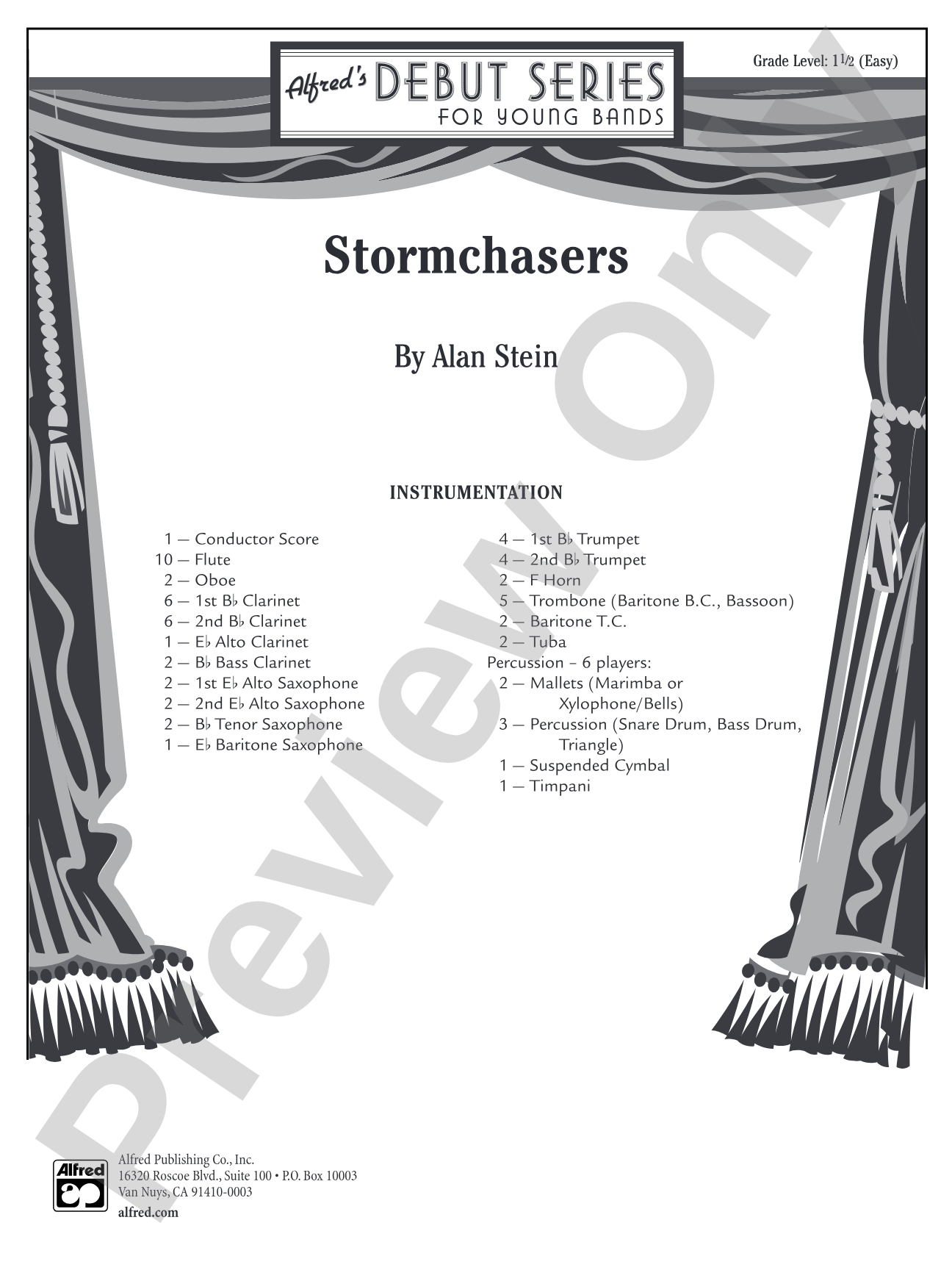

Stormchasers: Concert Band Conductor Score & Parts
By Alan Stein
Grade: 1.5 (Easy)
Item: 00-PK-0000653

$48.00
Pickup currently not available
Buy Extra Parts (Digital PDF Download)
| Product | Price | Quantity |
|---|---|---|
| Stormchasers: Score | $6.00 | |
| Stormchasers: Flute | $3.00 | |
| Stormchasers: Oboe | $3.00 | |
| Stormchasers: 1st B-flat Clarinet | $3.00 | |
| Stormchasers: 2nd B-flat Clarinet | $3.00 | |
| Stormchasers: E-flat Alto Clarinet | $3.00 | |
| Stormchasers: B-flat Bass Clarinet | $3.00 | |
| Stormchasers: E-flat Alto Saxophone | $3.00 | |
| Stormchasers: 2nd E-flat Alto Saxophone | $3.00 | |
| Stormchasers: B-flat Tenor Saxophone | $3.00 | |
| Stormchasers: E-flat Baritone Saxophone | $3.00 | |
| Stormchasers: 1st B-flat Trumpet | $3.00 | |
| Stormchasers: 2nd B-flat Trumpet | $3.00 | |
| Stormchasers: 1st F Horn | $3.00 | |
| Stormchasers: 1st Trombone | $3.00 | |
| Stormchasers: Baritone T.C. | $3.00 | |
| Stormchasers: Tuba | $3.00 | |
| Stormchasers: Mallets | $3.00 | |
| Stormchasers: 1st Percussion | $3.00 | |
| Stormchasers: 2nd Percussion | $3.00 | |
| Stormchasers: Timpani | $3.00 |
Parts Added to Cart!
Description
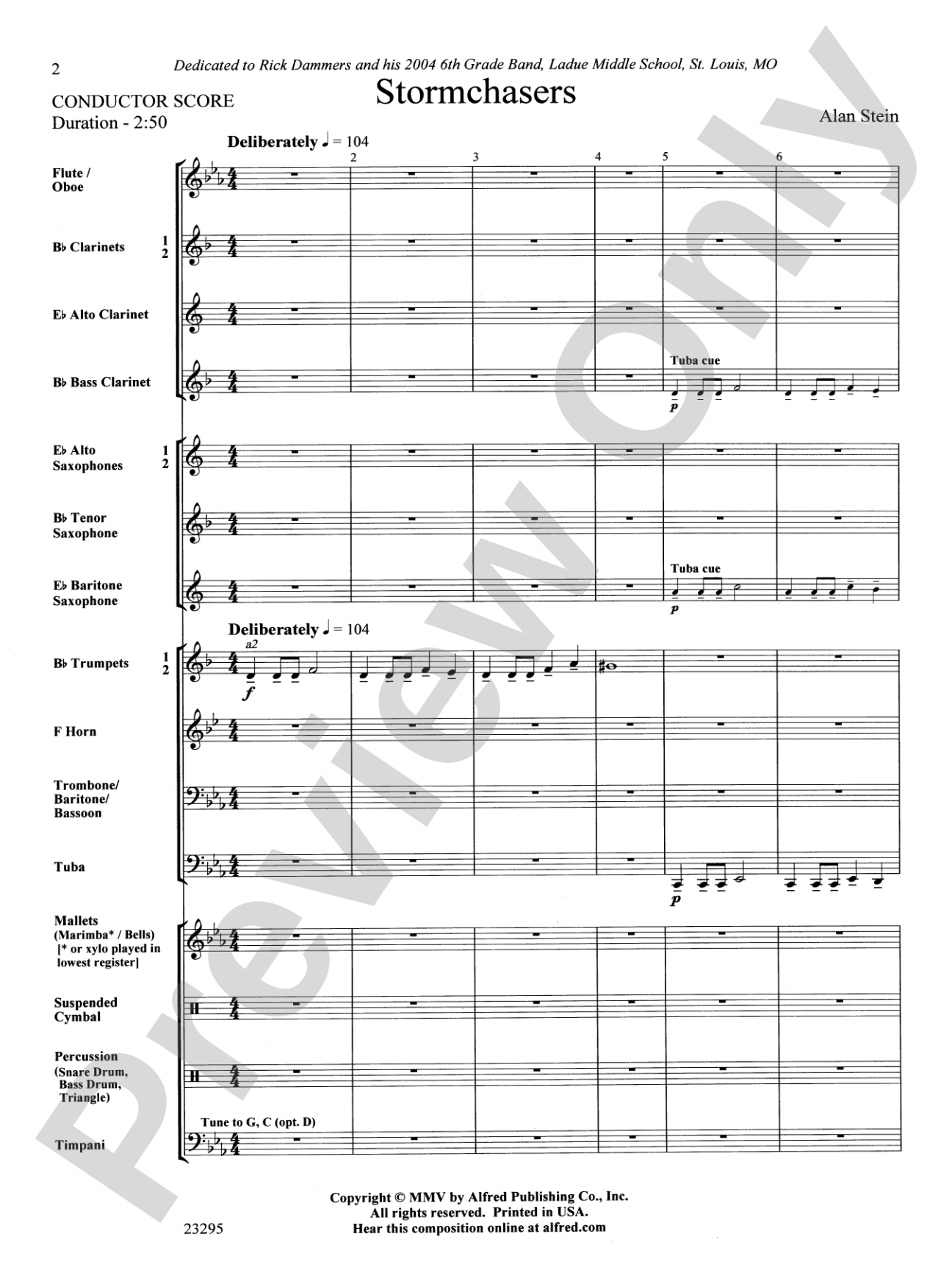
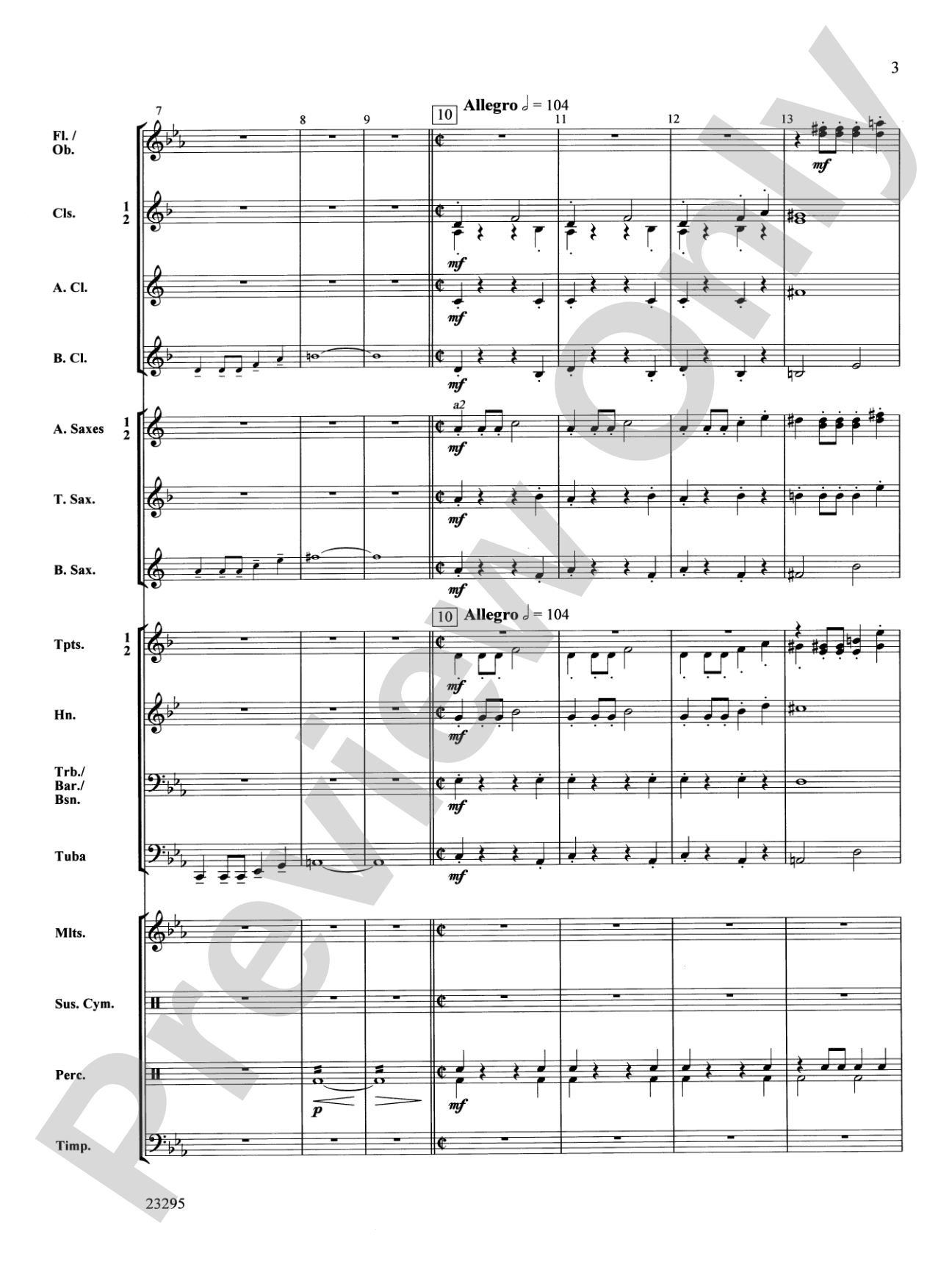
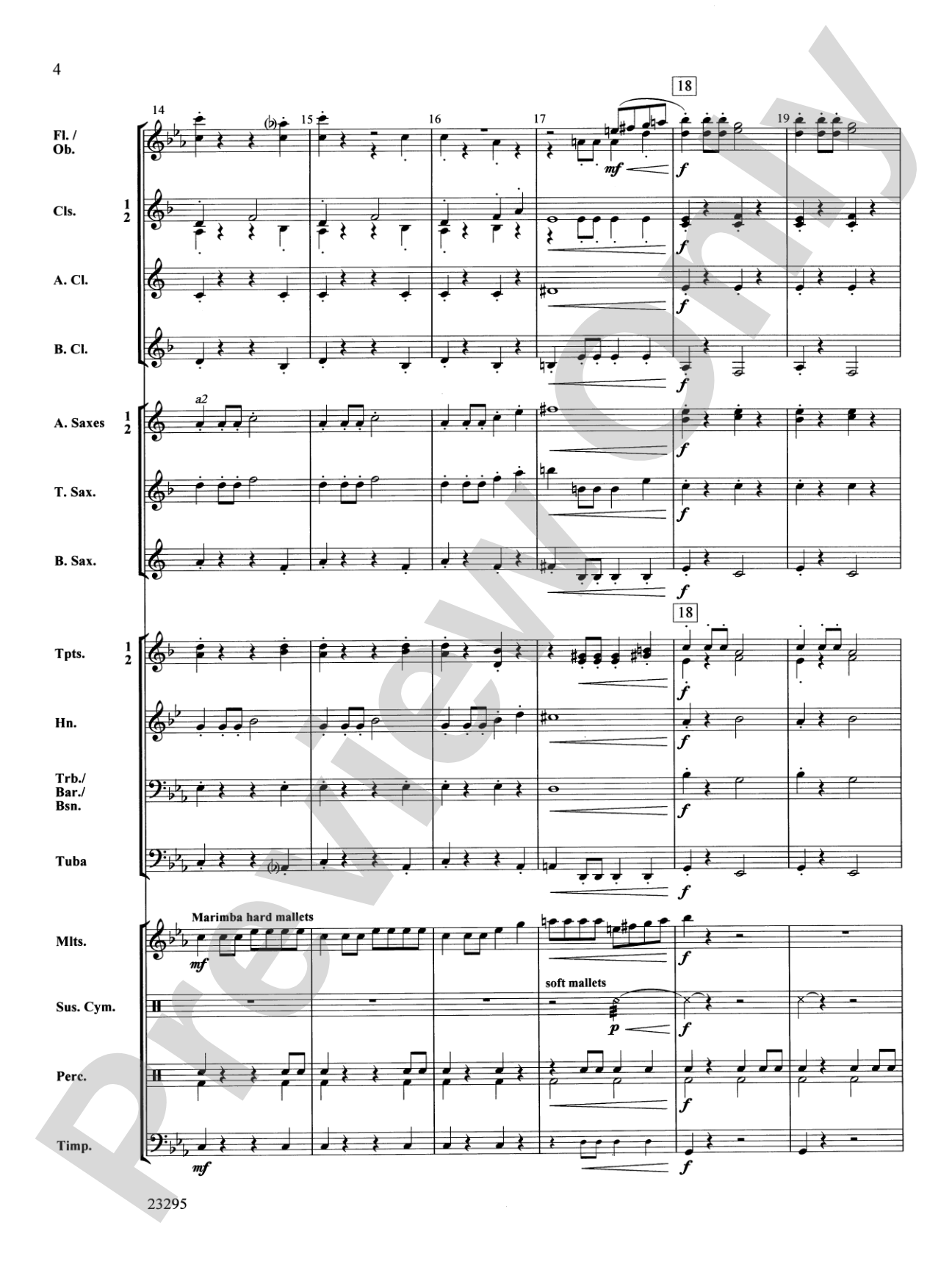
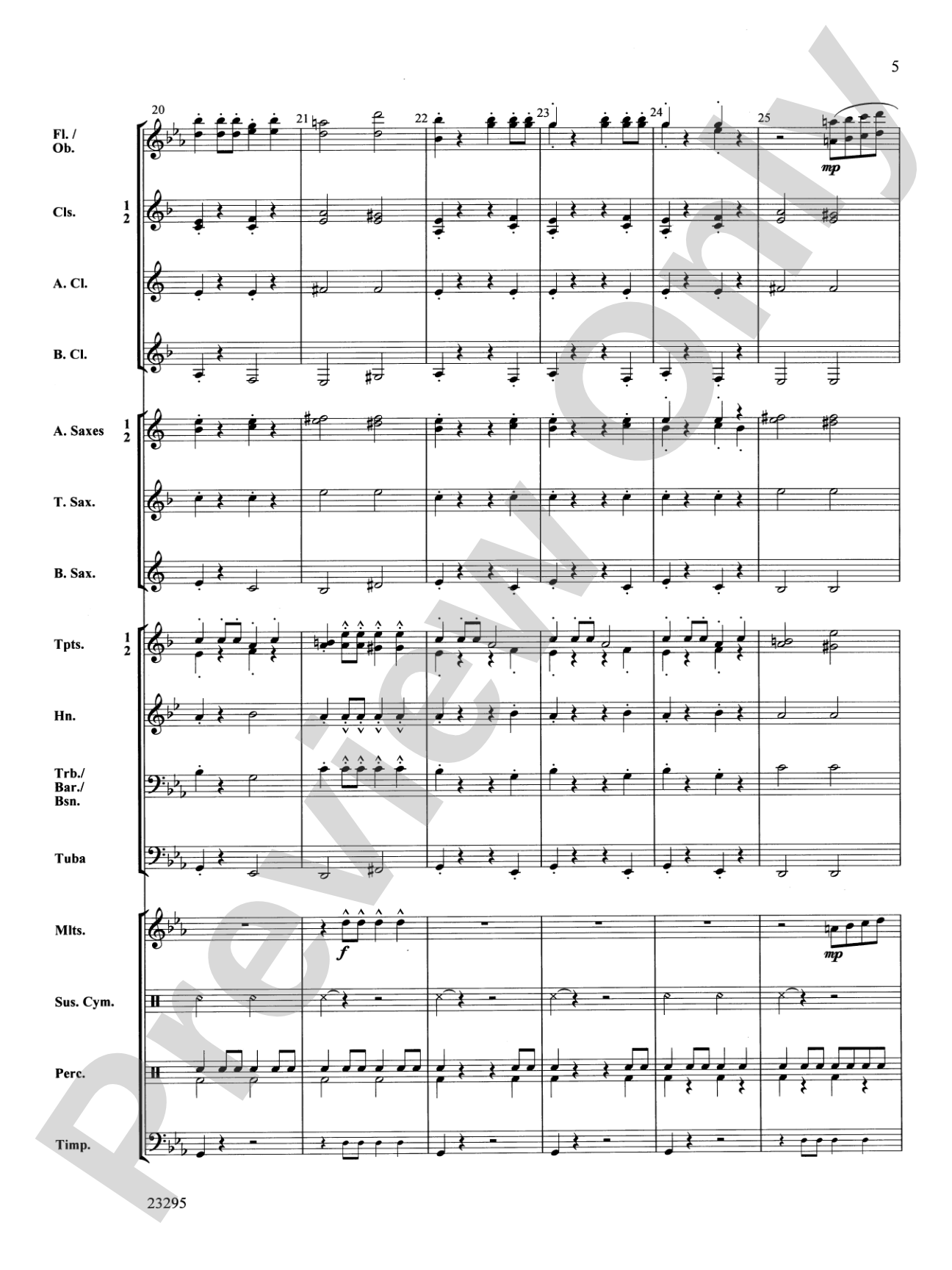
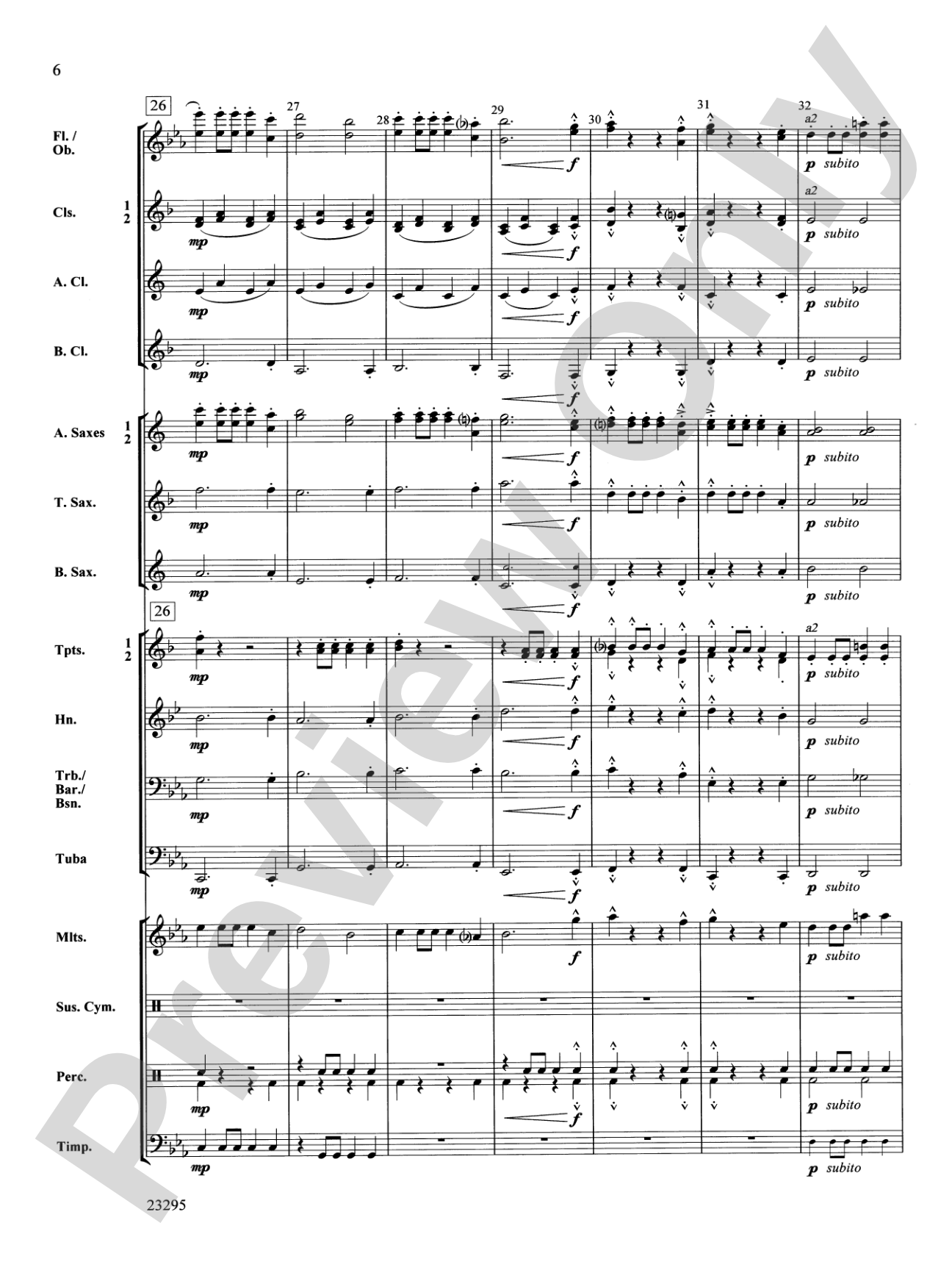
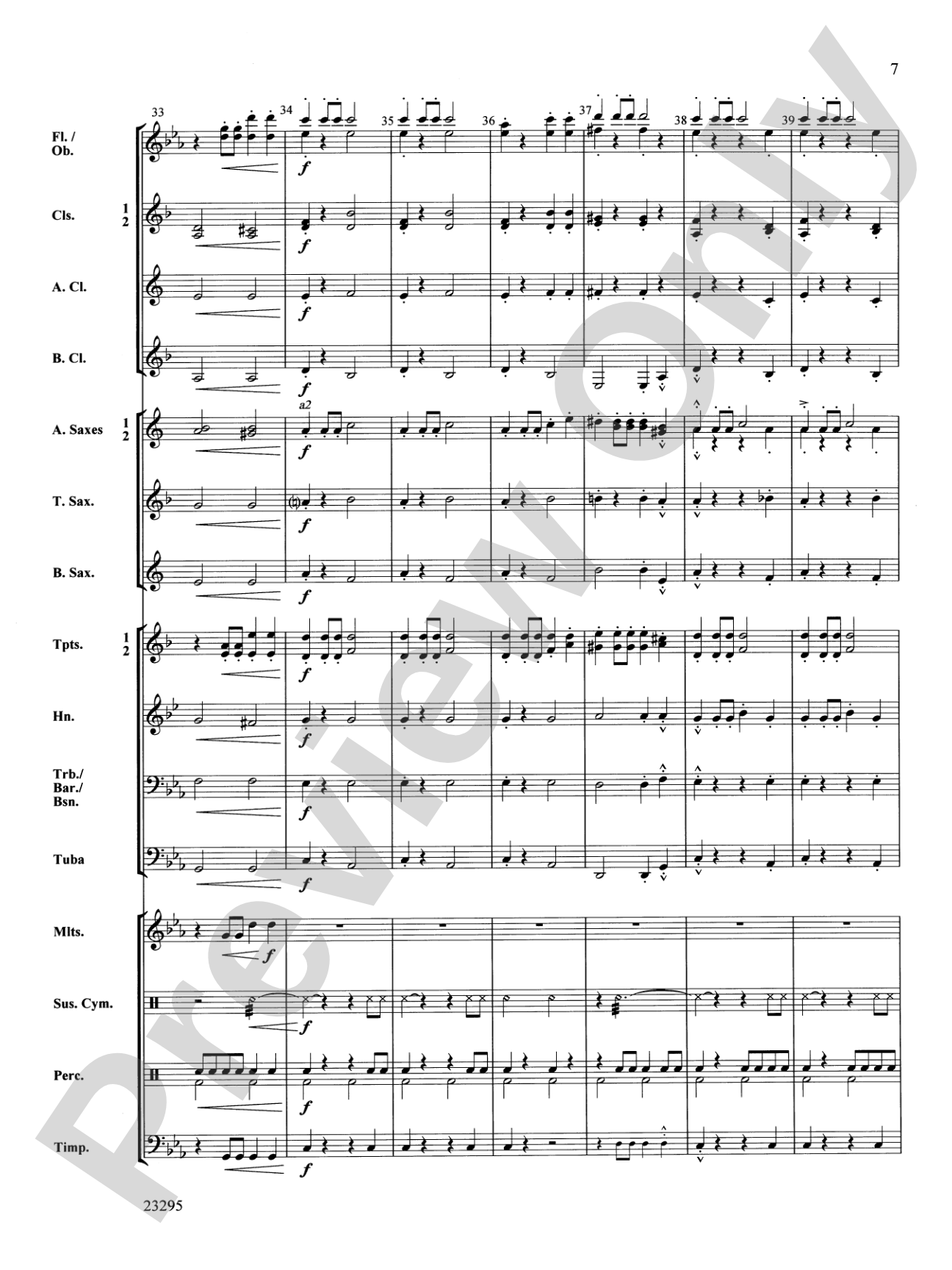
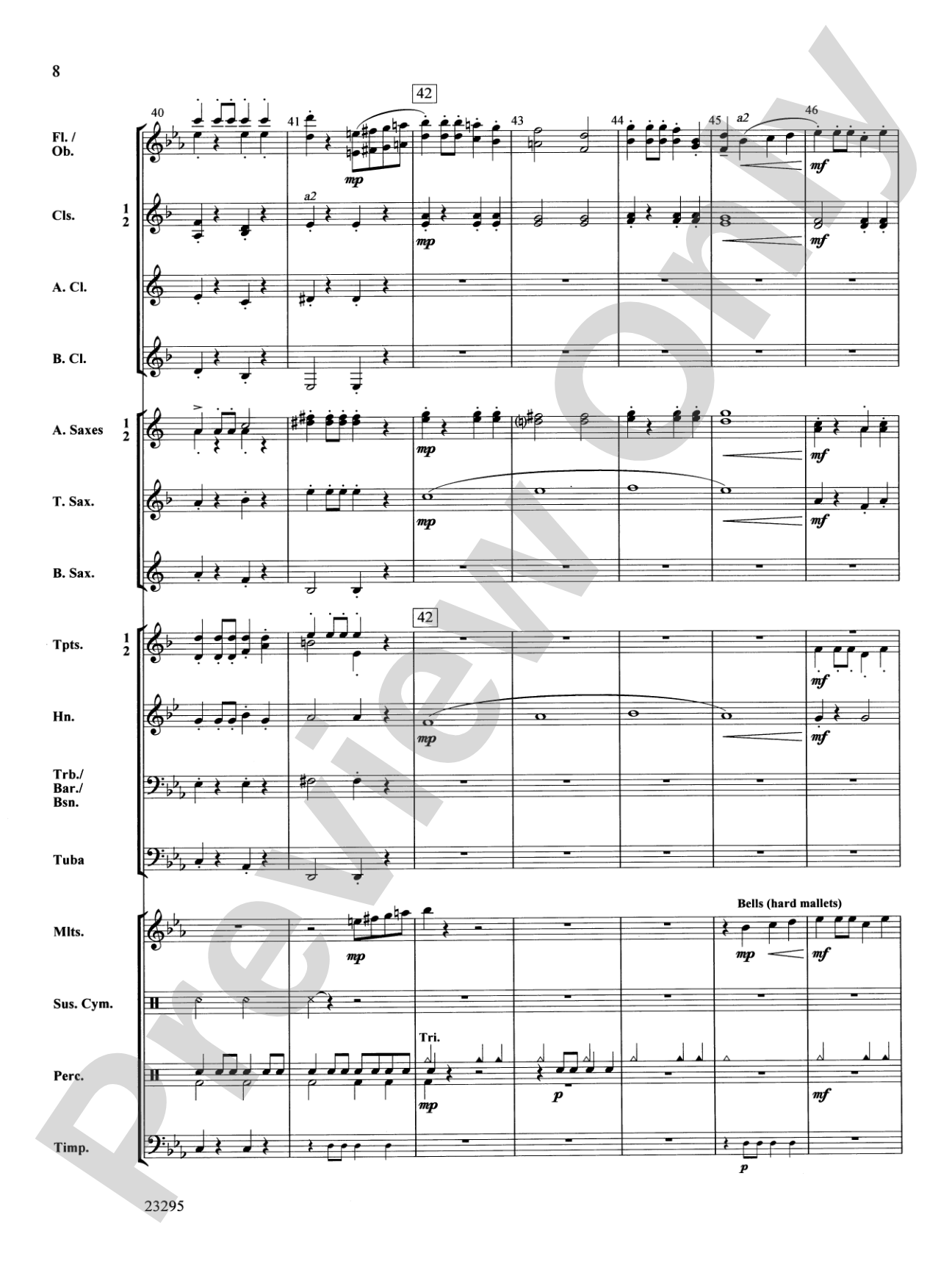
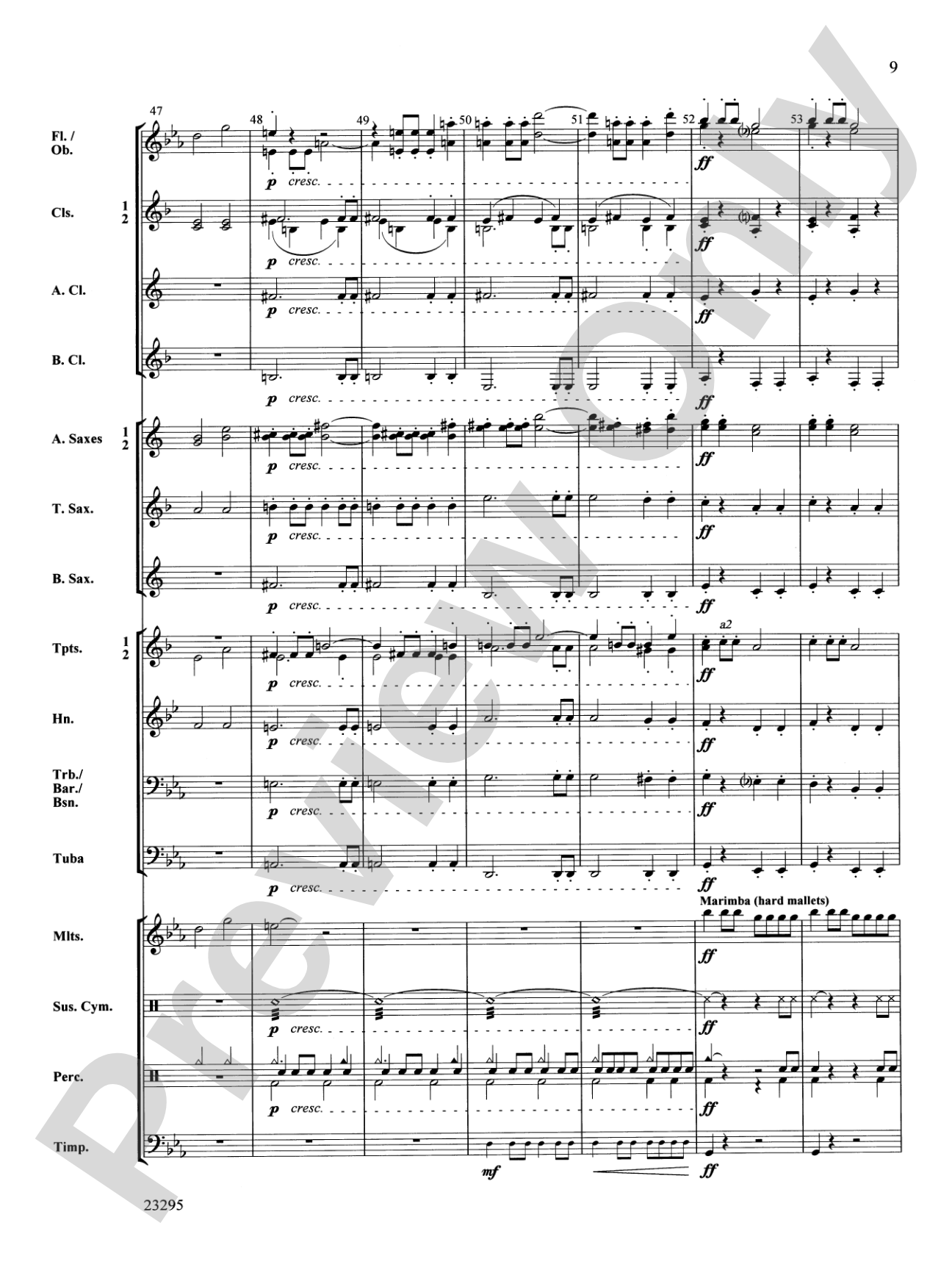
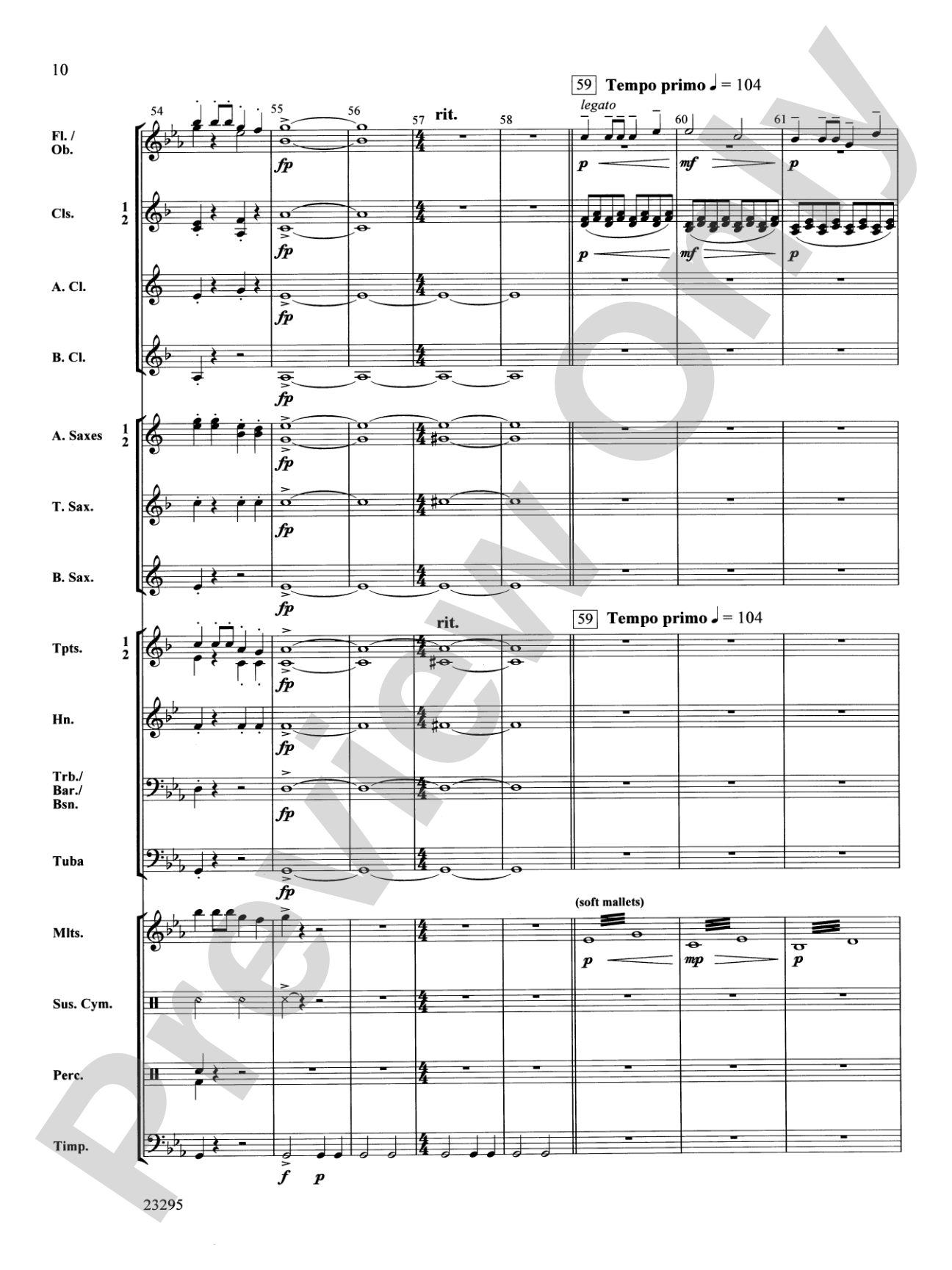
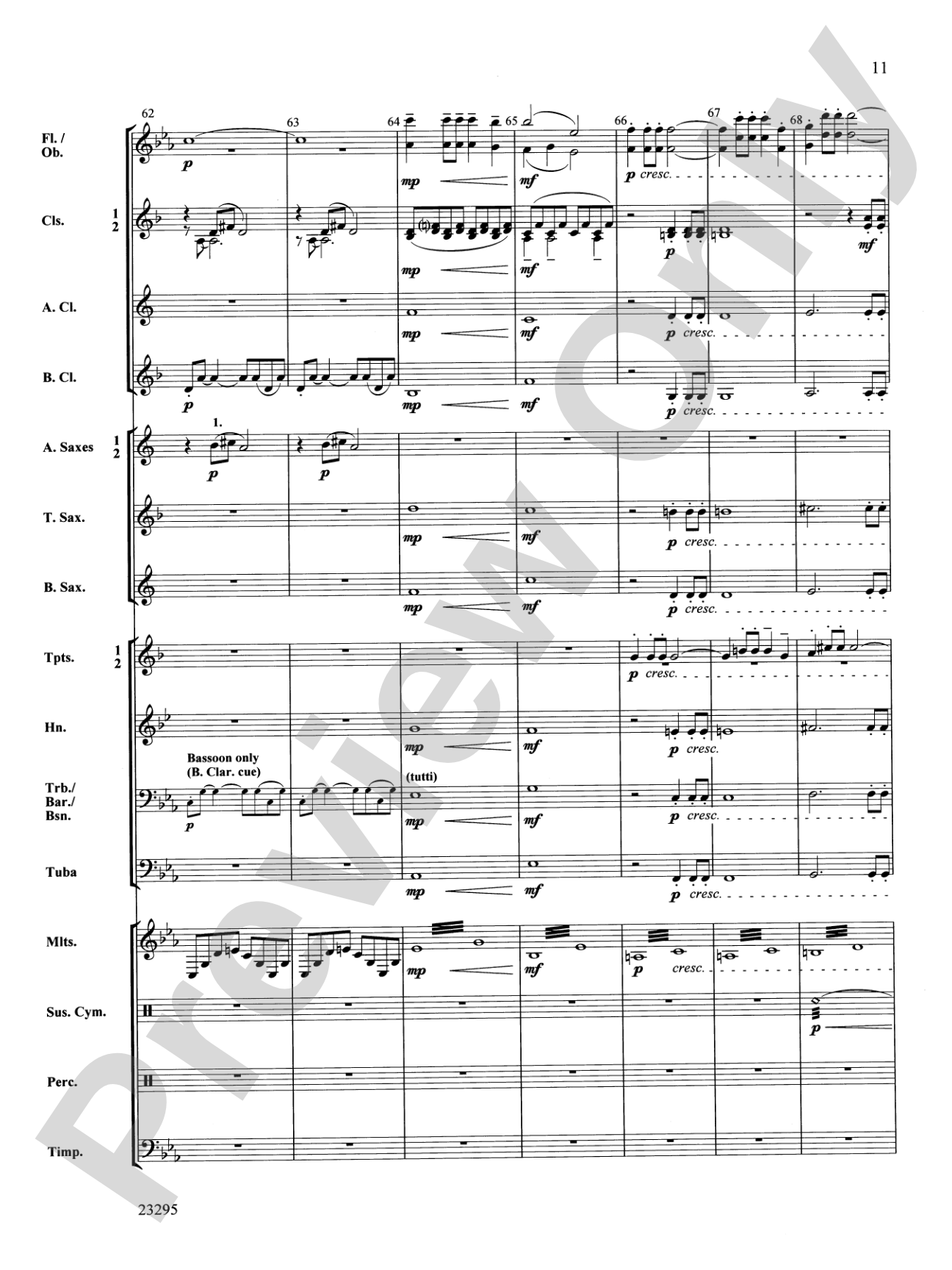
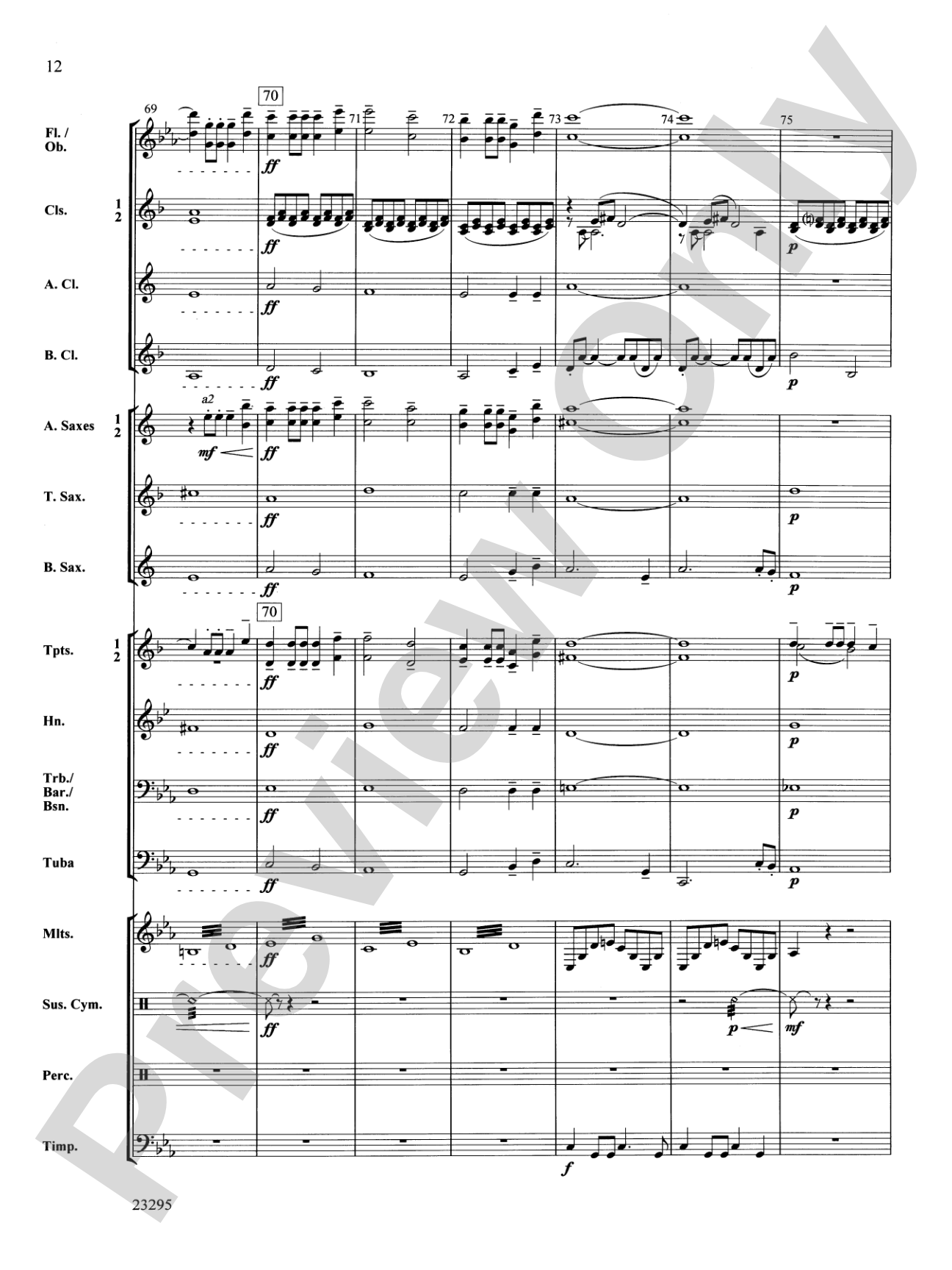
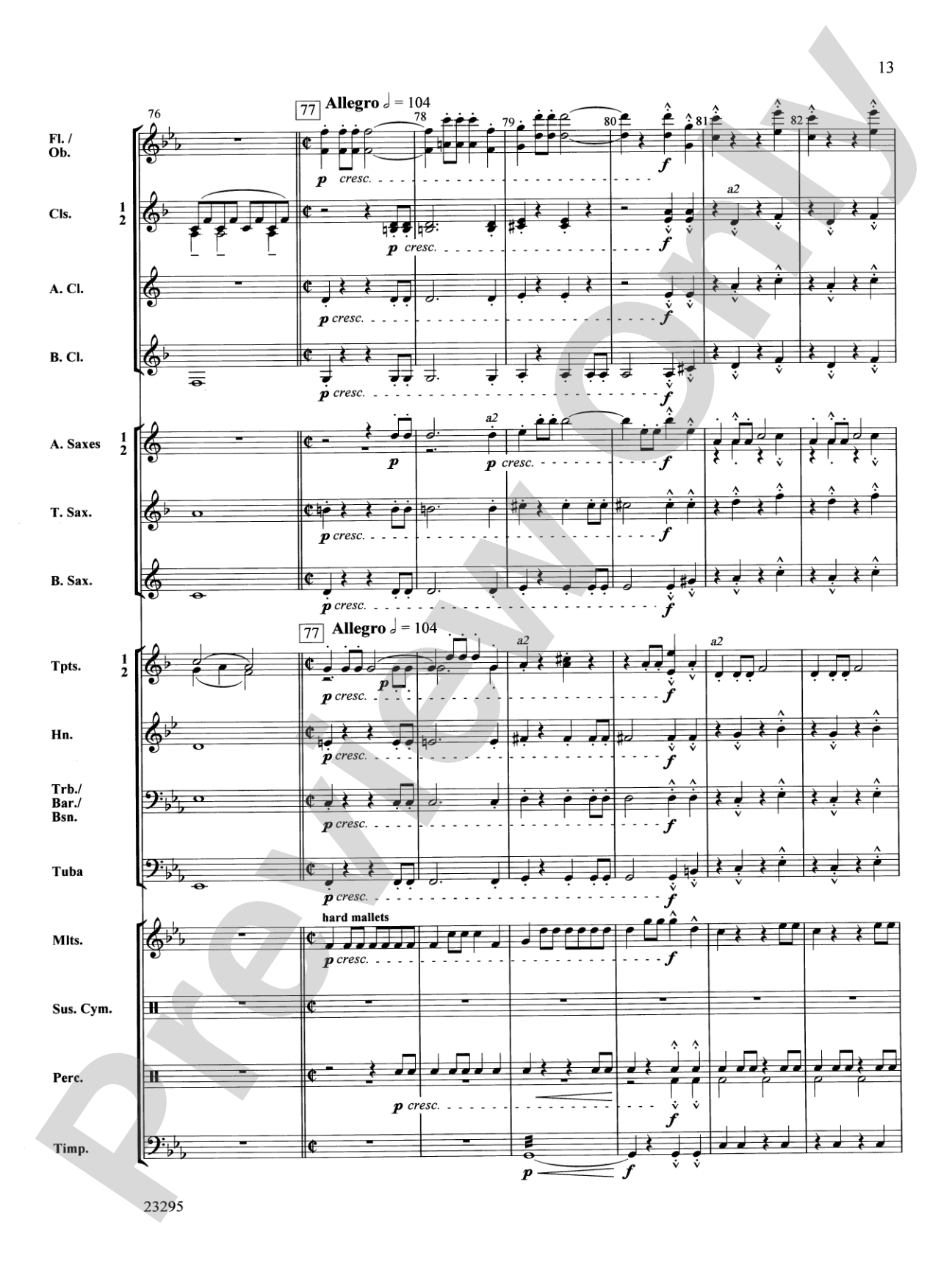
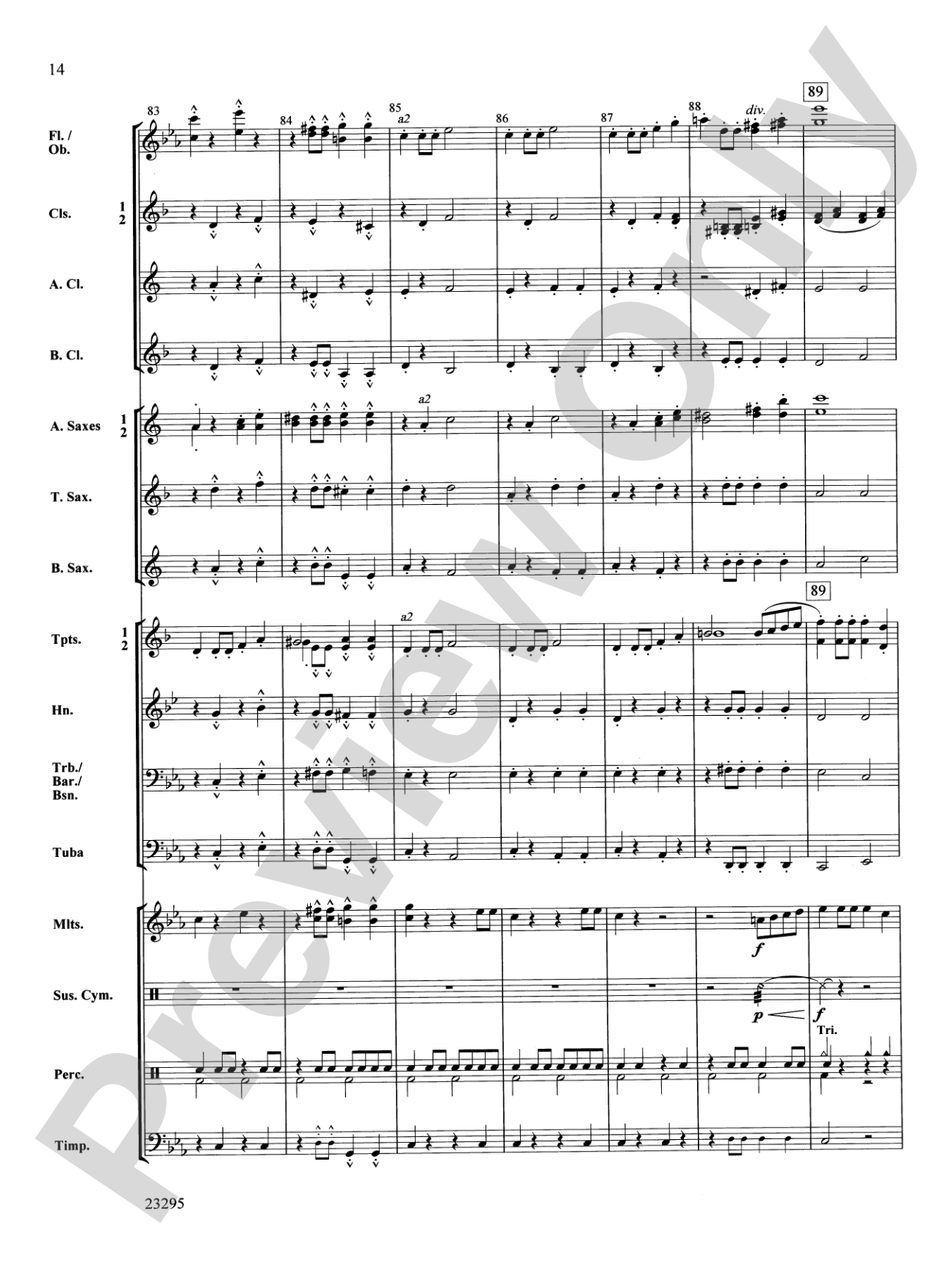
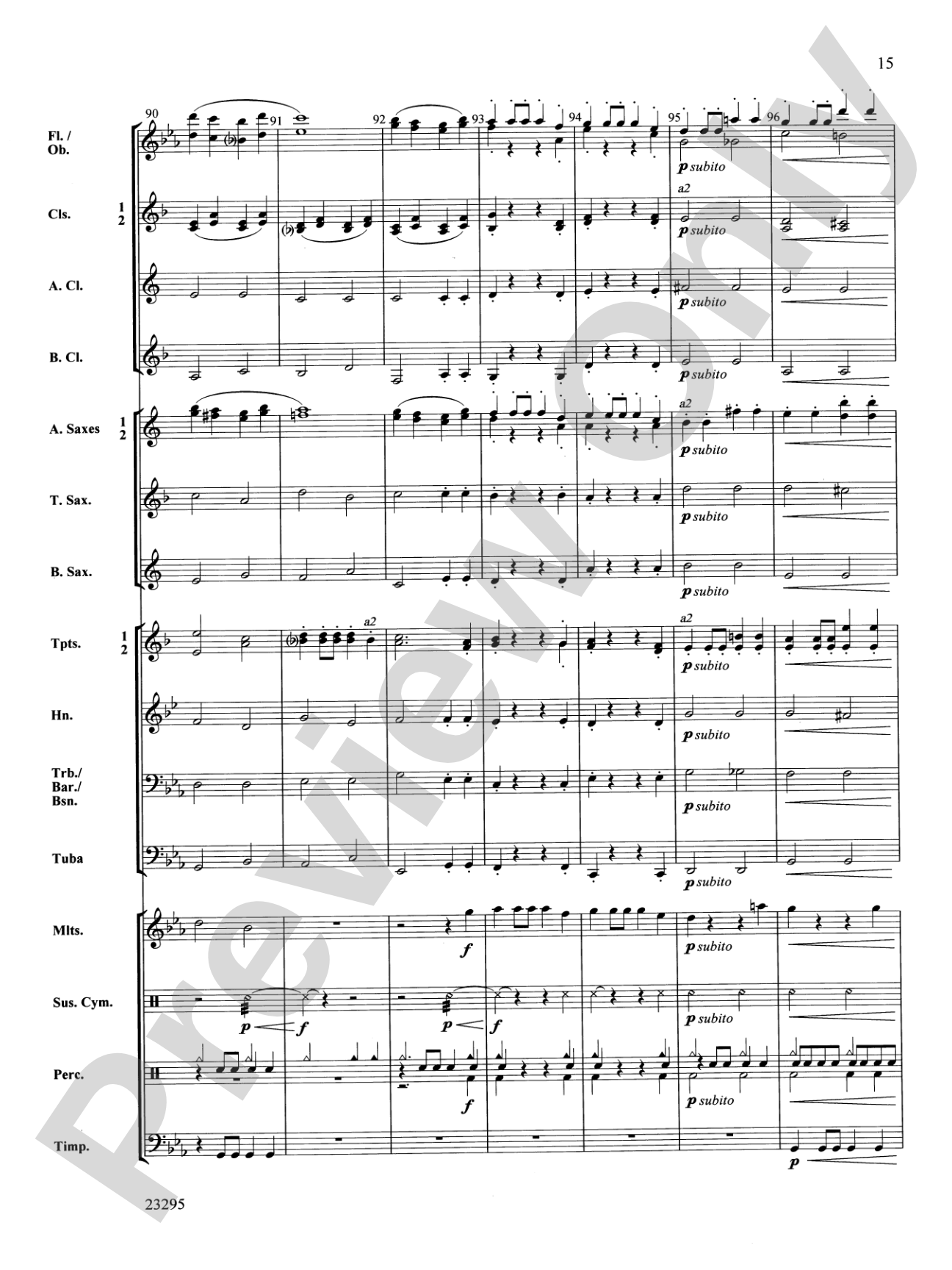
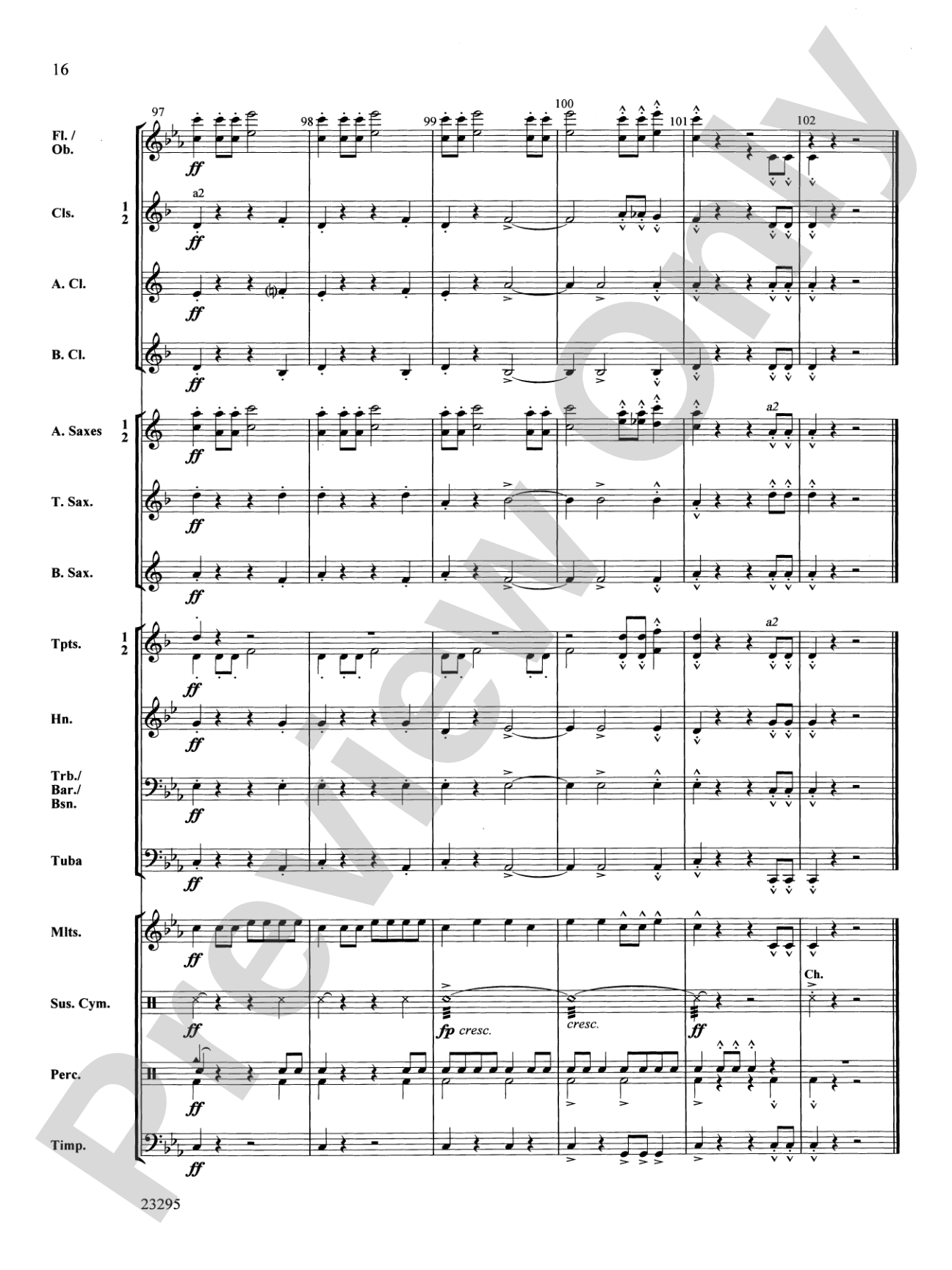
Written in 2004 for the remarkable Ladue 6th Grade Middle School Band in St. Louis, Missouri, Stormchasers is designed to introduce students to the concept of cut time. The piece alternates between sections with 4/4 and cut time markings. The piece opens with a rhythmic motif that appears in almost every measure of the piece.


Don't just read it, hear it, play along with it, and watch your students grow with it. In MakeMusic Cloud, Stormchasers: Concert Band Conductor Score & Parts comes alive with professional accompaniment, adjustable tempo, and built-in practice tools that turn solo practice into real progress.
Open in the Player
Jump straight in and assign it today.
Start Your Free Trial
Open this title and explore the full library in minutes.
Sample Audio
1
Audio File
--:--
0:00
0:00
Sample Video
No sample videos found.
Additional Details
Series:
Alfred Debut Series
Publisher:
Alfred Music
Page Count:
230
SKU:
00-PK-0000653
More about this title
About the Composer: Alan Stein
Alan Stein has spent decades composing music that speaks directly to the needs of young musicians. His work demonstrates a deep understanding of how middle school students learn, what excites them, and what challenges stretch them productively without overwhelming them.
Why we love this
Alan Stein wrote Stormchasers with a specific pedagogical goal in mind: giving young musicians a genuine introduction to cut time in a piece that doesn't feel like a lesson. The rhythmic motif that threads through nearly every measure creates structural cohesion while giving conductors a powerful teaching tool. Band directors consistently return to this piece because students engage with the music rather than fighting notation.
What to expect
Energy and forward motion define this piece. The recurring rhythmic motif creates a sense of momentum and purpose that carries the band through changing meters, while the storm imagery provides narrative drive that helps students stay engaged with the musical content.
Who it's for
Sixth-grade concert bands encountering cut time for the first time will find this piece both accessible and genuinely musical. Directors seeking to demystify cut time notation will appreciate how Stein integrates the concept into a work that sounds like real band music rather than a pedagogical exercise.
How to get the most out of it
- Establish the rhythmic motif with crystal clarity in the opening measures. Once your students internalize this pattern, the transitions between 4/4 and cut time sections will feel logical rather than disorienting.
- Use the tempo marking to lock the rhythmic feel before moving between meters. A steady pulse across meter changes prevents the ensemble from rushing when shifting to cut time.
- Balance the texture so the motivic material stays visible even when it passes to different sections. This reinforces what students are learning about rhythm and notation.
- Front-load rehearsal time on the meter changes themselves rather than other technical passages. Most of the difficulty lives in the conceptual shift, not the instrumental mechanics.
How to use it
Position this early in your concert to showcase your middle schoolers' grasp of contemporary concert band technique. It pairs well with Grade 1.5 to 2 pieces that explore standard 4/4 meters, allowing you to demonstrate your band's range in a single program.
Skills your students will build
- Reading and performing in cut time (alla breve)
- Transitioning between 4/4 and cut time signatures
- Identifying and sustaining rhythmic motifs across phrase boundaries
- Maintaining ensemble cohesion during meter changes
- Following conductor cues to navigate multiple time signatures