

Still, Still, Still: SSA Choral Octavo
Traditional Austrian Carol / arr. Victor C. Johnson
Item: 00-PO-0006936
$2.05
Minimum order quantity: 20 copies
Pickup currently not available
Description
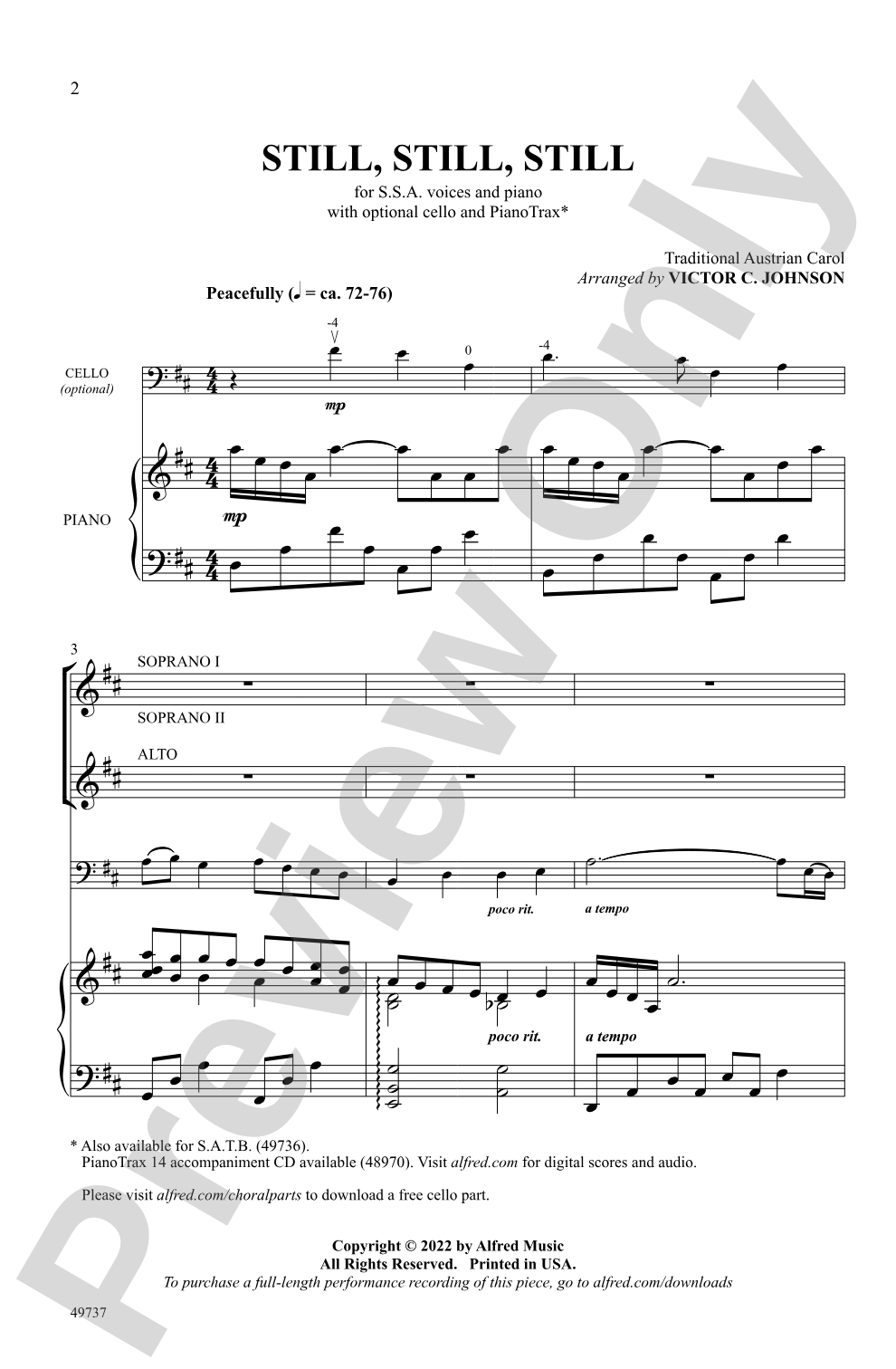
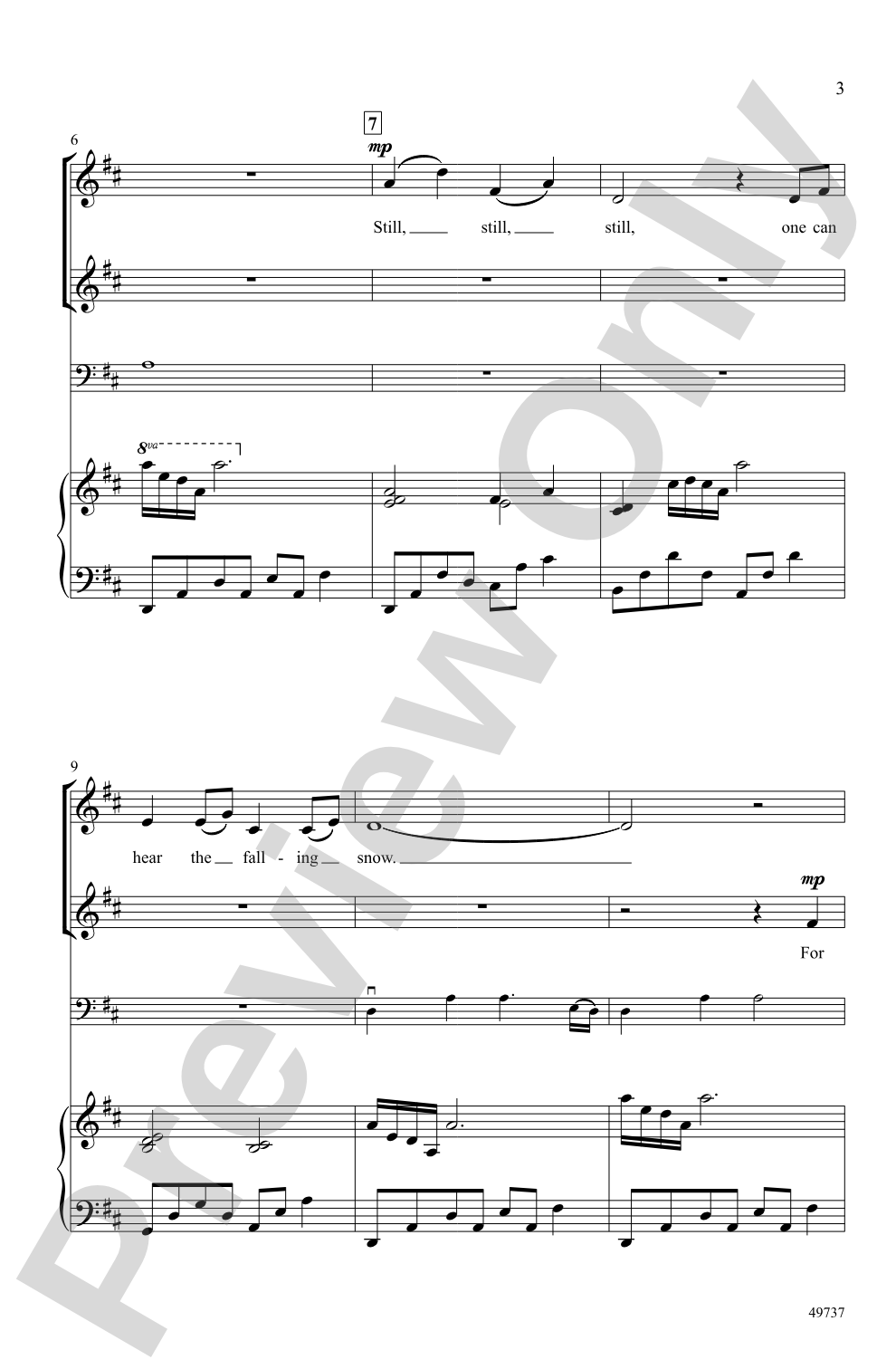
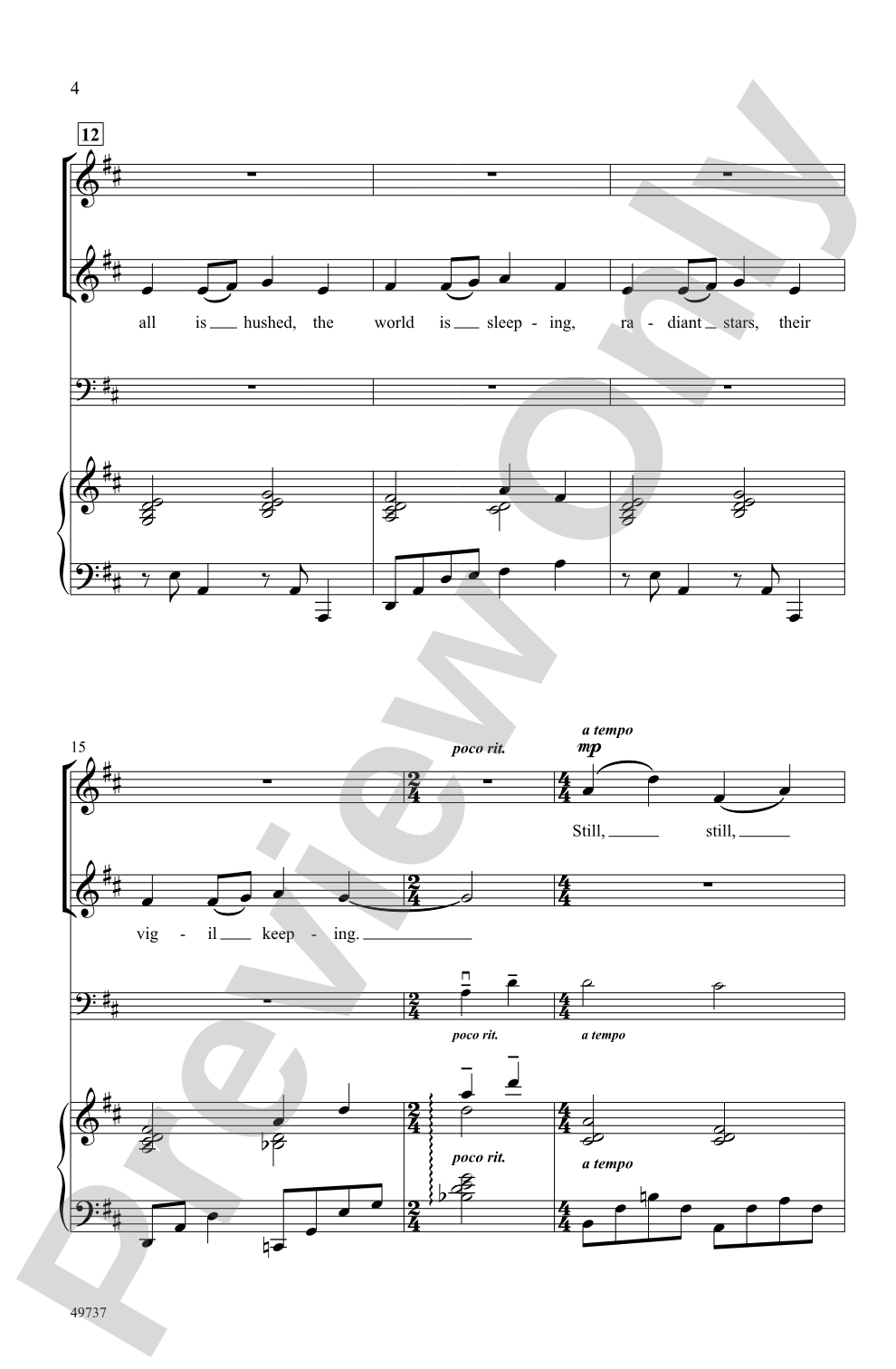
Victor Johnson lends his artful pen to the beloved Austrian carol, which proves a fitting vehicle for his sensitive signature style. Long melodic lines, generous harmonic suspensions, an intricate piano accompaniment, and a luminous cello obbligato combine to make a special moment for holiday programs. SSA and SATB singers will sound their best on this terrific treatment that is a joy to sing and a pleasure to hear.


Still, Still, Still: SSA Choral Octavo isn't in MakeMusic Cloud just yet...but it could be. Let us know you'd like to see it, and you'll help shape what comes next. In the meantime, start a free trial and dive into thousands of interactive titles your students can play along with today.
Request This Title
Tell us you want it.
Start Your Free Trial
Explore everything that's ready to play right now.
Sample Audio
1
Audio File
--:--
0:00
0:00
Sample Video
Additional Details
Series:
Alfred Choral Designs
Publisher:
Alfred Music
Page Count:
12
SKU:
00-PO-0006936
More about this title
About the Arranger: Victor C. Johnson

Victor C. Johnson, born and raised in Dallas, Texas, serves as School Choral Editor for Sing!, the educational arm of Choristers Guild. His catalogue spans over 500 published works across choral arrangements, vocal solos, and keyboard compositions, making him one of the most widely performed arrangers in American choral music.
From 2000 to 2018, Johnson directed choral ensembles at Fort Worth Academy of Fine Arts, where he led the Academy Singers, Academy Men's Choir, and served as Artistic Director for both the Singing Girls of Texas and Children's Choir of Texas. Since 2022, he has conducted the Dallas Symphony Children's Chorus Mixed Ensemble (grades 9-12), the resident children's choir for the Dallas Symphony Orchestra. His professional memberships include the American Choral Directors Association, American Guild of Organists, Texas Music Educators Association, National Association for Music Education, ASCAP, and Phi Mu Alpha Sinfonia.
Why we love this
Johnson's gift for elongated melodic phrasing and harmonic richness elevates this traditional carol into something luminous without sacrificing its essential character. The interplay between the SSA voices, piano accompaniment, and cello obbligato creates multiple layers of musical interest, giving your singers genuine artistry to explore while remaining accessible to developing ensembles. It's the kind of arrangement that sounds far more sophisticated than its technical demands, making it a smart choice for programs that need depth without excessive difficulty.
What to expect
There is a contemplative warmth to this setting, with the sustained lines and rich harmonies creating intimate moments of reflection. The cello obbligato traces a tender countermelody above and around the voices, drawing listeners into the carol's meditative quality rather than its festive associations.
Who it's for
This arrangement suits upper-level middle school and high school choirs seeking a meaningful holiday selection with genuine musical substance. Directors programming concerts that blend traditional carols with contemporary arrangements will find this a sophisticated alternative to predictable holiday fare, especially when singers have developed foundational blend and intonation skills.
How to get the most out of it
- Shape the long melodic lines through thoughtful breath placement rather than rigid phrasing marks; allow the suspensions to breathe naturally without rushing through them.
- Balance the cello obbligato prominently during instrumental passages so it registers as a full musical voice rather than mere accompaniment texture.
- Encourage singers to listen carefully to the harmonic suspensions in the piano part; this awareness helps them tune the suspended chords accurately and sustain them with confidence.
- Use the recorded accompaniment during sectional rehearsals to anchor pitch and tempo, but experiment with varied tempos during full rehearsals to find the pacing that best serves your ensemble's sound.
How to use it
Position this near the close of your holiday concert, perhaps as a bridge between more upbeat seasonal selections and a final processional or benediction. Its reflective character and luminous harmony make it an effective program closer, or it can anchor a concert sequence built around contemporary sacred arrangements rather than traditional carols performed in conventional style.
Skills your students will build
- Sustaining long melodic lines with consistent breath support and phrase direction
- Tuning harmonic suspensions and dissonance resolution
- Balancing SSA voicing while listening to independent instrumental obbligato
- Interpreting expressive possibilities within accessible technical range
- Maintaining ensemble cohesion across multiple independent musical lines